
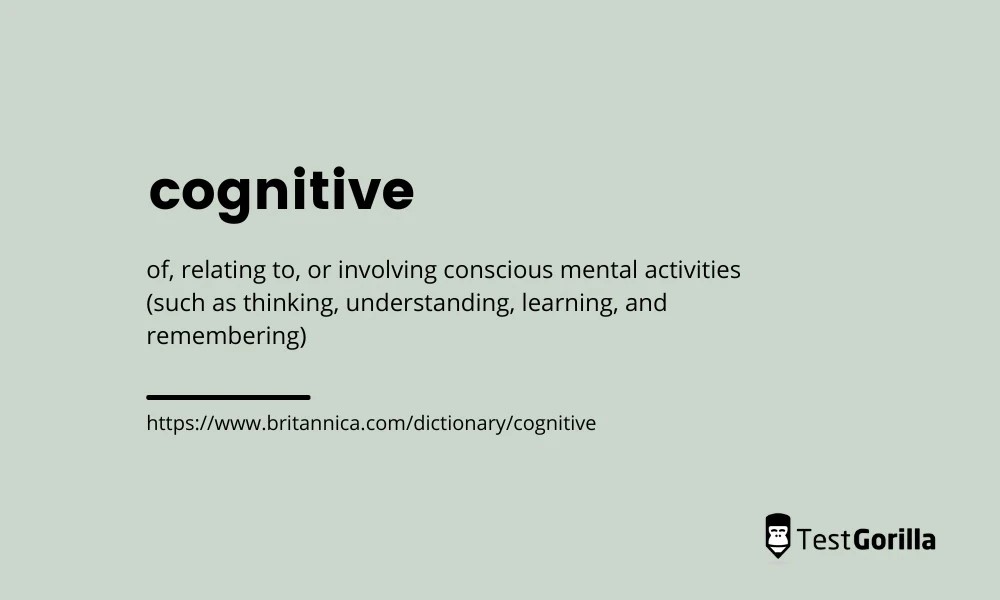
The term “cognitive” permeates our modern discourse, often appearing in discussions about technology, human interaction, and even our financial decisions. But what exactly does it mean to be cognitive? At its core, the definition of cognitive refers to the mental processes involved in acquiring knowledge and understanding through thought, experience, and the senses. It encompasses a wide array of activities, from the simplest act of perception to the most complex forms of reasoning and problem-solving. In essence, “cognitive” describes the workings of the mind – how we think, learn, remember, and interact with the world around us.
In today’s rapidly evolving landscape, understanding cognitive processes is not just an academic pursuit; it’s a fundamental aspect of navigating and thriving in a world increasingly shaped by technology. From the artificial intelligence that powers our apps and gadgets to the branding strategies that influence our purchasing decisions and the financial tools that manage our wealth, cognitive principles are at play. This article will delve into the definition of cognitive, exploring its foundational elements and then examining its profound impact across the key domains of Tech, Brand, and Money.
The Pillars of Cognitive Function: How We Process Information
Before we explore its applications, it’s crucial to understand the fundamental building blocks of cognitive function. These are the mental faculties that allow us to engage with and make sense of our environment.
Perception and Attention: The Gateway to Information
Our cognitive journey begins with perception – the process by which our brains interpret sensory information from the world. What we see, hear, smell, taste, and touch are raw data that our cognitive systems then organize and give meaning to. This is not a passive process; our brains actively select and filter incoming stimuli based on our existing knowledge, expectations, and current goals.
Closely linked to perception is attention. In a world saturated with information, our ability to focus on relevant stimuli while filtering out distractions is a critical cognitive skill. Attention acts as a spotlight, directing our mental resources to specific aspects of our environment, allowing us to process them more deeply. Think about trying to have a conversation in a noisy café. Your ability to attend to the person speaking to you, while largely ignoring the clatter of dishes and other conversations, is a testament to your cognitive attentional mechanisms at work.
Memory: The Foundation of Learning and Experience
Memory is another cornerstone of cognitive function. It’s our capacity to encode, store, and retrieve information. Without memory, learning would be impossible, and our sense of self would be fragmented. We have different types of memory, including:
- Sensory Memory: A fleeting, brief buffer that holds sensory information for a fraction of a second.
- Short-Term Memory (or Working Memory): This is our mental workspace, holding a limited amount of information for a short period (typically seconds to a minute) for immediate use. It’s what allows you to remember a phone number you just heard long enough to dial it.
- Long-Term Memory: This is our vast, relatively permanent storehouse of knowledge, experiences, and skills. It can be further categorized into:
- Explicit (Declarative) Memory: Memories that we can consciously recall and verbalize, such as facts (semantic memory) and personal experiences (episodic memory).
- Implicit (Procedural) Memory: Memories that are unconscious and revealed through performance, like riding a bicycle or playing a musical instrument.
The strength and accessibility of our memories are directly influenced by how we process information, our emotional state, and the context in which we learned it.
Language and Thought: The Tools of Understanding and Expression
Language is perhaps one of humanity’s most remarkable cognitive achievements. It’s the system of communication through which we express thoughts, ideas, and emotions. The relationship between language and thought is complex and bidirectional. Our language shapes how we think, and our thoughts, in turn, influence how we use language.
Cognitive linguistics, for instance, explores how our conceptual systems are structured and how these structures are reflected in language. The words we use carry conceptual weight, influencing how we perceive and categorize the world. Beyond spoken and written language, our internal monologue – our silent thinking process – is a fundamental aspect of cognitive activity. This is where reasoning, planning, and abstract thought take place.
Reasoning and Problem-Solving: Navigating Challenges
At the higher echelons of cognitive function lie reasoning and problem-solving. Reasoning involves drawing conclusions from information, whether it’s through deductive logic (moving from general principles to specific conclusions) or inductive logic (moving from specific observations to general conclusions). Problem-solving is the application of cognitive strategies to overcome obstacles and achieve goals. This can range from simple puzzles to complex scientific challenges.
These processes involve a range of cognitive skills, including:
- Analysis: Breaking down complex problems into smaller, manageable parts.
- Synthesis: Combining different pieces of information to form a new understanding.
- Evaluation: Assessing the validity and usefulness of information or solutions.
- Creativity: Generating novel ideas and approaches.
These cognitive pillars work in concert, enabling us to learn, adapt, and interact with our environment in sophisticated ways.
Cognitive in Tech: The Engine of Innovation
The intersection of cognitive principles and technology is where much of our modern innovation is occurring. From the software we use daily to the sophisticated AI systems shaping our future, cognitive concepts are fundamental.
AI and Machine Learning: Mimicking Human Cognition
Artificial intelligence (AI) is, in many ways, an attempt to replicate or simulate human cognitive abilities in machines. Machine learning, a subfield of AI, enables systems to learn from data without explicit programming. This learning process mirrors aspects of human learning, where experience (data) leads to improved performance.
Consider the cognitive processes involved in recognizing a face. Humans do this effortlessly, drawing on vast stores of learned visual information. AI systems, through deep learning algorithms, are now capable of achieving remarkable accuracy in facial recognition by analyzing millions of images and identifying patterns. Similarly, natural language processing (NLP) aims to enable computers to understand, interpret, and generate human language, mimicking our cognitive ability to process and produce speech and text.
AI tools and applications are transforming industries by automating tasks that previously required human cognitive effort. This includes:
- Predictive Analytics: Using cognitive models to forecast future trends, from market behavior to customer preferences.
- Personalized Recommendations: AI algorithms learn our preferences (a cognitive process) to suggest products, content, or services we might like.
- Automated Customer Service: Chatbots and virtual assistants employ NLP to understand and respond to customer inquiries, simulating human interaction.
- Software Development: AI is being used to assist in coding, debugging, and even designing software architecture, streamlining cognitive tasks for developers.
- Digital Security: AI plays a crucial role in identifying and responding to cyber threats by analyzing patterns and anomalies, a cognitive function of threat detection.
The ongoing advancements in AI are not just about creating smarter machines; they are about understanding the very nature of intelligence and applying those insights to solve complex problems and enhance human capabilities.
User Experience (UX) and Interface Design: The Cognitive Connection
In the realm of software and apps, cognitive psychology is paramount to designing effective and intuitive user experiences. The goal of UX design is to create products that are not only functional but also enjoyable and easy to use. This requires a deep understanding of how users think, perceive information, and interact with digital interfaces.
Cognitive principles that inform UX design include:
- Cognitive Load: This refers to the amount of mental effort required to use a system. Good UX design aims to minimize cognitive load by presenting information clearly, organizing it logically, and reducing unnecessary steps.
- Mental Models: Users bring their own existing mental models of how things should work. Effective UX design aligns the interface with these user mental models, making the product feel familiar and predictable.
- Perception and Affordance: Designers use visual cues and affordances to communicate how interface elements can be used. For example, a button that looks clickable “affords” being clicked.
- Memory and Familiarity: By using familiar design patterns and icons, designers leverage users’ existing knowledge and reduce the need for new learning.
Reviews and tutorials for apps and software often highlight the user-friendliness of a product, which is a direct reflection of how well its design has considered cognitive principles. Gadget reviews, too, often touch upon the intuitive nature of controls and interfaces, a testament to cognitive design.
Cognitive in Brand: Shaping Perception and Influence
The definition of cognitive extends beyond technical applications; it’s deeply embedded in the art and science of branding and marketing. Brands are not just logos; they are cognitive constructs in the minds of consumers.
Brand Strategy and Personal Branding: Crafting Meaning and Identity
Brand strategy is fundamentally about shaping how a brand is perceived and remembered. This involves understanding consumer psychology and cognitive biases. A strong brand creates a distinct mental representation in the consumer’s mind, influencing their purchasing decisions and loyalty.
Personal branding takes these principles to an individual level. It’s about consciously shaping how you are perceived by others, whether in your professional life or social interactions. This involves understanding your audience’s cognitive processes and presenting yourself in a way that resonates with them. Effective personal branding involves:
- Defining your Unique Value Proposition: What makes you stand out? This taps into the cognitive process of differentiation.
- Consistent Messaging: Repetition and consistency are key to building strong cognitive associations with your brand.
- Storytelling: Humans are wired to connect with stories. Brands and individuals that tell compelling narratives create deeper cognitive engagement.
Marketing and Design: Influencing Consumer Cognition
Marketing and design are inherently cognitive endeavors. Advertisements, packaging, and brand aesthetics are all designed to capture attention, evoke emotions, and create memorable associations.
- Color Psychology: Different colors trigger different emotional and cognitive responses. A brand’s choice of color palette is a deliberate cognitive decision.
- Typography: The font used for a brand’s logo or marketing materials can convey a range of feelings, from trustworthiness to innovation.
- Imagery and Symbolism: Visual elements are powerful tools for creating cognitive shortcuts, imbuing brands with meaning and associations.
- Reputation Management: A brand’s reputation is built on consistent positive cognitive experiences and perceptions. Negative experiences can quickly erode this, highlighting the fragility of cognitive impressions.
Case studies in marketing often demonstrate how strategic brand positioning and creative campaigns have successfully altered consumer perceptions and driven sales by tapping into fundamental cognitive principles.
Cognitive in Money: Decision-Making and Financial Well-being
The definition of cognitive also plays a significant role in how we manage our finances. Behavioral economics, a field that blends psychology and economics, highlights how our cognitive biases and heuristics influence our financial decisions, often in irrational ways.
Personal Finance and Investing: Overcoming Biases
Our financial decisions are not always purely rational. Cognitive biases can lead us to make choices that are not in our best long-term interest. Understanding these biases is crucial for effective personal finance and investing. Some common cognitive biases include:
- Loss Aversion: The tendency to feel the pain of a loss more strongly than the pleasure of an equivalent gain. This can lead investors to hold onto losing investments for too long or sell winning investments too soon.
- Confirmation Bias: The tendency to seek out information that confirms our existing beliefs and ignore information that contradicts them. In investing, this can lead to overlooking warning signs.
- Overconfidence Bias: An inflated belief in one’s own abilities or knowledge, leading to taking on excessive risk.
- Recency Bias: Giving more weight to recent events or information than to historical data.
Financial tools and platforms are increasingly being designed with these cognitive tendencies in mind. They aim to guide users towards more rational decisions, provide clear visualizations of financial data, and offer nudges to encourage good financial habits.

Online Income and Side Hustles: Cognitive Agility in the Gig Economy
The rise of online income and side hustles demands cognitive agility. Individuals need to be able to learn new skills quickly, adapt to changing market demands, and manage their time effectively. This requires strong cognitive functions such as:
- Learning Agility: The ability to rapidly acquire new knowledge and skills.
- Problem-Solving: Identifying opportunities and overcoming challenges in the online marketplace.
- Self-Discipline and Motivation: The cognitive capacity to stay focused and productive without direct supervision.
- Adaptability: Being able to pivot strategies and offerings as the online landscape evolves.
Business finance, too, relies heavily on cognitive processes for strategic planning, risk assessment, and resource allocation. The ability of business leaders to analyze complex data, forecast future scenarios, and make sound decisions under uncertainty is a direct application of advanced cognitive capabilities.
In conclusion, the definition of cognitive, encompassing the intricate processes of the mind, is a foundational concept that underpins much of our modern existence. From the technological advancements that shape our daily lives to the brands that influence our perceptions and the financial decisions that impact our well-being, understanding cognitive principles is not just beneficial, it is essential for navigating and thriving in the 21st century. As we continue to push the boundaries of what’s possible in Tech, Brand, and Money, a deeper appreciation for the cognitive machinery at play will undoubtedly lead to more effective, intuitive, and ultimately, more human-centered innovations.
aViewFromTheCave is a participant in the Amazon Services LLC Associates Program, an affiliate advertising program designed to provide a means for sites to earn advertising fees by advertising and linking to Amazon.com. Amazon, the Amazon logo, AmazonSupply, and the AmazonSupply logo are trademarks of Amazon.com, Inc. or its affiliates. As an Amazon Associate we earn affiliate commissions from qualifying purchases.