
For the modern investor, the question “When does the stock market close today?” is often more than a simple inquiry about the time. It represents a fundamental need to understand the rhythm of global finance, the mechanics of liquidity, and the strategic windows available for executing trades. Whether you are a retail investor managing a retirement account or an active day trader looking for late-day volatility, understanding the operational hours of the major exchanges is the first step in mastering market participation.
In the United States, the primary equity markets—the New York Stock Exchange (NYSE) and the Nasdaq—operate on a synchronized schedule. However, the “close” of the market is not a singular event but a series of phases that transition from high-volume regular trading into the specialized environment of after-hours sessions.
Understanding Standard Trading Hours for Major US Exchanges
The core of the American financial system revolves around the standard trading session. For the vast majority of individual investors, this is the period during which stock prices are most stable, liquidity is at its peak, and bid-ask spreads are at their narrowest.
The New York Stock Exchange (NYSE) and Nasdaq Schedule
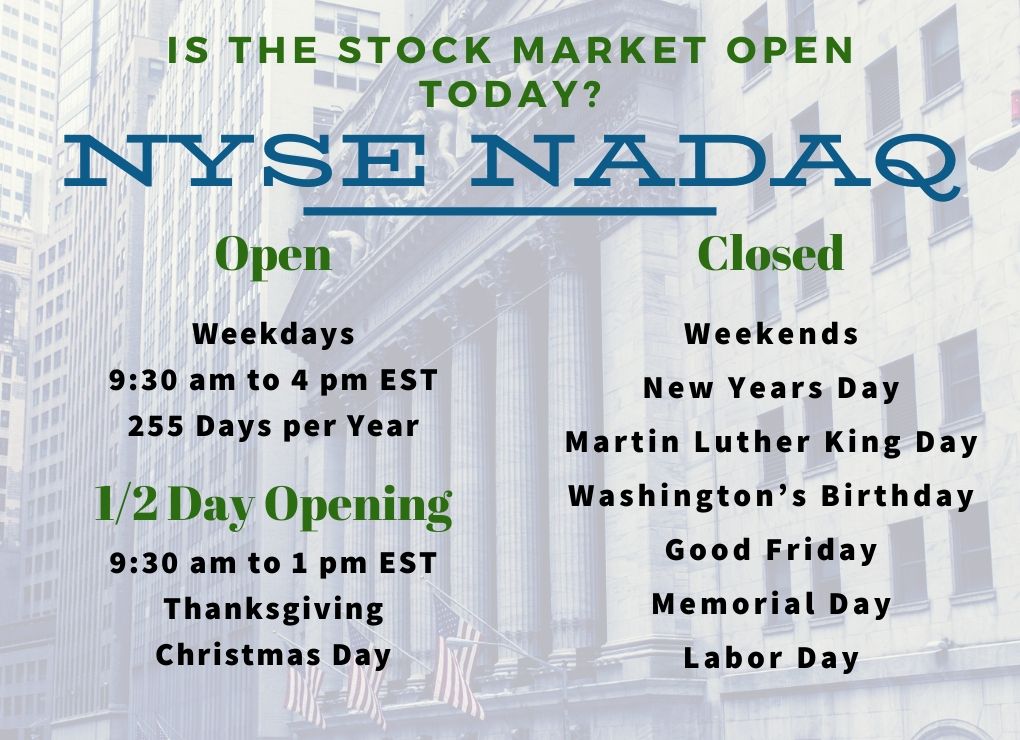
The standard trading hours for both the NYSE and the Nasdaq are from 9:30 AM to 4:00 PM Eastern Time (ET), Monday through Friday. This 6.5-hour window is the heartbeat of the global economy. During these hours, the “open outcry” (though now largely electronic) and automated matching engines facilitate millions of transactions per second.
It is important to note that while the physical location of the NYSE is in New York City, the digital nature of modern trading means that these hours apply regardless of where the investor is located. Whether you are trading from a laptop in London or a smartphone in Singapore, your orders must align with the 4:00 PM ET closing bell to be executed during the regular session.
Why the 9:30 AM to 4:00 PM Window Exists
Historically, market hours were designed to accommodate the physical presence of floor traders and the manual processing of paperwork. Even as the world has moved to a 24/7 digital infrastructure, the 9:30 AM to 4:00 PM window persists for several strategic reasons. Primarily, it concentrates liquidity. By forcing the majority of market participants to trade within a specific timeframe, the market ensures that there are enough buyers and sellers to keep prices fair and efficient. If trading were spread evenly across 24 hours, the lack of volume at 3:00 AM might lead to erratic price swings and higher costs for investors.
The Importance of Eastern Time (ET) in Global Finance
Because New York City is the financial capital of the world, Eastern Time serves as the “standard time” for the global investment community. When tracking the market close, it is vital to adjust for your local time zone. For instance, an investor on the West Coast of the United States must be prepared for the market to close at 1:00 PM PT. Understanding this synchronization is crucial for managing “Market on Close” (MOC) orders and ensuring that you do not miss the final liquidity window of the day.
Beyond the Bell: Pre-Market and After-Hours Trading
The 4:00 PM closing bell does not actually mean that trading stops. In the modern era, the “Money” niche has expanded into what is known as extended-hours trading. This allows participants to react to news that breaks outside of standard hours, such as corporate earnings reports or geopolitical events.
What is Extended-Hours Trading?
Extended-hours trading is divided into two segments: the pre-market session and the after-hours session. Most major brokerage firms allow retail clients to participate in these sessions, though the rules and risks differ significantly from standard trading.
- Pre-Market: Typically runs from 4:00 AM to 9:30 AM ET.
- After-Hours: Typically runs from 4:00 PM to 8:00 PM ET.
While the market “closes” at 4:00 PM for the purpose of setting official daily prices, the after-hours session is where much of the institutional reaction to earnings happens. If a major tech company releases its quarterly results at 4:15 PM, you will see its stock price move dynamically in the after-hours market.
Risks and Rewards of Late-Day Trades
Trading after the 4:00 PM close is a double-edged sword. The primary advantage is the ability to act immediately on new information. However, the risks are substantial. Liquidity is much lower during extended hours, meaning there are fewer participants. This can lead to “wide spreads”—the difference between the price a buyer is willing to pay and the price a seller is willing to accept. In a low-liquidity environment, a single large order can cause a stock price to jump or crash unnaturally, leading to potential losses for the unwary investor.
Electronic Communication Networks (ECNs) Explained
Extended trading is made possible by Electronic Communication Networks (ECNs). Unlike the standard session, which may involve designated market makers to provide stability, ECNs simply match buy and sell orders digitally. This is why many brokers require investors to use “Limit Orders” during after-hours sessions; since there is no guarantee of a “fair” market price, a limit order ensures you don’t buy a stock for significantly more than you intended during a period of low volume.
Market Holidays and Early Closures: What to Expect
The stock market does not follow the standard 365-day calendar. To manage your portfolio effectively, you must be aware of the specific days when the market closes early or remains closed entirely.
The Annual Holiday Calendar for Investors
The US stock markets observe nine major holidays per year, during which the exchanges are closed for the full day. These include:
- New Year’s Day
- Martin Luther King, Jr. Day
- Presidents’ Day
- Good Friday
- Memorial Day
- Juneteenth National Independence Day
- Independence Day (July 4th)
- Labor Day
- Thanksgiving Day
- Christmas Day
When these holidays fall on a weekend, the market usually closes on the preceding Friday or the following Monday. Being aware of these dates is essential for managing margin requirements and avoiding the risk of holding volatile positions over a long holiday weekend.
Early Close Days: When the Market Shuts at 1:00 PM
In addition to full closures, there are specific days when the market closes early, typically at 1:00 PM ET. The most common examples are the Friday after Thanksgiving (Black Friday) and Christmas Eve (if it falls on a weekday). During these shortened sessions, trading volume is usually very light, which can lead to deceptive price movements. Professional traders often advise caution during these sessions, as the “smart money” is often away, leaving the market prone to erratic swings.
How Unexpected Closures Happen (Circuit Breakers and Beyond)
While scheduled closures are predictable, the market can also “close” or pause unexpectedly due to extreme volatility. These are known as “circuit breakers.” Established by the SEC, these rules automatically halt trading across all exchanges if the S&P 500 drops by certain percentages (7%, 13%, and 20%) relative to the previous day’s close. A Level 3 decline (20%) results in the market closing for the remainder of the day, regardless of what time it occurs. This mechanism is designed to prevent a total market collapse driven by algorithmic panic selling.
The Mechanics of the Market Close: The “Closing Cross”
The final minutes of the trading day are often the most intense. At exactly 4:00 PM ET, the “Closing Cross” occurs, which is the process of determining the official closing price for every security.
Price Discovery and Final Benchmarks
The closing price is not just the last trade made; it is a calculated benchmark. For many mutual funds and institutional portfolios, the 4:00 PM price is the value used to calculate their Net Asset Value (NAV). Because so much capital is tied to this specific number, the volume of trades in the final two minutes of the day—often called the “Closing Auction”—can represent a significant portion of the entire day’s total volume.
High Volatility in the Final Minutes of Trading
If you watch a stock ticker at 3:59 PM, you will often see prices jumping rapidly. This is caused by traders rushing to square their positions before the bell. Day traders who do not want to hold stocks overnight must sell by 4:00 PM, while institutional “index funds” must buy or sell shares to ensure their holdings match the index they track. This convergence of interests creates a “power hour” (3:00 PM to 4:00 PM) where volatility and opportunity are at their highest.
Institutional Rebalancing and the “MOC” Order
Large institutions often use “Market on Close” (MOC) orders. An MOC order guarantees that the trade will be executed as close to the closing price as possible. These orders must be entered by a certain cut-off time (usually 3:50 PM ET for the NYSE). Understanding this mechanic helps individual investors realize why the market often moves in one direction in the final ten minutes; it is often the result of massive institutional orders being priced into the Closing Cross.
Strategic Considerations for Different Investor Profiles
Knowing when the market closes is only half the battle; knowing how to act around that time is what separates successful investors from the rest.
Day Traders vs. Long-Term Investors
For the long-term investor, the daily close is largely noise. Whether a stock closes at $100.05 or $99.95 on a Tuesday is irrelevant to a twenty-year horizon. However, for the active trader, the close is a deadline. Holding a leveraged position overnight exposes the trader to “gap risk”—the possibility that the stock will open at a significantly different price the next morning due to news that broke while the market was closed.

Managing Global Portfolios Across Time Zones
In our interconnected world, the “Money” niche is global. When the US market closes at 4:00 PM ET, the Asian markets are preparing to open. A savvy investor knows that the sentiment at the US close often sets the tone for the Nikkei in Tokyo or the Hang Seng in Hong Kong. Monitoring the “futures” market—which trades almost 24 hours a day—can give you a preview of how the market will open the following day long after the 4:00 PM bell has rung.
In conclusion, “when the stock market closes” is a gateway to understanding market liquidity, institutional behavior, and risk management. By respecting the 4:00 PM ET bell while remaining aware of the extended hours and holiday schedules, investors can better time their entries and exits, ensuring they are never caught off guard by a silent trading floor.
aViewFromTheCave is a participant in the Amazon Services LLC Associates Program, an affiliate advertising program designed to provide a means for sites to earn advertising fees by advertising and linking to Amazon.com. Amazon, the Amazon logo, AmazonSupply, and the AmazonSupply logo are trademarks of Amazon.com, Inc. or its affiliates. As an Amazon Associate we earn affiliate commissions from qualifying purchases.