
The Standard & Poor’s 500, commonly known as the S&P 500, is more than just a stock market index; it is the definitive heartbeat of the American economy and a primary benchmark for global investors. When people ask, “How is the S&P 500 doing today?” they are rarely looking for a singular numerical value. Instead, they are seeking to understand the underlying health of the corporate world, the sentiment of institutional investors, and the projected trajectory of their personal wealth. In a financial landscape defined by rapid fluctuations and macroeconomic shifts, interpreting the index’s performance requires a nuanced understanding of market mechanics, sector weightings, and the broader economic climate.
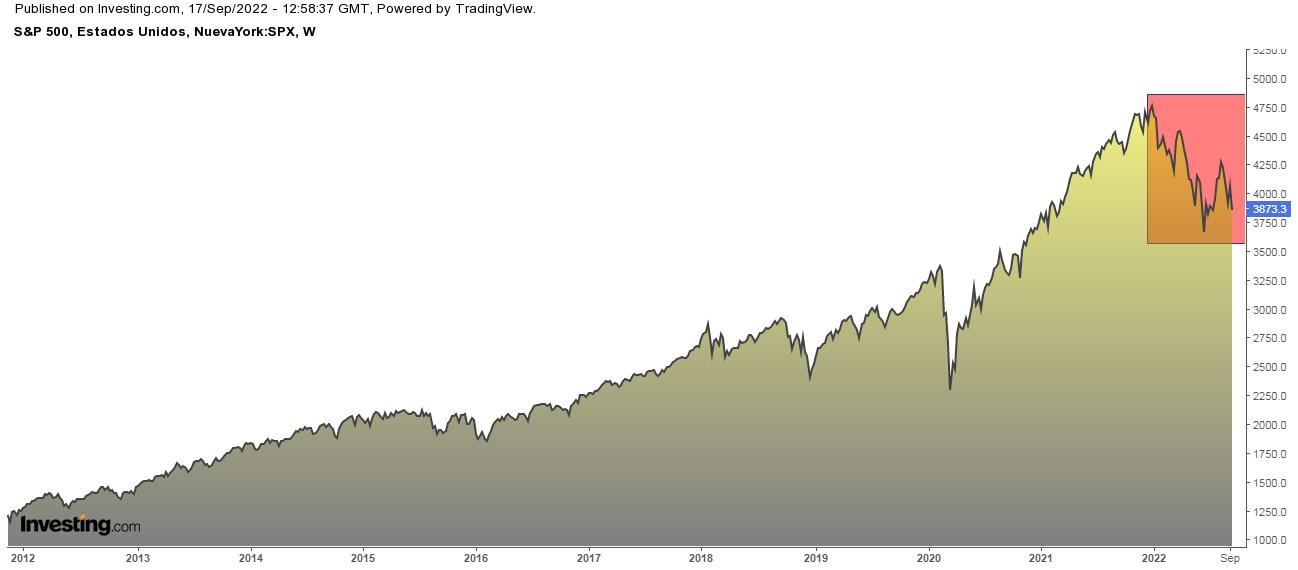
Understanding the S&P 500 as a Barometer for Global Wealth
To understand how the S&P 500 is performing today, one must first appreciate its structure. Unlike the Dow Jones Industrial Average, which is price-weighted, the S&P 500 is a market-capitalization-weighted index. This means that the larger a company’s total market value, the more influence it exerts on the index’s daily movement.
The Power of Market Cap Weighting
In today’s market, the concentration of the S&P 500 has reached historic levels. A small group of mega-cap companies—often referred to as the “Magnificent Seven”—now accounts for a significant percentage of the index’s total value. Consequently, when an investor asks how the index is doing, the answer is heavily dictated by the performance of these titans. This weighting system ensures that the index reflects the actual economic footprint of the companies within it, but it also means that a slump in a few massive firms can drag down the entire index, even if the majority of the other 493 stocks are gaining ground.
Why the S&P 500 Matters to Your Portfolio
For the average individual, the S&P 500 is likely the cornerstone of their retirement or brokerage account. Whether through mutual funds or Exchange Traded Funds (ETFs) like VOO or SPY, millions of people are “indexed” to this basket of stocks. Its daily performance is a direct reflection of personal net worth for a vast portion of the population. Understanding its movements allows investors to gauge whether they are on track for their long-term financial goals or if they need to adjust their risk tolerance.
Current Market Performance: Analyzing the Drivers of Today’s Trends
The daily movement of the S&P 500 is rarely the result of a single event. Instead, it is a culmination of corporate earnings reports, geopolitical stability, and investor psychology. To assess how the index is doing today, we must look at the specific sectors that are driving the momentum.
The Dichotomy Between Growth and Value
In the current financial environment, there is a distinct tug-of-war between “growth” stocks and “value” stocks. Growth stocks, predominantly found in the technology and communications sectors, thrive on innovation and future earnings potential. When the S&P 500 is up, it is often because these sectors are benefiting from advancements in artificial intelligence or strong consumer demand for digital services. On the other hand, value stocks—found in utilities, consumer staples, and healthcare—often provide a cushion during market downturns. Today’s performance is frequently a reflection of which of these two philosophies is winning the favor of institutional capital.
Sector-Specific Impacts: Energy, Finance, and Tech
A deep dive into today’s performance usually reveals a story within the sectors. For instance, if the S&P 500 is trading flat, it might be because a rally in the Tech sector is being offset by a slump in the Energy sector due to falling oil prices. Similarly, the Financial sector plays a massive role in the index’s stability. Since banks and financial institutions are the lifeblood of credit and commerce, their performance within the S&P 500 serves as a leading indicator of whether the broader economy is expanding or contracting.
Macroeconomic Factors Influencing Today’s Index

Beyond the internal mechanics of the stock market, external economic forces play a decisive role in determining the index’s daily close. No investor can truly understand “how the market is doing” without looking at the moves of the Federal Reserve and the data coming out of Washington and Wall Street.
Interest Rates and the Federal Reserve
Perhaps the single most influential factor on the S&P 500 today is the “cost of money.” When the Federal Reserve adjusts interest rates, it sends shockwaves through the index. Higher interest rates generally lead to lower stock valuations because they increase borrowing costs for companies and make “risk-free” assets like Treasury bonds more attractive. Conversely, when the Fed signals a pause or a cut in rates, the S&P 500 often rallies as investors anticipate cheaper capital and higher corporate profits.
Inflation and Consumer Sentiment
Inflation is another critical variable. The S&P 500 represents companies that sell goods and services; if inflation is too high, consumer purchasing power erodes, potentially hurting corporate margins. However, many S&P 500 companies possess “pricing power,” allowing them to pass costs onto consumers. Today’s market performance often hinges on the latest Consumer Price Index (CPI) or Producer Price Index (PPI) reports. If these reports show that inflation is cooling, the index tends to react positively, signaling a “soft landing” for the economy.
Strategic Approaches for the Modern Investor
Knowing how the S&P 500 is doing today is only useful if it informs a sound investment strategy. For most individuals, the goal is not to trade the daily volatility but to harness the long-term wealth-building power of the index.
The Philosophy of “Time in the Market”
While the daily fluctuations of the S&P 500 can be gut-wrenching or exhilarating, financial history shows that “time in the market” beats “timing the market.” Over the last several decades, the S&P 500 has provided an average annual return of approximately 10% before inflation. Investors who obsess over “how the index is doing today” might be tempted to sell during a dip, missing out on the inevitable recovery. A professional approach involves maintaining a long-term perspective, recognizing that today’s red numbers are often the seeds of tomorrow’s green ones.
The Role of Diversification and Rebalancing
Even though the S&P 500 is diversified across 500 companies, it is still a 100% equity index. A savvy investor looks at the index’s performance today to decide when to rebalance. If the S&P 500 has had an extraordinary run, it might comprise a larger percentage of an individual’s portfolio than intended. Rebalancing—selling some of the winning index shares to buy other assets like bonds or international stocks—is a disciplined way to “sell high” and maintain a desired risk profile.
Future Outlook and Final Considerations
As we look at the S&P 500’s performance today, we must also look toward the horizon. The index is a forward-looking mechanism; it prices in expectations for the next six to twelve months. Today’s price is essentially a consensus of what the world’s most sophisticated investors believe the future holds for corporate America.
The Impact of Innovation and Earnings Cycles
The long-term health of the S&P 500 is inextricably linked to corporate earnings. We are currently in an era where productivity gains from automation and technology are expected to drive margins to new heights. Each quarterly earnings season provides a reality check for the index. If companies meet or exceed their “guidance,” the index typically climbs. If they miss, we see a correction. Monitoring how the index handles these earnings cycles is key to understanding its overall resilience.
Conclusion: Navigating the Daily Noise
In conclusion, answering “how the S&P 500 is doing today” requires looking past the ticker symbol. It involves a holistic view of interest rate trajectories, corporate health, and global economic stability. While the daily percentage change is a useful snapshot, the real value of the S&P 500 lies in its ability to compound wealth over decades. For the disciplined investor, today’s market movement is just one small data point in a much larger journey toward financial independence. Whether the index is up or down today, the fundamental principles of investing—diversification, low costs, and long-term thinking—remain the most reliable tools for navigating the complexities of the financial world.
aViewFromTheCave is a participant in the Amazon Services LLC Associates Program, an affiliate advertising program designed to provide a means for sites to earn advertising fees by advertising and linking to Amazon.com. Amazon, the Amazon logo, AmazonSupply, and the AmazonSupply logo are trademarks of Amazon.com, Inc. or its affiliates. As an Amazon Associate we earn affiliate commissions from qualifying purchases.