
In an increasingly interconnected digital world, the concept of a “strong password” has evolved from a simple recommendation into an absolute necessity. It serves as the primary barrier protecting our personal data, financial assets, and digital identities from an ever-growing array of sophisticated cyber threats. Yet, despite widespread awareness, many individuals and organizations still fall prey to easily preventable security breaches due to weak or reused passwords. Understanding what constitutes a strong password, why it’s crucial, and how to effectively manage it is no longer optional; it’s fundamental to navigating the digital landscape securely.
The Imperative of Digital Security in the Modern Age
The digital realm, while offering unparalleled convenience and connectivity, is also a fertile ground for malicious actors. From sophisticated nation-state attacks to opportunistic individual hackers, the threat landscape is constantly shifting, making robust digital security more critical than ever before.
The Evolving Threat Landscape
Gone are the days when cyber threats were primarily the domain of highly technical individuals exploiting obscure vulnerabilities. Today, automated tools and readily available hacking kits empower even novice attackers to launch sophisticated assaults. Phishing scams, ransomware, brute-force attacks, credential stuffing, and social engineering are just a few of the persistent dangers we face daily. Each of these methods often targets the weakest link: the password. A compromised password can grant an attacker access to emails, banking accounts, social media profiles, cloud storage, and even sensitive corporate networks, leading to devastating consequences.
The Cost of Compromise
The repercussions of a weak password stretch far beyond mere inconvenience. For individuals, a breach can lead to identity theft, financial losses, reputational damage, and emotional distress. Imagine losing access to your life savings, having your personal photos leaked, or facing the arduous task of restoring your credit score after fraudulent activities. For businesses, the stakes are even higher. Data breaches can result in massive financial penalties, significant reputational damage, loss of customer trust, intellectual property theft, and operational downtime. In an era where data is king, protecting it begins with the foundation of strong authentication.
Defining Strength: Beyond Simple Complexity
Many people mistakenly equate “strong” with “complex,” believing that merely adding a special character or number suffices. While complexity is a component, true password strength encompasses several critical characteristics that work in concert to create a robust defense.
Length: The First Line of Defense
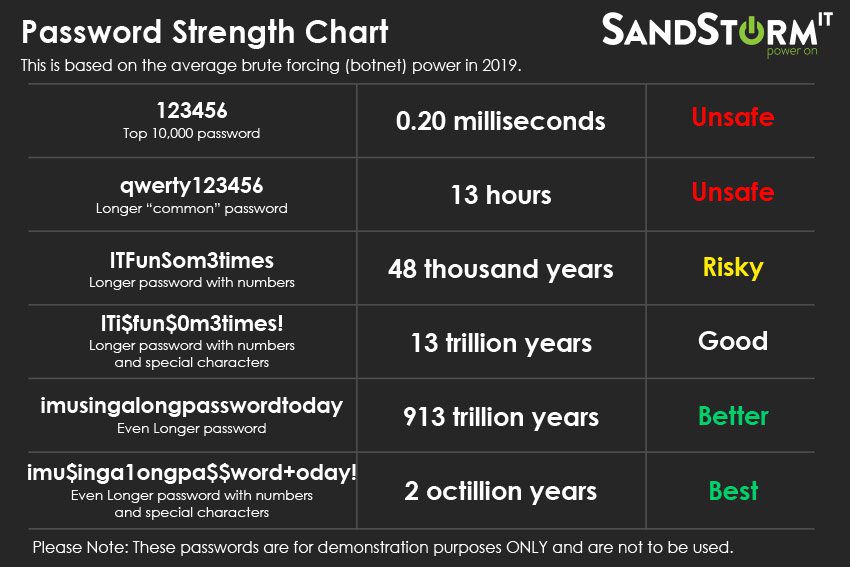
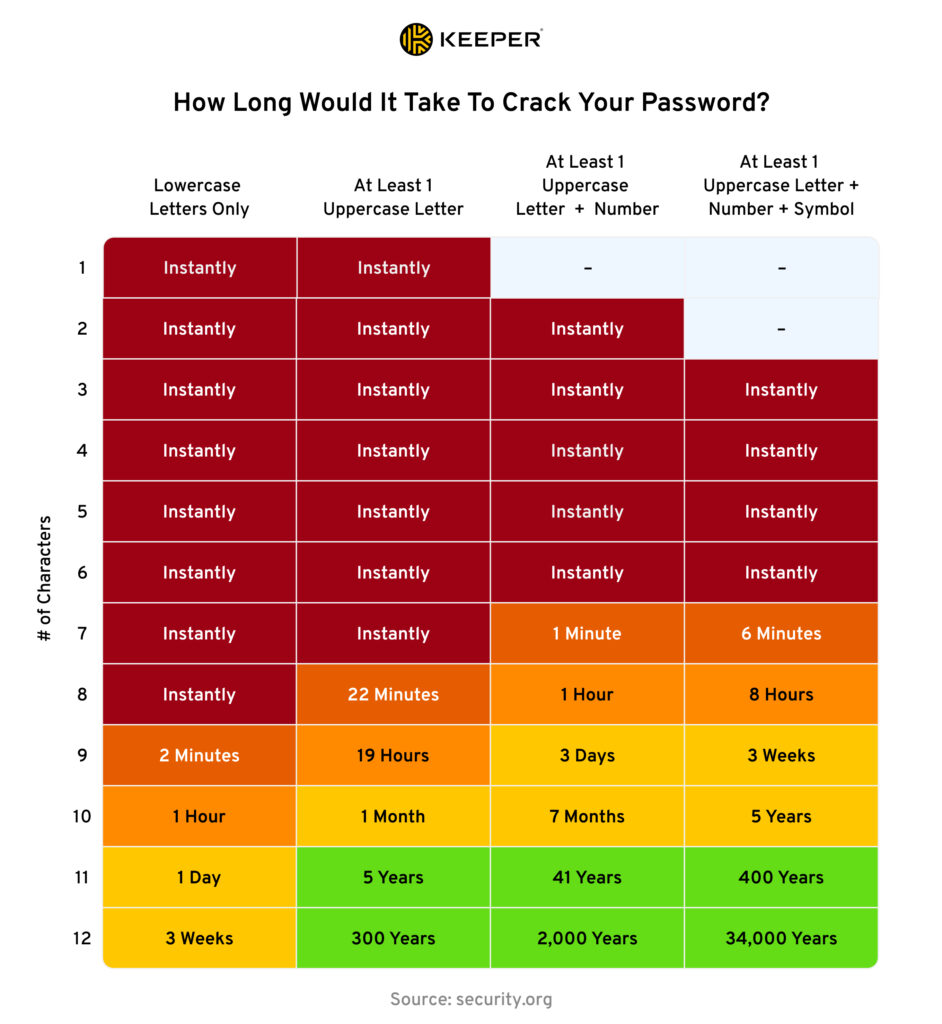
Perhaps the single most important factor in password strength is length. The longer a password, the exponentially more difficult it is for a computer to guess or crack through brute-force attacks (where a program systematically tries every possible combination). While a short password with varied characters might seem strong, its limited character space makes it vulnerable to rapid decryption by modern processors. Security experts now recommend a minimum length of 12-16 characters, with longer being always better. A good analogy is a physical lock: a cheap, small lock can be picked quickly, no matter how intricate its few pins. A larger, longer lock with more pins offers far greater resistance.
Character Variety: A Multifaceted Shield
Beyond length, a strong password incorporates a mix of different character types. This includes:
- Uppercase letters (A-Z)
- Lowercase letters (a-z)
- Numbers (0-9)
- Special characters (!@#$%^&*()-=_+)
By utilizing all four categories, you dramatically increase the number of possible combinations, making it much harder for attackers to guess or crack the password, even with sophisticated tools. Each added character type expands the “character space,” making the attacker’s job exponentially more difficult.
Unpredictability: Defeating Guessing Games
A truly strong password is unpredictable. It avoids any personal information, sequential patterns, common dictionary words, or easily guessable substitutions (like “P@ssw0rd1” for “Password”). Attackers often employ “dictionary attacks” (trying common words and phrases) and “hybrid attacks” (adding numbers or symbols to dictionary words). They also use algorithms to guess based on publicly available information about you. A password derived from a random string of characters, or a seemingly nonsensical passphrase, is far more secure than one based on a birthday, pet’s name, or favorite sports team.
Uniqueness: Preventing the Domino Effect
One of the most catastrophic security errors is reusing the same password across multiple online accounts. This practice creates a “domino effect”: if one service you use suffers a data breach, and your email and password are leaked, attackers can then use those credentials to attempt logging into all other accounts where you’ve used the same combination. This is known as “credential stuffing” and is incredibly common. Every account should have a unique, strong password. This compartmentalization ensures that even if one account is compromised, the damage is contained.
Common Password Weaknesses and How to Avoid Them
Understanding what makes a password weak is just as important as knowing what makes it strong. Many common habits inadvertently create significant vulnerabilities.
Predictable Patterns and Personal Information
Passwords like “123456,” “qwerty,” or “password” are notoriously weak and are often the first combinations tried by attackers. Similarly, using easily guessed personal information such as birthdates, names of family members, pets, or hobbies makes a password vulnerable to social engineering and information-gathering techniques. Avoid any pattern that could be found in a dictionary, a keyboard sequence, or information discoverable about you online.
Reusing Passwords Across Multiple Accounts
As discussed, password reuse is a critical flaw. Even if one of your reused passwords is strong, its strength is negated across every other account it protects once one account is breached. The principle of uniqueness is non-negotiable for robust digital security.
Short and Simple: An Open Invitation
A password like “admin” or “user123” is effectively no barrier at all. Modern computers can crack short, simple passwords in milliseconds using brute-force attacks. The exponential increase in time required to crack longer passwords (even by just a few characters) highlights why minimum length recommendations are crucial.
Dictionary Words and Common Phrases
While a passphrase like “Thequickbrownfoxjumpsoverthelazydog!” might be long, if it’s a direct quote or a well-known idiom, it can still be vulnerable to dictionary attacks or pre-computed rainbow tables if not properly diversified. Attackers have vast databases of common words, phrases, and even famous quotes to test. Substituting letters for numbers (e.g., ‘E’ for ‘3’) or adding symbols to the end of a common word offers only marginal improvement in security.
Best Practices for Crafting and Managing Strong Passwords
Building and maintaining strong passwords doesn’t have to be an arduous task. Several strategies and tools can make the process efficient and effective.
Embracing Passphrases
Instead of trying to remember a complex string of random characters, consider using a passphrase. A passphrase is a sequence of several unrelated words, often with some capitalization, numbers, and symbols interspersed. For example, “CorrectBatteryHorseStaple7!” is much longer, easier to remember, and significantly harder to crack than “P@ssw0rd!” because of its length and unpredictability as a concatenated phrase. The key is to choose words that are unrelated to each other and not a common idiom or quote.
The Indispensable Role of Password Managers
For most people, remembering a unique, strong password for every online account is an impossible feat. This is where password managers become invaluable. These secure applications encrypt and store all your passwords in a digital vault, protected by a single, very strong “master password” (which you must remember). Password managers can generate highly random, complex passwords for new accounts and automatically fill them in when you visit a website. They eliminate the need to remember dozens or hundreds of complex strings, drastically improving your security posture. Popular options include LastPass, 1Password, Bitwarden, and Dashlane.
Leveraging Two-Factor Authentication (2FA/MFA)
Even the strongest password can theoretically be compromised. That’s why Two-Factor Authentication (2FA) or Multi-Factor Authentication (MFA) is a critical secondary layer of defense. 2FA requires a second form of verification in addition to your password, typically something you have (like a code from an authenticator app, a text message, or a physical security key) or something you are (biometrics like a fingerprint or face scan). This means that even if an attacker manages to steal your password, they still cannot access your account without the second factor. Always enable 2FA wherever it’s available.
Regular Password Audits and Updates
Periodically, it’s wise to review your existing passwords. Many password managers offer features to identify weak, reused, or old passwords. If a service you use announces a data breach, change your password for that service immediately, and for any other services where you might have reused it. While modern security practices (like unique, long passwords and 2FA) reduce the need for frequent arbitrary password changes, a targeted update after a breach or suspicion of compromise is essential.
Staying Informed About Security Threats
The digital security landscape is dynamic. New threats emerge, and old ones evolve. Staying informed about common attack vectors, phishing techniques, and major data breaches can help you recognize and avoid risks. Follow reputable cybersecurity news sources and apply best practices as they evolve.
The Future of Authentication: Beyond Traditional Passwords
While strong passwords and 2FA remain the cornerstone of digital security today, the industry is constantly innovating to move beyond the inherent vulnerabilities and user friction of traditional passwords.
Biometrics: Convenience Meets Security
Biometric authentication, using unique physical characteristics like fingerprints, facial recognition, or iris scans, offers a convenient and often more secure alternative to passwords. Many smartphones and laptops now integrate biometric sensors for unlocking devices and authorizing payments. While highly convenient, it’s crucial to understand the limitations (e.g., the potential for biometric data to be spoofed or the lack of a “change” option if compromised, unlike a password).
Passkeys: The Passwordless Revolution
Passkeys are emerging as a significant step towards a truly passwordless future. Built on FIDO (Fast Identity Online) standards, passkeys use public-key cryptography to authenticate users. Instead of a shared secret (the password) that can be stolen, passkeys involve a pair of cryptographically linked keys – a public key stored with the service and a private key stored on your device (often secured by your device’s biometrics or PIN). This system is inherently more phishing-resistant, as there’s no password to type or steal, and it’s unique to each website. Passkeys represent a major leap in both security and usability.
Hardware Security Keys
Physical hardware security keys (like YubiKey) offer an extremely robust form of multi-factor authentication. These USB-like devices generate cryptographically secure codes or respond to challenges when plugged into a computer or tapped against a mobile device. They are highly resistant to phishing and man-in-the-middle attacks, making them a top-tier option for securing critical accounts.
In conclusion, a strong password is a multi-faceted defense mechanism characterized by length, character variety, unpredictability, and uniqueness. It is the bedrock of your digital security. By embracing best practices like passphrases, leveraging password managers, enabling 2FA, and staying informed, you can significantly fortify your online presence. As technology progresses, emerging authentication methods like biometrics and passkeys promise an even more secure and user-friendly future, but for now, mastering the art and science of the strong password remains an essential skill for every digital citizen.
aViewFromTheCave is a participant in the Amazon Services LLC Associates Program, an affiliate advertising program designed to provide a means for sites to earn advertising fees by advertising and linking to Amazon.com. Amazon, the Amazon logo, AmazonSupply, and the AmazonSupply logo are trademarks of Amazon.com, Inc. or its affiliates. As an Amazon Associate we earn affiliate commissions from qualifying purchases.