
In the rapidly evolving landscape of technology, understanding the fundamental building blocks of how things work is crucial. Whether you’re delving into the latest AI tools, exploring the intricacies of software development, or even managing your personal finances and investments, a grasp of basic electrical principles provides a surprising bedrock of knowledge. At the heart of all electrical phenomena lies a fundamental quantity, and understanding its unit is the first step in demystifying the world of electricity. So, what exactly is the basic unit of electrical quantity?
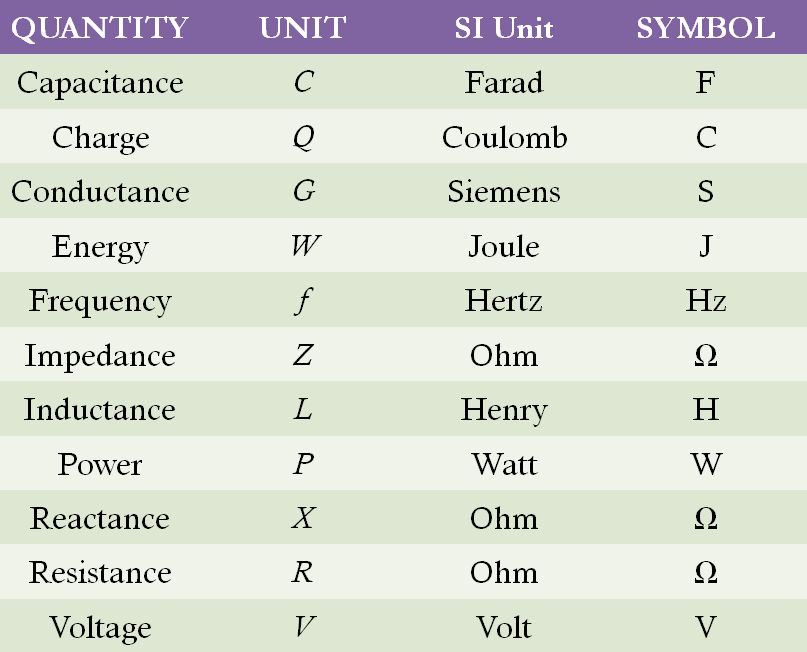
The answer, in its simplest form, is the Coulomb (C). This unit quantifies electric charge. Everything we perceive as electrical – from the flow of electrons in a circuit to the static cling on your clothes – is a manifestation of electric charge. While often discussed in terms of “electricity” as a general concept, it’s charge that is the fundamental, irreducible property.
This exploration will delve into the significance of the Coulomb, its relationship to other electrical quantities, and why understanding these basics is surprisingly relevant to individuals interested in Technology, Brand building, and even Money management. We’ll unpack the concepts in a way that’s accessible, informative, and ultimately, empowering.
The Electric Charge: The Foundation of Everything Electrical
Imagine the universe as being made up of fundamental particles. At the atomic level, we have protons, neutrons, and electrons. Protons carry a positive electric charge, electrons carry a negative electric charge, and neutrons are electrically neutral. The charge of a single proton is equal in magnitude but opposite in sign to the charge of a single electron. It’s this imbalance or presence of charged particles that gives rise to electrical phenomena.
Defining the Coulomb: Quantifying the Charge
The Coulomb is the standard unit of electric charge within the International System of Units (SI). Named after the French physicist Charles-Augustin de Coulomb, it’s a macroscopic unit, meaning it represents a very large number of elementary charges.
To put it in perspective, one Coulomb of charge is equivalent to the charge of approximately 6.24 x 10^18 electrons. This is a staggeringly large number of individual particles. This highlights that when we talk about currents in everyday devices, we’re dealing with the collective movement of an immense population of electrons.
Elementary Charge: The Smallest Unit We Know
While the Coulomb is the SI unit, the smallest known unit of free electric charge is the elementary charge, denoted by the symbol e. This is the magnitude of the charge of a single proton or a single electron.
- Charge of a proton: +e
- Charge of an electron: –e
The value of the elementary charge is approximately 1.602 x 10^-19 Coulombs. This incredibly small number emphasizes just how much charge is packed into a single Coulomb. Understanding this relationship is key to appreciating the scale of electrical measurements.
Why is Charge Fundamental?
Charge is fundamental because it’s an intrinsic property of matter. It’s not something that can be created or destroyed, only transferred or redistributed. This principle, known as the conservation of electric charge, is a cornerstone of physics. When you rub a balloon on your hair, you’re not creating charge; you’re transferring electrons from your hair to the balloon, making the balloon negatively charged and your hair positively charged.
Beyond Charge: Understanding Related Electrical Quantities
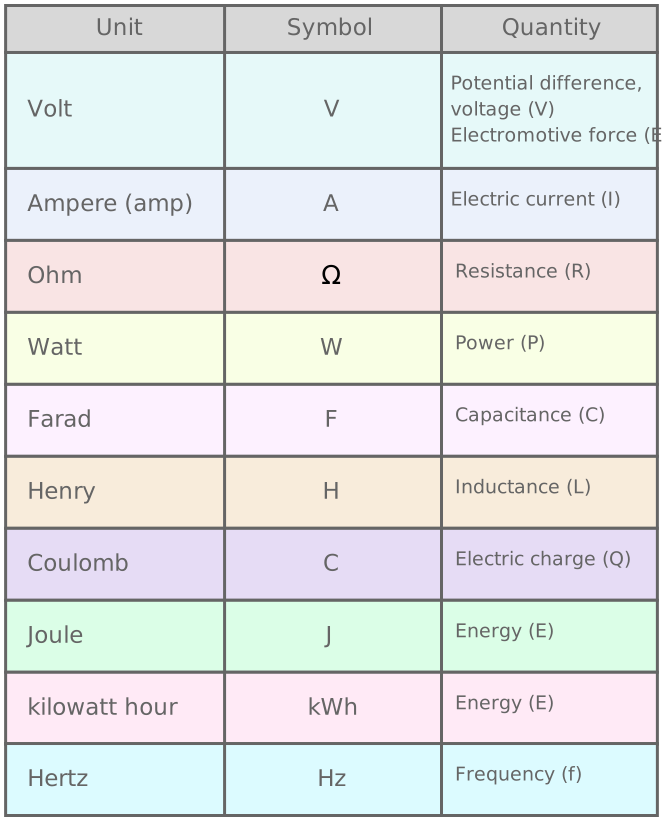
While the Coulomb quantifies charge, it’s just one piece of the electrical puzzle. To truly understand how electricity works and its applications, we need to consider other fundamental quantities that are directly related to charge. These include electric current, voltage, and resistance.
Electric Current (Ampere – A)
Electric current is the rate of flow of electric charge. If electric charge is like water, then electric current is the flow rate of that water. The SI unit for electric current is the Ampere (A), named after André-Marie Ampère.
One Ampere is defined as one Coulomb of charge flowing past a point in one second. Mathematically, this is expressed as:
$I = Q / t$
Where:
- $I$ is the current in Amperes (A)
- $Q$ is the charge in Coulombs (C)
- $t$ is the time in seconds (s)
Understanding current is vital for anyone involved in technology. From the power consumption of your latest smartphone to the data transfer speeds in networking, current is a critical metric.
Electric Potential Difference (Voltage – V)

Electric potential difference, commonly known as voltage, is the “push” or “pressure” that drives electric charge to flow. It’s the difference in electric potential energy per unit of charge between two points. Think of it as the difference in water pressure between two points in a pipe that causes water to flow. The SI unit for voltage is the Volt (V), named after Alessandro Volta.
One Volt is defined as one Joule of energy per Coulomb of charge.
$V = Energy / Charge$
Voltage is crucial in understanding how power is supplied to devices and how they operate. A device requires a certain voltage to function, and the source supplying that voltage must be able to provide it.
Electrical Resistance (Ohm – Ω)
Electrical resistance is a measure of a material’s opposition to the flow of electric current. Just as friction slows down moving objects, resistance impedes the flow of charge. The SI unit for resistance is the Ohm (Ω), named after Georg Simon Ohm.
The relationship between voltage, current, and resistance is described by Ohm’s Law:
$V = I * R$
Where:
- $V$ is the voltage in Volts (V)
- $I$ is the current in Amperes (A)
- $R$ is the resistance in Ohms (Ω)
Understanding resistance is key to designing efficient circuits, managing heat dissipation in electronic components, and even optimizing energy consumption in various applications.
The Interconnectedness: Why These Basics Matter Across Tech, Brand, and Money
While the question “what is the basic unit of electrical quantity” might seem purely academic or confined to an electronics lab, its underlying principles have far-reaching implications across the domains of Technology, Brand, and Money.
Technology: The Foundation of Innovation
At its core, all technology relies on the controlled manipulation of electricity. From the microprocessors in your computer to the intricate circuitry of a smart home device, engineers and developers are constantly working with charge, current, and voltage.
- Software and AI Tools: While seemingly abstract, the hardware that runs these tools – the processors, memory, and communication chips – are all governed by electrical principles. The speed and efficiency of AI algorithms are directly impacted by the performance of the underlying hardware, which in turn is dictated by how well electrical quantities are managed. Understanding concepts like power consumption (related to current and voltage) is critical for optimizing software performance and battery life in portable devices.
- Apps and Gadgets: The design and functionality of every app and gadget are underpinned by electrical engineering. Battery life, processing speed, connectivity – all these are directly influenced by the management of electrical quantities. A poorly designed gadget might draw too much current, leading to overheating and reduced lifespan, or require a voltage not readily available, limiting its usability.
- Digital Security: Even digital security has an electrical facet. The integrity of data transmission relies on stable electrical signals. Understanding how electrical noise or interference can corrupt data is crucial for building robust and secure systems. The physical security of data centers, for instance, involves managing power grids and preventing electrical surges.
- Productivity: Efficient use of technology directly impacts productivity. Understanding how devices consume power and how to optimize their usage (e.g., by managing background processes that draw current) can lead to less downtime and more effective work.
Brand: Powering Perceptions and Experiences
The connection between electrical quantities and Brand might seem less direct, but it’s profoundly impactful in the modern digital age.
- Brand Strategy and Corporate Identity: Brands today are inextricably linked to their digital presence. The reliability and performance of a company’s website, app, or online services directly shape customer perception. If a brand’s online platform is consistently slow, prone to errors, or unavailable – all issues potentially rooted in underlying electrical or network problems – it can severely damage its reputation and brand equity. A seamless digital experience, on the other hand, reinforces a brand’s image of competence and innovation.
- Marketing and Design: The visual appeal and user experience of marketing materials and product designs are often facilitated by technology. High-resolution images, interactive websites, and engaging video content all require robust digital infrastructure. The speed at which these are delivered to consumers is dependent on network performance, which is a manifestation of electrical signals. A brand that promises cutting-edge technology but delivers a slow or glitchy online experience is creating a disconnect between its marketing message and the reality, leading to brand erosion.
- Reputation Management: In the age of instant feedback and social media, a single technological failure can have widespread reputational consequences. A major outage due to electrical issues or network overload can lead to a barrage of negative reviews and social media commentary, quickly damaging years of brand building. Understanding the potential points of failure in the technological backbone that supports a brand is essential for proactive reputation management.
Money: The Financial Implications of Electrical Concepts
The relationship between electrical quantities and money is perhaps the most tangible, especially in areas like personal finance, investing, and business.
- Personal Finance and Online Income: The tools we use for managing our money – banking apps, budgeting software, online trading platforms – are all powered by technology. The reliability and accessibility of these services are paramount. If a banking app is down due to an electrical issue, it can cause significant inconvenience and financial stress for users. Furthermore, many side hustles and online income streams rely on stable internet connectivity and functional digital devices, both of which are dependent on electricity.
- Investing and Financial Tools: The stock market and financial trading are now almost entirely digital. The speed and accuracy of trades are critical, and any disruption due to electrical or network failures can lead to significant financial losses. High-frequency trading firms, for example, invest heavily in ensuring the most robust and fastest electrical infrastructure to gain even a millisecond advantage. Understanding the underlying technology that supports financial markets provides a deeper appreciation for the reliability and security measures required.
- Business Finance and Efficiency: For businesses, energy costs are a significant operational expense. Understanding concepts like power consumption (measured in Watts, which is Volts times Amps) is crucial for optimizing energy usage and reducing costs. Investing in energy-efficient technology, for instance, can directly impact a company’s bottom line. Furthermore, the reliability of a company’s IT infrastructure, which is inherently electrical, is vital for business continuity and avoiding costly downtime.
Conclusion: The Ubiquitous Power of Fundamentals
While the question “what is the basic unit of electrical quantity” might initially seem like a niche query for electricians or physicists, its answer – the Coulomb, representing electric charge – is a gateway to understanding a vast and interconnected world.
From the intricate workings of the latest AI algorithms and the seamless user experience of a beloved app, to the enduring strength of a brand’s reputation and the secure management of our personal finances, the principles of electricity are woven into the fabric of our modern lives.
By grasping the fundamental concept of electric charge and its related quantities like current, voltage, and resistance, we gain a more profound understanding of the technologies we use daily, the brands we trust, and the financial systems that govern our world. This foundational knowledge empowers us not just as consumers and users, but as informed individuals capable of navigating and contributing to an increasingly electrified future.
aViewFromTheCave is a participant in the Amazon Services LLC Associates Program, an affiliate advertising program designed to provide a means for sites to earn advertising fees by advertising and linking to Amazon.com. Amazon, the Amazon logo, AmazonSupply, and the AmazonSupply logo are trademarks of Amazon.com, Inc. or its affiliates. As an Amazon Associate we earn affiliate commissions from qualifying purchases.