
The Sun, a constant, powerful presence in our sky, is more than just a brilliant light source. It’s a colossal, fiery sphere of gas, a cosmic furnace that fuels our planet and dictates the rhythm of our lives. But delve deeper, and you’ll find that this celestial giant is an intricate tapestry woven from fundamental building blocks of the universe. Understanding what the Sun is made up of not only satisfies our innate curiosity about our solar system’s heart but also unlocks profound insights into the forces that shape stars, planets, and ultimately, life itself.
While the immediate answer to “what is the Sun made up of” points to gases, the true marvel lies in the specific elements, their proportions, and the energetic processes that bind them together. This knowledge isn’t just for astronomers; it has ripple effects across various domains, influencing our understanding of energy generation, technological advancements, and even the very foundations of our economic systems.
The Stellar Alchemy: Unpacking the Sun’s Elemental Composition
At its core, the Sun is a star, and like most stars in the universe, it’s predominantly composed of two very light elements: hydrogen and helium. These two elements make up an astonishing percentage of the Sun’s total mass, forming the fuel that powers its unending brilliance.
Hydrogen: The Abundant Fuel
Hydrogen, the simplest and most abundant element in the universe, holds the primary position in the Sun’s composition. Accounting for approximately 74% of the Sun’s mass, it’s the raw material for the Sun’s energy production. In the extreme temperatures and pressures found within the Sun’s core, hydrogen atoms undergo a process called nuclear fusion.
The Fusion Process: Powering the Cosmos
Nuclear fusion is the engine of the Sun. It’s a process where atomic nuclei combine to form heavier nuclei, releasing immense amounts of energy in the process. In the Sun’s core, hydrogen nuclei (protons) fuse together to form helium nuclei. This intricate chain reaction, often referred to as the proton-proton chain, is the source of the light and heat that radiates outwards, eventually reaching Earth.
The sheer quantity of hydrogen available on the Sun is staggering. It’s estimated that the Sun converts millions of tons of hydrogen into helium every second. This continuous conversion is what allows the Sun to shine for billions of years and will continue to do so for billions more. Understanding this fundamental process is not just a matter of scientific curiosity; it fuels research into fusion power on Earth, a quest for a clean and virtually inexhaustible energy source. This aligns with the Tech domain, specifically in the realm of energy solutions and sustainable technologies.
Helium: The Fusion Byproduct
Helium, the second lightest element, is the primary product of hydrogen fusion in the Sun. It makes up about 24% of the Sun’s mass. While it’s a byproduct, it’s far from inert. As fusion progresses, helium accumulates in the Sun’s core, eventually influencing the star’s evolution.
The presence and behavior of helium within the Sun are crucial for stellar models. Astronomers study the spectral lines of helium in the Sun’s light to understand its internal structure and the rate of fusion occurring. This detailed spectroscopic analysis is a cornerstone of astrophysics and informs our broader understanding of celestial bodies.
The Trace Elements: A Cosmic Dusting
Beyond hydrogen and helium, the Sun contains a small but significant percentage (about 2%) of heavier elements. These are often referred to as “metals” in astronomical parlance, even though they include elements like oxygen, carbon, nitrogen, neon, iron, and silicon. These elements were forged in previous generations of stars that lived and died, scattering their heavier constituents into the interstellar medium. The Sun, like our solar system, formed from a giant cloud of gas and dust that incorporated these stellar remnants.
The presence of these heavier elements, though in trace amounts, plays a role in the Sun’s overall properties, including its temperature, luminosity, and magnetic activity. For instance, iron is crucial in understanding the Sun’s magnetic field generation, a phenomenon with direct implications for space weather and the Digital Security of our technological infrastructure. Studying these trace elements also provides clues about the Sun’s formation history and its place within the galactic context.
The Sun’s Structure: Layers of Energy and Activity
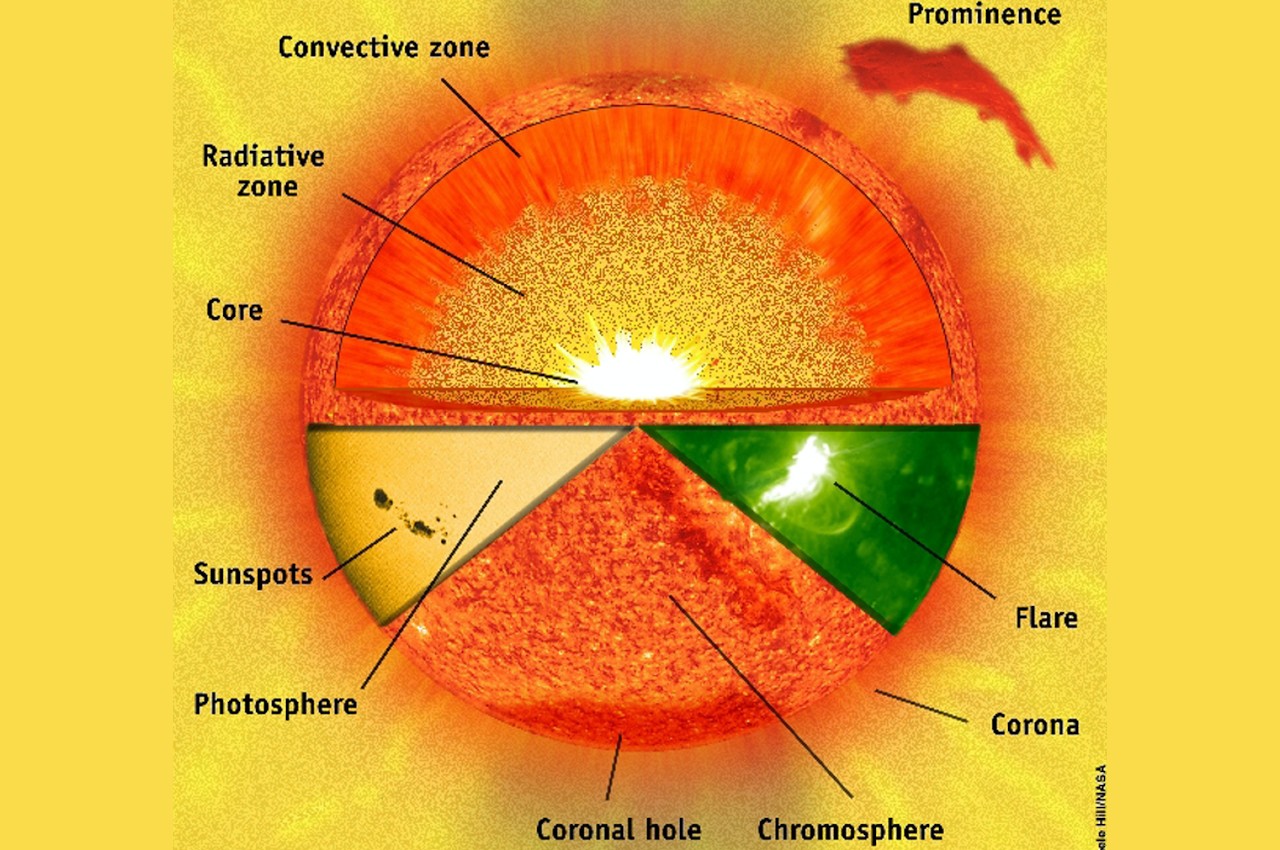
The Sun isn’t a uniform ball of gas. It’s a complex, layered structure, each with distinct characteristics and playing a vital role in the Sun’s overall function. These layers are the result of the intense energy generated at its core and the outward flow of that energy.
The Core: The Heart of Fusion
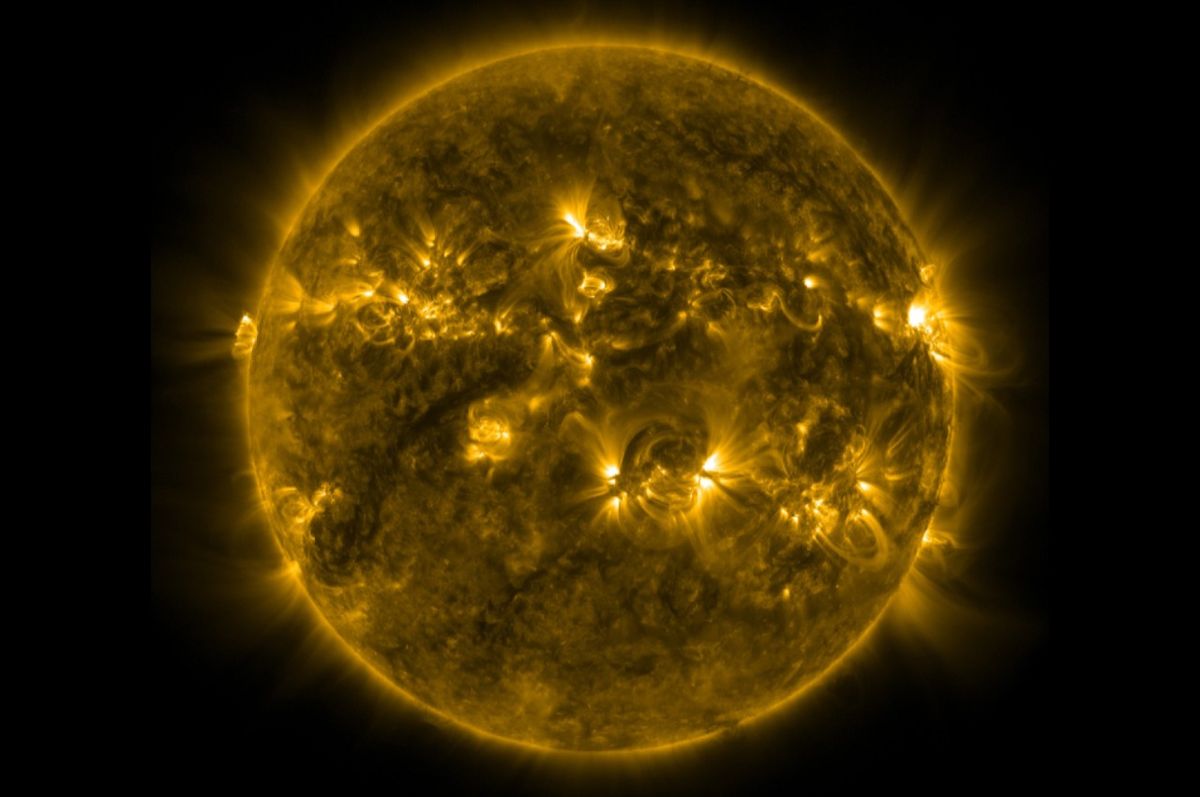
The Sun’s core is where all the magic happens. It’s a region of incredibly high temperature and pressure, estimated to be around 15 million degrees Celsius. It’s here that hydrogen nuclei overcome their electrostatic repulsion and fuse to form helium, releasing the enormous energy that powers the Sun. The core is incredibly dense, more so than any solid on Earth. The energy produced in the core takes hundreds of thousands of years to travel to the Sun’s surface, a journey through the radiative and convective zones.
The Radiative Zone: A Slow Energy Transfer
Surrounding the core is the radiative zone. In this region, energy is transported outwards by photons (particles of light). These photons are constantly absorbed and re-emitted by the plasma, making their journey through this zone incredibly slow. It’s a process of countless interactions, each step subtly nudging the energy towards the surface. The high density and temperature in this zone mean that light struggles to travel freely.
The Convective Zone: Boiling Plasma
As the energy moves further out, it reaches the convective zone. Here, the plasma is cooler and less dense. Instead of photon transport, energy is transferred through convection. Hot plasma rises, cools as it nears the surface, releases its heat, and then sinks back down, creating giant convective currents. This process is akin to boiling water, where hotter water rises and cooler water sinks. These convective currents are responsible for churning the Sun’s surface and play a role in generating its magnetic field.
The Photosphere: The Visible Surface
The photosphere is the visible surface of the Sun, the layer we perceive as the Sun’s disc. It’s about 5,500 degrees Celsius and is where most of the light we see originates. Sunspots, those darker, cooler regions on the Sun’s surface, are found here. These are areas of intense magnetic activity that inhibit convection, leading to lower temperatures. Studying sunspots offers insights into the Sun’s magnetic field and its cycles of activity, which directly impact Brand reputation in terms of satellite communication and space exploration risks.
The Chromosphere and Corona: The Sun’s Atmosphere
Above the photosphere lie the chromosphere and the corona, the Sun’s outer atmosphere. The chromosphere is a reddish layer visible during solar eclipses, while the corona is the ethereal, wispy outer atmosphere that extends millions of kilometers into space. The corona is surprisingly hotter than the photosphere, a phenomenon that scientists are still trying to fully understand. It’s in the corona that solar flares and coronal mass ejections occur – powerful bursts of energy and particles that can have significant impacts on Earth, affecting our technological infrastructure and even influencing the Money markets through disruptions to satellite-based financial services.
The Sun’s Influence: Beyond Heat and Light
The Sun’s composition and structure are not merely abstract scientific facts; they are the fundamental drivers of phenomena that profoundly impact our planet, our technologies, and even our economies. Understanding these connections reveals a deeper appreciation for the Sun’s ubiquitous influence.
Energy Generation and Technological Innovation
The Sun’s primary output, light and heat, is the ultimate source of energy for Earth. This energy drives weather patterns, sustains ecosystems, and is harnessed by humans for countless purposes. Solar power, a rapidly growing renewable energy sector, directly capitalizes on the Sun’s fusion output. The efficiency and scalability of solar technologies are directly linked to our understanding of the Sun’s energy spectrum and its variability. This is a prime example of how fundamental science in Tech drives practical innovation. The development of more efficient solar panels, energy storage solutions, and grid management systems all rely on this knowledge.
Space Weather and Digital Security
The Sun is a dynamic entity, constantly releasing charged particles and magnetic fields into space. This outflow, known as the solar wind, is responsible for phenomena like the aurora borealis. However, more powerful events like solar flares and coronal mass ejections (CMEs) can have significant consequences for our technologically dependent society. These events can disrupt satellite communications, interfere with GPS signals, damage power grids, and even pose risks to astronauts. Therefore, understanding the Sun’s composition and its activity cycles is crucial for predicting and mitigating the impacts of space weather. This is a direct concern for Digital Security, as critical infrastructure relies on the stability of our technological systems. Companies and governments invest heavily in space weather forecasting and protective measures.
Economic Implications and Resource Management
The Sun’s influence extends to economic activities in subtle yet significant ways. Agriculture, for example, is entirely dependent on sunlight for plant growth. Changes in solar output or solar-induced climate shifts can impact crop yields, affecting food prices and global food security. Furthermore, the development and deployment of solar energy technologies represent a significant economic sector. Investments in this area, driven by the need for sustainable energy and the understanding of solar physics, are reshaping the global Money landscape. The financial markets themselves can be indirectly affected by major solar events that disrupt critical communication and trading infrastructure.
Personal Branding and Scientific Literacy
While not as direct, the Sun’s power and mystery have long captured the human imagination. Understanding the Sun’s composition and its role in the universe can foster a sense of awe and wonder, encouraging scientific literacy. This scientific curiosity can, in turn, inspire individuals to pursue careers in STEM fields, contributing to innovation and progress. In a broader sense, understanding fundamental scientific principles allows for better decision-making, both individually and societally, and can even influence how we perceive our place in the cosmos, impacting our personal narratives and sense of purpose. This is a subtle but important link to the Brand of scientific inquiry and human endeavor.
In conclusion, the question “what is the Sun made up of” opens a gateway to understanding the fundamental forces that govern our solar system and beyond. From the fusion of hydrogen and helium in its core to the complex interplay of its atmospheric layers, the Sun is a testament to the power and beauty of cosmic processes. This knowledge is not confined to the realm of astrophysics; it directly informs technological advancements, influences our economic realities, and shapes our understanding of the universe we inhabit. The Sun, in all its fiery glory, continues to be a source of endless fascination and a critical pillar of our existence.
aViewFromTheCave is a participant in the Amazon Services LLC Associates Program, an affiliate advertising program designed to provide a means for sites to earn advertising fees by advertising and linking to Amazon.com. Amazon, the Amazon logo, AmazonSupply, and the AmazonSupply logo are trademarks of Amazon.com, Inc. or its affiliates. As an Amazon Associate we earn affiliate commissions from qualifying purchases.