
In the dynamic and often unpredictable world of investing, savvy traders and long-term investors alike constantly seek tools to mitigate risk, protect capital, and execute their strategies with precision. Among the most fundamental yet powerful of these tools is the stop buy order. Far from a simple instruction to purchase an asset, a stop buy order is a conditional directive that plays a crucial role in both risk management for short sellers and strategic entry for those looking to capitalize on upward momentum. Understanding its nuances, types, and practical implications is essential for anyone serious about disciplined financial trading.
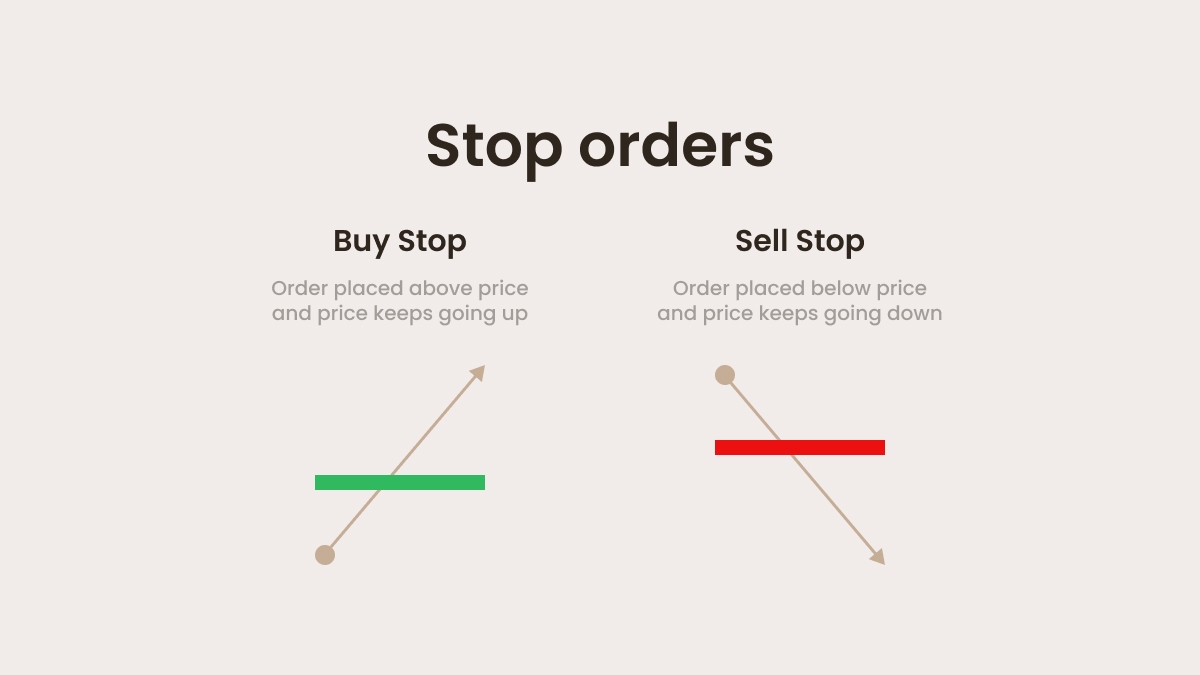
At its core, a stop buy order is an instruction given to a broker to buy a security once its price reaches or surpasses a specified level, known as the “stop price.” It’s important to recognize that a stop buy order is not an immediate market order to buy; rather, it becomes a market order (or a limit order, depending on the type) only after the trigger condition – the stop price – is met. This conditional nature is what makes it such a valuable instrument, allowing investors to pre-program their responses to specific market movements without constant manual oversight.
The Mechanics and Purpose of Stop Buy Orders
To fully grasp the utility of a stop buy order, it’s imperative to understand the mechanics of how it functions and the distinct purposes it serves within an investment strategy. It acts as an automated mechanism, designed to execute a trade when predefined market conditions are met, thereby removing emotion from critical trading decisions.
Defining the Stop Price
The “stop price” is the linchpin of any stop buy order. This is the specific price point that, when touched or exceeded by the market price of a security, activates the stop buy order. It serves purely as a trigger. For a standard stop market buy order, once this trigger is hit, the order transforms into a market order and is executed at the next available market price. Crucially, the execution price may not be exactly the stop price, particularly in fast-moving or illiquid markets, due to a phenomenon called slippage.
Stop Buy for Short Positions (Risk Management)
One of the primary and most critical applications of a stop buy order is in managing risk for short sellers. When an investor “shorts” a stock, they borrow shares and sell them, hoping to buy them back later at a lower price to profit from the decline. The risk with short selling is theoretically unlimited, as a stock’s price can rise indefinitely.
A stop buy order is used by short sellers to cap potential losses. If a shorted stock begins to rise unexpectedly, hitting the predefined stop buy price, the order activates, forcing the short seller to buy back the shares. This action closes out the short position, preventing further losses as the stock continues its upward trajectory. For example, if an investor shorts XYZ stock at $100 and places a stop buy order at $105, they are essentially saying, “If this stock rises to $105, I want to cut my losses and buy it back.” This is a fundamental risk management technique for short-term traders engaging in short sales.
Stop Buy for Long Positions (Entry Strategy)
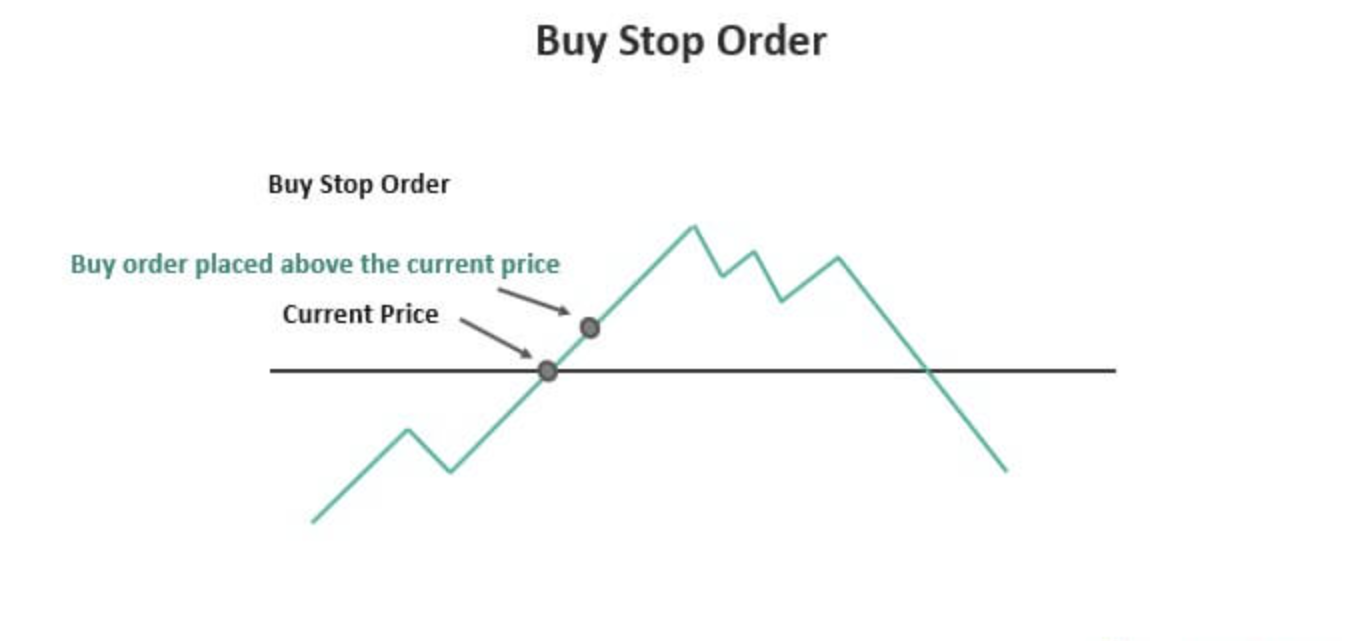
While less intuitive than its use for short positions, a stop buy order can also be a powerful tool for investors looking to initiate a long position (buying a stock outright with the expectation of its price increasing). In this context, it’s often referred to as a “stop-entry buy order.”
Investors might use a stop buy order to enter a long position only after a stock breaks above a significant resistance level. A resistance level is a price point that a stock has struggled to move past in the past. A decisive move above this level can signal strong upward momentum or a breakout. By setting a stop buy order just above this resistance, an investor ensures they only buy the stock if it convincingly demonstrates strength, thereby avoiding premature entry into a potentially struggling asset. For instance, if ABC stock has consistently faced resistance at $50, an investor might place a stop buy order at $50.50. This means they only buy if the stock proves it can sustainably trade above its previous ceiling.
Triggering a Market Order
It’s vital to reiterate that a standard stop buy order, once triggered by the stop price, becomes a market order. A market order is an instruction to buy or sell immediately at the best available current price. This ensures execution, but it does not guarantee a specific execution price. In volatile markets, the price at which the order is filled could be significantly higher than the stop price.
Differentiating Between Order Types
While the core concept of a stop buy order remains consistent, various types offer different levels of control over price and execution. Understanding these distinctions is crucial for tailoring the order to specific trading strategies and risk tolerances.
Stop Market Buy Order
This is the most straightforward and commonly understood form of a stop buy order. As discussed, once the market price reaches or exceeds the specified stop price, the order automatically converts into a market order.

- Pros: High likelihood of execution. Since it’s a market order, it typically gets filled quickly at the best available price once triggered.
- Cons: Susceptibility to slippage. In fast-moving markets or with thinly traded securities, the execution price can be substantially higher than the stop price, leading to larger-than-anticipated losses for short sellers or a less favorable entry price for long positions.
Stop-Limit Buy Order
The stop-limit buy order introduces an additional layer of control by combining the stop price with a “limit price.” When the stock price reaches or surpasses the stop price, the order doesn’t become a market order; instead, it becomes a limit order to buy at the specified limit price or better.
- Pros: Provides price control. An investor can specify the maximum price they are willing to pay, thereby avoiding significant slippage. This can be particularly useful for short sellers who want to limit losses but also avoid buying back shares at an exorbitant price during a sudden, sharp rally.
- Cons: No guarantee of execution. If the stock price moves very quickly past both the stop price and the limit price, the order may not be filled. The market may jump above the limit price before the order can be executed, leaving the investor’s position open.
Trailing Stop Buy (for Short Positions)
A trailing stop buy order is a more advanced and dynamic type, primarily used by short sellers to protect profits or continually adjust their risk exposure. Unlike a fixed stop price, a trailing stop price moves with the market.
For a short position, a trailing stop buy order is set at a fixed percentage or dollar amount above the current market price of the shorted stock. As the stock price falls (favorable for a short seller), the trailing stop price also falls, maintaining the specified distance above the new, lower market price. If the stock price then reverses and rises, hitting the adjusted trailing stop price, the order is triggered, and the short position is covered.
- Example: You short a stock at $100 and set a 10% trailing stop buy. Your initial stop is $110. If the stock drops to $90, your trailing stop automatically moves down to $99 ($90 + 10% of $90). If it then rises to $99, your order triggers, closing your short position.
- Pros: Allows short sellers to protect increasing profits as the stock price declines, without needing to manually adjust the stop price. It offers a “set it and forget it” mechanism for dynamically managing risk.
- Cons: Can be triggered prematurely by normal market fluctuations if the trailing percentage is too tight, potentially cutting a winning short position short.
Strategic Benefits and Key Considerations
Integrating stop buy orders into an investment strategy offers numerous advantages, but it also comes with practical considerations and potential pitfalls that investors must navigate carefully.
Automating Disciplined Trading
One of the most significant benefits of stop buy orders is their ability to automate trading discipline. In the heat of the moment, emotions like fear and greed can override rational decision-making. By pre-setting stop buy orders, investors can ensure that their predefined risk parameters are adhered to, or their entry conditions are met, without emotional interference. This leads to a more systematic and consistent approach to trading. For short sellers, it enforces a loss-cutting discipline, preventing small losses from escalating into catastrophic ones. For long-position entries, it ensures that an investor only enters a trade when their technical analysis confirms a specific momentum shift.
Managing Risk and Capital
Effective risk management is paramount in investing, and stop buy orders are a cornerstone of this practice. For short sellers, they provide an essential safety net, protecting against potentially unlimited losses if a shorted stock unexpectedly skyrockets. By defining a maximum acceptable loss for each trade, investors can control their capital exposure and preserve their overall portfolio. For those using stop buy orders to enter long positions, it ensures that capital is only deployed when a stock demonstrates clear strength, reducing the risk of buying into a false breakout or a weak market.
The Challenge of Slippage
While market stop buy orders offer guaranteed execution, they are susceptible to slippage. Slippage occurs when the execution price differs from the stop price. This is particularly prevalent in volatile markets, during periods of low liquidity, or when there’s a significant news event. For example, if a stock gaps up overnight, a stop buy order might be triggered at a price significantly higher than the intended stop price. This can result in a larger loss for short sellers or a less favorable entry price for those looking to go long. Stop-limit buy orders can mitigate slippage, but at the cost of potential non-execution.
Setting Optimal Stop Prices
The effectiveness of a stop buy order heavily depends on where the stop price is set. An arbitrary stop price can be counterproductive. Optimal stop prices are typically determined through a combination of:
- Technical Analysis: Identifying key support and resistance levels, moving averages, or other chart patterns that signal potential reversals or breakouts.
- Volatility: Considering the historical price fluctuations of the security. A highly volatile stock might require a wider stop to avoid being triggered by normal price swings.
- Risk Tolerance: Personal financial capacity and willingness to accept risk play a crucial role.
Setting a stop too tight might lead to premature execution due to normal market noise, while setting it too wide could expose an investor to unacceptable losses.
The Importance of Review
Stop buy orders are not “set it and forget it” tools, especially for long-term positions or in rapidly changing market conditions. It’s crucial for investors to regularly review and, if necessary, adjust their stop prices. Market dynamics, news events, and changes in a company’s fundamentals can all impact what constitutes an appropriate stop level. Active management, even with automated orders, is a hallmark of successful investing.
Conclusion
A stop buy order is an indispensable tool in the investor’s arsenal, embodying the principles of disciplined trading and proactive risk management. Whether used by short sellers to safeguard against devastating losses or by astute investors to strategically enter long positions amidst confirmed momentum, its conditional nature offers a powerful mechanism for automating trade execution. By understanding the distinctions between stop market, stop-limit, and trailing stop buy orders, and by carefully considering factors like slippage and optimal stop placement, investors can harness the full potential of these orders. In an environment where every decision counts, the thoughtful application of stop buy orders can significantly enhance an investor’s ability to navigate market complexities, protect capital, and consistently execute a well-defined trading strategy.
aViewFromTheCave is a participant in the Amazon Services LLC Associates Program, an affiliate advertising program designed to provide a means for sites to earn advertising fees by advertising and linking to Amazon.com. Amazon, the Amazon logo, AmazonSupply, and the AmazonSupply logo are trademarks of Amazon.com, Inc. or its affiliates. As an Amazon Associate we earn affiliate commissions from qualifying purchases.