
The question “what is the smallest number?” seems deceptively simple, a query that might emerge from a curious child or a programmer grappling with data types. Yet, upon closer examination, it unlocks a universe of mathematical concepts, stretching from the foundational principles of arithmetic to the cutting edge of theoretical physics and the practicalities of digital representation. This exploration will delve into the profound implications of this seemingly straightforward question, weaving through the intricate tapestry of numbers, their properties, and their representation across the realms of technology, business, and personal finance.
The Illusive Nature of “Smallest”
At its most basic, within the familiar landscape of natural numbers (1, 2, 3, …), the smallest number is unequivocally 1. This is our starting point, the first positive whole number, the building block for counting. However, the moment we venture beyond this simple definition, the concept of “smallest” begins to fragment and multiply.
Expanding the Number Line: Introducing Zero and Negatives
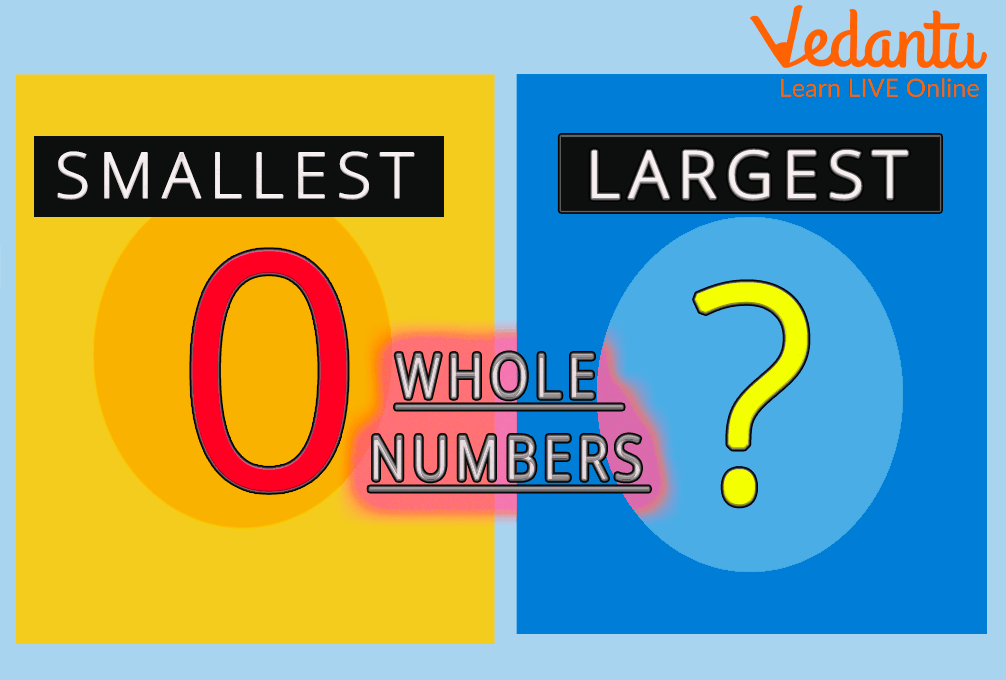
If we include whole numbers, which are natural numbers plus zero (0, 1, 2, 3, …), then 0 becomes the smallest non-negative integer. Zero is a pivotal concept, representing absence, nullity, and the origin point on a number line. Its discovery and integration into mathematics were revolutionary, enabling more sophisticated calculations and abstract reasoning.
The introduction of integers (…, -3, -2, -1, 0, 1, 2, 3, …) shatters the notion of a single “smallest” number. The number line now extends infinitely in both positive and negative directions. For any negative number you can conceive, however small (meaning, however far to the left on the number line), you can always find a smaller one by simply adding another negative sign or multiplying by -1. This concept of unboundedness is critical. There is no absolute smallest integer.
Rational and Irrational: A Continuum of Smallness
Our journey doesn’t stop at integers. Rational numbers encompass all numbers that can be expressed as a fraction $p/q$, where $p$ and $q$ are integers and $q$ is not zero. This includes decimals that terminate or repeat. Between any two rational numbers, no matter how close they are, there always exists another rational number. For instance, between 0.1 and 0.2, you have 0.11, 0.101, 0.1001, and so on, infinitely. This property means that even within the rational numbers, there’s no single “smallest” positive rational number other than approaching zero.
Then come the irrational numbers, like $pi$ or $sqrt{2}$, which cannot be expressed as a simple fraction. These numbers have non-terminating, non-repeating decimal expansions. The set of real numbers, which combines rational and irrational numbers, forms a continuous line. Just as with integers, there is no smallest positive real number. We can always find a number infinitesimally closer to zero.
The Tiny Titans: Approaching Zero
The question “what is the smallest number?” often implicitly refers to the smallest positive number. In this context, we are talking about numbers that are incredibly close to zero, but not zero itself. This is where concepts like infinitesimals and the limits of sequences become relevant, particularly in calculus.
Infinitesimals: Numbers Smaller Than Any Positive Number
Historically, the concept of infinitesimals was used by mathematicians like Newton and Leibniz to develop calculus. An infinitesimal can be thought of as a quantity that is smaller than any positive real number, yet not zero. While modern calculus is rigorously defined using limits, the intuitive idea of an infinitesimal is still powerful. It represents a conceptual leap into a realm where numbers can be arbitrarily close to zero. In some non-standard analysis frameworks, infinitesimals are given a formal footing.
Limits and Sequences: The Dance Towards Zero
In calculus, we study the behavior of functions as their input approaches a certain value, often zero. A sequence of numbers like $1, 1/2, 1/4, 1/8, …$ gets progressively smaller, with each term approaching zero. The limit of this sequence is 0. This demonstrates that we can construct sequences of numbers that get arbitrarily close to zero, proving that there is no smallest positive number within the real number system. This understanding is fundamental in various fields, from physics modeling to financial forecasting.
Numbers in the Digital Age: Constraints and Representations

While mathematics allows for an infinite continuum of numbers, the real world, especially the digital realm, imposes constraints. When we talk about the “smallest number” in a practical technological or financial context, we are often referring to the smallest representable value within a given system.
The Smallest Unit: Floating-Point Precision
In computer science, numbers are stored using finite precision. The most common way to represent real numbers is using floating-point formats (like IEEE 754). These formats have a limited number of bits to store a number, which means there’s a smallest positive number that can be represented. This smallest positive number is often referred to as the machine epsilon, although it’s more accurately the smallest representable number greater than zero.
For example, in single-precision floating-point (32-bit), the smallest positive normalized number is approximately $1.175 times 10^{-38}$. Below this, we have denormalized numbers, which can represent even smaller magnitudes but with reduced precision. The existence of these smallest representable numbers is crucial for understanding the limitations of numerical computation and the potential for numerical errors. This has direct implications for software development, data analysis, and the accuracy of AI tools.
The Tiny Denominations: Smallest Currency Units
In the world of money, the concept of the “smallest number” takes on a tangible form: the smallest denomination of currency. In the United States, this is the cent (0.01 dollar). In other countries, it might be a fraction of a cent if transactions can occur at that level, or a larger smallest coin. However, even here, the idea of divisibility suggests that conceptually, money can be divided into ever smaller units. This is explored in personal finance when considering micro-investments or the impact of minuscule transaction fees over time.
The Building Blocks: Smallest Data Values in Technology
In digital security, the smallest meaningful unit of data can be a single bit (0 or 1). However, when considering numerical values within security protocols or algorithms, the smallest representable number within the defined data types (like a 16-bit unsigned integer, with a smallest value of 0) becomes significant. The ability to handle extremely small numbers is also vital in areas like cryptography and blockchain technology, where vast quantities and minuscule differences can have profound security implications.
The Philosophical and Practical Implications
The question “what is the smallest number?” forces us to confront the limits of our understanding and the practicalities of our tools. It’s a gateway to appreciating the elegance of mathematical abstraction while simultaneously grounding ourselves in the tangible constraints of the physical and digital worlds.
Brand Identity and the “Smallest” Differentiator
In the realm of brand strategy and personal branding, the concept of “smallest” can be reframed as the most subtle yet impactful differentiator. A successful brand isn’t always about being the biggest or the loudest; sometimes, it’s about identifying and amplifying a unique, even seemingly small, aspect of its identity or offering. This could be a meticulous attention to detail, a niche customer service approach, or a unique design element. Understanding what constitutes the “smallest” meaningful difference can be the key to carving out a distinct corporate identity and building a strong reputation.
Financial Precision and the Tiniest Gains
For investors and those pursuing online income or side hustles, the “smallest number” often translates to the smallest profit or the smallest transaction. While a single cent might seem insignificant, the aggregation of these tiny gains over time, especially with compound interest, can lead to substantial wealth accumulation. This is the essence of many personal finance strategies. Conversely, even the smallest fees or losses can erode profits, highlighting the importance of understanding financial tools and making informed decisions that account for even the minutest financial impacts. Business finance professionals also grapple with managing incredibly small operational costs or profit margins that, in aggregate, define profitability.
Technological Innovation and the Limits of Scale
In technology, the pursuit of ever-smaller components has driven innovation for decades, from shrinking transistors to developing microscopic sensors. The “smallest number” here relates to the limits of miniaturization and the potential for quantum computing, where the smallest quantum states become the building blocks. Understanding these limits, whether in hardware or software, is crucial for productivity and for developing the next generation of gadgets and AI tools. Digital security also benefits from understanding the smallest possible vulnerabilities or the most intricate patterns that could indicate a breach.
Conclusion: A Universe of Smallness
Ultimately, the answer to “what is the smallest number?” is multifaceted and dependent on context. Mathematically, in the realm of real numbers, there is no smallest positive number; we can always get closer to zero. However, in practical applications, from the precision of floating-point numbers in software to the smallest denominations in money, there are inherent limitations. The question serves as a powerful reminder of the interconnectedness of abstract mathematical concepts and their tangible impact across technology, business, and our personal lives. It encourages a deeper appreciation for the nuances of quantity, precision, and the infinite potential that lies both in the grandest and the most infinitesimally small of numbers.
aViewFromTheCave is a participant in the Amazon Services LLC Associates Program, an affiliate advertising program designed to provide a means for sites to earn advertising fees by advertising and linking to Amazon.com. Amazon, the Amazon logo, AmazonSupply, and the AmazonSupply logo are trademarks of Amazon.com, Inc. or its affiliates. As an Amazon Associate we earn affiliate commissions from qualifying purchases.