
In the contemporary digital landscape, the question “What’s on Showtime?” has shifted from a query about television schedules to a complex exploration of streaming architecture, software integration, and high-fidelity content delivery. Showtime, a long-standing titan of premium cable, has undergone a massive technological metamorphosis. Now integrated into the Paramount+ ecosystem, the platform represents a case study in how legacy media transforms into a tech-first streaming service. This article explores the technological infrastructure, the user experience design, and the advanced digital features that define the modern Showtime experience.
The Integration Frontier: Showtime Meets Paramount+
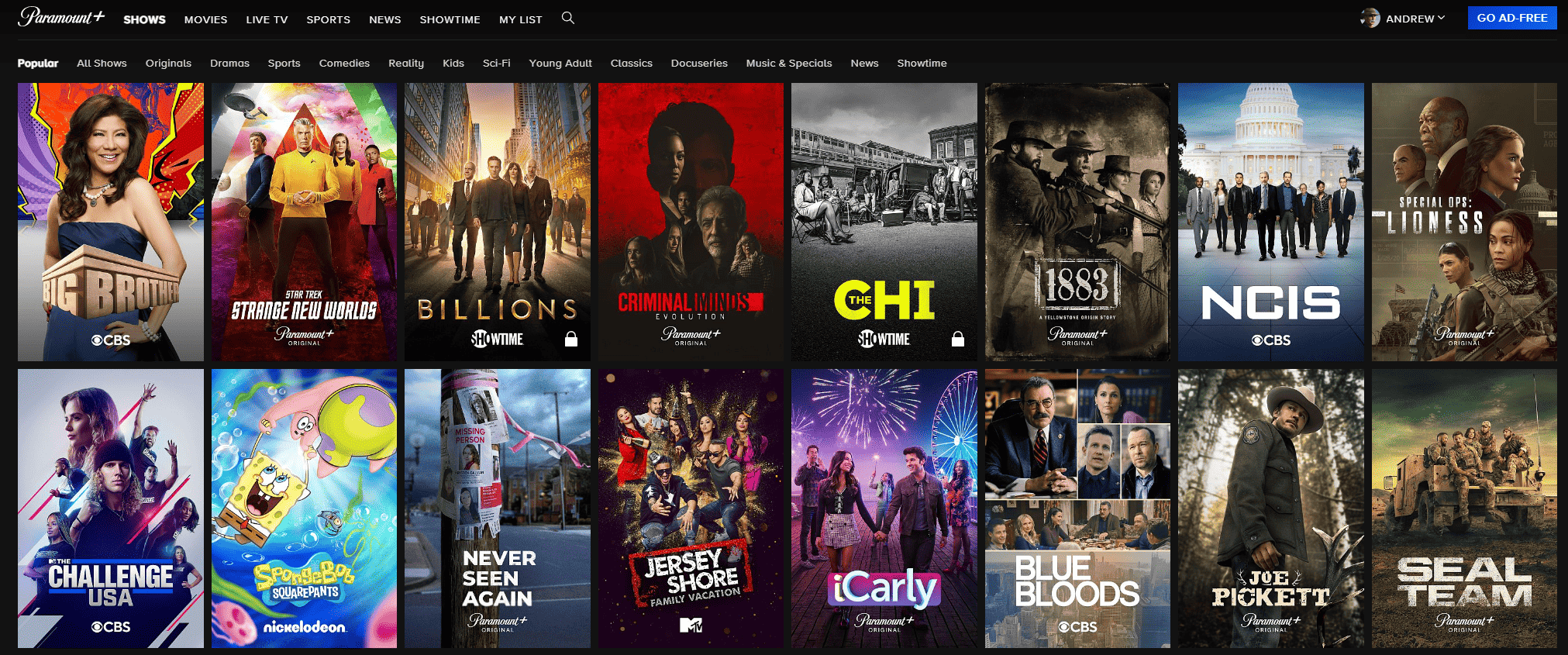
The most significant technological shift for Showtime in recent years is its structural integration into the Paramount+ platform. This was not merely a branding exercise but a massive backend migration designed to consolidate data, improve server efficiency, and streamline the user journey.

The Software Merge: Consolidating the Tech Stack
Transitioning from a standalone “Showtime Anytime” or “Showtime OTT” application to a unified “Paramount+ with Showtime” experience required a sophisticated overhaul of the tech stack. Developers had to migrate millions of user profiles, watch histories, and billing credentials into a centralized database. This involved complex API (Application Programming Interface) management to ensure that legacy Showtime subscribers could access their content through the Paramount+ interface without losing data integrity. The result is a more robust microservices architecture that allows for faster updates and fewer system-wide crashes during high-traffic premieres.
User Experience (UX) and Interface Navigation
From a technical design perspective, the integration focuses on reducing “click friction.” The UX designers implemented a specialized “hub” architecture. Within the Paramount+ app, Showtime exists as a premium brand node. The interface utilizes a horizontal scrolling logic and dynamic carousels that are populated in real-time based on the user’s subscription tier. The technical challenge here lies in “entitlement logic”—the code that checks in milliseconds whether a user has the specific rights to view Showtime content versus standard Paramount+ content—ensuring a seamless transition between the two libraries.
The Hardware Compatibility Layer: Where to Stream
The versatility of a streaming service is often defined by its hardware abstraction layer—the ability of the software to run efficiently across a multitude of devices with varying processing power and operating systems.
Smart TV Ecosystems and Dedicated Apps
Modern streaming requires Showtime to maintain compatibility with a fragmented market of operating systems, including Samsung’s Tizen, LG’s WebOS, and Sony’s Android TV integration. Each of these platforms requires specific optimization. For instance, the tech team must ensure that the app’s memory footprint is small enough to run on older smart TVs while still being powerful enough to leverage the hardware acceleration of the latest 4K processors. This involves rigorous beta testing across various chipsets to ensure that the video player doesn’t stutter and that the navigation remains responsive.
Mobile and Tablet Optimization
On the mobile side, the Showtime experience is optimized for both iOS and Android, focusing on adaptive bitrate streaming. This technology allows the app to detect the user’s internet speed in real-time and adjust the video quality accordingly. If you are on a 5G network, the app pushes a high-bitrate 1080p or 4K stream; if you enter a zone with poor reception, the software automatically downscales the resolution to prevent buffering. Furthermore, the implementation of “download-to-go” features utilizes advanced encryption to store content locally on the device while respecting digital rights management (DRM) protocols.
Advanced Streaming Features and Technical Specifications

For the tech-savvy viewer, “what’s on Showtime” is as much about how it looks as what is playing. The platform has significantly upgraded its technical delivery to meet the demands of modern home theaters.
4K UHD and HDR Support: A Visual Deep Dive
Showtime has expanded its support for 4K Ultra High Definition (UHD) and High Dynamic Range (HDR). From a technical standpoint, this involves the use of the HEVC (High-Efficiency Video Coding) or H.265 codec. This codec allows for the delivery of high-resolution video at manageable bitrates, ensuring that 4K content doesn’t overwhelm the average household’s bandwidth. The integration of Dolby Vision and HDR10+ metadata ensures that the luminosity and color accuracy of cinematic hits like Yellowjackets or Billions are reproduced exactly as the cinematographers intended, regardless of the screen’s peak brightness capabilities.
Audio Fidelity: Spatial Audio and Surround Sound Tech
Beyond the visuals, the tech behind Showtime’s audio delivery is equally impressive. The platform supports Dolby Atmos on compatible devices, providing an immersive, three-dimensional soundstage. This is achieved through object-based audio coding, where sound is not just assigned to a channel (like left or right) but is treated as a coordinate in a 3D space. For users with standard setups, the platform utilizes sophisticated downmixing algorithms to ensure that dialogue remains crisp and clear even when compressed into stereo or 5.1 surround sound.
Digital Security and Account Management
In an era of increasing cyber threats and digital piracy, the security infrastructure supporting Showtime is paramount. The platform employs several layers of tech to protect both the content and the user’s personal information.
Multi-Factor Authentication (MFA) and Privacy Settings
To combat account takeovers and credential stuffing attacks, the platform has integrated more robust authentication protocols. While traditional password entry remains the norm, the backend now utilizes behavioral analytics to detect suspicious login attempts. If a login occurs from a geographically improbable location, the system triggers additional verification steps. Furthermore, the platform adheres to strict GDPR and CCPA standards, giving users technical tools to manage their data footprint, opt out of tracking, and view their data usage logs.
Managing Bandwidth and Offline Viewing Technology
One of the more underrated technical features is the offline viewing module. This involves the use of temporary “tokens” that authorize a device to play a file without a live internet connection for a set period. The files are typically wrapped in a proprietary container that prevents them from being exported or played in third-party media players. Additionally, the app includes “Data Saver” modes, which allow users to manually cap the bitrate. This is a crucial feature for users on metered data plans, utilizing server-side transcoding to deliver the best possible image at the lowest possible data cost.
The Future of the Platform: AI and Personalization
As we look toward the future of what’s on Showtime, the focus is shifting toward Artificial Intelligence (AI) and Machine Learning (ML) to enhance the discovery process and operational efficiency.
Recommendation Engines and Machine Learning
The “What’s on” experience is increasingly curated by algorithms. By analyzing millions of data points—including watch time, search queries, and even the time of day a user watches—the machine learning model builds a predictive profile. This isn’t just about suggesting similar genres; it’s about “content affinity” mapping. If the data shows that users who watch high-stakes dramas also tend to enjoy specific types of documentaries, the AI will prioritize those in the “Recommended for You” section. This technical layer helps reduce “choice fatigue,” a common issue in the saturated streaming market.
The Next Wave of Streaming Codecs: AV1 and Beyond
Technologically, the platform is eyeing the adoption of the AV1 codec. AV1 is an open-source, royalty-free video coding format that offers 30% better compression than HEVC. For the user, this means even higher quality video with less data usage and faster load times. While hardware support for AV1 is still rolling out across new TVs and smartphones, the software infrastructure is being prepared to support this next leap in video efficiency.
In conclusion, “What’s on Showtime” is a question answered by a sophisticated web of cloud computing, advanced video codecs, and intuitive UI design. By merging with Paramount+, Showtime has secured its place in a high-tech future where the delivery of content is as important as the content itself. Whether it’s through 4K Dolby Vision streams, AI-driven recommendations, or cross-platform synchronization, the technology remains the silent engine driving the premium entertainment experience.
aViewFromTheCave is a participant in the Amazon Services LLC Associates Program, an affiliate advertising program designed to provide a means for sites to earn advertising fees by advertising and linking to Amazon.com. Amazon, the Amazon logo, AmazonSupply, and the AmazonSupply logo are trademarks of Amazon.com, Inc. or its affiliates. As an Amazon Associate we earn affiliate commissions from qualifying purchases.