
In the vast and ever-evolving landscape of technology, where new communication protocols emerge with bewildering frequency, it might seem anachronistic to dedicate an entire discussion to a standard that first saw the light of day in 1960. Yet, the RS-232 standard, officially known as “Recommended Standard 232,” holds a remarkably enduring and significant position, particularly in specialized technical domains. Far from being a relic confined to history books, RS-232 remains a workhorse in countless industrial, commercial, and even niche consumer applications worldwide. Understanding RS-232 isn’t just about appreciating a piece of historical engineering; it’s about comprehending a fundamental building block that laid the groundwork for much of our modern interconnected world, influencing everything from how early computers talked to modems, to how sophisticated industrial machinery communicates today. This article will delve into the intricacies of RS-232, exploring its origins, technical specifications, diverse applications, and its unexpected persistence in an era dominated by USB, Ethernet, and wireless technologies, firmly rooting its relevance within the broader sphere of technology trends and practical application.

The Genesis and Evolution of RS-232: A Foundation of Digital Communication
The birth of RS-232 wasn’t driven by a desire for revolutionary consumer tech, but by a very practical and pressing need in the mid-20th century: how to get different pieces of electronic equipment to communicate reliably over distances, especially between data terminal equipment (DTE) like computers and data circuit-terminating equipment (DCE) like modems. This necessity gave rise to a standard that would define serial communication for decades, profoundly impacting the burgeoning tech industry and setting a precedent for future interface design.
Historical Context and Standardization
Before RS-232, connecting disparate electronic devices was often a bespoke, laborious process, requiring custom interfaces for each pairing. The Electronic Industries Alliance (EIA), a trade organization, recognized the need for a unified standard to ensure interoperability. In 1960, they released RS-232, which outlined a common method for transmitting serial data. The initial versions focused heavily on the interface between teletypewriters, modems, and early computers, reflecting the telecommunications landscape of the time. The standard has undergone several revisions over the years, most notably RS-232-C (1969), RS-232-D (1987), and RS-232-E (1991), with the TIA (Telecommunications Industry Association) eventually joining the EIA to become EIA/TIA-232. Each revision primarily clarified specifications and incorporated minor technical updates, but the core principles remained largely consistent. This standardization was a monumental step, allowing manufacturers to design equipment with confidence that it would “plug and play” with other compliant devices, a concept we now take for granted in everything from our smartphones to our smart home gadgets.
Early Applications and Ubiquity
In its heyday, RS-232 was virtually synonymous with computer connectivity. It was the primary port for connecting external modems, which were crucial for early internet access and remote data exchange. Printers, plotters, and other peripheral devices frequently relied on RS-232 for communication with host computers. For “Tech” enthusiasts and professionals of the 70s, 80s, and even 90s, the distinctive DB-25 or later DB-9 connector was a familiar sight on the back of every PC. This widespread adoption meant that skills in configuring and troubleshooting RS-232 connections were essential for IT professionals, forming a foundational part of digital security and productivity in early computing environments. Its reliability and established presence made it the default choice for a vast array of applications, cementing its status as an indispensable part of the technological infrastructure.
Technical Deep Dive: Unpacking the RS-232 Standard
To understand why RS-232 persisted for so long and where it still finds relevance, it’s crucial to grasp its underlying technical principles. Unlike modern parallel interfaces that send multiple bits simultaneously, RS-232 is a serial communication protocol, meaning it sends data one bit at a time over a single wire. This simplicity, combined with a robust electrical specification, contributed significantly to its longevity.
Core Electrical Characteristics
One of the defining features of RS-232 is its use of relatively high voltage levels for signal transmission, which contrasts sharply with the low-voltage signals of modern TTL (Transistor-Transistor Logic) or CMOS (Complementary Metal-Oxide-Semiconductor) circuits.
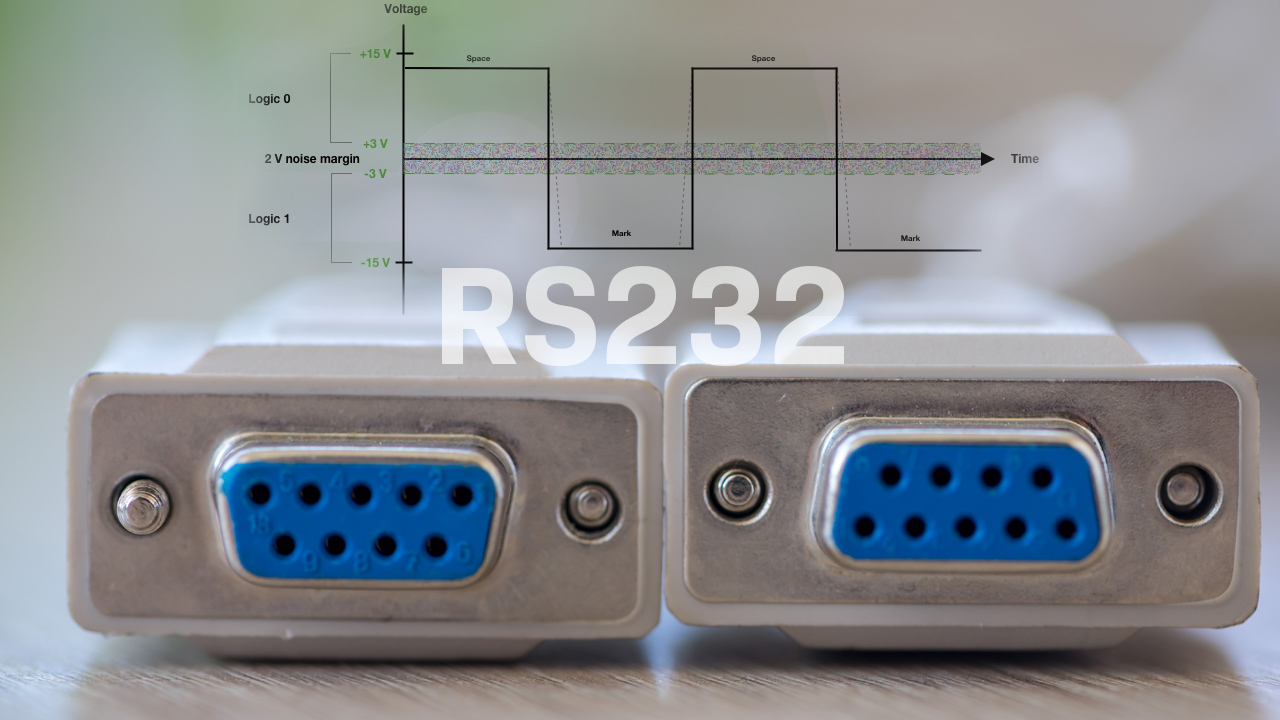
- Logic States: A positive voltage (typically +3V to +15V relative to ground) represents a logic ‘0’ (SPACE), while a negative voltage (typically -3V to -15V relative to ground) represents a logic ‘1’ (MARK). This inverted logic might seem counter-intuitive today but was designed for greater noise immunity over longer cable lengths.
- Voltage Levels: The drivers generate voltages typically between ±5V and ±12V. Receivers interpret any voltage above +3V as a ‘0’ and any voltage below -3V as a ‘1’. Voltages between -3V and +3V are considered undefined or a “dead zone,” providing hysteresis to prevent misinterpretation due to noise.
- Common Ground: RS-232 typically uses a common ground reference between the DTE and DCE. While simple, this can sometimes lead to issues with ground loops if the ground potentials differ significantly between devices, impacting signal integrity and potentially posing digital security concerns in industrial settings.
Pinouts and Connectors: DB-9 and DB-25
The physical connectors associated with RS-232 are instantly recognizable. While the standard originally specified a 25-pin D-subminiature connector (DB-25), the 9-pin version (DB-9) became more prevalent, especially with the rise of personal computers, as it was sufficient for most common applications and saved space.
Common DB-9 Pinout:
- Pin 1 (CD – Carrier Detect): Indicates if a modem has detected a carrier signal from another modem.
- Pin 2 (RxD – Receive Data): Data transmitted from the DCE to the DTE.
- Pin 3 (TxD – Transmit Data): Data transmitted from the DTE to the DCE.
- Pin 4 (DTR – Data Terminal Ready): DTE tells the DCE it’s ready to communicate.
- Pin 5 (GND – Signal Ground): Common reference for all signals.
- Pin 6 (DSR – Data Set Ready): DCE tells the DTE it’s ready to communicate.
- Pin 7 (RTS – Request To Send): DTE requests permission from DCE to send data.
- Pin 8 (CTS – Clear To Send): DCE grants permission to DTE to send data.
- Pin 9 (RI – Ring Indicator): Modem indicates an incoming call.
The precise function of each pin underscores RS-232’s origins in telecommunications, where signals like Carrier Detect and Ring Indicator were vital for modem operation.
Data Transmission and Flow Control
RS-232 communication is inherently asynchronous, meaning there is no separate clock signal transmitted alongside the data. Instead, both the sender and receiver must agree on a common data rate (baud rate), and each character transmitted is framed with start and stop bits to synchronize the receiving device.
- Asynchronous Transmission: Each character (typically 7 or 8 bits) is preceded by a start bit (logic 0) and followed by one or two stop bits (logic 1). An optional parity bit can be included for basic error checking. This method is efficient for transmitting data in bursts without constant clock synchronization.
- Full Duplex: RS-232 supports full-duplex communication, meaning data can be transmitted and received simultaneously, using separate transmit (TxD) and receive (RxD) lines. This significantly enhances productivity compared to half-duplex systems.
- Flow Control: To prevent data loss when one device sends data faster than the other can process it, RS-232 incorporates flow control mechanisms:
- Hardware Flow Control (RTS/CTS): The Request To Send (RTS) and Clear To Send (CTS) lines are dedicated control signals. When a device is ready to receive data, it asserts its CTS line. If it needs to pause, it de-asserts CTS. This is a robust and efficient method for physical data flow management.
- Software Flow Control (XON/XOFF): This method uses special characters (XON to resume, XOFF to pause) embedded within the data stream itself. While it requires fewer wires, it can be less reliable if data corruption affects the XON/XOFF characters.
The Enduring Legacy: Where RS-232 Found Its Niche
While RS-232 has largely disappeared from mainstream consumer electronics, its legacy is far from over. Its robustness, simplicity, and well-understood nature have allowed it to persist in critical applications, particularly where reliability and cost-effectiveness are paramount. This sustained relevance showcases how fundamental “Tech” solutions, even older ones, continue to contribute to “Money”-generating industries and enhance overall “Productivity.”

Industrial Automation and Control Systems
This is arguably where RS-232 shines brightest today. Industrial environments demand highly reliable communication, often over moderate distances, and with equipment that might be decades old.
- PLCs and SCADA Systems: Programmable Logic Controllers (PLCs) and Supervisory Control and Data Acquisition (SCADA) systems, which are the backbone of modern factories, power plants, and utility networks, frequently use RS-232 for programming, configuration, and data exchange with sensors, actuators, and human-machine interfaces (HMIs). The direct, point-to-point nature of RS-232 simplifies connectivity and reduces potential network complexity, making it a reliable choice for “Business Finance” investments in manufacturing infrastructure.
- CNC Machines and Robotics: Computer Numerical Control (CNC) machines, used in precision manufacturing, often rely on RS-232 for transmitting G-code programs. Robotics systems also utilize it for specific control and diagnostic functions, ensuring seamless operation and optimal “Productivity.”
- Data Loggers and Sensors: Many industrial sensors and data logging devices, especially those in harsh environments where electromagnetic interference is a concern, use RS-232 for transmitting collected data to a central controller or PC. Its voltage levels provide a level of noise immunity that lower-voltage standards might lack, contributing to data integrity and overall system “Digital Security” in terms of reliable data acquisition.
Networking and Telecommunications (Historical Perspective)
Historically, RS-232 was foundational for early wide area networks (WANs) and the burgeoning telecommunications industry. Modems, which converted digital computer signals into analog signals for transmission over phone lines, were universally equipped with RS-232 ports. This allowed computers to connect to bulletin board systems (BBSs) and, eventually, the early internet. While fiber optics and high-speed Ethernet have long since replaced RS-232 in the core network infrastructure, its pioneering role in enabling remote connectivity cannot be overstated, laying the conceptual groundwork for how we interact with online “Apps” and “AI Tools” today.
Debugging, Configuration, and Diagnostics
Beyond industrial control, RS-232 continues to be indispensable for the initial setup, configuration, and debugging of a wide range of embedded systems and network devices.
- Network Hardware: Many routers, switches, and firewalls still feature an RS-232 console port. IT professionals use these ports to establish a direct connection to the device for initial configuration, password recovery, or troubleshooting when the network interface itself is not yet operational. This is a critical “Digital Security” tool, as it offers a secure, out-of-band management channel.
- Embedded Systems Development: Engineers developing microcontrollers and other embedded systems frequently use RS-232 (or a UART, Universal Asynchronous Receiver/Transmitter, which implements RS-232-like serial communication) for debugging, firmware flashing, and sending diagnostic messages. Its simplicity makes it a quick and easy way to get textual output from a device during development, significantly aiding “Productivity” in the R&D phase.
- Medical Equipment: Some specialized medical devices, known for their long operational lifespans and stringent reliability requirements, still incorporate RS-232 for data transfer or control, where its proven stability is prioritized over cutting-edge speed.
Advantages and Limitations in the Modern Era
Like any technology, RS-232 comes with its own set of trade-offs. Understanding these allows us to appreciate why it endures in specific niches while being superseded in others.
Why it Persisted: Simplicity and Robustness
RS-232’s longevity is a testament to several inherent strengths:
- Simplicity: The protocol is relatively straightforward to implement in both hardware and software, requiring minimal processing power and basic logic circuits. This low complexity contributes directly to its “Cost-Effectiveness” for manufacturers and users.
- Robustness: The use of relatively high voltage swings (e.g., ±12V) makes RS-232 signals less susceptible to electrical noise over moderate distances compared to lower-voltage digital signals. This is particularly valuable in noisy industrial environments, contributing to “Digital Security” by ensuring reliable data transmission.
- Low Cost: The components required for RS-232 communication are inexpensive and widely available, which further reinforces its “Money” benefits for businesses seeking reliable yet affordable solutions.
- Well-Established Standard: Its long history means there’s a vast installed base of compatible equipment, extensive documentation, and a deep pool of experienced technicians, which aids “Productivity” by reducing learning curves and troubleshooting time.
- Point-to-Point Reliability: For direct device-to-device communication, RS-232 provides a dedicated, reliable channel without the overhead or potential conflicts of shared bus systems.
The Constraints: Speed, Distance, and Evolution
Despite its advantages, RS-232 faces significant limitations in the context of modern “Technology Trends”:
- Speed Limitations: RS-232 typically operates at modest baud rates, often maxing out around 115,200 bits per second (bps) for reliable communication, though some implementations can reach higher speeds. This is orders of magnitude slower than modern interfaces like USB (up to 20 Gbps for USB 3.2) or Ethernet (10 Gbps and beyond). This bottleneck severely limits its suitability for high-bandwidth applications, such as transferring large files or streaming video.
- Distance Constraints: While relatively robust to noise, RS-232 cables are generally limited to about 15-50 feet (5-15 meters) for reliable high-speed data transfer without using special low-capacitance cabling or line drivers/repeaters. Beyond this, signal degradation becomes an issue. This contrasts with Ethernet, which can span 100 meters, or fiber optics, which can transmit data over many kilometers.
- Single-Device Connection: RS-232 is fundamentally a point-to-point communication standard. You can connect only two devices directly (one DTE to one DCE) per port. This lacks the multi-device connectivity capabilities of bus architectures like USB or network protocols like Ethernet, which are central to modern “Gadgets” and “Apps.”
- Voltage Levels and Grounding: While beneficial for noise immunity, the higher voltage levels require dedicated driver/receiver ICs and can be less power-efficient than lower-voltage alternatives. The common ground scheme, as mentioned, can also lead to ground loop issues in complex setups.
- Connector Size: The DB-9 and especially DB-25 connectors are bulky compared to modern miniature connectors, making them impractical for compact “Gadgets” like smartphones or ultrabooks.
RS-232’s Place in Today’s Tech Landscape and Beyond
Despite its age and limitations, RS-232 continues to hold a strategic place in the modern technological ecosystem, primarily as a bridge between legacy systems and contemporary technology, and in specialized applications where its unique strengths outweigh its drawbacks.
Bridging the Old and New: USB-to-Serial Adapters
One of the most common ways RS-232 interacts with current “Tech” is through USB-to-serial converters. As modern computers rarely feature dedicated serial ports, these adapters provide a crucial link, allowing users to connect legacy RS-232 devices (like industrial control panels, older network gear, or specialized lab equipment) to the USB ports of contemporary laptops and desktops. These converters often include drivers that emulate a serial port, making the process relatively transparent to software. This functionality is vital for “Productivity” in environments where significant investment has been made in RS-232-based infrastructure, enabling continued use without costly upgrades. They effectively extend the lifespan and utility of valuable equipment, showcasing how older standards can coexist and integrate with newer “Technology Trends.”
Continued Relevance in Specialized Fields and Embedded Systems
Beyond industrial automation, RS-232, or its underlying UART principles, remains prevalent in various niche sectors:
- Point-of-Sale (POS) Systems: Many older cash registers, barcode scanners, and credit card terminals still communicate via RS-232. While newer systems often adopt USB or Ethernet, the simplicity and stability of serial ports ensure that existing retail “Business Finance” investments can continue to function reliably.
- Lab Equipment: Scientific and medical laboratory instruments, which often have long operational lifespans, frequently use RS-232 for data acquisition and control.
- Embedded Systems Development: For hobbyists and professional developers working with microcontrollers (e.g., Arduino, ESP32), UART (which forms the basis for RS-232-like serial communication) is a fundamental tool for debugging, flashing firmware, and basic communication with a host PC. This directly impacts “Productivity” in hardware and software development.
Future Outlook: A Niche, Not Obsolete
It’s clear that RS-232 will not be making a comeback in consumer electronics, nor will it be replacing high-speed interfaces like USB or Ethernet for general-purpose computing. However, to declare it obsolete would be to overlook its sustained and critical role in specific domains. As long as there is legacy industrial machinery, embedded systems that prioritize reliability over speed, and a need for simple, robust point-to-point communication, RS-232, or its derivatives like RS-485 (a multi-drop serial standard often built upon similar principles), will continue to be relevant. It serves as a powerful reminder that not all technological advancements mean outright replacement; sometimes, older standards carve out enduring niches based on their inherent strengths. In a world increasingly focused on “Technology Trends” and rapid innovation, the story of RS-232 is a testament to the lasting power of well-engineered simplicity and the financial wisdom of leveraging proven, cost-effective solutions for specific, mission-critical tasks.
aViewFromTheCave is a participant in the Amazon Services LLC Associates Program, an affiliate advertising program designed to provide a means for sites to earn advertising fees by advertising and linking to Amazon.com. Amazon, the Amazon logo, AmazonSupply, and the AmazonSupply logo are trademarks of Amazon.com, Inc. or its affiliates. As an Amazon Associate we earn affiliate commissions from qualifying purchases.