
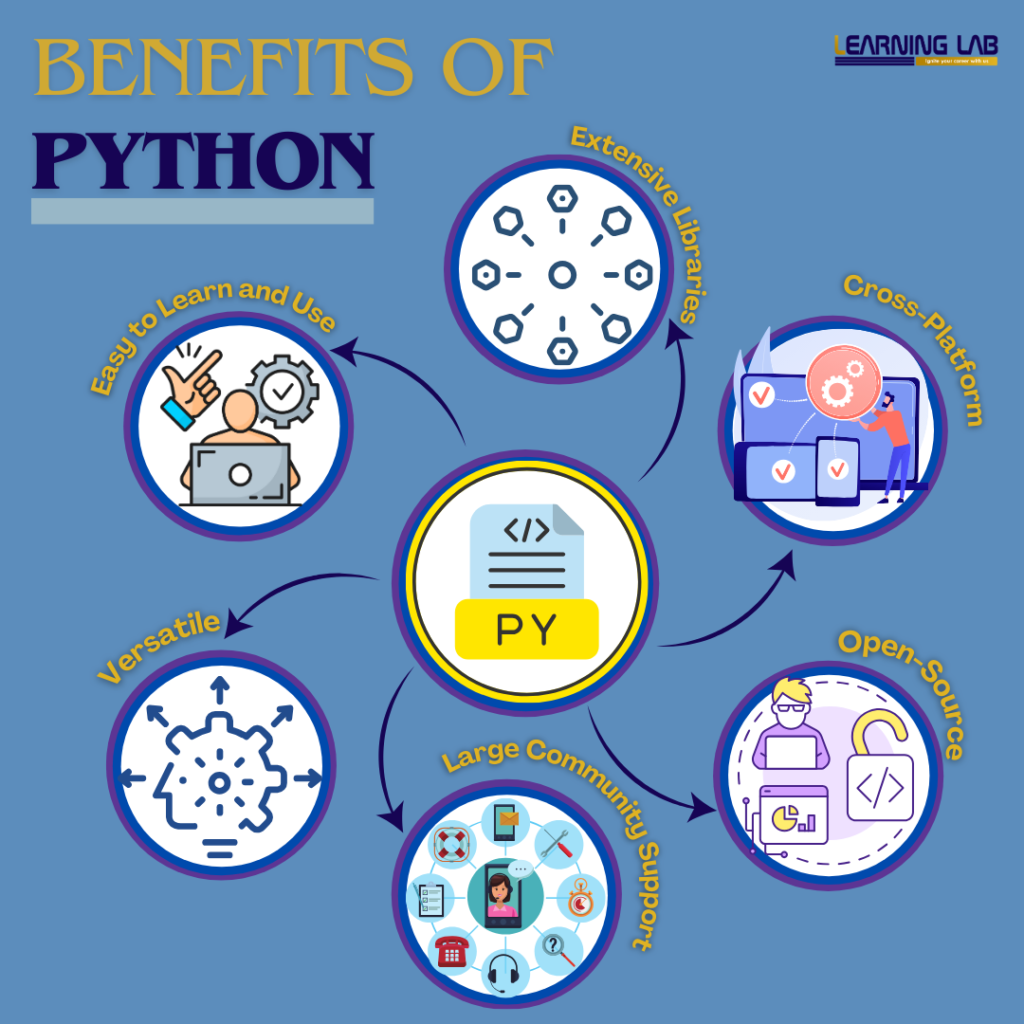
Python, a powerhouse in the programming world, has ascended to become one of the most versatile and widely adopted languages. Its elegant syntax, readability, and extensive libraries make it a go-to choice for a vast array of applications, spanning the domains of technology, business branding, and even personal finance. While its applications are incredibly broad, understanding its core strengths and primary use cases is key to appreciating its impact. This article delves into what Python is mainly used for, exploring its significant contributions across the technological landscape and touching upon how its adoption can indirectly influence branding and financial strategies.

Python’s Dominance in the Tech Landscape
At its heart, Python excels as a general-purpose programming language, meaning it’s not confined to a single niche. However, its design principles have naturally steered it towards specific areas where it shines brightly. The ease with which developers can write, read, and debug code in Python has fostered rapid development cycles, making it ideal for projects that demand agility and innovation.
1. Web Development: Powering the Internet’s Infrastructure
Python has established a robust presence in web development, empowering both front-end and back-end functionalities. Frameworks like Django and Flask have become industry standards for building scalable, secure, and dynamic web applications.
Django: The Full-Stack Framework
Django, a high-level Python Web framework, encourages rapid development and clean, pragmatic design. It follows the “batteries-included” philosophy, providing developers with almost everything they need out of the box to build a complex website or application. This includes an Object-Relational Mapper (ORM) for database interactions, a templating engine for dynamic content generation, and a robust administrative interface that can be customized to manage data. The security features built into Django, such as protection against common web vulnerabilities like cross-site scripting (XSS) and SQL injection, make it a reliable choice for businesses and individuals alike. Companies like Instagram and Spotify leverage Django to power their massive platforms, demonstrating its scalability and resilience.
Flask: The Lightweight and Flexible Option
In contrast, Flask is a microframework that offers a more minimalist approach. It provides the essential tools for web development but leaves many architectural decisions to the developer. This flexibility makes Flask ideal for smaller projects, APIs, or when developers want more control over their technology stack. Its simplicity allows for quicker prototyping and easier integration with other tools and services. Many startups and individual developers find Flask to be an excellent entry point into Python web development due to its gentle learning curve and extensive community support.
Beyond Frameworks: APIs and Microservices
Python’s suitability extends to building Application Programming Interfaces (APIs) and microservices. Its ability to integrate seamlessly with other languages and systems, coupled with libraries like requests for making HTTP requests and FastAPI for building high-performance APIs, makes it a preferred choice for creating the interconnected services that underpin modern applications.
2. Data Science and Machine Learning: Unlocking Insights and Intelligence
Perhaps the most significant area where Python has revolutionized the tech landscape is in data science and machine learning. The sheer volume of data generated daily necessitates powerful tools for analysis, interpretation, and the development of intelligent systems. Python, with its rich ecosystem of libraries, has become the de facto standard in this field.
NumPy and Pandas: The Pillars of Data Manipulation
NumPy (Numerical Python) provides support for large, multi-dimensional arrays and matrices, along with a collection of high-level mathematical functions to operate on these arrays. This forms the bedrock for efficient numerical computations. Pandas builds upon NumPy, offering data structures like DataFrames that enable easy data manipulation, cleaning, and analysis. These libraries allow data scientists to handle complex datasets with remarkable efficiency, making them indispensable for tasks ranging from financial modeling to scientific research.
Scikit-learn: The Machine Learning Toolkit
Scikit-learn is a comprehensive and powerful machine learning library that provides simple and efficient tools for predictive data analysis. It encompasses a wide range of algorithms for classification, regression, clustering, dimensionality reduction, model selection, and preprocessing. Its consistent API and excellent documentation make it accessible for both beginners and experienced practitioners. Whether it’s building recommendation engines, detecting fraud, or classifying images, scikit-learn offers the building blocks for sophisticated AI solutions.
TensorFlow and PyTorch: Deep Learning Revolution
For more advanced machine learning, particularly deep learning, Python is the primary language for using major frameworks like TensorFlow (developed by Google) and PyTorch (developed by Facebook’s AI Research lab). These frameworks provide the tools to build and train complex neural networks, leading to breakthroughs in areas like computer vision, natural language processing (NLP), and generative AI. The ability to leverage Python’s expressive syntax to define intricate neural network architectures has accelerated innovation in artificial intelligence at an unprecedented pace.
3. Automation and Scripting: Streamlining Everyday Tasks
Python’s simplicity and readability make it an exceptional tool for automation and scripting. Repetitive tasks, whether in software development, system administration, or even personal productivity, can be significantly streamlined with Python scripts.
System Administration and DevOps
In the realm of DevOps, Python is heavily used for automating infrastructure management, deployment pipelines, and server configurations. Tools like Ansible, which is largely written in Python, rely on the language to orchestrate complex IT environments. Python scripts can be used to manage cloud resources, monitor system performance, and automate backups, freeing up valuable time for IT professionals to focus on more strategic initiatives.
Task Automation for Productivity
On a personal level, Python can automate a multitude of tasks that would otherwise be tedious and time-consuming. This can include renaming batches of files, organizing digital photos, sending personalized emails, scraping data from websites (with ethical considerations, of course), and even controlling hardware devices. The vast array of libraries for file system operations, email clients, and web scraping makes these tasks surprisingly straightforward to implement.
4. Scientific and Numeric Computing: Advancing Research
Beyond data science, Python has become a vital tool in various scientific disciplines. Its libraries offer powerful capabilities for mathematical modeling, simulation, data visualization, and scientific research.
SciPy: Scientific Libraries
SciPy is a collection of libraries for mathematics, science, and engineering, built on NumPy. It provides modules for optimization, linear algebra, integration, interpolation, special functions, FFT, signal and image processing, ODE solvers, and more. This makes it a fundamental tool for researchers in physics, chemistry, biology, engineering, and other scientific fields who need to perform complex numerical computations and analyses.
Matplotlib and Seaborn: Visualizing Data and Results
Effective data visualization is crucial for understanding complex datasets and communicating research findings. Matplotlib is a widely used plotting library that allows for the creation of static, animated, and interactive visualizations in Python. Seaborn, built on top of Matplotlib, provides a high-level interface for drawing attractive and informative statistical graphics. Together, these libraries enable scientists and analysts to create compelling charts, graphs, and plots to illustrate trends, patterns, and results.
Python’s Influence on Brand and Business Strategy
While Python’s direct use is primarily in technology, its adoption has profound indirect implications for brand building and business strategy. The efficiency and innovation it enables can directly impact a company’s market position and customer experience.
1. Driving Innovation and Competitive Advantage
Businesses that effectively leverage Python in their technology stack can achieve a significant competitive advantage. The speed of development, the ability to implement cutting-edge AI features, and the creation of robust, scalable web applications all contribute to a stronger market presence. A company that can quickly adapt to market demands, offer personalized user experiences through data analysis, or automate internal processes to reduce costs is inherently more competitive. This technological prowess then becomes a facet of its brand identity – a brand known for innovation and efficiency.
2. Enhancing Customer Experience Through Data and AI
The data science and machine learning capabilities powered by Python are instrumental in understanding customer behavior, personalizing interactions, and improving product offerings. By analyzing user data, companies can tailor marketing messages, recommend relevant products, and provide more responsive customer support. This data-driven approach leads to a more satisfying customer experience, which is a cornerstone of strong brand loyalty and positive reputation management.
3. Streamlining Operations and Reducing Costs
The automation capabilities of Python can lead to significant cost savings and operational efficiencies for businesses. Automating repetitive tasks, optimizing resource allocation, and improving internal workflows can free up human capital for more strategic and creative endeavors. These cost savings can then be reinvested in product development, marketing, or customer service, further bolstering the brand’s value proposition. The perception of a well-run, efficient company can also positively influence brand perception.
Python and Personal Finance: Indirect Benefits
The connection between Python and personal finance might not be immediately obvious, but its impact is growing, particularly for those interested in investing, income generation, and financial management.
1. Algorithmic Trading and Investment Analysis
For individuals interested in algorithmic trading or more sophisticated investment analysis, Python is an indispensable tool. Libraries like pandas and NumPy are used for analyzing historical stock data, scikit-learn can be employed to build predictive models for market movements, and specialized libraries exist for interacting with financial APIs to execute trades. This allows individuals to automate trading strategies, backtest investment ideas, and gain deeper insights into market trends, potentially leading to more informed financial decisions and improved investment returns.
2. Building Financial Tools and Side Hustles
Python’s versatility opens up opportunities for creating custom financial tools or even developing side hustles. An individual might build a personal budgeting app, a cryptocurrency portfolio tracker, or a tool to automate expense categorization. These projects can not only improve personal financial management but also potentially be developed into small businesses or services offered to others. The ability to quickly prototype and deploy such applications democratizes access to sophisticated financial management and analysis tools.

3. Data-Driven Personal Finance Management
Even without active trading, Python can be used to gain a more granular understanding of personal finances. Scripts can be written to aggregate data from various financial accounts, analyze spending patterns, and identify areas for potential savings. This level of detailed, personalized financial insight can empower individuals to make more strategic decisions about their money, leading to better personal finance outcomes and greater financial well-being.
In conclusion, Python’s primary use cases lie at the forefront of technological innovation, particularly in web development, data science, machine learning, and automation. However, its influence extends far beyond the realm of pure technology. By enabling businesses to innovate faster, understand their customers better, and operate more efficiently, Python indirectly contributes to building stronger brands and more robust business strategies. Furthermore, for individuals interested in financial markets, investment analysis, and creating their own financial tools, Python offers a powerful gateway to enhanced personal finance management and income generation opportunities. Its adaptability and extensive capabilities ensure that Python will continue to be a dominant force across a wide spectrum of industries and applications for years to come.
aViewFromTheCave is a participant in the Amazon Services LLC Associates Program, an affiliate advertising program designed to provide a means for sites to earn advertising fees by advertising and linking to Amazon.com. Amazon, the Amazon logo, AmazonSupply, and the AmazonSupply logo are trademarks of Amazon.com, Inc. or its affiliates. As an Amazon Associate we earn affiliate commissions from qualifying purchases.