
When you navigate the world of borrowing, understanding the core components of a loan agreement is crucial for making informed financial decisions. One of the most fundamental and impactful elements is the principal amount. While it might seem straightforward, its implications ripple through your entire repayment journey, influencing everything from your monthly payments to the total interest you’ll eventually pay. In essence, the principal is the bedrock of any loan, the initial sum of money you borrow.
The concept of principal is central to the “Money” pillar of our website. It’s the starting point for any financial transaction involving debt, whether it’s a mortgage to buy a home, a car loan to get you on the road, a personal loan for unexpected expenses, or even a business loan to fuel growth. Understanding the principal amount is not just about identifying a number; it’s about grasping the scale of your financial commitment and how it interacts with other loan components.

The Foundation of Your Borrowing: Defining the Principal Amount
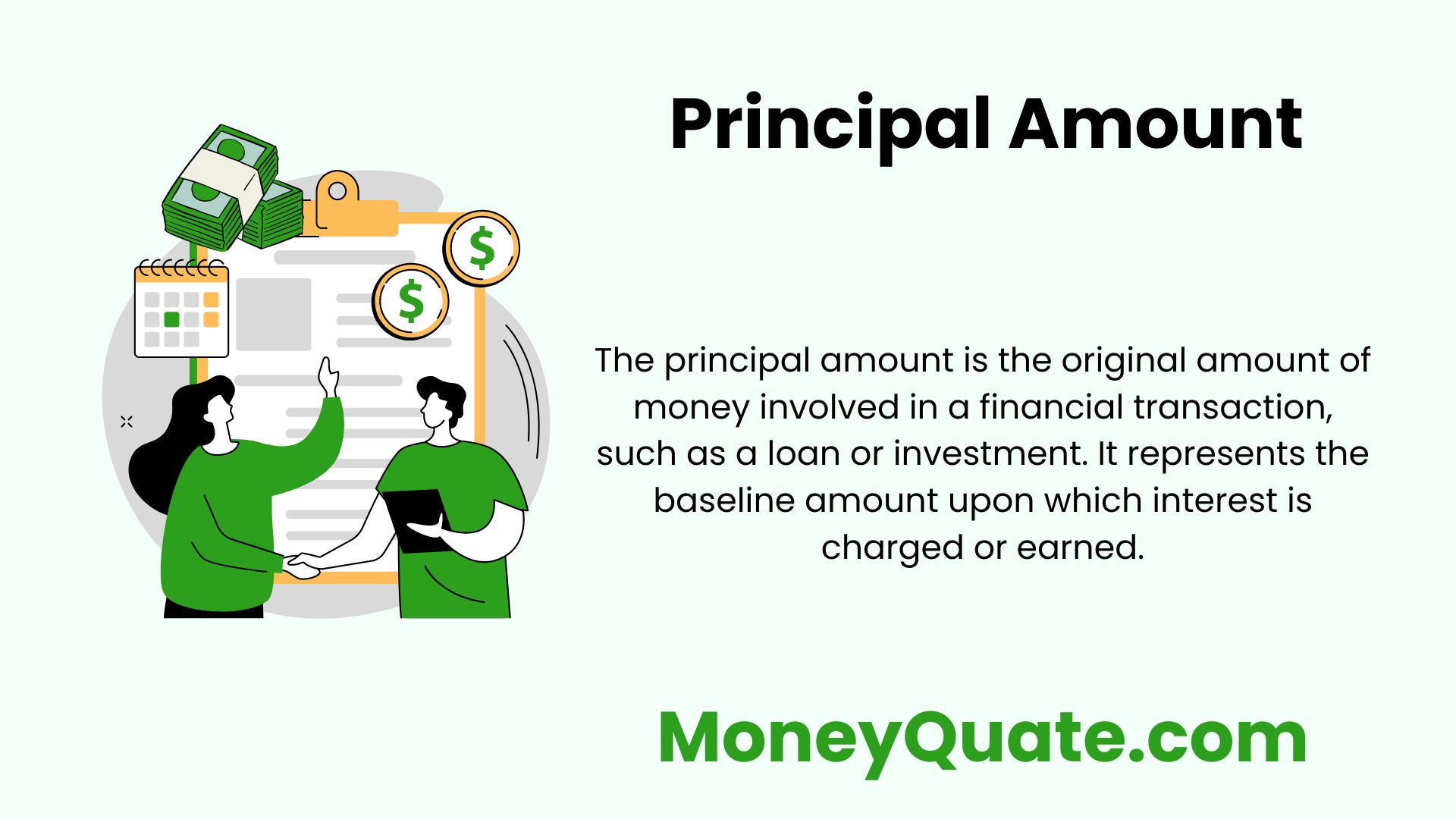
At its most basic, the principal amount is the original sum of money lent to the borrower. It’s the figure you see listed on your loan agreement, the amount you’ll need to repay, excluding any interest, fees, or other charges. Think of it as the “face value” of the loan before any financial growth (interest) is added.
For example, if you take out a $10,000 car loan, the $10,000 is your principal amount. If you secure a $200,000 mortgage, that $200,000 is the principal. Every dollar you borrow, directly from the lender to you, constitutes the principal.
How the Principal Amount is Determined
The principal amount is not an arbitrary figure. It’s typically determined by several factors, primarily the borrower’s needs and the lender’s assessment of risk and the borrower’s ability to repay.
- Loan Purpose and Needs: The most significant driver of the principal amount is what you need the money for. Are you buying a modest used car, or a brand-new luxury vehicle? Are you looking to purchase a starter home or a larger family residence? The cost of the asset or the service you’re financing directly dictates the required principal.
- Lender’s Underwriting Process: Before a lender approves a loan, they conduct an underwriting process. This involves a thorough evaluation of your financial health, including your credit score, income, existing debts (debt-to-income ratio), and employment history. This assessment helps the lender determine how much risk they are taking on and, consequently, how much they are comfortable lending.
- Down Payment: For loans like mortgages or car loans, a down payment significantly reduces the principal amount. A larger down payment means you are borrowing less money, which can lead to lower monthly payments and less interest paid over time. For instance, if a house costs $300,000 and you put down $60,000, your principal loan amount will be $240,000.
- Loan-to-Value (LTV) Ratio: This is a key metric used by lenders, particularly for secured loans. It compares the loan amount to the value of the asset being financed. A lower LTV generally indicates lower risk for the lender. For example, a mortgage with a high LTV might require private mortgage insurance (PMI), which is an additional cost but doesn’t directly increase the principal itself.
The Principal’s Dance with Interest: Understanding Loan Amortization
The principal amount is not static throughout the life of the loan. It’s the amount that is directly affected by your repayments, and critically, it’s the base upon which interest is calculated. This intricate relationship is best understood through the concept of loan amortization.
Loan Amortization: Paying Down the Principal
Loan amortization is the process of paying off a debt over time through regular installments. Each payment you make typically consists of two components: principal repayment and interest payment. The way these two components are allocated changes over the life of the loan, and this is where the principal amount’s significance truly unfolds.
- Early Stages of the Loan: In the initial stages of most amortizing loans, a larger portion of your monthly payment goes towards paying the interest. This is because the interest is calculated on the largest outstanding principal balance. As you make payments, a small portion reduces the principal, but the bulk is consumed by interest.
- Later Stages of the Loan: As you continue to make payments, the outstanding principal balance gradually decreases. Consequently, the amount of interest you owe each month also decreases. This means that in the later stages of the loan, a larger portion of your monthly payment is directed towards paying down the principal. This accelerating principal reduction helps you own your asset outright faster.
The Power of Extra Payments on Principal
Understanding amortization highlights the significant benefit of making extra payments towards your loan. When you make an extra payment, you can often designate it specifically to be applied to the principal. This is a powerful strategy for several reasons:
- Reduces Total Interest Paid: By reducing the principal balance faster, you shrink the base on which future interest is calculated. This can lead to substantial savings over the life of the loan, especially for long-term loans like mortgages.
- Shortens Loan Term: Paying down the principal more aggressively will inevitably shorten the time it takes to repay the loan. This means you’ll be debt-free sooner, freeing up your finances for other goals.
- Builds Equity Faster: For secured loans like mortgages, reducing the principal directly increases your equity in the property. This can be crucial if you plan to sell your home or refinance in the future.
Technology’s Role in Tracking Amortization: Modern financial tools, often found in apps and online platforms within the “Money” and “Tech” sections of our website, can help you visualize your loan amortization schedule. These tools allow you to see exactly how much of each payment goes towards principal and interest, and they can often simulate the impact of making extra payments. This data-driven approach empowers you to take control of your loan repayment strategy.
Impact of Different Loan Types on Principal Repayment
While the principle of amortization applies broadly, the way the principal is repaid can vary slightly depending on the loan type.
- Installment Loans: These are the most common type, like mortgages, car loans, and personal loans. They involve regular, fixed payments over a set period, and amortization is the standard repayment method.
- Interest-Only Loans: In some specific scenarios, you might encounter interest-only loans, particularly in commercial real estate or for certain types of mortgages. During the interest-only period, your payments only cover the interest accrued, and the principal amount remains unchanged. Once this period ends, you transition to making payments that include both principal and interest. This can offer lower initial payments but means you’re not building equity or reducing your debt as quickly.
- Revolving Credit (e.g., Credit Cards): While not a traditional installment loan with a fixed principal, credit cards also involve a principal amount – the outstanding balance. Payments on credit cards go towards both interest and principal. However, the flexibility of credit cards means you can make minimum payments, which will heavily favor interest, or pay more to aggressively reduce the principal and thus the interest paid.
Beyond the Principal: Understanding Other Loan Components
While the principal amount is undoubtedly the core, it’s essential to view it within the broader context of a loan agreement. Understanding how other components interact with the principal will give you a complete picture of your borrowing costs.
Interest: The Cost of Borrowing the Principal
Interest is the fee you pay to the lender for the privilege of borrowing the principal amount. It’s expressed as a percentage of the principal, known as the interest rate. The higher the interest rate, the more you will pay in interest over the life of the loan, assuming the principal amount and loan term remain the same.
- Fixed Interest Rates: The interest rate remains constant for the entire loan term. This provides predictability in your monthly payments.
- Variable Interest Rates: The interest rate can fluctuate over the loan term, typically tied to a benchmark index. This can lead to lower initial payments but introduces the risk of payments increasing if the benchmark index rises.
Fees: Additional Costs Associated with the Principal
Beyond interest, loan agreements often include various fees. While these fees don’t typically add to the initial principal amount you borrow, they represent additional costs of obtaining and servicing the loan.
- Origination Fees: Charged by the lender for processing the loan application.
- Appraisal Fees: For secured loans, an appraisal is needed to determine the value of the asset.
- Closing Costs: Common in mortgages, these encompass a range of fees from title insurance to recording fees.
Smart Financial Tools and Budgeting: Utilizing personal finance apps and budgeting tools, accessible through our “Money” and “Tech” sections, can help you track not only your principal repayment but also factor in all associated fees and interest. This comprehensive overview prevents financial surprises and ensures you’re making efficient progress towards debt freedom.
Loan Term: The Duration of Principal Repayment
The loan term is the length of time you have to repay the principal amount and all accrued interest. Loan terms can vary significantly, from a few months for short-term personal loans to 30 years or more for mortgages.
- Shorter Loan Terms: Generally mean higher monthly payments but result in paying less interest over the life of the loan.
- Longer Loan Terms: Typically mean lower monthly payments, making the loan more affordable on a monthly basis, but you will end up paying significantly more interest.
The interplay between the principal amount, interest rate, and loan term is critical. A larger principal with a high interest rate and a long loan term can lead to a substantial overall cost. Conversely, a smaller principal, a lower interest rate, and a shorter term will result in a more affordable loan.

Conclusion: Mastering Your Principal for Financial Freedom
The principal amount is the foundation of any loan. It’s the initial sum you borrow, and it’s the figure that dictates the scale of your financial commitment. Understanding how the principal is determined, how it’s affected by your repayments through amortization, and how it interacts with interest, fees, and the loan term is paramount for effective personal finance management.
By proactively managing your principal – through informed borrowing decisions, strategic down payments, and the power of extra payments – you can significantly reduce the total cost of your loan, accelerate your journey to debt freedom, and unlock greater financial flexibility. In the digital age, leveraging technology and the wealth of information available in areas like “Money,” “Tech,” and “Brand” (by understanding the brand promises of lenders) can empower you to make the most intelligent decisions about your principal and your financial future.
aViewFromTheCave is a participant in the Amazon Services LLC Associates Program, an affiliate advertising program designed to provide a means for sites to earn advertising fees by advertising and linking to Amazon.com. Amazon, the Amazon logo, AmazonSupply, and the AmazonSupply logo are trademarks of Amazon.com, Inc. or its affiliates. As an Amazon Associate we earn affiliate commissions from qualifying purchases.