
In today’s interconnected world, the ability to communicate across languages is not just a skill, but a superpower. As global businesses expand and digital platforms become increasingly universal, understanding the nuances of different linguistic systems is more crucial than ever. For anyone venturing into the vast and rich landscape of the Chinese language, a fundamental concept to grasp is Pinyin. More than just a simple transcription system, Pinyin serves as a critical gateway, unlocking accessibility for learners, developers, and even those seeking to leverage Chinese culture in the digital realm.
But what exactly is Pinyin? And why is it so central to learning and interacting with Mandarin Chinese in the 21st century? This article will delve into the core of Pinyin, exploring its origins, its mechanics, and its profound impact across various domains, from personal learning and productivity to its integral role in the technology sector and brand engagement with Chinese markets.
Understanding the Foundation: What is Pinyin?
At its heart, Pinyin, officially known as Hanyu Pinyin (汉语拼音), is the official romanization system for Standard Mandarin Chinese. It uses the Latin alphabet to represent the sounds of Mandarin Chinese words. Think of it as a phonetic bridge, allowing speakers of languages that use the Latin alphabet to pronounce and understand Chinese characters.
Before Pinyin, learning Mandarin was a daunting task, relying heavily on memorizing pronunciation guides that were often inconsistent or only accessible to those already initiated into the intricacies of Chinese phonetics. The introduction of Hanyu Pinyin in the late 1950s by the Chinese government revolutionized this process, providing a standardized, systematic, and user-friendly method for transcribing Chinese sounds.
The Building Blocks: Tones and Initials/Finals
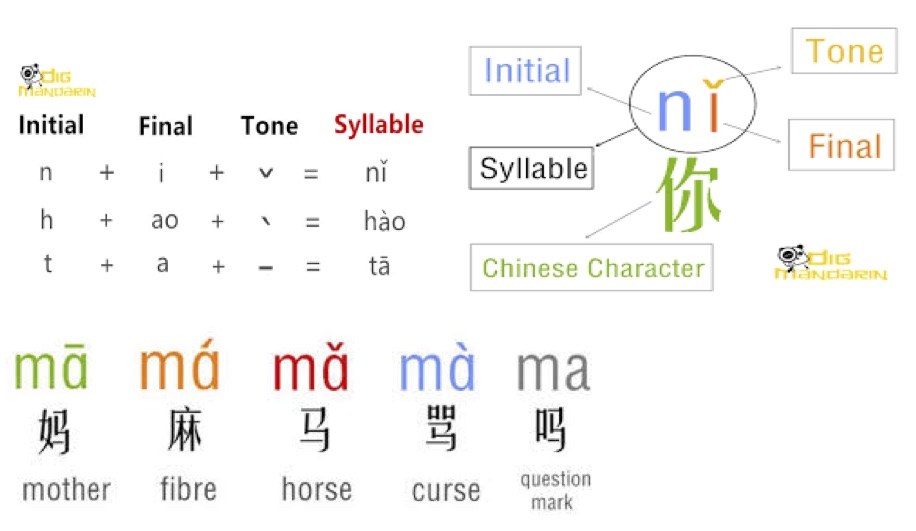
The magic of Pinyin lies in its ability to capture the subtle yet crucial elements of Mandarin pronunciation. Mandarin is a tonal language, meaning that the pitch contour of a syllable can drastically change its meaning. Pinyin represents these tones using diacritics (marks above vowels), which are absolutely essential for accurate communication. There are four main tones and a neutral tone, each with a distinct contour:
- First Tone (¯): High and level (e.g., mā – mother)
- Second Tone (´): Rising (e.g., má – hemp)
- Third Tone (ˇ): Falling then rising (e.g., mǎ – horse)
- Fourth Tone (`): Falling (e.g., mà – to scold)
- Neutral Tone (no mark): Light and unstressed (e.g., ma – a question particle)
Mastering these tones is paramount, as mispronouncing a tone can lead to misunderstanding or even entirely different meanings. Pinyin provides the visual cue to practice and perfect these tones.
Beyond tones, Pinyin breaks down syllables into two main components: initials and finals.
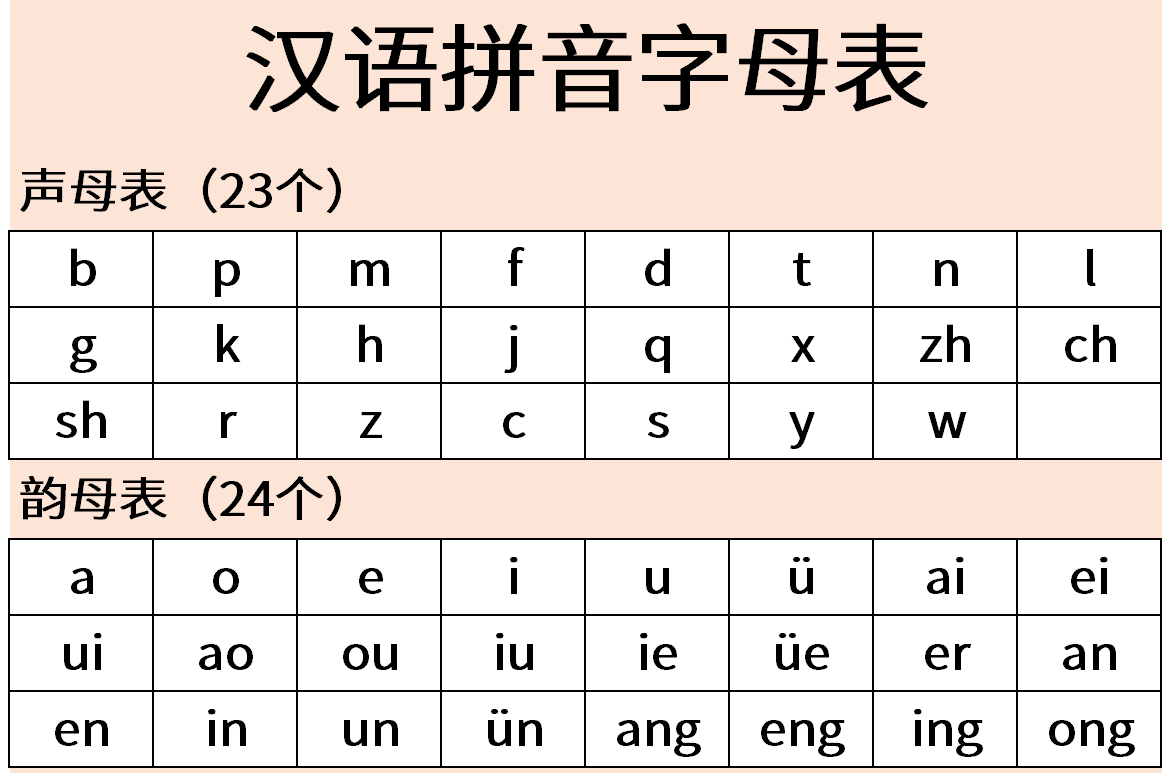
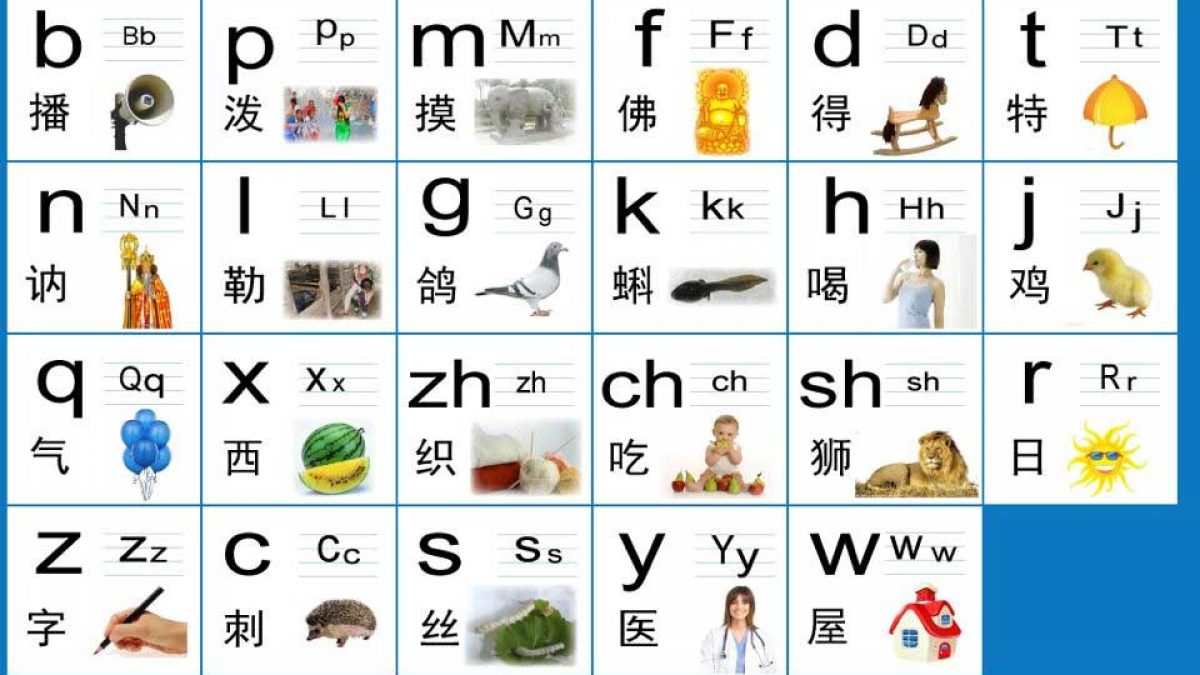
- Initials are the consonant sounds that begin a syllable. There are 21 initials in Pinyin, such as ‘b’, ‘p’, ‘m’, ‘f’, ‘d’, ‘t’, ‘n’, ‘l’, ‘g’, ‘k’, ‘h’, ‘j’, ‘q’, ‘x’, ‘zh’, ‘ch’, ‘sh’, ‘r’, ‘z’, ‘c’, ‘s’.
- Finals are the vowel sounds or combinations of vowel and nasal sounds that follow an initial. There are 35 finals, such as ‘a’, ‘o’, ‘e’, ‘i’, ‘u’, ‘ü’, ‘ai’, ‘ei’, ‘ao’, ‘ou’, ‘an’, ‘en’, ‘ang’, ‘eng’, ‘ong’, and more complex ones.
By combining initials and finals, and crucially, applying the correct tone, learners can accurately pronounce any Mandarin syllable. For example, the syllable “zhong” (meaning “middle”) is formed by the initial ‘zh’ and the final ‘ong’, often pronounced with a fourth tone (zhōng).
The Tech Integration: Pinyin in the Digital Age
The widespread adoption of Pinyin has had a transformative effect on the integration of the Chinese language into the digital landscape. Without Pinyin, the development of user-friendly input methods for computers and smartphones would have been significantly more challenging.
2.1. Revolutionizing Input Methods: Typing Chinese with Ease
For anyone who has ever tried to type Chinese characters, the challenge is immediately apparent: there are thousands of them. Pinyin input methods are the ubiquitous solution. Users simply type the Pinyin romanization of a word, and a list of corresponding characters appears on the screen. The system then intelligently suggests the most likely character based on context, frequency, and user history.
This technological innovation has democratized access to digital Chinese communication. It has enabled billions to participate in online conversations, create documents, and navigate digital platforms without needing to memorize the stroke order and appearance of every single character. This has profound implications for:
- Productivity: Professionals can quickly draft emails, reports, and messages in Chinese, boosting efficiency in businesses operating in or with China.
- Education: Students can easily type their assignments, participate in online forums, and conduct research in Chinese, accelerating their learning process.
- Global Connectivity: Individuals can connect with friends, family, and colleagues across the globe by easily typing messages in Chinese.
The underlying AI algorithms in these input methods are constantly evolving, becoming more sophisticated at predicting user intent and offering accurate suggestions, further enhancing the user experience. This is a prime example of how technology, powered by fundamental linguistic tools like Pinyin, can break down barriers.
2.2. AI, Language Models, and the Future of Chinese Interaction
Pinyin plays an indispensable role in the development and training of artificial intelligence, particularly in the realm of Natural Language Processing (NLP) for Chinese. Language models, the backbone of many AI tools, require vast amounts of text data for training. Pinyin-based transcriptions provide a standardized format that AI systems can readily process and learn from.
- Speech Recognition: Pinyin is a crucial component in developing accurate speech recognition systems for Mandarin. By associating spoken sounds with their Pinyin and subsequent characters, AI can understand and transcribe spoken Chinese.
- Machine Translation: Pinyin-based data aids in the training of machine translation engines, allowing for more nuanced and accurate translations between Chinese and other languages.
- Chatbots and Virtual Assistants: The ability of AI to understand and respond in Chinese relies heavily on Pinyin as an intermediary step for processing user input and generating output.
Furthermore, as AI tools become more sophisticated, they can even assist learners in mastering Pinyin itself. AI-powered pronunciation trainers can analyze a learner’s speech, identify tonal errors, and provide targeted feedback, making the process of acquiring accurate Mandarin pronunciation more efficient and engaging.
Pinyin’s Impact on Branding and Marketing
Beyond its technical applications, Pinyin significantly influences how brands engage with the Chinese market and how individuals build their personal brands within a Chinese context.
3.1. Brand Naming and Localization
When international companies enter the Chinese market, a critical aspect of their branding strategy is the choice of their Chinese name. Often, this involves transliterating their brand name phonetically into Chinese. This is where Pinyin becomes invaluable. Brands work with linguists and cultural consultants to select Chinese characters that not only sound similar to the original name but also carry positive connotations and resonate with the target audience.
For example, Coca-Cola’s Chinese name “可口可乐” (Kěkǒu kělè) is a brilliant example of phonetic transliteration and semantic optimization. “Kěkǒu” (可口) means “tasty” or “delicious,” and “kělè” (可乐) sounds like “Cola.” The chosen characters evoke a sense of pleasure and enjoyment associated with the brand. This process relies heavily on understanding the phonetic and semantic possibilities offered by Pinyin.
Similarly, brands need to consider how their slogans, taglines, and marketing campaigns will be perceived phonetically and semantically when translated or adapted for the Chinese market. Pinyin helps ensure that the intended message is conveyed accurately and appealingly.
3.2. Personal Branding and Digital Presence
For individuals aiming to build a personal brand or professional presence in China, understanding Pinyin is also a strategic advantage.
- Professional Networking: When communicating with Chinese professionals, using their Pinyin name correctly demonstrates respect and attention to detail. Many Chinese individuals working in international settings will use their English name alongside their Chinese name, often provided in Pinyin, making pronunciation accessible.
- Online Identity: If an individual wants to establish an online presence on Chinese social media platforms or professional networks, using their name in Pinyin can aid in discoverability and recognition.
- Content Creation: For content creators targeting a Chinese audience, understanding the phonetic nuances conveyed by Pinyin can inform the language and tone of their content, ensuring it sounds natural and engaging.
In essence, Pinyin acts as a bridge not only for language learning but also for building authentic connections and effective communication within the complex and dynamic Chinese cultural and business landscape.
The Broader Significance: Beyond Learner’s Tools
Pinyin’s influence extends far beyond its immediate utility for language learners. It is a foundational element in the ongoing digitization of Chinese culture and a vital tool for fostering global understanding and collaboration.
4.1. Preserving and Disseminating Chinese Culture
While Chinese characters are the enduring written form of the language, Pinyin provides a dynamic and accessible way to introduce this rich culture to a wider audience. It enables children and adults alike to begin their journey into Chinese literature, history, and philosophy without the initial hurdle of character memorization. This accessibility fosters greater cultural exchange and appreciation on a global scale.
4.2. A Catalyst for Innovation
The standardization of Pinyin paved the way for technological advancements that have profoundly impacted how the world interacts with the Chinese language. Without this phonetic system, the development of input methods, spell checkers, voice assistants, and other digital tools would have been significantly delayed or fundamentally different. Pinyin is, therefore, an unsung hero in the story of technological innovation in multilingual communication.
Conclusion: Embracing the Power of Pinyin
In conclusion, Pinyin is far more than just a phonetic transcription system; it is a critical enabler for learning, communicating, and engaging with the Mandarin Chinese language in our increasingly globalized and digitized world. From empowering individuals to learn a new language with greater ease to fueling the advancements in AI and language technology, Pinyin bridges linguistic divides. For businesses looking to expand into China, for individuals seeking to connect across cultures, and for developers building the next generation of digital tools, understanding and utilizing Pinyin is an investment that yields significant returns in fluency, accessibility, and global reach. As technology continues to evolve, Pinyin will undoubtedly remain a cornerstone of Chinese language interaction, ensuring that this vital global language remains accessible and influential for generations to come.
aViewFromTheCave is a participant in the Amazon Services LLC Associates Program, an affiliate advertising program designed to provide a means for sites to earn advertising fees by advertising and linking to Amazon.com. Amazon, the Amazon logo, AmazonSupply, and the AmazonSupply logo are trademarks of Amazon.com, Inc. or its affiliates. As an Amazon Associate we earn affiliate commissions from qualifying purchases.