
The world of healthcare education, particularly nursing, can sometimes feel like a labyrinth of acronyms and distinct terminology. Prospective students, career changers, and even seasoned professionals might find themselves pondering the precise names for the various nursing degrees available. Understanding this nomenclature is not merely an academic exercise; it’s fundamental to making informed decisions about educational pathways, career progression, and the types of roles one can pursue within the dynamic field of nursing. This article aims to demystify the different nursing degrees, exploring their common appellations and the distinct levels of education they represent.
The Foundation: Entry-Level Nursing Degrees
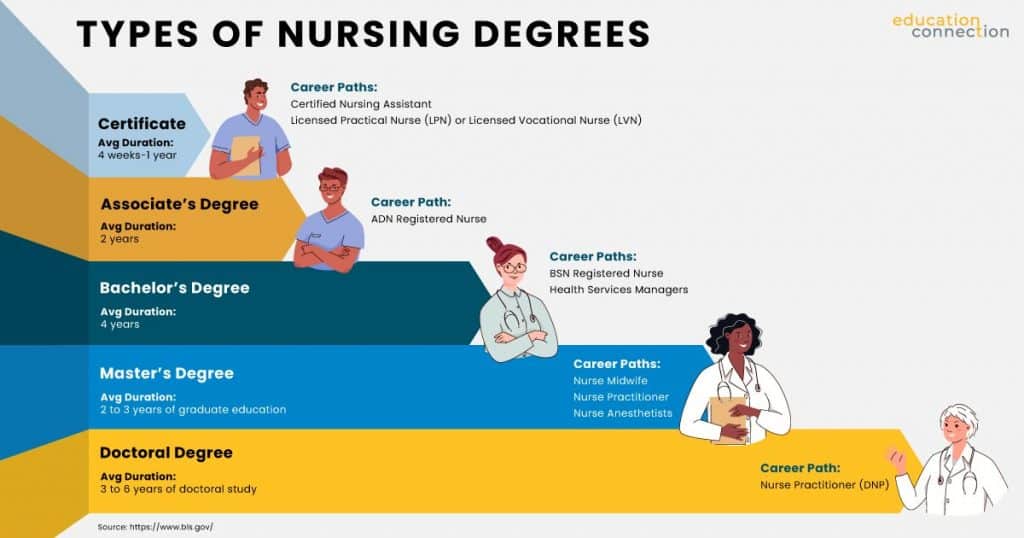
At the most fundamental level, aspiring nurses embark on their educational journey through programs designed to equip them with the essential knowledge and skills to practice. These entry-level degrees form the bedrock of the nursing profession and are typically the first step towards becoming a registered nurse (RN).
Associate Degree in Nursing (ADN)
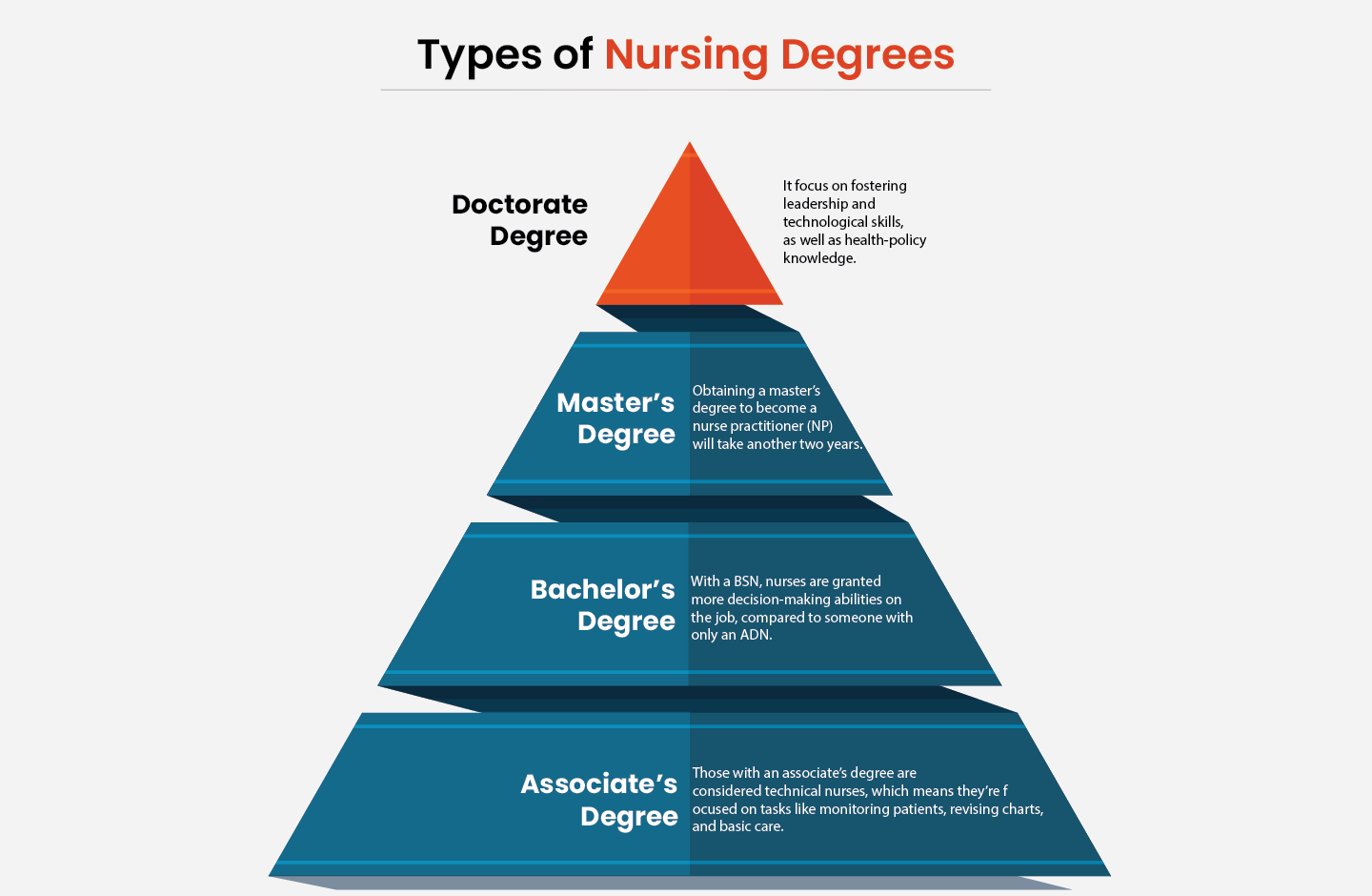
The Associate Degree in Nursing, commonly referred to as an ADN, is often the most accessible and quickest route to becoming a registered nurse. These programs are typically offered at community colleges, vocational schools, and some university extension campuses. An ADN program usually takes about two years to complete, focusing on fundamental nursing theory, clinical skills, and patient care. Graduates of ADN programs are eligible to sit for the NCLEX-RN examination, the standardized test required for RN licensure in the United States and Canada.
Key Characteristics of an ADN:
- Duration: Typically two years.
- Curriculum: Emphasizes direct patient care, basic nursing skills, pharmacology, anatomy, physiology, and medical-surgical nursing. Clinical rotations are a crucial component, providing hands-on experience in various healthcare settings.
- Career Opportunities: ADN-prepared nurses are qualified to work in a wide range of healthcare environments, including hospitals, clinics, long-term care facilities, and home health agencies. They often begin their careers in direct patient care roles.
- Advancement Potential: While an ADN provides a solid foundation, many nurses with an ADN pursue further education to advance their careers, often through RN-to-BSN bridge programs.
Bachelor of Science in Nursing (BSN)
The Bachelor of Science in Nursing, or BSN, is a four-year undergraduate degree program. It provides a more comprehensive and in-depth education compared to the ADN, incorporating advanced nursing theory, research, leadership, community health, and evidence-based practice. A BSN program is generally considered the standard for entry into many nursing roles, especially in hospital settings, and is increasingly preferred by employers.
Key Characteristics of a BSN:
- Duration: Typically four years.
- Curriculum: Builds upon the foundational knowledge of the ADN, with a stronger emphasis on critical thinking, problem-solving, leadership, public health, community nursing, and research methodologies. BSN programs often include more extensive clinical experiences and may involve a capstone project or thesis.
- Career Opportunities: BSN-prepared nurses are well-equipped for a broader range of roles, including leadership positions, specialized care units (such as intensive care or oncology), case management, and public health nursing. Many healthcare organizations, particularly Magnet-designated hospitals, prioritize hiring nurses with BSN degrees.
- Advancement Potential: A BSN is often a prerequisite for graduate nursing programs (Master of Science in Nursing – MSN, Doctor of Nursing Practice – DNP, Doctor of Philosophy – PhD), enabling nurses to pursue advanced practice roles, specialized clinical areas, education, or research.
Bridging the Gap: Advanced and Specialized Nursing Degrees
Beyond the entry-level qualifications, a spectrum of advanced nursing degrees exists, catering to those who wish to deepen their expertise, specialize in a particular area of practice, or move into leadership, education, or research roles. These degrees signify a higher level of theoretical understanding, clinical proficiency, and often, a broader scope of practice.
Master of Science in Nursing (MSN)
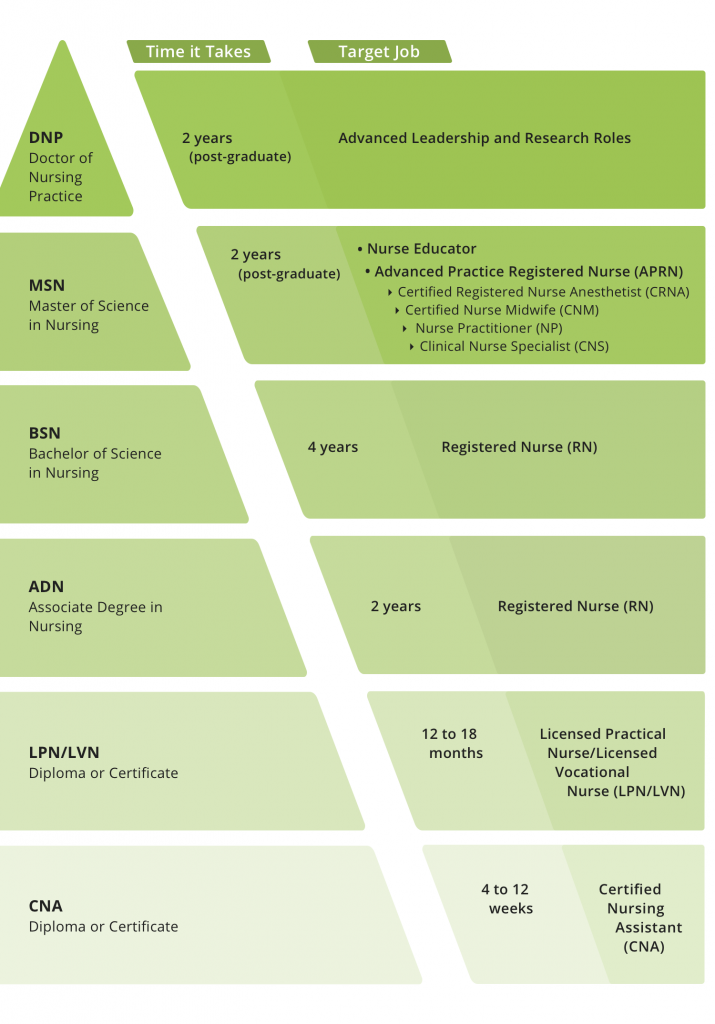
The Master of Science in Nursing (MSN) is a graduate-level degree that allows registered nurses to specialize in a chosen area of practice or prepare for advanced roles. MSN programs are typically designed for nurses who already hold a BSN (though some programs offer pathways for ADN-prepared nurses). The duration of an MSN program can vary, but it generally takes one to two years of full-time study.
Key Specializations within an MSN:
- Advanced Practice Registered Nurse (APRN): This is one of the most common pathways for MSN graduates. APRNs have a significantly expanded scope of practice and can diagnose, treat, and manage acute and chronic illnesses. This category includes:
- Nurse Practitioner (NP): NPs can specialize in various areas such as family practice, pediatrics, adult-gerontology, women’s health, psychiatric-mental health, and acute care. They can prescribe medications and order diagnostic tests.
- Clinical Nurse Specialist (CNS): CNSs focus on improving patient care and nursing practice within a specific specialty area (e.g., oncology, critical care, diabetes). They act as expert clinicians, educators, and consultants.
- Certified Registered Nurse Anesthetist (CRNA): CRNAs provide anesthesia services to patients undergoing surgical, diagnostic, and obstetrical procedures. This is a highly specialized and in-demand role.
- Certified Nurse-Midwife (CNM): CNMs provide comprehensive care to women throughout their pregnancy, childbirth, and postpartum period, as well as routine gynecological care.
- Nursing Education: MSN graduates can prepare for roles as educators in nursing schools or as clinical educators in healthcare facilities, teaching and mentoring future nurses.
- Nursing Administration/Leadership: This specialization focuses on managing nursing services, departments, or entire healthcare organizations. Graduates are prepared for roles such as nurse managers, directors, and chief nursing officers.
- Public Health Nursing: MSN-prepared public health nurses focus on population-level health outcomes, disease prevention, and health promotion within communities.
- Informatics: This growing field combines nursing knowledge with information science and computer technology to manage and communicate data in healthcare.
Doctor of Nursing Practice (DNP)
The Doctor of Nursing Practice (DNP) is the highest clinical practice degree in nursing. It is designed for experienced nurses who wish to become leaders in healthcare delivery and practice transformation. The DNP program emphasizes advanced clinical skills, evidence-based practice, leadership, and the translation of research into practice. It is typically pursued by nurses who hold an MSN or BSN.
Key Aspects of a DNP:
- Focus: The DNP curriculum focuses on applying scientific knowledge to improve patient outcomes, develop innovative healthcare models, and lead change within healthcare systems. It is less research-intensive than a PhD in nursing and more focused on practical application.
- Curriculum: Includes advanced clinical residencies, leadership development, quality improvement, healthcare policy, and a capstone project that addresses a significant clinical problem.
- Career Opportunities: DNP-prepared nurses are prepared for roles such as advanced practice providers (NPs, CNSs, CRNAs, CNMs), clinical nurse leaders, healthcare administrators, policymakers, and consultants. They are instrumental in driving evidence-based practice and improving the quality and safety of patient care.
- Duration: DNP programs typically take two to four years to complete, depending on the student’s prior education and the program structure.
Doctor of Philosophy (PhD) in Nursing
While the DNP focuses on the highest level of clinical practice, the Doctor of Philosophy (PhD) in Nursing is a research-focused doctoral degree. It is designed for nurses who aspire to become leading researchers, academicians, and theorists in the field of nursing.
Key Aspects of a PhD in Nursing:
- Focus: The primary goal of a PhD in nursing is to generate new knowledge through rigorous scientific inquiry and research. Graduates are prepared to design, conduct, and disseminate research that advances the science of nursing.
- Curriculum: Emphasizes research methodologies, statistical analysis, research ethics, and the development of a dissertation based on original research.
- Career Opportunities: PhD-prepared nurses typically pursue careers in academia as faculty members at universities, leading research projects, mentoring doctoral students, and contributing to the theoretical foundations of nursing. They may also work in research institutions or as principal investigators in healthcare organizations.
- Duration: PhD programs are generally longer than DNP programs, often taking four to six years to complete due to the extensive research and dissertation requirements.
Understanding the Nuances: Beyond Degree Titles
It’s important to note that while the degree titles are generally standardized, the specific terminology used by educational institutions can sometimes vary. For instance, some programs might be titled “Bachelor of Arts in Nursing” (BA in Nursing), though this is less common than the BSN and may have a slightly different curriculum focus, potentially integrating more liberal arts.
Furthermore, the distinction between different levels of nursing education is crucial for understanding professional roles and responsibilities. For example, a Licensed Practical Nurse (LPN) or Licensed Vocational Nurse (LVN) holds a certificate or diploma from a program that is typically shorter than an associate degree and prepares them for a more focused role under the supervision of an RN. While not always referred to as a “degree” in the same vein as an ADN or BSN, these foundational nursing credentials are vital to the healthcare system.
The journey through nursing education is multifaceted, with each degree level offering distinct pathways and opportunities. From the foundational ADN and BSN to the specialized MSN and the doctoral-level DNP and PhD, understanding the nomenclature of nursing degrees is the first step for anyone aspiring to contribute to the health and well-being of others through this vital profession. As the field of nursing continues to evolve, so too will the educational pathways designed to prepare its dedicated professionals.
aViewFromTheCave is a participant in the Amazon Services LLC Associates Program, an affiliate advertising program designed to provide a means for sites to earn advertising fees by advertising and linking to Amazon.com. Amazon, the Amazon logo, AmazonSupply, and the AmazonSupply logo are trademarks of Amazon.com, Inc. or its affiliates. As an Amazon Associate we earn affiliate commissions from qualifying purchases.