
Navigating the complexities of the Internal Revenue Service (IRS) is a fundamental pillar of personal and business finance. For many, the realization that taxes are due brings a sense of urgency, and often, a degree of confusion. However, understanding how to pay the IRS is not merely a matter of administrative compliance; it is a critical component of strategic cash flow management and long-term financial health. Whether you are an individual taxpayer, a freelancer navigating the world of self-employment, or a business owner managing corporate liabilities, the method and timing of your payments can significantly impact your liquidity and creditworthiness.
In this guide, we will explore the diverse landscape of tax payment options, the strategic implications of different payment plans, and the financial tools available to ensure your interactions with the IRS are seamless, secure, and optimized for your specific financial situation.
Navigating Modern Payment Channels: Choosing the Right Method
The IRS has modernized its systems significantly over the last decade, moving away from paper checks toward more efficient digital solutions. Choosing the right channel depends on your current cash reserves, your need for a paper trail, and your desire to maximize financial benefits such as credit card rewards.
Direct Pay and Electronic Bank Transfers
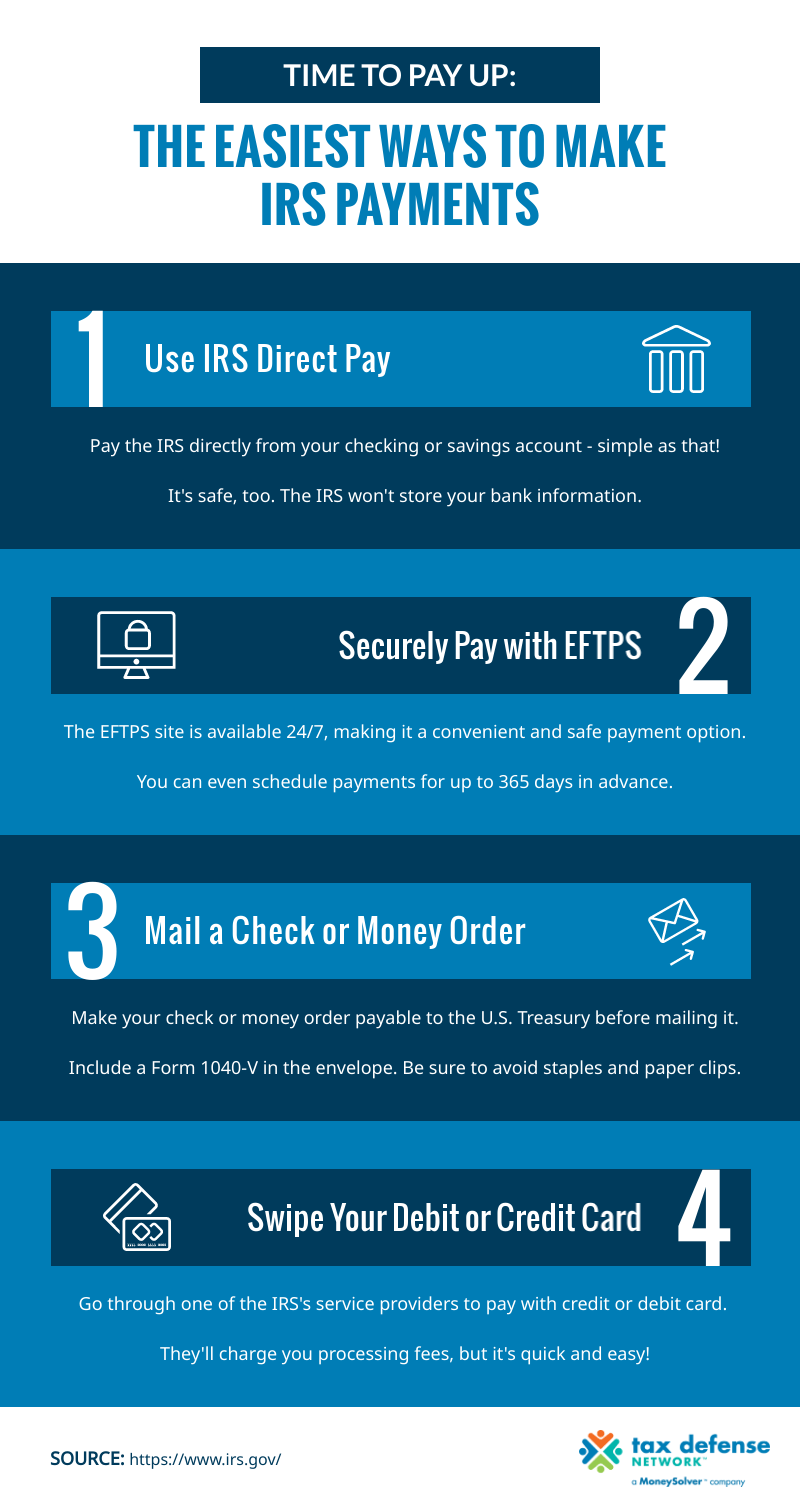
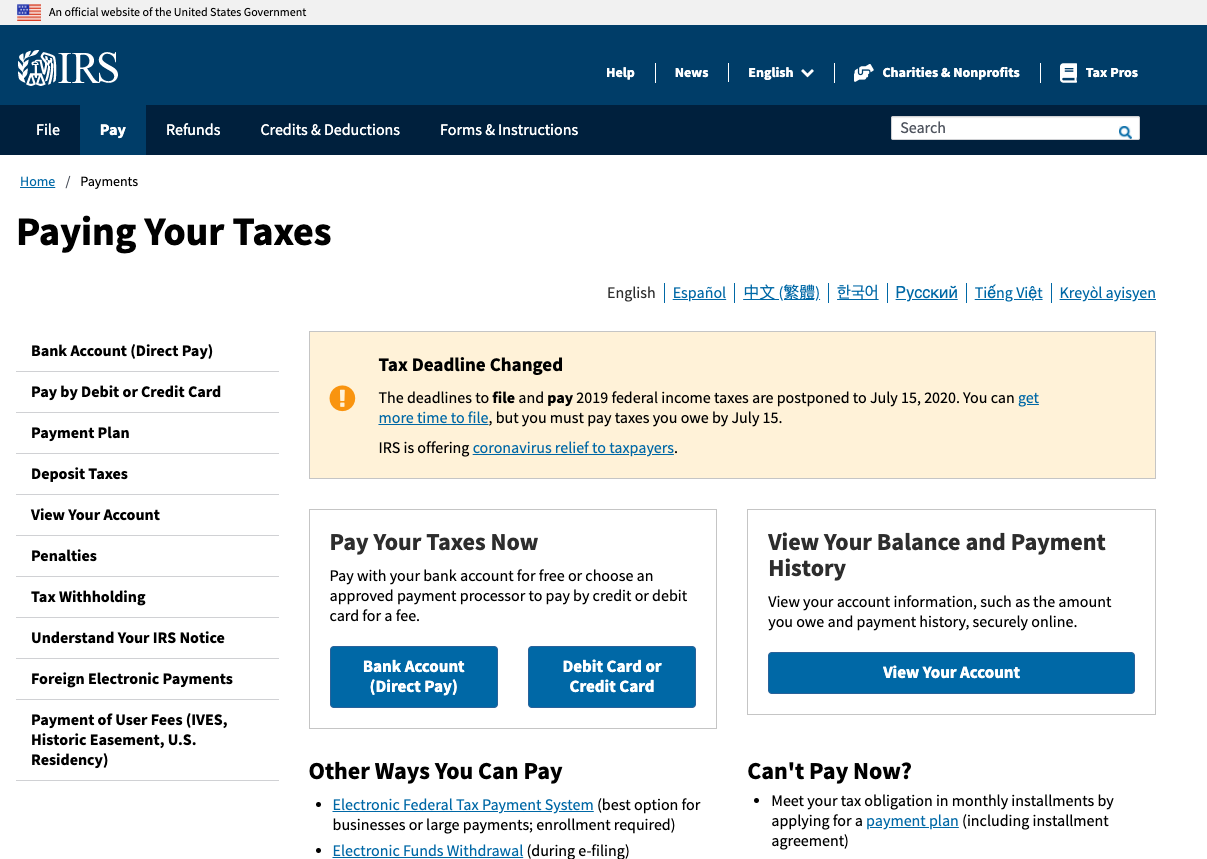
For most individual taxpayers, IRS Direct Pay remains the gold standard for efficiency. This service allows you to pay your individual tax bill directly from a checking or savings account without any additional fees. From a personal finance perspective, this is the most cost-effective method because it avoids the processing fees associated with plastic. It is an “immediate” transaction in the sense that you receive an instant confirmation number, which is vital for maintaining an organized financial record.
For businesses and individuals who prefer a more integrated approach, Electronic Funds Withdrawal (EFW) is available when filing via tax preparation software. This allows you to schedule a payment for a future date, providing a level of control over your cash flow that can be crucial during the high-expenditure months of early spring.
Credit and Debit Card Payments
While the IRS does not charge a fee for card payments, the third-party processors they use certainly do. These fees generally range from 1.87% to 1.98% for credit cards and a flat fee for debit cards.
From a strategic money management standpoint, paying with a credit card is usually only advisable in two scenarios:
- The Rewards Arbitrage: If you are using a card that offers high-value sign-up bonuses or cashback rewards that exceed the 2% processing fee, you can effectively “profit” from your tax bill.
- Liquidity Management: If you are facing a temporary cash crunch, charging your taxes to a card—especially one with a 0% introductory APR—can provide a cheaper alternative to IRS late payment penalties, provided you pay off the balance before the interest kicks in.
The Electronic Federal Tax Payment System (EFTPS)
For business owners and those making high-frequency payments, the EFTPS is the most robust tool available. Unlike Direct Pay, which is designed for one-off individual payments, EFTPS is a comprehensive portal where you can track your entire payment history and schedule payments up to 365 days in advance. It is particularly useful for managing payroll taxes and corporate income taxes, acting as a central hub for a business’s fiscal responsibility.
Managing Debt: Strategies for When You Owe More Than You Have
In an ideal financial world, every taxpayer would have a “tax sinking fund” ready to cover their liabilities. In reality, market fluctuations, unexpected business expenses, or personal emergencies can leave you with a tax bill that exceeds your liquid assets. When this happens, the IRS offers several pathways that function similarly to personal loans or debt restructuring.
Short-Term and Long-Term Installment Agreements
If you cannot pay your balance in full immediately, an Installment Agreement (or payment plan) is the most common recourse.
- Short-term plans: These typically give you up to 180 days to pay the balance in full. This is ideal if you are waiting on a large commission, an investment to mature, or a business contract to be paid out.
- Long-term plans: If you need more than six months, you can enter into a monthly payment plan.
From a financial planning perspective, it is important to note that while an installment agreement stops the “failure to pay” penalty from escalating at its highest rate, interest still accrues. Therefore, your goal should always be to pay as much as possible upfront to minimize the total cost of the “loan” from the government.
Offer in Compromise (OIC)
An Offer in Compromise is a sophisticated financial tool that allows taxpayers to settle their tax debt for less than the full amount they owe. This is not a “get out of jail free” card; the IRS performs a rigorous analysis of your “Reasonable Collection Potential,” looking at your income, assets, and basic living expenses.
For a business or individual in genuine financial distress, an OIC can be a lifeline that prevents total insolvency. However, the application process is arduous and often requires the assistance of a financial professional or tax attorney to ensure the offer is structured in a way the IRS is likely to accept.
Currently Not Collectible Status
In extreme cases where paying any amount toward a tax debt would prevent a taxpayer from meeting basic living expenses, the IRS may deem the account “Currently Not Collectible.” This does not erase the debt—interest and penalties continue to accrue—but it stops the IRS from engaging in aggressive collection actions like levies or garnishments. This status is a temporary financial shield used during periods of severe economic hardship.
Proactive Fiscal Responsibility: Avoiding the “Tax Surprise”
The most successful investors and entrepreneurs view tax payment not as a once-a-year hurdle, but as a continuous cycle. Moving from a reactive to a proactive stance on tax payments is the hallmark of sophisticated money management.
The Importance of Quarterly Estimated Payments
If you are self-employed or have significant investment income, you are likely required to make quarterly estimated tax payments. The U.S. tax system is “pay-as-you-go.” Waiting until April 15th to pay the entire year’s liability can result in underpayment penalties.
Strategically, these payments should be baked into your monthly budget. By setting aside 25% to 30% of your gross income into a high-yield savings account, you can earn a small amount of interest on your tax money before sending it to the IRS every quarter. This ensures that you stay compliant while maintaining a buffer for your own financial security.
Adjusting Withholding to Protect Your Cash Flow
For W-2 employees, your “payment” happens every pay period. However, many people treat a large tax refund as a “savings account.” From a wealth-building perspective, a large refund is actually an interest-free loan you gave to the government.
By using the IRS Tax Withholding Estimator, you can adjust your W-4 form to ensure you are paying just enough. The goal is to get your refund as close to zero as possible, allowing you to take that extra monthly cash and redirect it into an IRA, a 401(k), or other interest-bearing investments throughout the year.
Mitigating Penalties and Interest
The IRS interest rates are tied to the federal short-term rate plus 3%. In a high-interest-rate environment, the cost of carrying tax debt can be significant. Understanding the “Failure to File” vs. “Failure to Pay” penalties is crucial. The penalty for not filing is significantly higher (5% per month) than the penalty for not paying (0.5% per month). Therefore, even if you cannot afford to pay a dime, you should always file your return on time to avoid the most aggressive penalties.
Leveraging Financial Tools for Seamless Compliance
In the digital age, managing your relationship with the IRS should not involve spreadsheets and manual entries. There is a vast ecosystem of financial technology designed to automate and secure your tax payments.
Integrating Accounting Software
Modern accounting platforms like QuickBooks, Xero, or FreshBooks can be linked directly to your bank accounts to track income and expenses in real-time. Many of these tools now offer “Tax Folders” or integrated modules that estimate your tax liability as you go. For a small business owner, this integration turns “How to pay the IRS” from a complex question into a simple click-of-a-button process, as the software can often generate the necessary forms and even facilitate the EFW payment.
Security and Identity Protection
When dealing with the transfer of large sums of money to a government entity, digital security is paramount. The IRS has introduced the IP PIN (Identity Protection Personal Identification Number) program, which adds a layer of security to your tax account. Furthermore, when making payments, always ensure you are on the official .gov website. Scams involving “tax payment” links are common; a professional approach to money management involves verifying every portal and ensuring that your financial data is encrypted.
The Role of Financial Advisors and CPAs
While digital tools are powerful, they cannot replace the nuanced advice of a Certified Public Accountant (CPA) or a financial advisor. These professionals can help you determine whether it makes more sense to liquidate an asset to pay the IRS or to take out a low-interest personal loan to cover the balance. They provide the strategic layer over the tactical mechanics of payment, ensuring that your tax strategy aligns with your broader goals of wealth accumulation and estate planning.
By viewing IRS payments through the lens of professional finance, you transform a chore into a strategic operation. Whether you are maximizing credit card points, negotiating an installment plan to preserve liquidity, or adjusting your withholding to fuel your investments, the “how” of paying the IRS is a vital skill in the journey toward financial mastery.
aViewFromTheCave is a participant in the Amazon Services LLC Associates Program, an affiliate advertising program designed to provide a means for sites to earn advertising fees by advertising and linking to Amazon.com. Amazon, the Amazon logo, AmazonSupply, and the AmazonSupply logo are trademarks of Amazon.com, Inc. or its affiliates. As an Amazon Associate we earn affiliate commissions from qualifying purchases.