
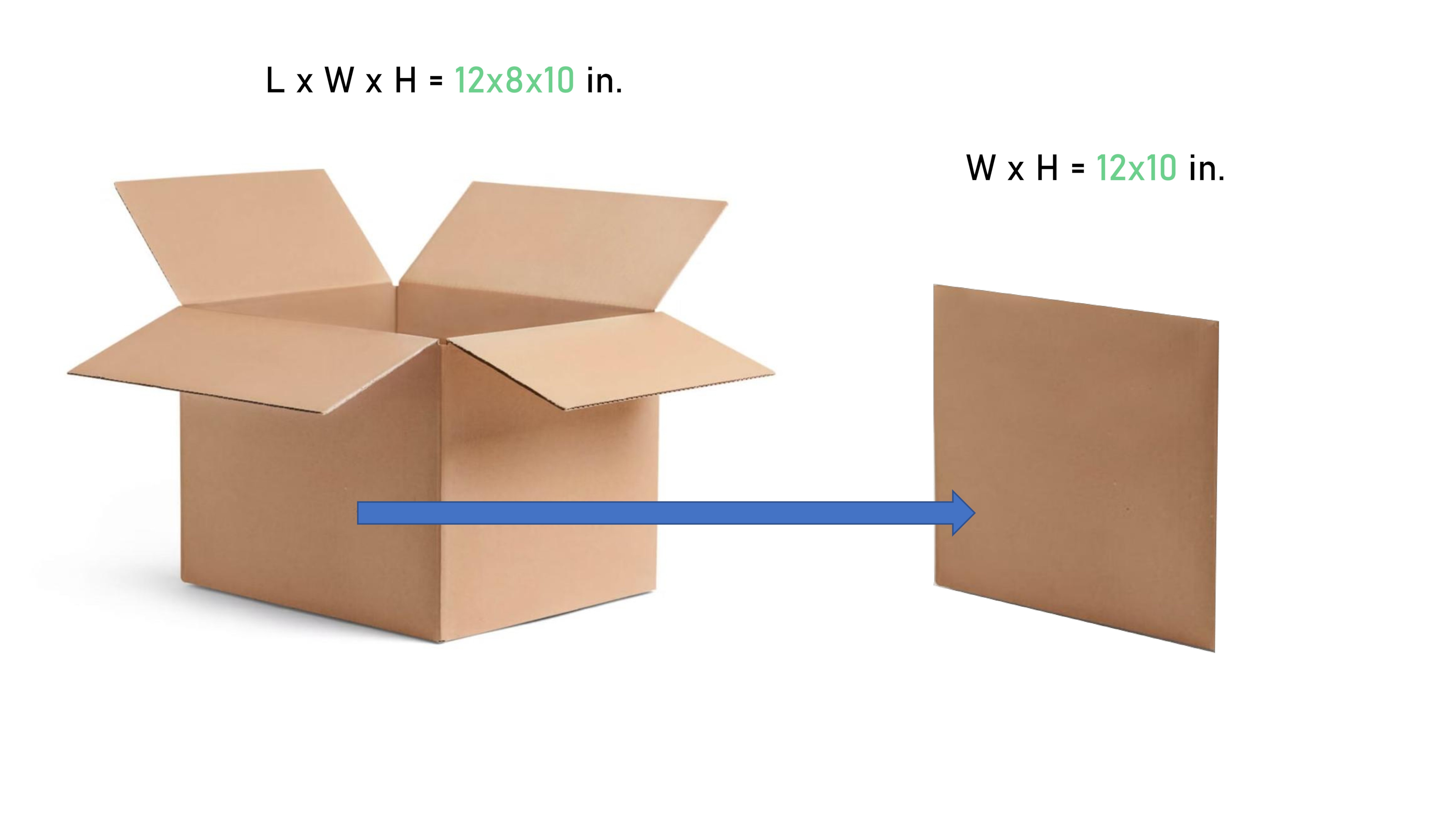
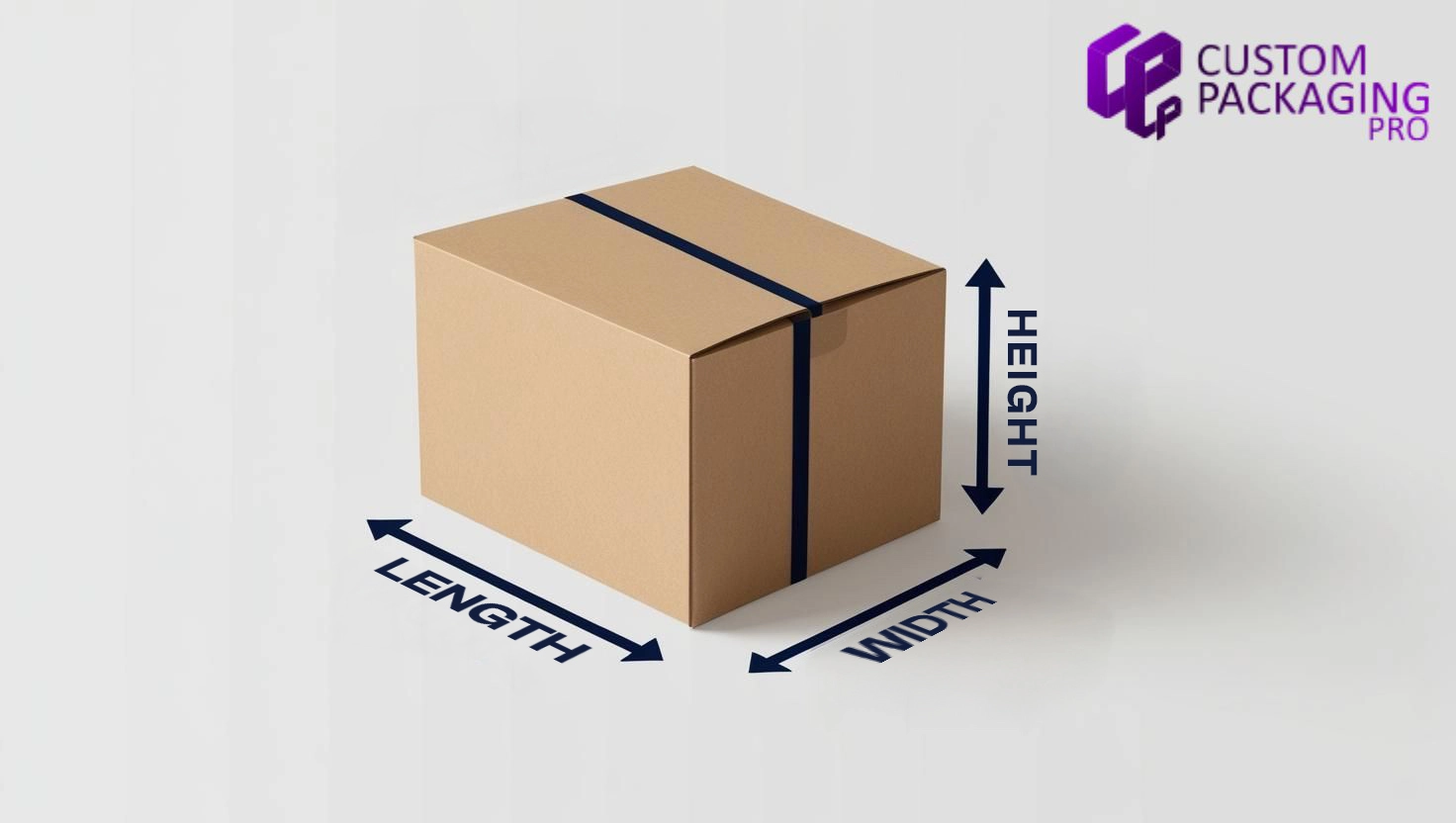
In the world of commerce, the simplest formulas often carry the heaviest financial weight. While “L x W x H” (Length x Width x Height) is introduced to most of us in primary school geometry as the formula for volume, in the context of business finance, e-commerce logistics, and global trade, it represents something far more critical: the blueprint for overhead costs and profit margins.
For entrepreneurs, online sellers, and corporate financial officers, these three variables dictate the “Dimensional Weight” (DIM weight) of a product. This calculation determines how much a carrier will charge for shipping and how much it costs to store inventory. Understanding the nuances of L x W x H is no longer a matter of basic math; it is a strategic financial tool used to protect bottom lines in an increasingly expensive global supply chain.
The Fundamentals of Dimensional Pricing and the DIM Factor
In the early days of logistics, shipping costs were primarily determined by the actual weight of a package. However, as e-commerce exploded, carriers like FedEx, UPS, and DHL realized that lightweight but bulky items (like a large box filled with pillows) were taking up valuable space on planes and trucks without paying a premium for that space. This led to the widespread adoption of dimensional pricing.
Moving Beyond Weight-Based Shipping
When a business looks at its financial statements, shipping is often one of the largest line items under “Operating Expenses.” The formula L x W x H allows carriers to calculate a package’s “theoretical weight” based on its volume. If the dimensional weight is higher than the actual weight, the business is billed for the larger of the two.
From a financial perspective, this means that the physical size of your product is just as important as its mass. A company selling high-density items like lead weights may be billed based on actual weight, but a company selling light-tech gadgets or apparel in oversized boxes is being penalized for the “dead air” inside their packaging.
Calculating the DIM Factor
To turn L x W x H into a monetary value, carriers use a “DIM Factor” or “dim divisor.” The formula typically looks like this:
(L x W x H) / Dim Divisor = Dimensional Weight
The divisor is a number set by the carrier (e.g., 139 or 166). In business finance, the goal is to negotiate a higher divisor with carriers, as a higher divisor results in a lower dimensional weight and, consequently, lower costs. For a high-volume side hustle or a scaling e-commerce brand, a small change in the L, W, or H can result in thousands of dollars in annual savings.
Impact on E-commerce Margins and Overhead
In the “Money” niche, efficiency is the precursor to scale. When we analyze the unit economics of a product, we must look at how the physical dimensions eat into the gross margin. If a product’s dimensions are not optimized, the business is essentially paying for the privilege of shipping air.
The Hidden Cost of “Air”
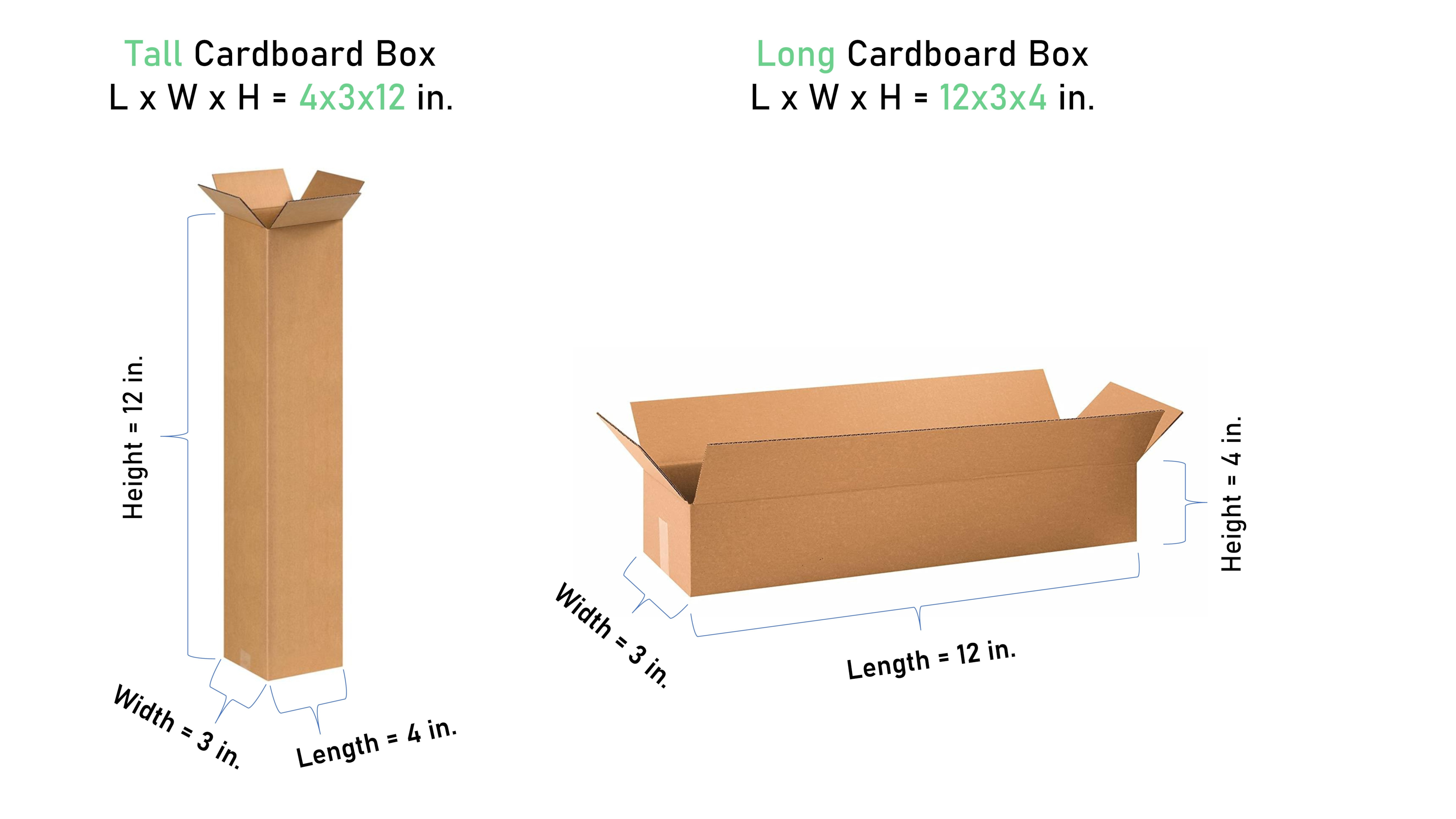
Many businesses fail because they ignore the spatial requirements of their inventory. Consider a product that measures 12 x 12 x 12 inches. If the packaging can be redesigned to 10 x 10 x 10 inches without compromising the product’s safety, the volume drops from 1,728 cubic inches to 1,000 cubic inches—a nearly 42% reduction.
In financial terms, this reduction doesn’t just lower shipping fees; it increases “shipping density.” This allows more units to fit on a single pallet, in a single shipping container, and on a single delivery truck. For a business operating on thin margins, optimizing the H (height) or W (width) of a box can be the difference between a profitable quarter and a net loss.
Packaging Optimization as a Financial Strategy
Strategic branding often conflicts with financial efficiency. A brand might want a large, luxurious box to create a “premium” unboxing experience. However, from a business finance standpoint, that extra inch of cardboard could trigger a higher shipping tier.
Financial analysts now work alongside product designers to ensure that the L x W x H of the retail packaging is “carrier-friendly.” This involves:
- Nested Packaging: Designing products to fit inside one another.
- Compression: For soft goods, using vacuum sealing to minimize the ‘H’ variable.
- Right-Sizing: Utilizing software to select the smallest possible box for any given order.
Scaling Your Business Through Spatial Efficiency
Beyond the immediate cost of shipping, L x W x H plays a pivotal role in the “Money” side of warehousing and inventory management. Every square foot of warehouse space has a cost associated with it, usually calculated as a monthly or annual lease payment. However, savvy business owners look at cubic feet—the three-dimensional reality of their storage.
Inventory Management and Warehousing Costs
If you are utilizing a Third-Party Logistics (3PL) provider or Amazon FBA (Fulfillment by Amazon), you are charged storage fees based on the volume of your goods. Amazon, for instance, dramatically increases its storage fees during the Q4 holiday season.
A business that has not optimized its product dimensions will see its storage overhead spike, eroding the gains from increased holiday sales. By auditing the L x W x H of your inventory, you can improve your “Inventory Turnover Ratio” in terms of volume. This means you can store more sellable units in the same footprint, effectively lowering your fixed costs per unit.
Leveraging Tech for Logistics Analysis
To manage the financial implications of L x W x H, many businesses are turning to financial tools and logistics software that provide “box-level” data. These tools analyze historical shipping data to identify “leakage”—money lost because employees chose boxes that were too large for the items ordered.
For an entrepreneur looking to build an online income stream, investing in a high-quality “cubing system” (a device that uses sensors to instantly measure L x W x H) can provide a significant Return on Investment (ROI). Precise measurements prevent “surprises” on carrier invoices, which are a common cause of cash flow disruptions in small businesses.
Future-Proofing Financial Logistics
As global trade faces challenges—from rising fuel surcharges to “green” taxes on carbon footprints—the L x W x H of products will become even more central to financial health. Carriers are increasingly moving toward “carbon-based” pricing, where the space a package occupies is tied to the fuel required to move it.
Sustainability and the Bottom Line
There is a direct correlation between spatial efficiency and financial sustainability. Reducing the volume of packaging (L x W x H) reduces the amount of material used (lowering COGS) and reduces the carbon footprint of transport. For businesses looking to attract ESG (Environmental, Social, and Governance) investors, showing a commitment to “dimensional efficiency” is a tangible way to demonstrate fiscal and environmental responsibility.
Strategic Planning for Product Development
When a business plans a new product launch, the financial model should begin with the L x W x H. Before a single prototype is built, the finance team should determine the “ideal dimensions” that fit into standard shipping envelopes or Tier 1 shipping brackets.
By “reverse-engineering” the product size to fit the most cost-effective shipping dimensions, companies can bake profitability into the product from day one. This is the hallmark of sophisticated financial planning in the modern age: recognizing that geometry is not just for mathematicians, but for anyone who wants to master the flow of money in a physical world.
Conclusion: The ROI of Precision
“What is L x W x H?” is a question that, on the surface, yields a simple measurement. But for the modern business professional, it is a question of scale, overhead, and competitive advantage. By mastering the three dimensions of their products, businesses can unlock hidden capital, optimize their supply chains, and ensure that every inch of their operation is contributing to the bottom line. In the final analysis, L x W x H isn’t just a formula for volume—it’s a formula for financial survival.
aViewFromTheCave is a participant in the Amazon Services LLC Associates Program, an affiliate advertising program designed to provide a means for sites to earn advertising fees by advertising and linking to Amazon.com. Amazon, the Amazon logo, AmazonSupply, and the AmazonSupply logo are trademarks of Amazon.com, Inc. or its affiliates. As an Amazon Associate we earn affiliate commissions from qualifying purchases.