
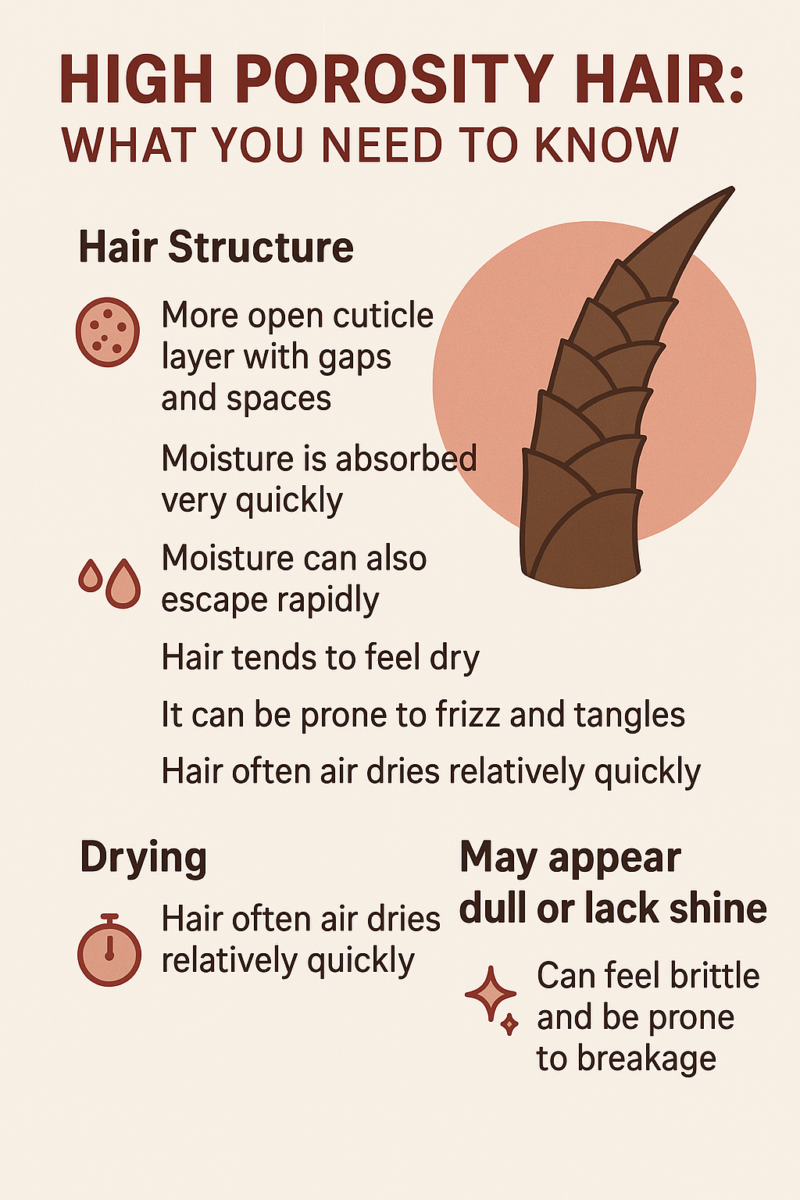
The concept of “porosity” in hair might sound technical, but it’s a surprisingly accessible and powerful tool for understanding your hair’s unique needs. Whether you’re a seasoned hair enthusiast or just starting to explore hair care beyond the basics, understanding porosity can unlock secrets to achieving healthier, more manageable, and visibly vibrant locks. In essence, hair porosity refers to your hair’s ability to absorb and retain moisture. It’s determined by the condition of your hair’s cuticle – the outermost layer, composed of overlapping scales. Think of these scales like shingles on a roof; when they’re lying flat and smooth, they create a protective barrier. When they’re lifted or damaged, moisture can easily escape, and external products can penetrate too readily, leading to various challenges.
This article will delve deep into the world of high porosity hair, exploring what it means, how to identify it, and, most importantly, how to tailor your hair care routine to thrive. We’ll approach this topic through the lens of our website’s core pillars: Tech, Brand, and Money, demonstrating how understanding hair porosity can be an empowering and even financially savvy pursuit.
Understanding the Mechanics of Porosity: The Science Behind Your Strands
Before we specifically address high porosity, it’s crucial to grasp the fundamental concept of hair porosity and how it’s determined. This isn’t about the texture (fine, medium, or coarse) or density (how many hairs you have per square inch) of your hair, but rather the underlying structure of the hair shaft itself.
The Cuticle: Your Hair’s Protective Shield
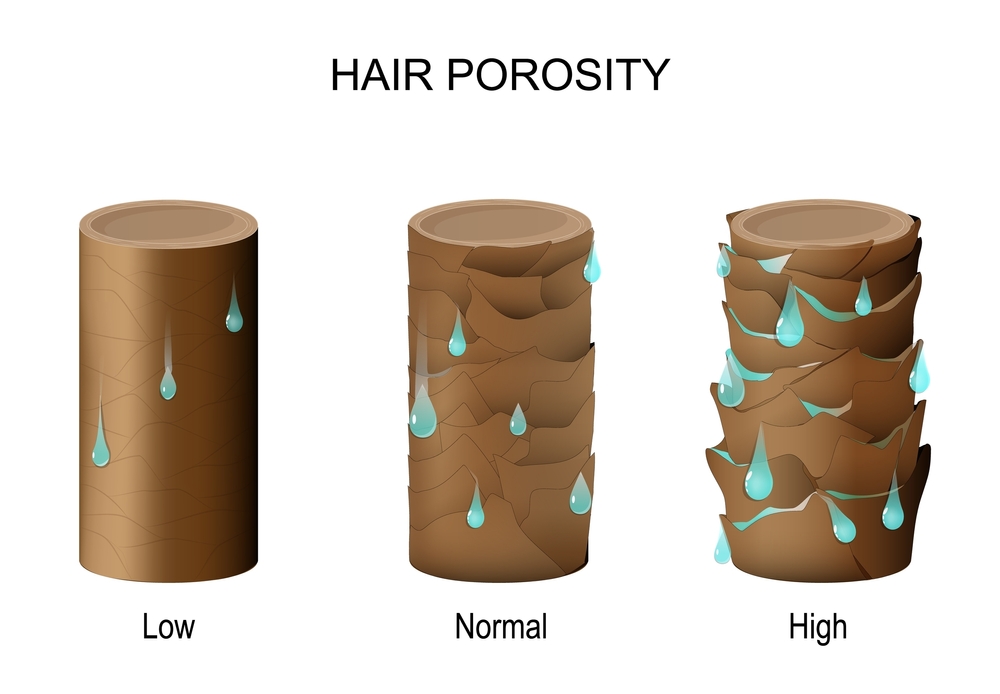
The cuticle is the outermost layer of the hair shaft, responsible for protecting the inner cortex. It’s made up of flat, overlapping keratin scales. The way these scales are positioned dictates your hair’s porosity.
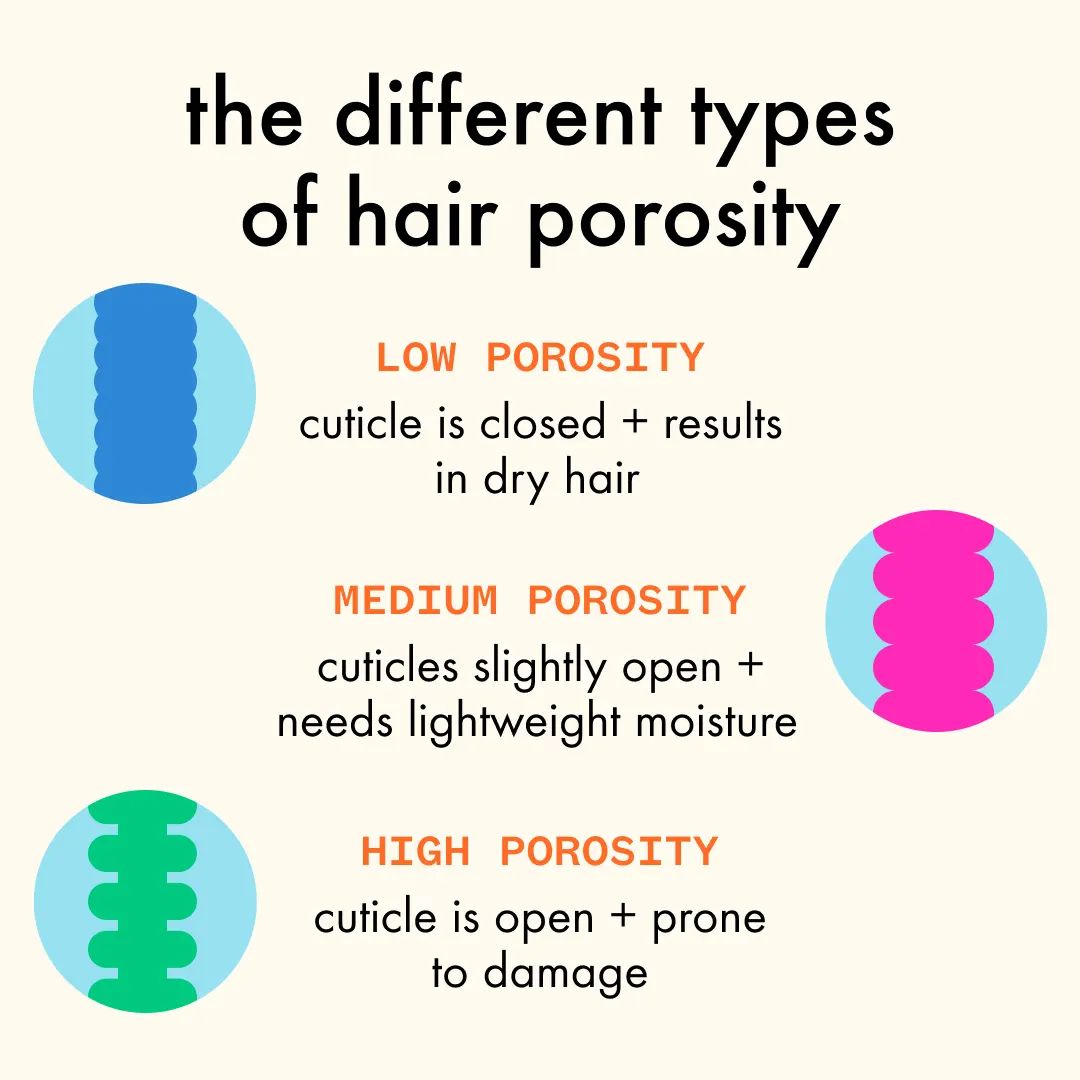
- Low Porosity Hair: In low porosity hair, the cuticle scales are very tightly bound together, lying flat and creating a smooth surface. This makes it difficult for water and products to penetrate the hair shaft. While this offers excellent protection against damage, it can also make it challenging to moisturize effectively. Think of it like a polished surface – liquids tend to bead up and sit on top.
- Medium Porosity Hair: Medium porosity hair has cuticles that are neither too tightly bound nor too open. This means it absorbs and retains moisture relatively well. It’s often considered the “ideal” porosity as it balances the ability to take in moisture with the ability to hold onto it.
- High Porosity Hair: In high porosity hair, the cuticle scales are lifted or have gaps between them. This allows moisture to enter the hair shaft very easily, but also causes it to escape just as quickly. Imagine a sieve; water passes through rapidly. This is often due to genetic predisposition or damage from chemical treatments, heat styling, or harsh manipulation.
Identifying Your Hair’s Porosity: The DIY Diagnostic
While a professional assessment can be insightful, several at-home methods can help you determine your hair’s porosity. These are practical applications of our Tech pillar, utilizing simple tools and observation to gain valuable data about your hair.
The Float Test: A Classic (and Surprisingly Accurate) Method
One of the most popular and accessible methods is the hair strand float test. This relies on the principle that hair with different porosity levels will behave differently in water.
- Preparation: Start with clean, product-free hair. Gently pull a few strands of hair from your brush or comb.
- The Test: Place these strands into a glass of room-temperature water.
- Observation: Observe how the hair strands behave after 2-4 minutes:
- High Porosity: If your hair strands sink quickly to the bottom of the glass, it’s a strong indicator of high porosity. The lifted cuticles allow water to be absorbed rapidly, making the hair heavier.
- Medium Porosity: Hair strands that float in the middle of the glass suggest medium porosity. They absorb water at a moderate pace.
- Low Porosity: Hair strands that float on the surface of the water indicate low porosity. The tightly bound cuticles repel water, preventing it from being absorbed quickly.
Visual and Tactile Clues: Beyond the Float Test
Beyond the float test, several other observable characteristics can point towards high porosity. These are essentially user-generated data points that inform your hair care strategy.
- Quick Drying: High porosity hair dries very quickly after washing. Because moisture enters and leaves easily, it doesn’t hold onto water for long. This can be a significant time-saver in your daily routine, a small win in the Tech of personal grooming.
- Prone to Frizz and Tangling: The lifted cuticles of high porosity hair create a rougher surface, leading to increased friction between strands. This results in frizz, especially in humid conditions, and makes hair prone to tangling and knotting.
- Absorbs Products Quickly, But Doesn’t Feel Moisturised: You might find that your hair soaks up conditioners and leave-in products almost instantly. However, shortly after application, your hair might still feel dry, brittle, or rough. This is the hallmark of high porosity – it takes in moisture, but can’t hold onto it.
- Susceptible to Environmental Damage: The open cuticle makes high porosity hair more vulnerable to environmental factors like sun, wind, and pollution. It also means it’s more easily damaged by heat styling tools.
- Often Feels Rough or Coarse: Even if your hair is fine, high porosity can sometimes lend a feeling of roughness or a slightly “straw-like” texture due to the exposed inner layers of the hair shaft.
Navigating the Challenges of High Porosity: Strategic Hair Care Solutions
Once you’ve identified your hair as high porosity, the next crucial step is to develop a hair care strategy that addresses its specific needs. This is where we can apply principles from Brand and Money, thinking about how you “brand” your hair care routine and make financially sound choices that benefit your strands in the long run.
Sealing in Moisture: The Cornerstone of High Porosity Care
The primary goal for high porosity hair is to trap moisture and prevent it from escaping. This involves a two-pronged approach: introducing moisture and then sealing it in effectively.
The Power of Sealing: Locking in Hydration
This is where product selection becomes paramount. For high porosity hair, you need products that can create a barrier to prevent moisture loss.
- Oils and Butters: Heavy oils and butters are your best friends. Look for ingredients like shea butter, cocoa butter, mango butter, coconut oil, avocado oil, and olive oil. These create a rich seal over the hair shaft.
- Leave-in Conditioners: Opt for creamy, rich leave-in conditioners. Thicker formulas are generally better for high porosity hair as they provide a more substantial coating.
- Creams and Gels: Styling creams and gels can also help to lock in moisture and provide definition. Look for products that contain emollients and humectants that can draw moisture in before sealing it.
Understanding Ingredient Synergy: A Smart Investment in Your Hair
When choosing products, think about the ingredients like you would an investment portfolio. You want a blend of components that work together for optimal results.
- Humectants (use with caution): Ingredients like glycerin, honey, and hyaluronic acid attract moisture. While beneficial, in high humidity, they can draw too much moisture from the air, potentially causing frizz. In dry climates, they can be incredibly effective at drawing moisture into the hair.
- Emollients: These smooth and soften the hair, improving manageability and reducing frizz. Examples include fatty alcohols (like cetyl alcohol, stearyl alcohol) and plant-derived oils.
- Occlusives: These are the ultimate moisture sealers. They form a barrier on the hair’s surface to prevent water loss. Examples include petroleum jelly (vaseline), mineral oil, beeswax, and certain silicones.
Your High Porosity Hair Care Routine: A Tailored Approach
Developing a consistent routine that caters to high porosity hair is key. This is about establishing a reliable system, much like a well-oiled Tech operation.
Washing and Conditioning: Gentle Yet Effective
- Co-Washing: Consider co-washing (washing your hair with conditioner instead of shampoo) regularly. This is a gentler way to cleanse your hair while infusing it with moisture.
- Sulfate-Free Shampoos: When you do shampoo, opt for sulfate-free formulas. Sulfates can strip natural oils, which are essential for keeping moisture in.
- Deep Conditioning: Incorporate deep conditioning treatments regularly, at least once a week. Use rich, moisturizing masks that contain butters, oils, and proteins. Consider sitting under a hooded dryer or using a heat cap to enhance penetration.
- Rinse with Cool Water: After conditioning, rinse your hair with cool or lukewarm water. This helps to close the cuticle, trapping in moisture.
Styling and Protection: Preserving Your Strands
- Apply Products to Damp Hair: Apply your leave-in conditioners, oils, and styling products to damp or wet hair. This helps to distribute them evenly and allows them to penetrate the hair shaft more effectively.
- The LOC/LCO Method: These popular methods are excellent for high porosity hair:
- LOC (Leave-in, Oil, Cream): Apply a water-based leave-in conditioner, followed by an oil, and then a cream sealant.
- LCO (Leave-in, Cream, Oil): Apply a water-based leave-in conditioner, followed by a cream, and then an oil sealant. Experiment to see which order works best for your hair.
- Protective Styles: Embrace protective hairstyles that minimize manipulation and shield your hair from the elements. Braids, twists, buns, and wigs can all be beneficial.
- Silk or Satin Pillowcases/Bonnet: Protect your hair at night by sleeping on a silk or satin pillowcase or wearing a silk or satin bonnet. These materials create less friction than cotton, reducing breakage and moisture loss.
The “Brand” of Your Hair: Investing in Your Personal Image and Well-being
Understanding and caring for your high porosity hair is more than just a routine; it’s an act of self-care that contributes to your overall personal Brand. When your hair looks and feels healthy, it boosts your confidence and enhances your presentation to the world.
The Financial Savvy of Hair Care: Making Smart Choices
Investing in the right products and techniques for high porosity hair can seem like an expense, but it’s often a cost-effective approach in the long run.
- Preventative Care is Cheaper than Repair: By consistently moisturizing and protecting your high porosity hair, you prevent damage. Repairing severely damaged hair can be costly, involving salon treatments, breakage, and even haircuts.
- Maximizing Product Efficacy: When you understand your hair’s porosity, you choose products that are actually effective, meaning you’re not wasting money on products that don’t work for your hair type. This aligns with a smart Money management strategy.
- DIY Solutions: Many effective treatments for high porosity hair can be made at home using natural ingredients, further reducing costs. Think of your kitchen as a personal Tech hub for hair care.
- Reduced Salon Visits: With a good at-home routine, you might find yourself needing fewer salon appointments for damage control or intensive treatments, saving you significant Money over time.
Building Your Hair’s “Brand Identity”: Confidence and Self-Expression
Your hair is a significant part of your personal Brand. When you have healthy, vibrant hair, it communicates confidence, attention to detail, and self-care.
- Confidence Booster: Well-maintained hair can significantly impact your self-esteem. When you feel good about your hair, you project that confidence in all aspects of your life.
- Personal Style: Your hair is a canvas for personal expression. Understanding its unique characteristics allows you to style it in ways that are both flattering and manageable, further solidifying your individual Brand.
- Empowerment Through Knowledge: Learning about your hair porosity is empowering. It shifts you from feeling frustrated with your hair’s behavior to being in control, making informed decisions about its care. This knowledge itself is a valuable asset, a form of intellectual capital that contributes to your personal Brand.
Conclusion: Embracing Your High Porosity Hair
High porosity hair, while presenting unique challenges, is not a limitation but a characteristic that can be managed and celebrated. By understanding the science behind your strands, adopting strategic hair care practices, and viewing your hair care as an investment in your personal Brand and financial well-being, you can unlock its full potential. From the simple Tech of the float test to the sophisticated Brand building that comes with confident self-care, mastering high porosity hair is a rewarding journey. So, embrace your hair’s absorption power, lock in that moisture, and let your vibrant, healthy locks shine!
aViewFromTheCave is a participant in the Amazon Services LLC Associates Program, an affiliate advertising program designed to provide a means for sites to earn advertising fees by advertising and linking to Amazon.com. Amazon, the Amazon logo, AmazonSupply, and the AmazonSupply logo are trademarks of Amazon.com, Inc. or its affiliates. As an Amazon Associate we earn affiliate commissions from qualifying purchases.