
The golden section, also known as the golden ratio, golden mean, or divine proportion, has captivated artists, designers, architects, and mathematicians for centuries. It’s a mathematical concept, often represented by the Greek letter phi (Φ), approximately equal to 1.618, that describes a peculiar relationship between two quantities. When the ratio of the sum of the quantities to the larger quantity is equal to the ratio of the larger quantity to the smaller one, the golden section is achieved. This harmonious proportion, found throughout nature and in human-made creations, has been employed to imbue artworks with a sense of balance, beauty, and visual appeal.

While traditionally discussed within the realm of fine art, the principles of the golden section resonate powerfully within the broader context of creation and aesthetics, a concept that seamlessly integrates with the core interests of our platform: Tech, Brand, and Money. Understanding the golden section isn’t just about appreciating classical art; it’s about recognizing an underlying principle of effective design, persuasive branding, and even sound financial strategy – all areas we delve into.
The Mathematical Underpinnings of Aesthetic Appeal
At its heart, the golden section is a mathematical constant. Imagine a line segment divided into two parts, a and b, where a is the longer part. If the ratio of the whole line (a + b) to the longer part (a) is the same as the ratio of the longer part (a) to the shorter part (b), then this division embodies the golden section. This can be expressed as:
(a + b) / a = a / b = Φ ≈ 1.618
This simple mathematical relationship, when applied to visual elements, creates a perceived sense of order and beauty. Artists and designers have intuitively or consciously used this ratio to guide their compositions, place focal points, and determine the dimensions of their works.
The Golden Rectangle and the Golden Spiral
Two of the most common visual manifestations of the golden section are the golden rectangle and the golden spiral.
- The Golden Rectangle: This is a rectangle whose side lengths are in the golden ratio. If you cut a square from a golden rectangle, the remaining rectangle is also a golden rectangle. This process can be repeated infinitely, creating a series of nested golden rectangles.
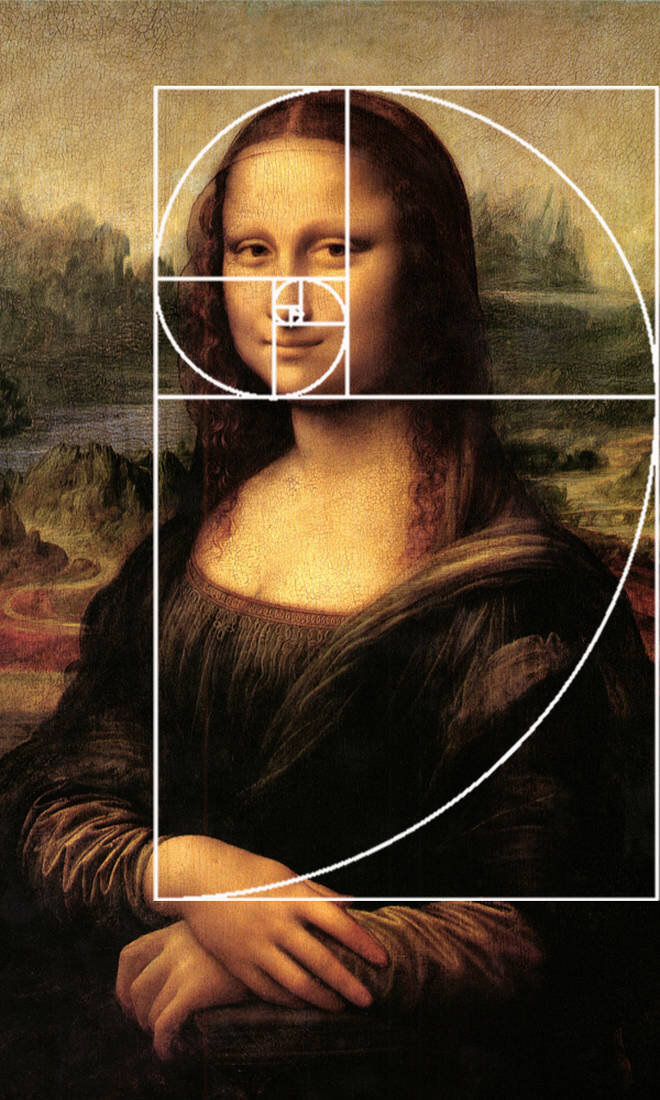
- The Golden Spiral: By connecting opposite corners of the squares that are progressively removed from the nested golden rectangles, a beautiful, sweeping spiral is formed. This spiral is found in many natural phenomena, from the unfurling of a fern frond to the arrangement of seeds in a sunflower and the swirl of a galaxy. Its presence in nature suggests an inherent appeal to the human eye, a visual language that resonates with our innate sense of harmony.
The enduring appeal of the golden section lies in its ability to provide a framework for aesthetically pleasing proportions. It’s not a rigid rule that dictates every artistic choice, but rather a guideline that, when applied thoughtfully, can lead to compositions that feel naturally balanced and visually engaging.
Golden Section in Art: From Ancient Wonders to Modern Masterpieces
The historical application of the golden section in art is a rich tapestry. While definitive proof of conscious application can be debated for some ancient structures, the pervasive presence of proportions close to Φ suggests a deep, intuitive understanding of its aesthetic power.
Classical Art and Architecture: Whispers of Proportion
Ancient Greek architects and sculptors are often credited with employing the golden section. The Parthenon in Athens, for instance, is frequently cited as an example, with its facade dimensions and the placement of its architectural elements exhibiting ratios close to 1.618. Similarly, sculptures like the Venus de Milo are analyzed for their harmonious proportions, with the placement of limbs and facial features potentially aligning with golden ratios.
Renaissance artists, armed with a renewed interest in classical ideals and advancements in geometry, are thought to have more deliberately incorporated the golden section into their works. Leonardo da Vinci’s “Mona Lisa,” “The Last Supper,” and his anatomical studies are often subjected to analysis, with researchers identifying golden rectangles and spirals guiding the composition and placement of key figures and elements. The “Vitruvian Man,” while primarily exploring human proportions based on Vitruvius’s writings, also touches upon these harmonious relationships.
The underlying principle here is the creation of visual harmony. When elements are arranged according to the golden section, the eye is guided through the composition in a natural and pleasing way. This leads to a sense of order and balance that can evoke feelings of peace, beauty, and even awe in the viewer.

Modern Art and Design: A Timeless Principle in Evolving Forms
The golden section’s influence didn’t wane with the advent of modern art. Artists and designers across various movements have continued to explore and utilize its principles.
- Compositional Guidance: In painting and photography, the golden section can be used to determine the placement of the horizon line, the main subject, or points of interest. Imagine dividing your canvas or frame into sections based on the golden ratio; placing your most important element at the intersection of these lines or along these divisions can create a more dynamic and visually compelling image than a simple centering. This is a principle that directly translates to digital design and even video editing.
- Typography and Layout: The golden section extends beyond fine art into the realm of graphic design. The proportions of a page, the size of text blocks relative to margins, and the spacing between elements can all be informed by the golden ratio. This creates a sense of visual hierarchy and readability that is pleasing to the eye. Think about the layout of a well-designed magazine spread or the responsive design of a website – the underlying principles of balanced proportions, informed by concepts like the golden section, contribute to a positive user experience.
- Architecture and Product Design: Even today, architects and product designers often draw inspiration from the golden section for its inherent aesthetic appeal. The dimensions of buildings, the placement of windows, and the proportions of furniture can all be subtly influenced by this ratio, contributing to a sense of elegant design and timelessness.
The continued relevance of the golden section highlights its universality. It speaks to a fundamental aspect of human perception and our appreciation for order and beauty, demonstrating that even in a rapidly evolving technological landscape, certain timeless principles of design and aesthetics persist.
The Golden Section in the Digital Age: Tech, Brand, and the Power of Proportion
The principles of the golden section are not confined to traditional canvases or physical spaces. In our increasingly digital world, understanding and applying these proportional relationships can significantly impact the effectiveness of technology, the strength of a brand, and even financial decision-making.
Tech: Enhancing User Experience Through Intuitive Design
In the realm of technology, the golden section plays a crucial role in User Interface (UI) and User Experience (UX) design.
- Website and App Layouts: When designing websites and mobile applications, the golden section can guide the arrangement of content, the sizing of elements like buttons and images, and the overall layout of the screen. Using golden rectangles or spirals can help create a visually balanced and intuitive interface that guides the user’s eye through important information and actions. For example, placing a call-to-action button at a point that aligns with a golden ratio division can increase its prominence and effectiveness.
- Visual Hierarchy and Readability: Effective digital content relies on clear visual hierarchy. The golden section can inform the sizing of headlines, subheadings, and body text, as well as the spacing between paragraphs and images. This ensures that information is presented in a digestible and appealing manner, improving readability and reducing cognitive load for the user.
- Image and Video Composition: Even in the creation of digital media, the golden section remains relevant. Photographers and videographers can use the “rule of thirds,” a simplification of the golden section, to compose visually striking shots. When editing images or videos, understanding these proportional relationships can help in cropping and framing to achieve more aesthetically pleasing results. AI tools designed to assist with image generation or editing can also implicitly or explicitly leverage these principles to create more harmonious visuals.
Ultimately, applying the golden section in tech design leads to products that are not only functional but also aesthetically pleasing and easy to interact with, fostering a more positive and engaging user experience.
Brand: Building Trust and Recognition Through Balanced Aesthetics
A strong brand is built on a foundation of trust, recognition, and consistent communication. The golden section, when integrated into branding strategies, can significantly contribute to these objectives.
- Logo Design: Many iconic logos subtly incorporate the golden ratio. The proportions of the elements within a logo, the spacing between them, and even the overall shape can be influenced by the golden section, contributing to a logo that is perceived as balanced, professional, and memorable. This inherent harmony can subconsciously communicate stability and reliability to consumers.
- Brand Visual Identity: Beyond the logo, the golden section can inform the entire visual language of a brand. This includes the design of marketing materials, website aesthetics, social media graphics, and even the packaging of products. Consistent application of these harmonious proportions across all brand touchpoints reinforces the brand’s identity and creates a cohesive and aesthetically pleasing experience for the audience.
- Marketing and Advertising: The principles of visual appeal that the golden section embodies are directly applicable to marketing campaigns. Advertisements designed with golden section principles in mind can be more captivating and persuasive, drawing the viewer’s attention to key messages and products. This is particularly relevant in the digital advertising space, where capturing attention quickly is paramount.
A brand that demonstrates an understanding of aesthetic balance, often guided by principles like the golden section, can convey a sense of sophistication and attention to detail, fostering a deeper connection with its target audience.
Money: The Unseen Influence of Proportion on Financial Success
While the connection between the golden section and art might seem abstract, its principles can also offer a unique perspective on financial matters, particularly in areas of investment and personal finance.
- Investment Charts and Analysis: Technical analysts in finance sometimes observe patterns in stock market charts that bear resemblance to Fibonacci sequences (closely related to the golden ratio). While not a direct application of artistic composition, the idea of finding inherent patterns and proportional relationships in data can be seen as a parallel. Some traders look for price movements that adhere to Fibonacci retracement levels, which are derived from the Fibonacci sequence, believing these levels can indicate potential support or resistance points. This highlights how underlying mathematical relationships can influence perceived value.
- Personal Finance and Budgeting: The concept of balanced proportions can be metaphorically applied to personal finance. A healthy budget involves allocating resources in a balanced way across different needs and wants. While not a strict mathematical formula, thinking about how income is divided and ensuring that expenditures are proportional to income and savings goals can be seen as a form of financial harmony. This echoes the idea of finding the “right” proportion for different aspects of one’s financial life.
- Business Finance and Scalability: In business finance, understanding optimal proportions is crucial for growth and profitability. The ratio of investment to return, the balance between operational costs and revenue, and the scaling of resources all require a keen sense of proportion. Businesses that achieve a harmonious balance in their financial structures are often more resilient and sustainable. Thinking about the “divine proportion” of resources can lead to more efficient and effective financial management.
The golden section, in its broader sense of harmonious and balanced proportions, offers a framework for thinking about not just what looks good, but what works effectively. This applies to the creation of beautiful art, the design of user-friendly technology, the building of compelling brands, and even the management of personal and business finances. It’s a testament to the enduring power of underlying mathematical principles that govern our perception and influence our decision-making in profound ways.
aViewFromTheCave is a participant in the Amazon Services LLC Associates Program, an affiliate advertising program designed to provide a means for sites to earn advertising fees by advertising and linking to Amazon.com. Amazon, the Amazon logo, AmazonSupply, and the AmazonSupply logo are trademarks of Amazon.com, Inc. or its affiliates. As an Amazon Associate we earn affiliate commissions from qualifying purchases.