
In the realm of research, a fundamental question often arises: “Can the findings from this study be applied to other situations, populations, or settings?” This concept is known as generalizability, and it’s a cornerstone of robust and impactful research across all disciplines, including the dynamic fields of technology, branding, and finance. When researchers strive for generalizability, they are essentially aiming to make their conclusions relevant beyond the confines of their specific experiment or survey. It’s about building a bridge from the observed to the unobserved, from the particular to the general, and ultimately, from a research finding to a real-world implication.
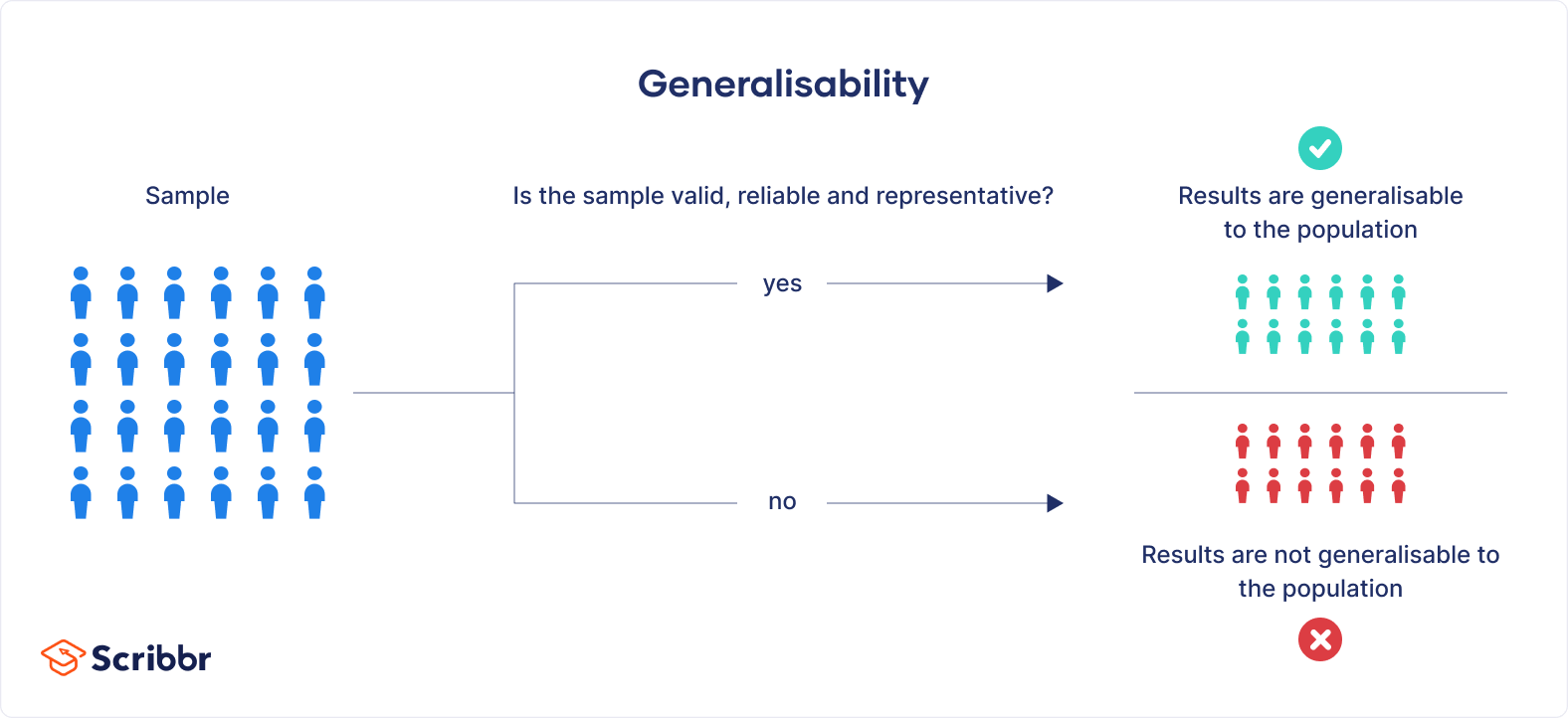
Imagine a tech company developing a new AI tool for content creation. If their research only tests the tool on a small group of highly experienced writers using very specific prompts, the findings might be exceptionally positive. However, if this tool is then rolled out to a broader audience of beginners, casual users, or those with different writing styles and needs, the initial positive results might not hold true. This is where generalizability becomes crucial. Without considering whether the initial findings can be generalized, the company might overpromise and underdeliver, leading to user frustration and a flawed product rollout.
Similarly, in the world of branding, a successful marketing campaign for a niche luxury product might not translate directly to a mass-market consumer good. The strategies that resonate with a discerning, high-net-worth audience might be entirely ineffective or even off-putting to a broader demographic. Understanding the generalizability of a brand’s messaging and its impact is vital for sustainable growth and effective market penetration.
And in finance, a particular investment strategy that proves profitable in a bull market might falter dramatically in a bear market. Research into personal finance or business finance needs to consider the various economic conditions and individual circumstances to which its recommendations can be generalized. Without this, advice could be misleading and potentially detrimental.
At its core, generalizability addresses the external validity of a research study. External validity is the extent to which the results of a study can be generalized to and across other situations, people, and times. It’s about ensuring that the lessons learned in a controlled research environment are applicable and meaningful in the messy, unpredictable realities of the world.
The Pillars of Generalizability: Understanding Its Dimensions
Generalizability isn’t a monolithic concept; it encompasses several interconnected dimensions. Understanding these different facets helps researchers design studies that maximize their applicability and allows consumers of research to critically evaluate the scope of its findings.
Target Population Generalizability: From Sample to Society
One of the most common forms of generalizability relates to the target population. Researchers rarely have the resources or feasibility to study an entire population. Instead, they select a sample – a subset of that population – to conduct their research. The goal is for the characteristics of the sample to accurately reflect the characteristics of the target population, so that findings from the sample can be generalized to the larger group.
For instance, in the tech world, a survey on the adoption rates of a new software feature might target “all small business owners.” However, if the sample only includes owners of businesses in a specific industry or region, the findings might not be generalizable to small business owners across different sectors or geographical locations. A truly generalizable study would ensure the sample is representative, perhaps through stratified sampling techniques that ensure proportional representation of different industries, business sizes, or geographical areas.
Similarly, a study on effective personal branding strategies for entrepreneurs might be conducted solely on male tech startup founders. While the findings might be insightful for that specific group, they might not be generalizable to female entrepreneurs, founders in different industries, or those in more traditional business sectors. To achieve broader generalizability, the sample would need to include a diverse range of entrepreneurs.
In finance, if a study on the effectiveness of a particular budgeting app is conducted on a sample of young, single adults with high disposable income, its findings might not be generalizable to families, retirees, or individuals with lower incomes and different financial priorities. The sample must mirror the diversity of the intended audience for the advice or tool to be broadly applicable.
The key to achieving target population generalizability lies in sampling methodology. Random sampling techniques, where every member of the target population has an equal chance of being selected, are often considered the gold standard for creating representative samples. However, other methods like stratified random sampling (dividing the population into subgroups and then randomly sampling from each subgroup) or cluster sampling (dividing the population into clusters and then randomly selecting clusters to sample from) can also enhance generalizability when appropriate.
Situational and Environmental Generalizability: Beyond the Lab
Beyond the characteristics of the people studied, generalizability also concerns the situations and environments in which the research is conducted. A study performed in a highly controlled laboratory setting might yield different results than the same study conducted in a real-world, everyday environment.
Consider a new productivity app designed to boost focus. If its effectiveness is tested in a silent, distraction-free office, its performance might be impressive. However, when users try to employ it in a busy co-working space, a noisy home environment, or during commutes, its actual utility might be significantly diminished. This highlights a lack of situational generalizability. For the app’s developers to claim broad applicability, they need to test its functionality and user experience across a variety of real-world scenarios and levels of distraction.
In branding, a focus group conducted in a comfortable, familiar setting might elicit different responses than a similar discussion held at a public event or online. The environment can subtly influence participants’ opinions and behaviors, impacting the generalizability of the findings to broader consumer perceptions. Marketers need to consider whether their brand messaging and its reception are likely to be consistent across diverse consumer touchpoints and environments, from online advertisements to in-store experiences.
For financial research, the economic climate is a critical situational factor. A study on investment strategies that takes place during a prolonged period of economic growth might produce overwhelmingly positive results. However, these strategies might perform poorly during an economic downturn. Therefore, the generalizability of financial advice is heavily dependent on the economic context. Researchers must either account for various economic scenarios or clearly state the specific conditions under which their findings are likely to hold true.
Temporal Generalizability: Time-Tested Truths
Another important aspect is temporal generalizability – the extent to which findings remain valid over time. Trends, technologies, societal norms, and economic conditions are constantly evolving. A study conducted even a few years ago might have findings that are no longer as relevant today.

In the fast-paced tech industry, a tutorial on how to use a specific piece of software might become obsolete as soon as a new version is released. Similarly, an AI tool designed with a particular dataset might lose its effectiveness as new data emerges and the underlying patterns it recognizes shift. Researchers in tech must be mindful of the shelf-life of their findings and acknowledge when their work might be context-dependent in terms of time.
For branding, consumer preferences and cultural values can shift significantly over time. A marketing campaign that was wildly successful a decade ago might be perceived as outdated or even offensive today. Effective brand strategy requires an understanding of enduring principles that can be adapted to changing times, rather than relying on ephemeral tactics. The generalizability of branding principles is about identifying core human desires and motivations that transcend specific eras.
In finance, economic cycles are inherently temporal. Investment strategies that worked during a particular historical period might not be applicable in the present or future. Personal finance advice must be robust enough to withstand changing economic realities, inflation rates, and interest rate fluctuations. Research that claims long-term validity needs to consider how its findings might hold up across different economic epochs.
Factors Influencing Generalizability: What to Look For
When evaluating research, or when designing a study, several factors significantly impact its generalizability. Being aware of these can help researchers improve their studies and help readers critically interpret findings.
Sample Size and Diversity
While not the sole determinant, a larger sample size generally increases the likelihood that the sample accurately reflects the target population. However, size alone isn’t sufficient. The diversity of the sample is equally, if not more, important. A large sample that is homogenous in its characteristics will have limited generalizability.
For example, a survey about the user experience of a new smart home gadget administered to 10,000 people who all live in large, single-family homes in a wealthy suburb might not be generalizable to people living in small apartments, those in rural areas, or individuals with different income levels who might have different technological needs and priorities. True diversity in the sample, reflecting variations in age, socioeconomic status, technical proficiency, living situation, and cultural background, is crucial for broader generalizability.
Research Design and Methodology
The research design and methodology employed have a profound impact on generalizability. Studies that use highly controlled experimental designs, while excellent for establishing cause-and-effect relationships within the study, can sometimes suffer from artificiality, limiting their real-world applicability. Conversely, studies conducted in naturalistic settings might have higher external validity but may be less able to isolate specific variables.
For a tech product, A/B testing on a live user base, rather than just in a lab, can offer insights into how the product performs under real-world usage patterns, thus enhancing generalizability. For branding, qualitative research like in-depth interviews and ethnographic studies can provide rich insights into consumer behavior in natural settings, leading to more generalizable conclusions about brand perception. In finance, longitudinal studies that track individuals’ financial behaviors over extended periods in their natural environments are more likely to yield generalizable advice than studies conducted on hypothetical scenarios.
Replication and Consistency
The replication of findings across multiple studies and by different researchers is a strong indicator of generalizability. If a particular tech solution, branding strategy, or financial principle proves effective in numerous independent studies, its generalizability is significantly bolstered. This collective evidence builds confidence that the findings are not due to chance, specific circumstances, or researcher bias.
Clear Definition of Scope and Limitations
Finally, clearly defining the scope and limitations of a study is essential for responsible generalizability. Researchers should explicitly state the population to which their findings are intended to apply and acknowledge any factors that might restrict their generalizability. This honesty allows readers to interpret the findings appropriately and avoids overstating the conclusions.
For instance, a tech review might conclude, “This AI writing assistant is highly effective for crafting technical documentation.” This is a specific claim with clear scope. If the researcher also adds, “However, its effectiveness for creative fiction may vary,” they are proactively addressing potential limitations in generalizability.

The Importance of Generalizability in Action
The pursuit of generalizability is not an academic exercise; it has tangible implications for innovation, strategy, and decision-making across industries.
In technology, generalizability ensures that innovations are not just niche marvels but solutions that can benefit a wide array of users. A truly generalizable piece of software or hardware can adapt to different user needs, operating systems, and technical environments, leading to wider adoption and greater impact. Understanding the generalizability of AI tools, for example, helps developers build systems that are fair, unbiased, and effective for diverse populations, preventing the creation of tools that inadvertently exacerbate existing inequalities.
For brands, generalizability means building a resonance that transcends fleeting trends. A brand with strong generalizable principles can adapt its message and approach to connect with different consumer segments and across various market shifts. It allows for consistent brand identity and a reliable reputation to be built over time, ensuring that marketing efforts yield long-term returns.
In finance, generalizability is paramount for providing sound advice and creating effective tools. Whether it’s personal finance planning, investment strategies, or business finance management, findings that can be generalized across different economic cycles, income levels, and life stages offer the most value and protection to individuals and organizations.
In conclusion, generalizability in research is about more than just statistical validity; it’s about the real-world relevance and applicability of knowledge. By understanding its nuances, factors, and importance, researchers can design more impactful studies, and consumers of research can make more informed decisions, ultimately leading to better innovation, more effective strategies, and sounder financial practices in our increasingly complex world.
aViewFromTheCave is a participant in the Amazon Services LLC Associates Program, an affiliate advertising program designed to provide a means for sites to earn advertising fees by advertising and linking to Amazon.com. Amazon, the Amazon logo, AmazonSupply, and the AmazonSupply logo are trademarks of Amazon.com, Inc. or its affiliates. As an Amazon Associate we earn affiliate commissions from qualifying purchases.