
In the mid-1970s, the concept of a “personal computer” was largely confined to the imaginations of science fiction writers and a small, dedicated community of electronics hobbyists. Computers were monolithic machines—massive, expensive engines of data processing housed in climate-controlled rooms of major corporations and academic institutions. The idea that an individual could own a computer, let alone use it for daily tasks, was revolutionary. At the heart of this transformation were two childhood friends from Seattle whose partnership would redefine the global technological landscape. To understand who started Microsoft is to understand the birth of the modern software industry itself.
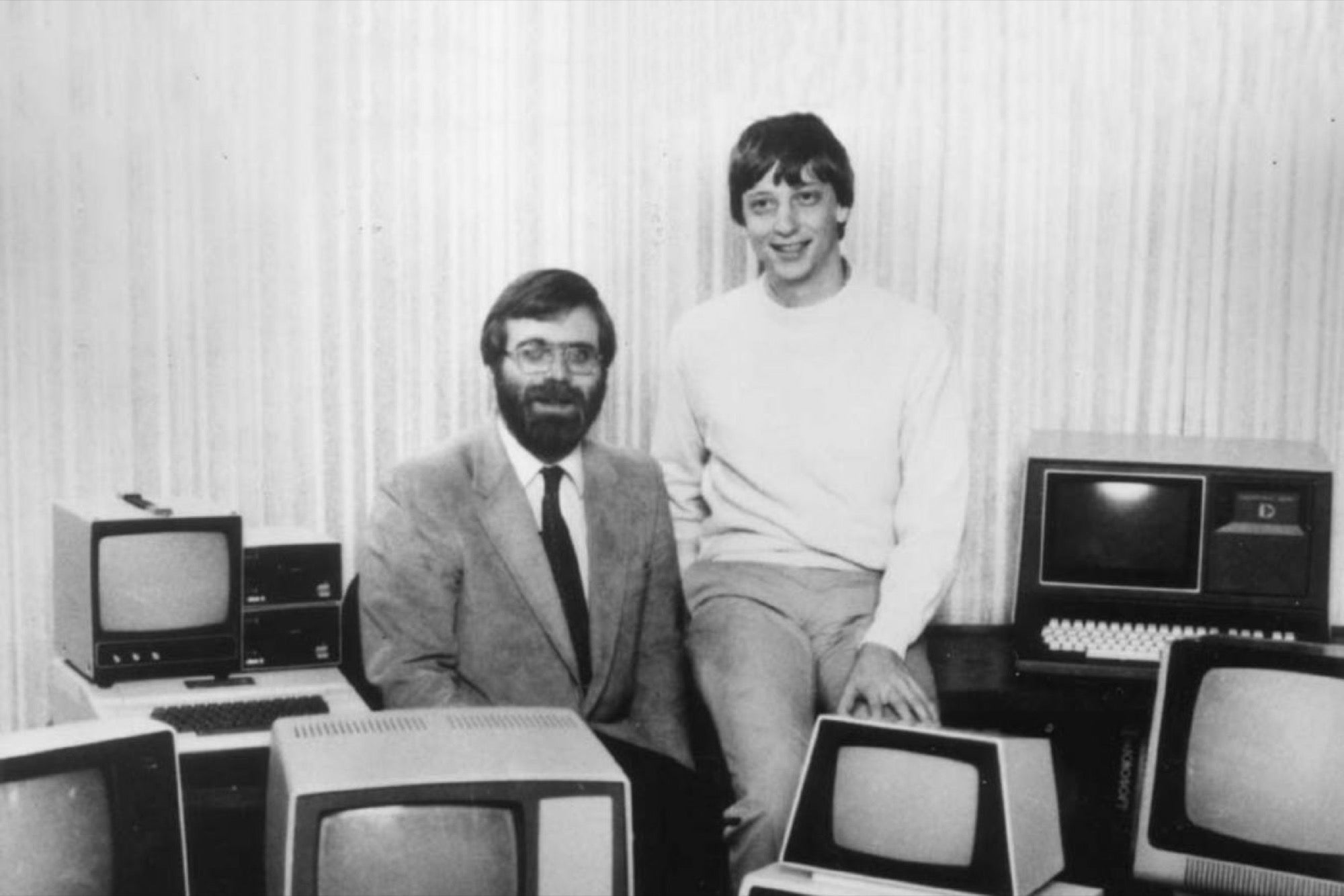
The Founders: Bill Gates, Paul Allen, and the Vision of a Personal Computer
Microsoft was founded by Bill Gates and Paul Allen on April 4, 1975. While the names are now synonymous with global enterprise and philanthropy, their journey began in the computer lab of Lakeside School in Seattle. It was here that a young Gates and a slightly older Allen first encountered the Teletype Model 33 ASR terminal, sparking a lifelong obsession with the logic of software.
The Childhood Connection: Lakeside School and Early Programming
The partnership that would create Microsoft was forged in the fires of early mainframe access. At Lakeside School, Gates and Allen spent their free time identifying bugs in the systems of Computer Center Corporation (C-Cubed). This wasn’t merely a hobby; it was a deep dive into the architecture of code. They spent thousands of hours learning the nuances of Fortran, Lisp, and machine language. This early exposure gave them a technical advantage that few others in the world possessed: they understood how to squeeze maximum performance out of limited hardware.
The Altair 8800: The Catalyst for Microsoft’s Birth
The “Eureka” moment for Microsoft occurred in late 1974. Paul Allen was walking through Harvard Square when he saw the cover of Popular Electronics magazine featuring the MITS Altair 8800. The Altair was the world’s first commercially successful microcomputer kit. Allen rushed to show the magazine to Gates, who was then a student at Harvard. They realized that the “hardware revolution” had arrived, but it was missing one critical component: software. Without a programming language, the Altair was little more than a box of blinking lights. They contacted Ed Roberts, the creator of the Altair, claiming they had developed a BASIC (Beginners’ All-purpose Symbolic Instruction Code) interpreter for the machine. In reality, they hadn’t written a single line of code for the Altair’s Intel 8080 processor yet.
Defining the Software-First Business Model
The founding of “Micro-Soft” (as it was originally hyphenated) in Albuquerque, New Mexico, marked a pivotal shift in the tech industry. Before Gates and Allen, computer companies were hardware companies. Software was often given away for free or seen as a secondary accessory. Gates and Allen pioneered the “software-first” model. They argued that the intellectual property of the code was where the true value lay. This vision was famously articulated in Gates’ “Open Letter to Hobbyists,” where he condemned the pirating of software, insisting that developers deserved to be paid for their work so they could continue to innovate.
Technical Foundations: From BASIC to MS-DOS
The technical prowess of Microsoft’s founders allowed them to dominate the early microcomputer market. Their first product, Altair BASIC, was a masterpiece of efficiency, fitting a high-level language into a mere 4KB of memory. However, the true technical milestone that cemented Microsoft’s place in history was the development of the operating system.
Creating the First Microcomputer BASIC
Writing BASIC for the Altair required an incredible feat of software engineering. Since they didn’t have an actual Altair machine, Paul Allen wrote an emulator for the Intel 8080 on Harvard’s PDP-10 mainframe. When Allen finally flew to Albuquerque to demonstrate the software to MITS, it was the first time the code had ever run on the actual hardware. It worked perfectly. This success allowed Microsoft to begin licensing their BASIC to other emerging computer companies like Apple, Commodore, and Radio Shack, making it the industry standard.
The IBM Partnership: The Turning Point of Modern Computing
In 1980, IBM approached Microsoft to provide an operating system for their upcoming Personal Computer (the IBM PC). Microsoft did not yet have an operating system of its own. In a legendary business and technical maneuver, Microsoft purchased the rights to QDOS (Quick and Dirty Operating System) from Seattle Computer Products, refined it, and rebranded it as MS-DOS (Microsoft Disk Operating System).
Crucially, Gates and Allen insisted on a non-exclusive license. This meant Microsoft could license MS-DOS to other hardware manufacturers. This technical decision led to the era of “PC Clones,” where IBM-compatible machines dominated the market, all running Microsoft’s software. This established the x86 architecture as the dominant standard for decades to come.

Building the Graphical User Interface (GUI) Era
As hardware became more powerful, the command-line interface of MS-DOS became a bottleneck for mainstream adoption. Microsoft began developing “Windows,” a graphical shell that ran on top of DOS. This transition required a massive shift in technical philosophy—moving from text-based inputs to bitmapped graphics and mouse-driven navigation. While early versions of Windows faced stiff competition from the Apple Macintosh, Microsoft’s focus on backward compatibility and broad hardware support eventually made Windows the universal platform for both home and business computing.
The Evolution of the Microsoft Ecosystem: Windows, Office, and Beyond
By the 1990s, Microsoft had moved beyond being a startup; it was the architect of the digital workplace. The focus shifted from just providing an operating system to building a comprehensive ecosystem of tools that would define how the world worked.
The Windows Revolution: Bringing Computing to the Masses
The release of Windows 3.1 and, subsequently, Windows 95, represented a quantum leap in consumer technology. Windows 95, in particular, introduced the “Start” button and “Plug and Play” capabilities, simplifying the technical complexity of adding peripherals like printers and modems. This was the era where Microsoft solidified the “Wintel” monopoly (Windows software on Intel hardware), creating a standardized environment for software developers to build upon.
Office Productivity: Standardizing the Digital Workplace
Alongside the operating system, Microsoft developed the Office suite—Word, Excel, and PowerPoint. Technically, these tools revolutionized data management and communication. Excel’s grid-based calculation engine became the backbone of global finance, while Word’s formatting capabilities standardized professional documentation. By bundling these tools into a single “Office” suite, Microsoft created an interdependent ecosystem that made it nearly impossible for users to switch to competitors, effectively setting the technical standards for the global economy.
Navigating the Internet Tidal Wave and the Browser Wars
The mid-90s brought a new technical challenge: the World Wide Web. Initially slow to react, Gates famously issued the “Internet Tidal Wave” memo in 1995, pivoting the entire company toward the web. Microsoft developed Internet Explorer and integrated it directly into Windows. While this led to significant antitrust litigation, it also ensured that the web became a first-class citizen within the operating system, paving the way for the interconnected digital world we inhabit today.
The Modern Era: Transitioning to Cloud, AI, and Open Source
While the foundation of Microsoft was built by Gates and Allen on desktop software, the company’s continued relevance is due to its successful pivot into cloud computing and Artificial Intelligence. Under the leadership of Satya Nadella, Microsoft has embraced a “mobile-first, cloud-first” world.
Satya Nadella and the Cloud-First Strategy (Azure)
The founding spirit of Microsoft—providing the fundamental tools for others to build—found its modern expression in Microsoft Azure. Azure is a massive technical infrastructure that allows businesses to run applications, store data, and utilize machine learning without owning physical servers. This transition from “shrink-wrapped software” to “Software as a Service” (SaaS) represented one of the most significant technical pivots in corporate history.
Embracing the Future: AI Integration and OpenAI Partnership
Today, Microsoft is at the forefront of the Generative AI revolution. By partnering with OpenAI and integrating Large Language Models (LLMs) into its “Copilot” ecosystem, Microsoft is once again redefining the interface between humans and computers. Just as BASIC made the Altair usable, AI is making complex data analysis and content creation accessible to anyone through natural language. This represents the fulfillment of the founders’ original vision: making the computer an intuitive extension of human thought.
The Legacy of Innovation: From Founders to Global Infrastructure
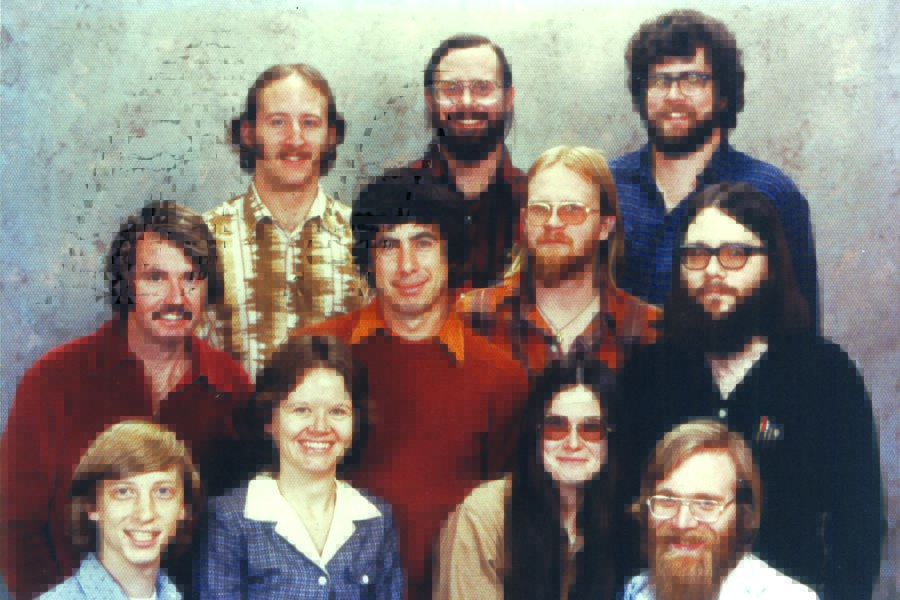
Paul Allen passed away in 2018, and Bill Gates has transitioned into global philanthropy, but the technical foundation they laid remains. Microsoft is no longer just a software company; it is a global utility. From the Xbox gaming ecosystem to the professional network of LinkedIn and the developer community on GitHub, the company’s reach is vast. Perhaps the most surprising technical shift in recent years has been Microsoft’s embrace of Open Source. Once a staunch opponent of Linux, Microsoft is now one of the largest contributors to the open-source community, recognizing that in a modern tech landscape, interoperability and collaboration are as important as proprietary code.
Conclusion
Who started Microsoft? Two visionaries who saw that software, not hardware, would be the true engine of the 21st century. Bill Gates and Paul Allen didn’t just build a company; they built the framework for the digital age. From the first lines of BASIC code in 1975 to the sophisticated AI-driven cloud of today, Microsoft’s journey reflects the evolution of technology itself. By consistently focusing on empowering users through software, the founders created a legacy that continues to shape how we communicate, work, and innovate in an increasingly connected world.
aViewFromTheCave is a participant in the Amazon Services LLC Associates Program, an affiliate advertising program designed to provide a means for sites to earn advertising fees by advertising and linking to Amazon.com. Amazon, the Amazon logo, AmazonSupply, and the AmazonSupply logo are trademarks of Amazon.com, Inc. or its affiliates. As an Amazon Associate we earn affiliate commissions from qualifying purchases.