
In the intricate world of airline travel, where passenger experiences range from budget-conscious basic economy to luxurious first class, brands constantly refine their offerings to capture diverse market segments. Delta Air Lines, a global leader in aviation, exemplifies this strategic segmentation with its meticulously crafted product tiers. Among these, “Delta Comfort Class,” often referred to as Delta Comfort+, stands out as a critical component of the airline’s brand strategy, positioned to bridge the gap between standard economy and premium cabins. Understanding Delta Comfort Class isn’t just about identifying a seat; it’s about dissecting a carefully constructed brand proposition designed to enhance customer experience, optimize revenue, and reinforce Delta’s overall corporate identity as a customer-centric carrier.
This article delves into Delta Comfort Class, examining it through the lens of brand strategy, product positioning, and customer value. We will explore how this particular offering contributes to Delta’s broader brand narrative, serves specific traveler needs, and influences overall brand perception in a highly competitive industry.
Understanding Delta’s Brand Hierarchy: A Spectrum of Choices
A successful brand, especially one as expansive as an airline, rarely offers a monolithic product. Instead, it constructs a hierarchy of services, each tailored to different customer needs, willingness to pay, and desired levels of comfort or exclusivity. Delta Comfort Class is a prime example of this strategic brand segmentation.
The Core Brand Promise: Connecting Travelers
At its heart, Delta’s brand promise revolves around reliability, service, and connecting people to places. This foundational promise underpins every product tier. However, how that promise is delivered and experienced varies significantly across its cabin classes. From the simplicity of Basic Economy to the exclusivity of Delta One, each tier is designed to reinforce different facets of the brand, while collectively contributing to Delta’s overarching identity as a premium global carrier. Delta’s brand architecture allows it to cater to a broad spectrum of travelers without diluting its core values.
From Basic Economy to Delta One: Navigating the Product Ladder
Delta’s cabin offerings typically include:
- Basic Economy: The most restrictive and budget-friendly option, emphasizing lowest price.
- Main Cabin: The standard economy experience, offering more flexibility than Basic Economy.
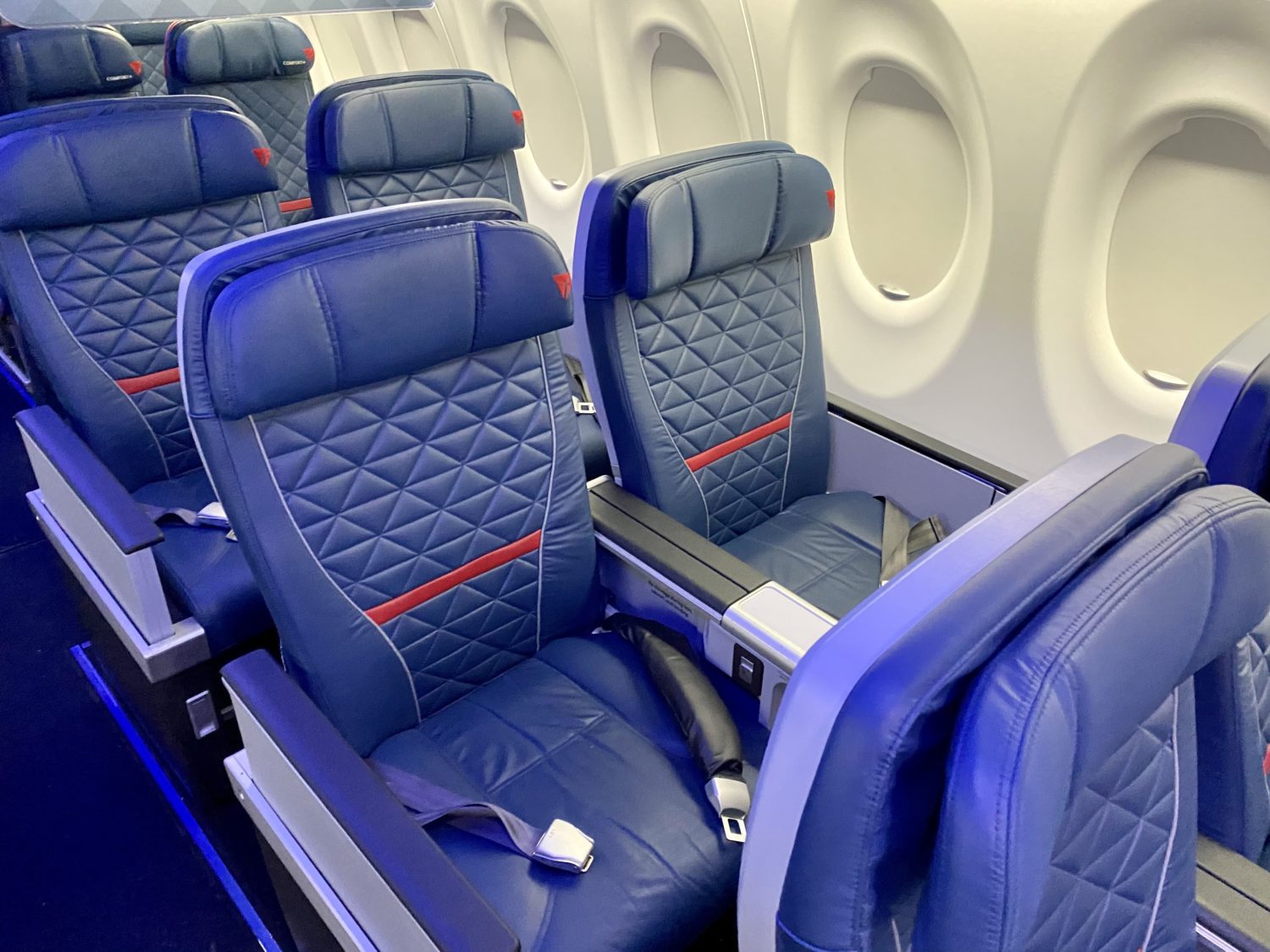
- Delta Comfort+ (Comfort Class): An enhanced economy experience, positioned between Main Cabin and First Class/Delta Premium Select.
- Delta Premium Select: A true premium economy product, offering a distinct cabin, larger seats, and elevated service on international routes.
- First Class: A domestic premium cabin with larger seats, enhanced meal service, and dedicated service.
- Delta One: The airline’s international business class, featuring lie-flat seats, gourmet dining, and lounge access.
Each step up this product ladder represents an incremental increase in benefits, comfort, and, naturally, price. This structured progression is a deliberate brand strategy to capture additional revenue through upselling and to provide a clear pathway for customers to choose the experience that best suits their travel objectives and budget.
The Strategic Role of Comfort+ in the Brand Portfolio
Delta Comfort+ is strategically positioned as an accessible upgrade for those who desire more than the Main Cabin but aren’t ready to commit to the significantly higher price point of First Class or Delta Premium Select. It’s an ingenious solution that addresses a specific market gap: passengers seeking tangible improvements in their journey without a full premium cabin investment. From a brand perspective, Comfort+ serves to enhance the perceived value of the overall Delta experience, demonstrating the airline’s commitment to offering choices and acknowledging that “comfort” is a spectrum, not a binary. It allows Delta to reinforce its premium identity even within the economy cabin structure.
The Comfort+ Value Proposition: Crafting an Enhanced Experience
The essence of any successful brand offering lies in its value proposition – what unique benefits it delivers to its target audience. Delta Comfort+ crafts its value proposition around a blend of tangible amenities and intangible psychological benefits, designed to make air travel more pleasant and less stressful.
Beyond Just a Seat: The Tangible Benefits
While the primary feature of Delta Comfort+ is often perceived as extra legroom, its value proposition extends significantly beyond mere physical space. Key tangible benefits typically include:
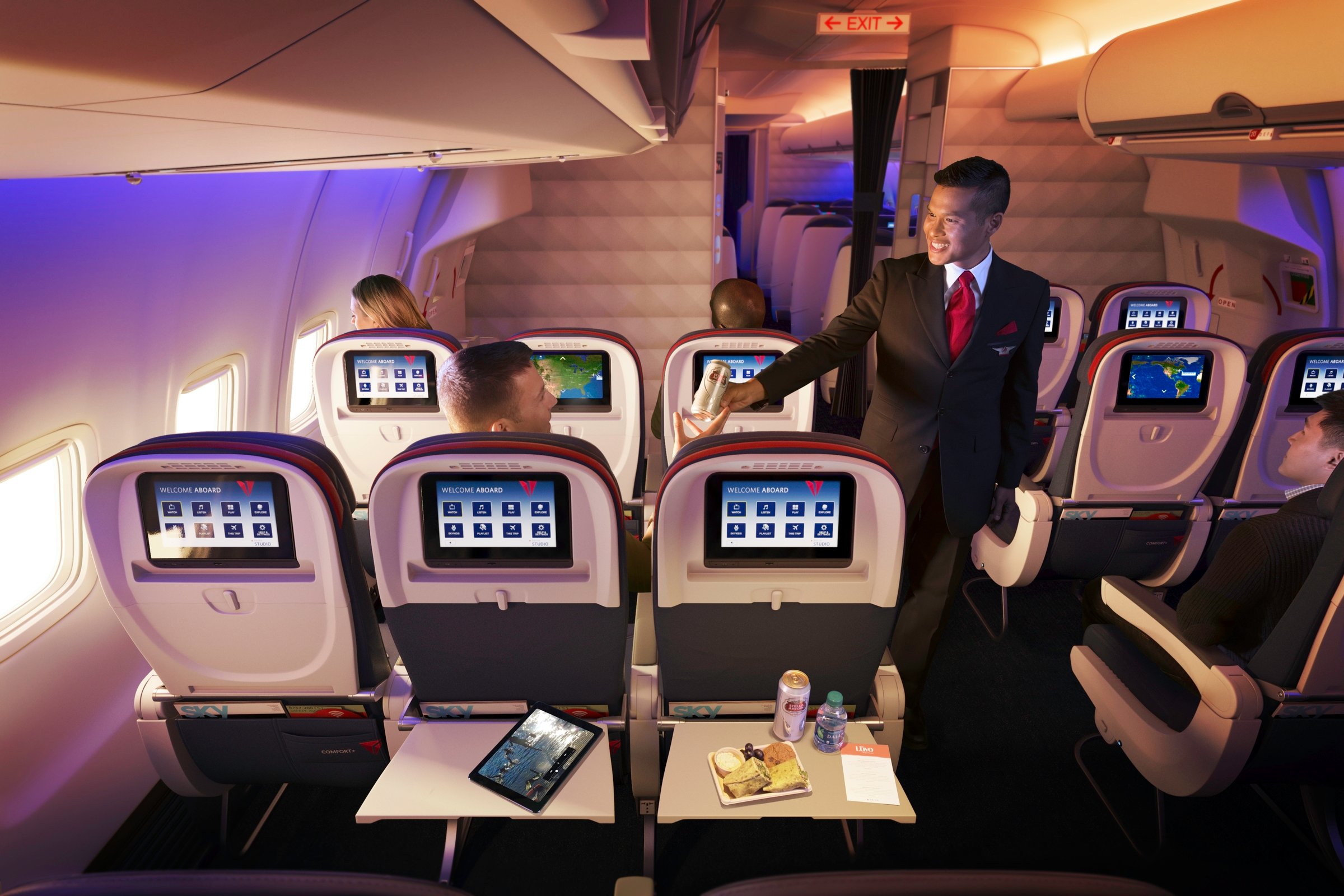
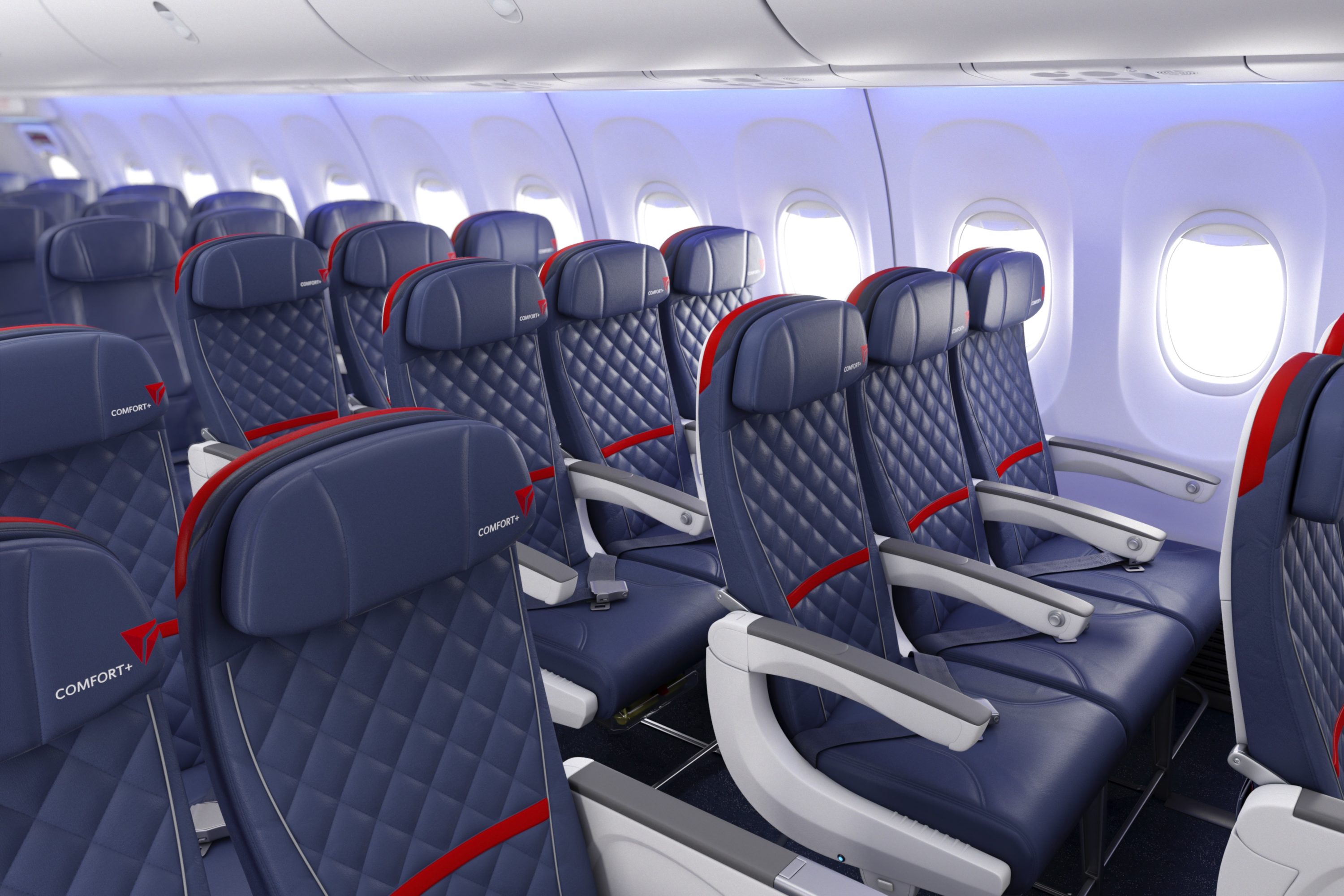
- Increased Legroom: Often 3-4 inches more than a standard Main Cabin seat, providing a noticeable improvement in personal space. This is a critical selling point for taller travelers or those on longer flights.
- Dedicated Overhead Bin Space: A crucial advantage, especially on full flights, guaranteeing space for carry-on luggage near the passenger’s seat, reducing boarding anxiety.
- Earlier Boarding: Passengers in Comfort+ are among the first to board, allowing them to settle in, store their belongings, and relax before the main boarding process begins. This contributes significantly to a less rushed start to the journey.
- Complimentary Premium Snacks and Beverages: Offering alcoholic beverages (beer, wine, spirits) and an elevated snack selection reinforces the “premium” aspect of the service, even if minor.
- Dedicated Cabin Zone: On many aircraft, Comfort+ occupies a distinct section at the front of the economy cabin, often with specific branding elements, visually distinguishing it from the Main Cabin.
These tangible benefits are carefully curated to provide a noticeable step up, justifying the additional cost and fulfilling the promise of “comfort.”
The Intangible Brand Value: Perceived Premium and Convenience
Beyond the physical amenities, Delta Comfort+ delivers significant intangible value, which is vital for brand perception and customer loyalty.
- Reduced Stress and Anxiety: The guaranteed overhead space and early boarding directly address common pain points in air travel, fostering a more relaxed start to the journey. This translates into a less stressful overall brand experience.
- Sense of Being Valued: Offering dedicated benefits and a slightly elevated service level can make passengers feel more appreciated by the airline, fostering a stronger emotional connection to the brand.
- Convenience and Efficiency: The faster deplaning often afforded by sitting closer to the front of the aircraft is a practical benefit that appeals to business travelers and those with tight connections.
- Perceived Exclusivity: While not a true premium cabin, the distinct branding and dedicated zone create a subtle sense of exclusivity, differentiating Comfort+ passengers from the general Main Cabin. This contributes to a positive self-perception for the customer, reflecting well on the brand providing that feeling.
By addressing both functional and emotional needs, Delta Comfort+ strengthens the overall brand experience, positioning Delta as an airline that understands and caters to passenger preferences for enhanced comfort and convenience.
Targeting the Discerning Traveler: Who is Comfort+ For?
Delta Comfort+ is primarily aimed at a specific demographic of traveler:
- Business Travelers: Who prioritize efficiency, a less stressful experience, and the ability to work comfortably, but whose companies may not approve full First Class fares.
- Leisure Travelers Seeking More Comfort: Individuals or families willing to pay a moderate premium for a more relaxed journey, especially on longer domestic or short international flights.
- Loyalty Program Members: Medallion members often receive complimentary upgrades to Comfort+, which serves as a significant perk, reinforcing their loyalty to the Delta brand.
- Those on Longer Flights: The benefits of extra legroom and dedicated space become exponentially more valuable on flights exceeding a few hours.
The brand message for Comfort+ resonates with those who appreciate value beyond the absolute lowest price but are not in the market for a luxury experience. It targets the “smart spender” who understands that a slightly higher investment can yield a significantly better travel experience.
Comfort+ as a Marketing and Revenue Strategy
Delta Comfort+ is not merely a service offering; it is a sophisticated element of Delta’s broader marketing and revenue generation strategy. Its existence helps the airline maximize revenue from each flight while strengthening customer relationships.
Dynamic Pricing and Revenue Optimization
Delta employs dynamic pricing models for Comfort+, meaning the price can fluctuate based on demand, route, time of booking, and other factors. This allows the airline to optimize revenue by charging different prices to different customers for essentially the same “product” (a seat). By unbundling features like legroom and priority boarding from the base fare, Delta creates an ancillary revenue stream. Many passengers purchase Comfort+ as an add-on during booking, or even post-booking, contributing significantly to the airline’s profitability. This strategy showcases how brand product segmentation directly impacts the bottom line.
Loyalty Program Integration: SkyMiles and Medallion Benefits
A cornerstone of Delta’s brand loyalty program, SkyMiles, is the perk of complimentary upgrades to Comfort+ for Medallion members (elite status holders). This is a powerful incentive for customers to remain loyal to Delta, accumulate miles, and strive for higher status tiers. The perceived value of these complimentary upgrades is immense, making Comfort+ a key retention tool. It reinforces the idea that loyalty to the Delta brand comes with tangible, desirable rewards, further solidifying the brand’s bond with its most frequent flyers. For many Medallion members, Comfort+ becomes their “default” economy experience, significantly enhancing their satisfaction with the airline.
Communicating the Value: Marketing Delta Comfort+
Delta’s marketing for Comfort+ focuses on highlighting the tangible benefits – “more space to stretch out,” “dedicated overhead bin space,” and “early boarding.” Visuals often depict relaxed passengers enjoying their extra room. The messaging is clear, concise, and emphasizes how Comfort+ alleviates common travel frustrations. The brand positions it as a smart, accessible upgrade that makes a real difference in the travel experience, aligning with a brand image that promises convenience and thoughtful service. This strategic communication ensures that potential customers understand the unique value proposition and are encouraged to choose Comfort+ over standard economy.
Customer Experience and Brand Perception
The ultimate measure of any brand offering is its impact on the customer experience and how that experience shapes brand perception. Delta Comfort+ plays a crucial role in managing customer expectations and fostering a positive brand image.
Setting Expectations: Managing the Comfort+ Promise
One of the challenges for any tiered product offering is managing customer expectations. Delta’s marketing for Comfort+ carefully balances highlighting its benefits without overpromising a First Class experience. It’s positioned as an enhanced economy product, not a premium cabin in itself. This clear communication is vital to prevent disappointment and ensure customers feel they received good value for their money. When expectations are met or exceeded, it strengthens brand trust and satisfaction. Conversely, mismatched expectations can lead to negative reviews and damage brand reputation.
Feedback and Continuous Improvement: Evolving the Brand Offering
Like any dynamic brand, Delta continuously monitors customer feedback regarding Comfort+. This feedback, gathered through surveys, social media, and direct interactions, is invaluable. It allows Delta to fine-tune the Comfort+ experience, ensuring it remains relevant and competitive. For instance, adjustments to snack offerings, in-flight entertainment integration, or service protocols are often informed by customer input, demonstrating the brand’s commitment to continuous improvement and responsiveness to its market. This iterative process is key to maintaining a strong and positive brand perception over time.
Competitive Landscape: How Comfort+ Stacks Up
In a competitive market, Delta Comfort+ must differentiate itself from similar offerings by other airlines (e.g., United Economy Plus, American Airlines Main Cabin Extra). While the core concept of extra legroom is similar across competitors, Delta aims to distinguish Comfort+ through its specific combination of benefits, integration with its loyalty program, and overall brand service ethos. The holistic package, combined with Delta’s overall brand reputation for operational excellence and customer service, is intended to give Comfort+ a competitive edge. It’s not just about the seat, but the entire Delta brand experience wrapped around it.
The Future of Premium Economy: Evolving Brand Segments
The airline industry is constantly evolving, driven by technological advancements, economic shifts, and changing consumer preferences. The segment that Delta Comfort+ occupies is no exception, hinting at the future of brand segmentation.
Responding to Market Demand and Traveler Preferences
As travelers become more sophisticated and discerning, demand for nuanced product offerings will only grow. Delta Comfort+ represents a successful response to the market’s desire for an intermediary option between basic and luxury. The brand’s ability to adapt these offerings, potentially adding or modifying features, will be key to its continued success. For example, as more airlines introduce true “Premium Economy” cabins (like Delta Premium Select), Comfort+ might need to refine its position further to avoid cannibalization and maintain distinct value.
Innovation in Brand Service Design
The future will likely see further innovation in how airlines design and brand their service tiers. This could involve more personalized offerings, greater integration with digital tools for seat selection and amenity customization, or even dynamic bundling of services. For Delta, the evolution of Comfort+ will be about maintaining its relevance as a strong mid-tier brand proposition, continuing to deliver value that aligns with its premium corporate identity, and ensuring it remains a compelling choice for travelers seeking that optimal balance of comfort, convenience, and cost. It’s a continuous process of brand refinement, driven by deep consumer insights and strategic foresight.
In conclusion, Delta Comfort Class is far more than just a seating option; it’s a strategically vital component of Delta Air Lines’ comprehensive brand architecture. It represents a masterful exercise in product segmentation, designed to cater to specific customer needs, optimize revenue through smart pricing and loyalty integration, and ultimately enhance Delta’s overall brand perception as a provider of flexible, customer-centric travel experiences. By understanding “what is Delta Comfort Class,” we gain insight into the sophisticated branding strategies that define success in today’s global airline industry.
aViewFromTheCave is a participant in the Amazon Services LLC Associates Program, an affiliate advertising program designed to provide a means for sites to earn advertising fees by advertising and linking to Amazon.com. Amazon, the Amazon logo, AmazonSupply, and the AmazonSupply logo are trademarks of Amazon.com, Inc. or its affiliates. As an Amazon Associate we earn affiliate commissions from qualifying purchases.