
Understanding how to calculate a monthly interest rate is one of the most fundamental skills in personal finance. Whether you are managing credit card debt, planning for a mortgage, or looking to grow your wealth through a high-yield savings account, the math behind the interest rate dictates how much you pay—or earn—every thirty days. Most financial institutions advertise an Annual Percentage Rate (APR), but because most billing cycles and interest accruals happen monthly, the annual figure can be misleading if not properly decoded.
By mastering the mechanics of monthly interest calculations, you gain the power to predict your monthly payments, understand the true cost of borrowing, and optimize your investment strategy. This guide provides a deep dive into the formulas, the nuances of compounding, and the practical applications of these calculations across various financial instruments.
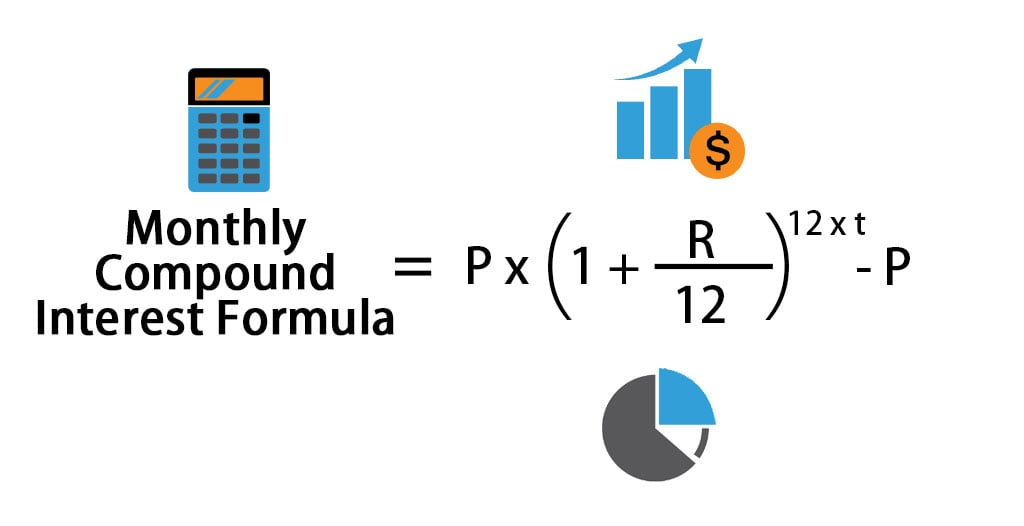
Decoding the Annual Percentage Rate (APR)
The first step in any interest calculation is understanding the raw material provided by the lender or bank: the Annual Percentage Rate (APR). The APR represents the yearly cost of funds over the term of a loan or the yearly income earned on an investment. However, interest is rarely applied just once a year.
APR vs. APY: What’s the Difference?
In the world of personal finance, you will often see two different acronyms: APR and APY (Annual Percentage Yield). While they sound similar, they serve different purposes. APR is typically used for loans and credit cards; it does not account for the effects of compounding within a single year. APY, on the other hand, is the actual rate of return or the actual cost of a loan when compounding is taken into account.
When you calculate a monthly interest rate from an APR, you are essentially finding the “periodic rate.” This is the rate applied to your balance at the end of each billing cycle. Understanding this distinction is crucial because a 15% APR does not mean you pay 15% of your balance every month; it means you pay a fraction of that 15% every month, which then compounds over time.
Why Lenders Use Annual Rates
Lenders use annual rates primarily for standardization and marketing. An annual rate provides a high-level view of the cost of credit, allowing consumers to compare different products easily. However, this standardization hides the day-to-day or month-to-month reality of how interest accumulates. For the average consumer, the “monthly periodic rate” is a much more actionable number for budgeting and debt management.
The Mathematical Breakdown: Converting APR to Monthly Interest
Converting an annual rate into a monthly rate is mathematically straightforward, but it requires precision. The basic formula is the foundation of most financial planning.
The Basic Formula
To find your monthly interest rate, you divide the APR by the number of months in a year.
Monthly Interest Rate = APR / 12
For example, if you have a credit card with an 18% APR, the calculation would be:
0.18 / 12 = 0.015 (or 1.5% per month).
Once you have the monthly rate, you can calculate the interest charge for a specific month by multiplying that rate by your principal balance:
Interest Charge = Balance × Monthly Interest Rate
Application Example: Credit Card Debt
Let’s apply this to a real-world scenario. Suppose you carry a $5,000 balance on a credit card with a 24% APR.
-
Convert the APR to a decimal: 0.24.
-
Divide by 12: 0.24 / 12 = 0.02.
-
Multiply by the balance: $5,000 × 0.02 = $100.
In this scenario, you are being charged $100 in interest for that month alone. If you only make a minimum payment that barely covers this $100, your principal balance of $5,000 will remain largely unchanged, leading to a cycle of debt that is difficult to break.
Application Example: Personal Loans
Personal loans often work similarly, though they are usually structured as installment loans with fixed monthly payments. Even if your payment is fixed at $300 a month, the portion of that $300 that goes toward interest is calculated using the monthly periodic rate. As your principal balance decreases over the life of the loan, the amount of interest you pay each month also decreases, a process known as amortization.
The Role of Compounding and Balance Methods
While the basic formula (APR / 12) is a great starting point, the actual interest charged can vary based on how the financial institution calculates your balance and how frequently they compound the interest.
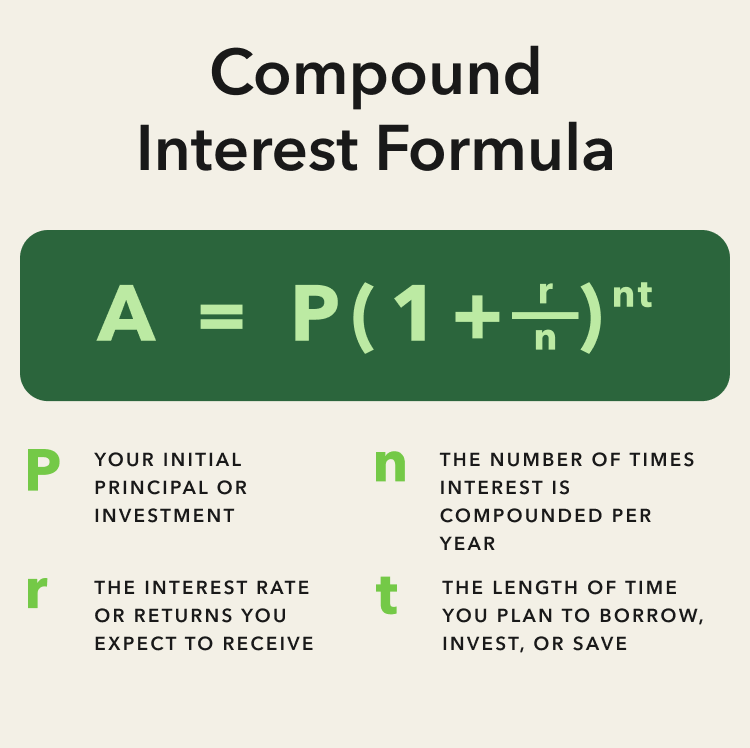
Compound Interest: The Double-Edged Sword
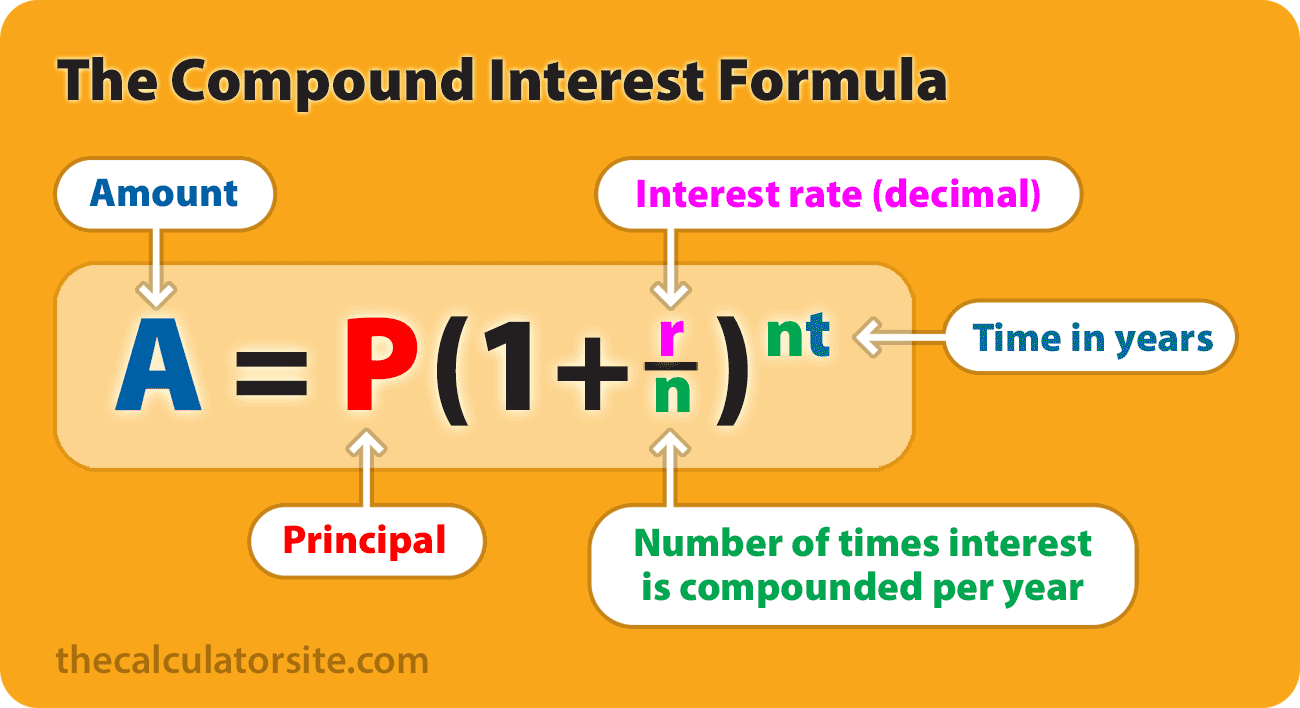
Compound interest is the process where interest is calculated on the initial principal and also on the accumulated interest of previous periods. In a savings account, compounding is your best friend—it helps your money grow exponentially. In debt, however, compounding is an adversary.
Most credit cards compound interest daily, even though they bill you monthly. To calculate a daily rate, you divide the APR by 365. That daily rate is applied to your balance every single day, and that new interest is added to the balance the next day. By the end of the month, the “monthly interest” is actually the sum of these daily charges. This results in an effective rate that is slightly higher than the simple APR / 12 calculation.
The Average Daily Balance Method
Most credit card issuers use the “Average Daily Balance” method to determine how much interest to charge. They don’t just look at your balance on the final day of the month. Instead, they:
-
Record the balance at the end of every day in the billing cycle.
-
Add all those daily balances together.
-
Divide the total by the number of days in the billing cycle (usually 30 or 31).
-
Apply the monthly or daily interest rate to this average.
This method means that if you pay down a large portion of your debt halfway through the month, you will pay less in interest than if you waited until the last day of the billing cycle, even if the final balance is the same.
Analyzing Specific Financial Instruments
Different financial products utilize monthly interest rates in unique ways. Understanding these nuances can help you make better decisions about where to put your money and which debts to prioritize.
Mortgage Interest and Amortization Schedules
Mortgages are perhaps the most complex application of monthly interest rates. Most mortgages are “amortized,” meaning your monthly payment is calculated to ensure the loan is paid off exactly at the end of the term (e.g., 30 years).
In the early years of a mortgage, the vast majority of your monthly payment goes toward interest. This is because the monthly interest rate is applied to the very large remaining principal. As the years go by and the principal shrinks, the interest portion of your payment decreases, and the amount going toward the principal increases. Calculating your monthly interest on a mortgage helps you see exactly how much of your “home investment” is actually going to the bank versus building equity in the property.
High-Yield Savings Accounts and Returns
For savers, the monthly interest calculation is a tool for projecting growth. If you have $10,000 in a high-yield savings account with a 4.5% APY, the bank is likely compounding interest monthly. Using the formula (0.045 / 12), you can estimate that you will earn roughly 0.375% per month.
On a $10,000 balance, that’s $37.50 in the first month. In the second month, you earn interest on $10,037.50, and so on. Understanding this allows you to see the tangible benefits of “paying yourself first” and leaving your dividends to reinvest.
Strategies to Optimize Interest Costs
Once you know how to calculate monthly interest, you can use that information to manipulate your finances in your favor. Knowledge of the math allows for strategic movements of capital.
Leveraging the 0% APR Window
Many credit cards offer a 0% introductory APR for 12 to 21 months. By calculating what your monthly interest would have been, you can see exactly how much you are saving by using these offers. This “saved” interest can be diverted toward paying down the principal faster. If you have a $10,000 debt at 20% APR, you are paying roughly $166 a month in interest. Moving that to a 0% card saves you $2,000 in a single year—money that can be used to wipe out 20% of the original debt.
Refinancing and Consolidation
When you compare loan offers, don’t just look at the monthly payment. Look at the APR and calculate the monthly interest cost. Sometimes a lower monthly payment is achieved by stretching the loan over a longer period, which can actually result in you paying more in total interest over time.
By calculating the monthly interest charge on your current high-interest debts, you can determine if a consolidation loan (even one with a moderate interest rate) will save you money. If the monthly interest charge on a consolidation loan is significantly lower than the sum of the interest charges on your individual credit cards, the consolidation is a mathematically sound move.
The Psychology of the “Interest Drain”
There is a psychological benefit to calculating monthly interest. Seeing a “24% APR” is abstract. Seeing a “$200 monthly interest charge” is visceral. It represents hours of work or a missed opportunity for investment. When you quantify the “interest drain” on your monthly budget, it often provides the necessary motivation to aggressively pursue debt-free living or to seek out better yields for your savings.
In conclusion, the ability to calculate a monthly interest rate transforms you from a passive participant in the financial system into an active manager of your wealth. Whether you are dividing an APR by 12 for a quick estimate or using daily compounding formulas for precision, these calculations are the key to unlocking a more secure and prosperous financial future. By focusing on the monthly numbers, you bring the long-term reality of interest into the immediate present, where you have the power to take action.
aViewFromTheCave is a participant in the Amazon Services LLC Associates Program, an affiliate advertising program designed to provide a means for sites to earn advertising fees by advertising and linking to Amazon.com. Amazon, the Amazon logo, AmazonSupply, and the AmazonSupply logo are trademarks of Amazon.com, Inc. or its affiliates. As an Amazon Associate we earn affiliate commissions from qualifying purchases.