
In the vast landscape of medical advancements, few technologies have had as profound and immediate an impact on human quality of life as the intraocular lens, or IOL. For millions worldwide, these tiny, sophisticated implants represent the difference between debilitating vision loss and a vibrant, clear view of the world. More than just a simple lens, an IOL is a marvel of bioengineering, precision manufacturing, and ophthalmic science, serving as a permanent replacement for the eye’s natural lens when it can no longer function effectively, most commonly due to cataracts. This article delves into the technological heart of IOLs, exploring their design, function, diverse types, and the continuous innovation that makes them a cornerstone of modern ophthalmology.

The Core Technology: How IOLs Replace the Natural Lens
At its essence, an IOL is an artificial lens implanted inside the eye, directly replacing the natural crystalline lens. The natural lens plays a crucial role in focusing light onto the retina, allowing us to see clearly at various distances. However, with age or certain medical conditions, this lens can become cloudy and hardened, a condition known as a cataract. Cataracts lead to blurred vision, glare, and eventually severe vision loss if left untreated. The technological solution developed to address this widespread problem is the IOL.
Unlike contact lenses, which sit on the surface of the eye, or eyeglasses, which are worn externally, an IOL is a permanent fixture within the eye’s internal structure. It performs the light-focusing function of the natural lens with remarkable efficiency, often restoring vision to levels comparable to or even better than before the cataract developed. The engineering challenge involves creating a lens that is not only optically precise but also biocompatible, durable, and capable of integration within the delicate ocular environment for a lifetime.
A Glimpse into the Anatomy of an IOL
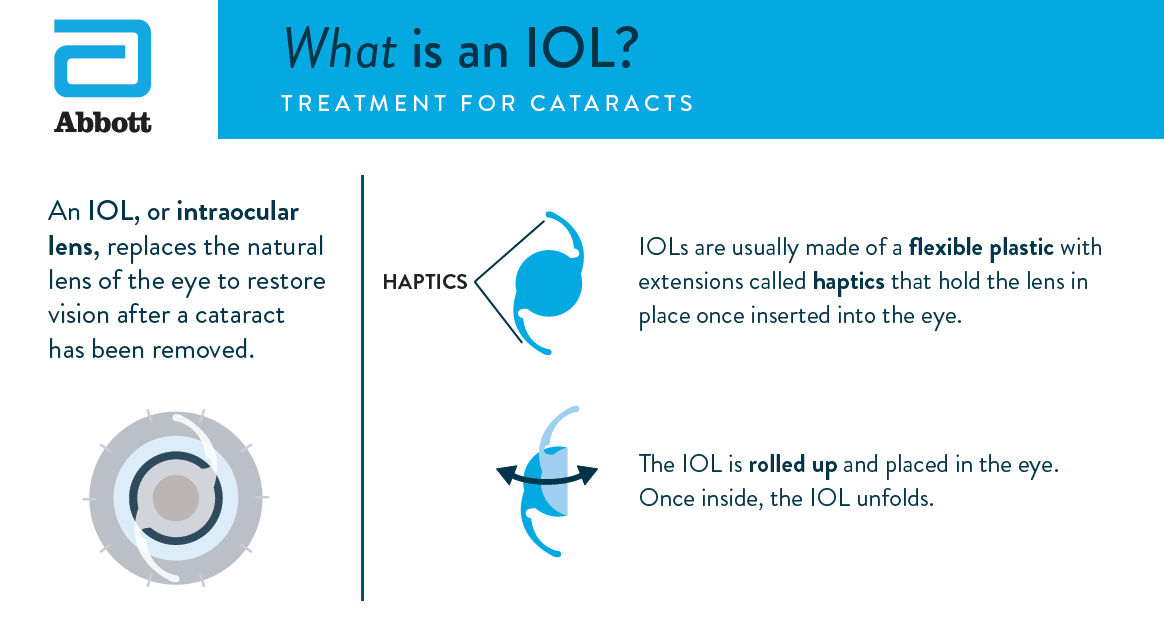
Despite their minute size – typically measuring just a few millimeters in diameter for the optical portion and around 11-13mm total including the haptics – IOLs are intricately designed devices. Their construction involves advanced materials and precise manufacturing techniques to ensure optimal performance and patient safety.
The primary component of an IOL is the optic, which is the central part that functions as the lens itself. Historically, early IOLs were made from rigid polymethyl methacrylate (PMMA). While effective, PMMA required larger incisions for implantation. Modern IOLs predominantly use flexible, biocompatible materials such as silicone or hydrophobic acrylic. These materials allow the IOL to be folded or rolled, enabling its insertion through a much smaller, self-sealing incision, which significantly reduces surgical trauma and speeds up recovery. These materials are chosen not only for their flexibility but also for their excellent optical properties, UV filtering capabilities (to protect the retina), and their inertness within the eye, minimizing the risk of adverse reactions.
Surrounding the optic are the haptics, which are thin, flexible arms or loops that extend from the optic. The haptics are critical for securely positioning and stabilizing the IOL within the eye’s capsular bag, the natural sac that once held the original lens. Their design ensures the IOL remains perfectly centered, which is essential for consistent visual quality. Haptic designs vary, but all aim for stable, long-term fixation without causing irritation to surrounding tissues. The entire assembly is engineered to mimic the approximate size and placement of the natural lens, ensuring it sits comfortably and functionally within the eye’s complex optical system.
The Surgical Process: Implantation and Integration
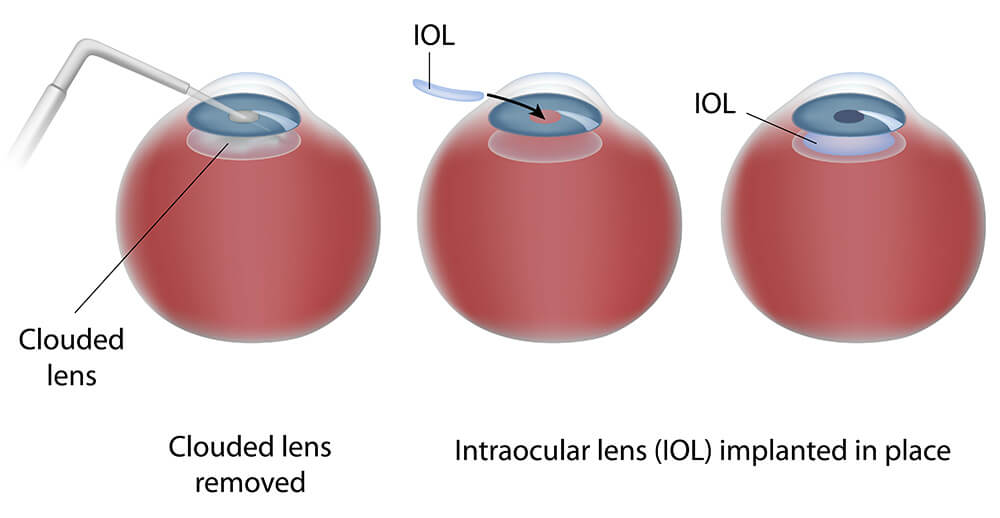
The implantation of an IOL is typically performed during cataract surgery, one of the most common and successful surgical procedures globally. The procedure, known as phacoemulsification, utilizes advanced technology to remove the cloudy natural lens.
The surgeon begins by making a tiny incision, often less than 3mm, in the cornea. Through this incision, a small ultrasonic probe is inserted to emulsify (break up) the cataractous lens into tiny fragments, which are then suctioned out. This process is meticulously performed using high-frequency ultrasound, which minimizes trauma to the surrounding eye structures.
Once the natural lens is removed, the flexible IOL is then inserted through the same small incision. Due to its foldable nature (made possible by acrylic or silicone materials), the IOL can be injected or pushed through the tiny opening. Once inside the eye, the IOL unfolds slowly and the surgeon carefully positions its haptics within the natural lens capsule, ensuring it is perfectly centered and stable. The small corneal incision is often self-sealing, requiring no sutures, further contributing to rapid recovery.
The integration of the IOL into the eye is remarkably smooth. The eye’s natural healing process allows the capsular bag to shrink slightly around the IOL, providing additional long-term stability. Patients often experience immediate improvements in vision, although the final clarity may take a few days or weeks to fully materialize as the eye heals completely. This delicate balance of surgical technique and advanced implant technology underscores the sophisticated nature of IOL development.
Types of IOLs: Tailoring Vision to Individual Needs
The journey of IOL technology has been one of continuous innovation, moving far beyond simply replacing a cloudy lens. Today, a wide array of IOL types are available, each designed with specific optical characteristics to address diverse visual needs and lifestyle preferences. This customization is a testament to the advanced engineering that allows ophthalmologists to tailor vision correction to an unprecedented degree.
Monofocal IOLs: The Standard Bearer
Monofocal IOLs represent the most common and widely used type of intraocular lens. As their name suggests, these lenses provide clear vision at a single focal point, typically optimized for distance vision. Patients who receive monofocal IOLs will generally experience excellent distance acuity, allowing them to drive, watch television, and see objects far away clearly.
However, a trade-off exists: individuals with monofocal IOLs will usually still require reading glasses or bifocals for near vision tasks, such as reading, using a smartphone, or working on a computer. Despite this, their reliability, excellent optical quality, and cost-effectiveness make them a foundational technology in cataract surgery. The design of monofocal IOLs is relatively straightforward, focusing on providing a single, clear point of focus without introducing significant visual aberrations. They have a long track record of success and are a safe and effective choice for a vast majority of patients.
Premium IOLs: Expanding Visual Freedom
For patients seeking greater independence from eyeglasses after cataract surgery, premium IOLs offer advanced solutions. These lenses incorporate sophisticated optical designs to provide multiple focal points or correct specific refractive errors, vastly expanding visual freedom.
-
Multifocal and Trifocal IOLs: These are engineered with concentric rings or zones that allow the eye to focus light from various distances (near, intermediate, and far) simultaneously.
- Multifocal IOLs typically offer two focal points (distance and near).
- Trifocal IOLs further enhance this by providing an additional focal point for intermediate vision, which is crucial for tasks like computer work.
The underlying technology often involves diffractive or refractive optical principles, meticulously crafted onto the lens surface. While these lenses can significantly reduce or eliminate the need for glasses, some patients may experience trade-offs such as glare or halos around lights, particularly at night, due to the way they split light.
-
Toric IOLs: These lenses are a breakthrough for patients with astigmatism, a common refractive error where the cornea (or natural lens) has an irregular, football-like curvature instead of being perfectly spherical. Astigmatism causes blurred or distorted vision at all distances. Toric IOLs are specially designed with different powers in different meridians of the lens to correct for this asymmetry, thereby providing clear, uncorrected distance vision for astigmatic eyes. Precise alignment during surgery is critical for their effectiveness.
-
Extended Depth of Focus (EDOF) IOLs: Representing a more recent advancement, EDOF IOLs offer a continuous range of clear vision from distance to intermediate, providing a smoother transition compared to multifocal lenses. They achieve this by creating a single, elongated focal point rather than multiple distinct ones, which can reduce the visual disturbances (like halos) sometimes associated with multifocal designs, while still offering excellent functional vision.
-
Accommodative IOLs: While still less common and continually under development, accommodative IOLs aim to mimic the natural focusing ability of the young eye by changing position or shape within the eye to focus at different distances. The challenge lies in consistently achieving a significant and stable range of accommodation, but ongoing research promises future improvements in this area.
Light Adjustable Lenses (LALs): Post-Surgical Refinement
A truly revolutionary advancement in IOL technology is the Light Adjustable Lens (LAL). Unlike other IOLs where the power is fixed at the time of implantation, the LAL allows for non-invasive adjustment of its power after it has been surgically implanted and the eye has healed.
This unique capability is achieved through a photosensitive material within the lens. After implantation and initial recovery (typically 2-3 weeks), the patient’s vision is assessed. If any residual refractive error exists, the surgeon uses a specialized light delivery device to direct specific patterns of UV light onto the IOL. This light exposure causes precise changes to the lens’s curvature and refractive power. Multiple adjustments can be made over a period, allowing for unparalleled precision in achieving the desired visual outcome. Once the optimal vision is attained, a final “lock-in” treatment with UV light prevents any further changes. The LAL offers an unprecedented level of customization and a highly personalized approach to vision correction, minimizing the risk of a patient being left with an undesired refractive outcome.
The Technological Edge: Innovations Driving IOL Advancement
The evolution of IOLs is a prime example of how interdisciplinary technological advancements drive progress in medicine. From materials science to digital engineering and diagnostic integration, a relentless pursuit of perfection continues to refine these sight-restoring devices.
Biocompatibility and Durability: Engineering for Longevity
The success of an IOL hinges not only on its optical performance but also on its ability to coexist harmoniously with the delicate biological environment of the eye for a lifetime. This demands sophisticated materials science. Modern IOLs are fabricated from highly purified, medical-grade polymers (acrylics, silicones) that are chosen for their inertness and non-reactivity with ocular tissues. These materials are designed to resist degradation, calcification, and opacification over time, ensuring long-term clarity and stability.
Further engineering ensures the surface properties of the IOL actively promote biocompatibility, reducing the likelihood of inflammation or cellular adhesion (such as posterior capsular opacification, or PCO, a common post-cataract surgery complication where cells grow on the back of the lens capsule). Ongoing research explores novel surface modifications and drug-eluting IOLs that could further enhance integration and prevent complications, making IOLs even more durable and maintenance-free.
Digital Design and Manufacturing: Precision Engineering
The precision required for IOLs is extraordinary. A variation of even a few microns in curvature or thickness can significantly impact visual quality. This level of accuracy is achieved through advanced digital design and manufacturing processes. Computer-Aided Design (CAD) software allows engineers to model IOL optics with extreme precision, simulating light pathways and predicting performance.
Manufacturing employs Computer-Aided Manufacturing (CAM) techniques, including ultra-precision lathing, milling, and molding, often in highly controlled cleanroom environments. Each IOL is custom-engineered based on precise patient measurements (biometry) taken prior to surgery. Quality control is paramount, involving rigorous testing for optical power, surface quality, and dimensional accuracy to ensure every lens meets stringent international standards before it is approved for implantation. This fusion of digital design and advanced manufacturing ensures consistent, high-quality outcomes.
Integration with Diagnostic Technologies
The effectiveness of an IOL is heavily dependent on accurate pre-operative measurements and calculations. This is where advanced diagnostic technologies play a crucial role. Modern ophthalmology relies on state-of-the-art biometers, which use technologies like optical coherence tomography (OCT) or partial coherence interferometry, to precisely measure the axial length of the eye, corneal curvature, anterior chamber depth, and lens thickness.
These measurements are fed into sophisticated IOL power calculation formulas, many of which now incorporate artificial intelligence (AI) and machine learning algorithms. AI-driven systems can analyze vast datasets of patient outcomes, refine formulas, and even predict the best IOL choice for a particular patient’s unique ocular anatomy and visual goals. This seamless integration of diagnostic devices with computational power allows ophthalmologists to select the optimal IOL power and type with unparalleled accuracy, minimizing post-operative refractive surprises and maximizing patient satisfaction.
Impact and Future Outlook: A Vision of Continuous Improvement
The invention and continuous refinement of the IOL stand as one of the most successful medical technologies of our time, profoundly impacting millions of lives globally. The story of the IOL is not just about a medical device; it is about restoring independence, enhancing safety, and improving the overall quality of life for an aging population.
Enhancing Quality of Life
For someone with advanced cataracts, the world becomes a hazy, muted, and often dangerous place. Simple tasks like driving, reading, or recognizing faces become difficult or impossible. IOL implantation can swiftly transform this reality, returning vibrant color, sharp detail, and functional independence. This enhanced vision translates directly into improved safety (e.g., reduced risk of falls), greater social engagement, and the ability to continue hobbies and work, contributing significantly to mental well-being and reducing healthcare burdens related to visual impairment. Beyond vision restoration, the freedom from dependence on strong corrective lenses for conditions like high myopia or hyperopia further underscores the transformative power of this technology.
The Horizon of Ophthalmic Innovation
The field of IOLs is far from static, with research and development continuing at a rapid pace. The future holds promise for even more sophisticated and personalized solutions:
- “Smart” IOLs: Imagine IOLs equipped with micro-sensors that can monitor intraocular pressure (for glaucoma detection) or deliver medication directly to the eye. Research is exploring these possibilities, potentially turning the IOL into a multi-functional therapeutic platform.
- Truly Accommodative IOLs: The quest for an IOL that perfectly mimics the natural eye’s ability to focus at all distances, without trade-offs, remains a holy grail. Future generations of accommodative IOLs may achieve this through advanced materials, electromechanical components, or even biologically integrated designs.
- Regenerative Medicine: While not strictly an IOL, breakthroughs in regenerative medicine could potentially allow for the regeneration of a patient’s own natural lens, offering an alternative to artificial implants in the distant future. However, for now, IOLs remain the gold standard.
- Further Customization: Leveraging AI and advanced imaging, IOLs will become even more personalized, addressing subtle individual aberrations and optimizing vision for specific activities or environmental conditions, blurring the lines between perfect natural vision and technologically enhanced sight.
In conclusion, the intraocular lens is a testament to the power of technological innovation in improving human health and well-being. From its humble beginnings as a simple PMMA disk to today’s multifocal, toric, and light-adjustable marvels, the IOL represents a sophisticated integration of materials science, optics, precision engineering, and digital diagnostic tools. As research continues to push the boundaries, IOLs will undoubtedly remain at the forefront of ophthalmic technology, continuing to provide millions with the invaluable gift of clear sight and a renewed outlook on life.
aViewFromTheCave is a participant in the Amazon Services LLC Associates Program, an affiliate advertising program designed to provide a means for sites to earn advertising fees by advertising and linking to Amazon.com. Amazon, the Amazon logo, AmazonSupply, and the AmazonSupply logo are trademarks of Amazon.com, Inc. or its affiliates. As an Amazon Associate we earn affiliate commissions from qualifying purchases.