
The stock market is the heartbeat of the global economy, a sprawling network of exchanges where trillions of dollars change hands daily. For the individual investor, understanding when these markets open and close is more than a matter of simple scheduling; it is a fundamental component of a successful financial strategy. Timing influences liquidity, volatility, and the ability to react to breaking news. While many beginners assume the market operates on a standard 9-to-5 schedule, the reality is a complex tapestry of international time zones, extended trading sessions, and varying holiday calendars.
In an era of digital connectivity, the “market” never truly sleeps, yet the primary sessions of major exchanges remain the periods of highest activity and opportunity. Whether you are a long-term investor building a retirement portfolio or a side-hustler looking to capitalize on intraday price movements, mastering the clock is your first step toward financial proficiency.
Understanding Standard Trading Hours in the United States
For the majority of Western investors, the focus remains on the two largest exchanges in the world by market capitalization: the New York Stock Exchange (NYSE) and the Nasdaq. Located in New York City, these exchanges set the pace for global equity markets.
The NYSE and Nasdaq Schedule
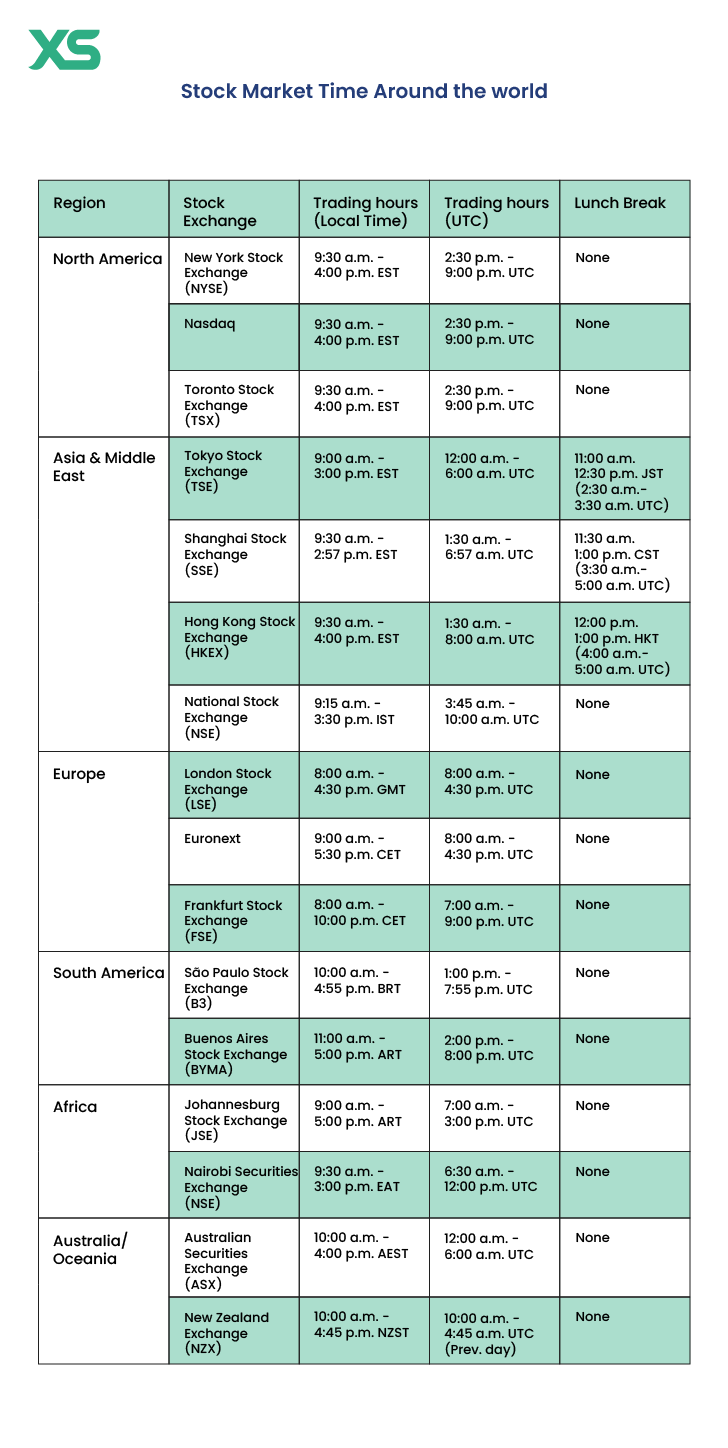
The standard trading hours for the NYSE and Nasdaq are Monday through Friday, from 9:30 AM to 4:00 PM Eastern Time (ET). This 6.5-hour window is known as the “regular session.” Unlike some international exchanges that observe a midday lunch break, U.S. markets trade continuously throughout this period.
The opening bell at 9:30 AM often triggers a surge in volume as the market processes news, earnings reports, and economic data that accumulated overnight. Conversely, the “closing cross” at 4:00 PM represents the final flurry of activity where institutional investors and index funds rebalance their positions. For personal finance enthusiasts, the regular session is generally the safest time to execute trades, as the high volume ensures “tighter” bid-ask spreads—meaning you can buy and sell closer to the actual market price.
Holiday Closures and Early Dismissals
It is essential to note that the U.S. stock market does not operate on weekends. Furthermore, the market observes several federal holidays. Major closures include New Year’s Day, Martin Luther King Jr. Day, Washington’s Birthday (Presidents’ Day), Good Friday, Memorial Day, Juneteenth, Independence Day, Labor Day, Thanksgiving, and Christmas Day.
In addition to full closures, the market occasionally observes “early early dismissals.” On days such as the Friday after Thanksgiving (Black Friday) or Christmas Eve (if it falls on a weekday), the market typically closes at 1:00 PM ET. Keeping a calendar of these events is vital for managing margin requirements and ensuring that any time-sensitive trades are executed before the liquidity evaporates.
Exploring Extended Hours: Pre-Market and After-Hours Trading
While the regular session is the main event, modern technology allows for trading outside the standard 9:30 AM to 4:00 PM window. These periods are known as extended-hours trading, divided into pre-market and after-hours sessions.
The Mechanics of the ECN
Extended trading is made possible through Electronic Communication Networks (ECNs), which automatically match buy and sell orders without the need for a centralized exchange floor. Pre-market trading in the U.S. can begin as early as 4:00 AM ET and runs until the opening bell at 9:30 AM. After-hours trading begins immediately at 4:00 PM and can continue until 8:00 PM ET.
Historically, these sessions were the exclusive domain of institutional investors and high-net-worth individuals. However, today, most major retail brokerages provide access to extended hours for their clients, though participants must often agree to specific risk disclosures.
Risks and Rewards of Extended Trading
Trading during these hours offers the advantage of reacting immediately to corporate news. Most companies release their quarterly earnings reports either before the market opens or after it closes to prevent extreme volatility during the regular session. By trading in the extended session, an investor can act on this information before the general public hits the “buy” button at 9:30 AM.
However, extended-hours trading is not without significant risk. The primary concern is low liquidity. With fewer participants in the market, the gap between the price a buyer is willing to pay and the price a seller is willing to accept (the spread) can widen dramatically. This can lead to “slippage,” where your order is executed at a much worse price than expected. Additionally, price movements in the after-hours session can be deceptive; a stock may jump 5% at 6:00 PM on low volume, only to open flat or even down the following morning when the full force of the market arrives.
Global Market Sessions: A 24-Hour Perspective
For those looking to diversify their portfolios internationally or engage in foreign exchange (Forex) and commodities, it is necessary to look beyond the shores of North America. The financial world functions as a relay race, with one region passing the baton to the next as the earth rotates.

The European Markets
As the U.S. East Coast is still asleep, Europe takes the stage. The London Stock Exchange (LSE), one of the world’s oldest and most influential, operates from 8:00 AM to 4:30 PM Greenwich Mean Time (GMT). Other major hubs, such as the Euronext Paris and the Deutsche Börse (Frankfurt), follow similar schedules, typically opening an hour later relative to GMT.
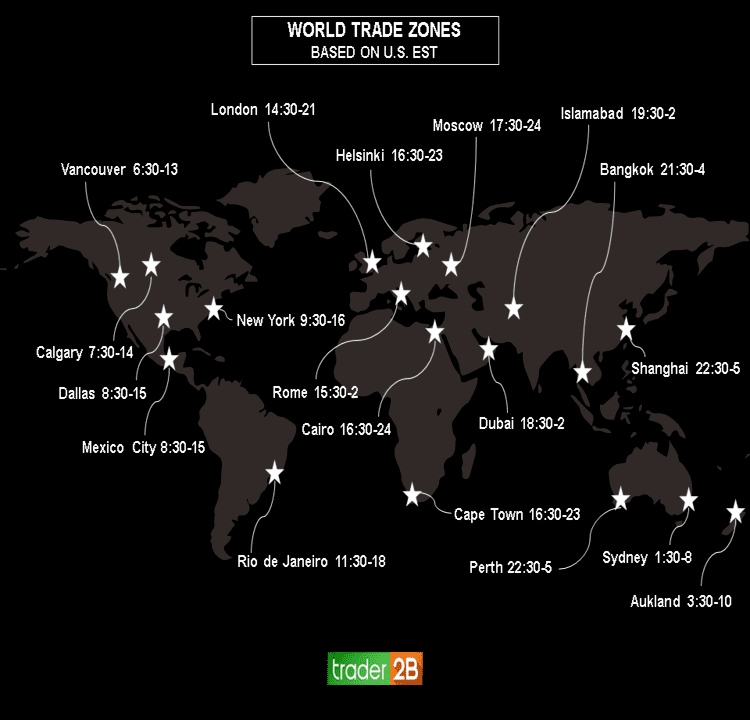
The European session is particularly interesting because it overlaps with the U.S. session for several hours in the morning (typically from 9:30 AM to 11:30 AM ET). This overlap period often sees some of the highest trading volumes of the day, as traders in London and New York are active simultaneously.
The Asian Markets
The “Asian Session” or “Tokyo Session” is the first to open each new calendar day. The Tokyo Stock Exchange (TSE) operates from 9:00 AM to 3:00 PM local time. Notably, many Asian exchanges, including Tokyo and the Hong Kong Stock Exchange (HKEX), incorporate a mandatory lunch break. In Tokyo, the market pauses from 11:30 AM to 12:30 PM.
The Hong Kong and Shanghai markets provide critical insight into the health of the Chinese economy. Their hours usually run from approximately 9:30 AM to 4:00 PM local time, with a break between 12:00 PM and 1:00 PM. For Western investors, these markets trade during the late evening and early morning hours (e.g., 8:00 PM to 3:00 AM ET).
Overlapping Hours and Volatility
The concept of “market overlaps” is a cornerstone of professional trading. When two major markets are open at the same time, the increase in participants leads to higher liquidity and more predictable price trends. The U.S./London overlap is the most significant, followed by the Tokyo/London overlap. Understanding these windows allows an investor to choose the most efficient time to enter or exit a position, minimizing costs and maximizing the speed of execution.
Why Timing Matters: Strategic Considerations
For anyone focused on personal finance and wealth building, understanding the “when” is just as important as the “what.” Market hours dictate the environment in which your money operates.
Day Trading vs. Long-Term Investing
For a long-term investor who buys index funds or blue-chip stocks to hold for decades, the exact hour of the trade might seem irrelevant. However, even for the “buy and hold” crowd, avoiding the first and last 30 minutes of the trading day can be beneficial. These periods are characterized by high volatility and “amateur” noise. Executing a trade during the “midday lull” (between 11:00 AM and 2:00 PM ET) often results in more stable pricing.
For the side-hustler or active trader, the opening and closing hours are the “Power Hours.” This is where the volatility provides the price swings necessary for short-term profit. However, this requires a disciplined approach and an understanding that the risk of capital loss is significantly higher during these windows.
Options and Futures Markets
The rules change slightly when dealing with financial derivatives. Most stock options stop trading exactly at 4:00 PM ET, mirroring the underlying stock market. However, some broad-based index options (like those tracking the S&P 500) trade until 4:15 PM ET.
Futures markets, on the other hand, operate nearly 24 hours a day, six days a week. For example, S&P 500 futures trade from Sunday evening through Friday afternoon with only brief daily breaks. This makes the futures market a primary tool for “hedging” or protecting a portfolio against overnight news events that occur while the traditional stock market is closed.
Essential Tools for Tracking Market Hours
In the modern financial landscape, you do not need to sit in front of a terminal with five clocks to stay informed. Various tools and platforms can help you stay synchronized with global markets.
Trading Platforms and Real-Time Alerts
Most modern brokerage apps provide a “Market Status” indicator, showing whether the exchange is open, closed, or in an extended session. Advanced platforms like Thinkorswim or Interactive Brokers allow users to set alerts for market opens and closes across different time zones. This is particularly useful for investors who hold ADRs (American Depositary Receipts) of foreign companies, as the price of the ADR in New York will be heavily influenced by the performance of the “home” stock in London or Tokyo overnight.
Economic Calendars
A professional-grade economic calendar is an indispensable tool for any serious investor. Websites and apps dedicated to financial news provide daily schedules of not just market hours, but also the timing of “market-moving” events. This includes Federal Reserve interest rate announcements (usually at 2:00 PM ET), jobs reports (8:30 AM ET), and inflation data.
Knowing that a major report is due at 8:30 AM—an hour before the market opens—allows an investor to prepare for a potentially volatile opening bell. It provides the opportunity to set “limit orders” (orders to buy or sell only at a specific price) rather than “market orders,” which could be executed at unfavorable prices in the chaos of a data-driven rally or sell-off.
Ultimately, the stock market is a global engine that runs on a strict schedule. By respecting these times and understanding the nuances of different sessions, you move from being a passive participant to a strategic navigator of your own financial future. Whether you are managing a small side income or a major investment portfolio, the clock is one of the most powerful tools in your arsenal. Proper timing ensures that your capital is deployed when the market is most efficient, allowing you to focus on the long-term goal: consistent wealth creation.
aViewFromTheCave is a participant in the Amazon Services LLC Associates Program, an affiliate advertising program designed to provide a means for sites to earn advertising fees by advertising and linking to Amazon.com. Amazon, the Amazon logo, AmazonSupply, and the AmazonSupply logo are trademarks of Amazon.com, Inc. or its affiliates. As an Amazon Associate we earn affiliate commissions from qualifying purchases.