
For investors, traders, and financial professionals worldwide, the New York financial markets represent the heartbeat of global capitalism. Whether you are managing a personal retirement portfolio or executing high-frequency algorithmic trades, understanding the specific rhythm of the New York Stock Exchange (NYSE) and the Nasdaq is fundamental to success. The question of “what time does the market open” goes far beyond a simple numerical answer; it involves understanding time zones, extended sessions, holiday schedules, and the psychological phases of the trading day.
In New York, the standard equity markets operate on Eastern Time (ET). While the physical and electronic infrastructure of these markets is technically active nearly 24 hours a day through various channels, the core session—where the vast majority of volume and liquidity resides—is strictly defined.
Understanding Standard Trading Hours in New York
The primary trading session for the New York Stock Exchange and the Nasdaq Stock Market begins at 9:30 AM ET and concludes at 4:00 PM ET. This six-and-a-half-hour window is often referred to as “regular trading hours” or the “core session.” During this period, liquidity is at its peak, bid-ask spreads are generally at their narrowest, and the most significant volume of shares changes hands.
The New York Stock Exchange (NYSE) and NASDAQ
While both major exchanges share the same 9:30 AM to 4:00 PM schedule, they operate with slightly different mechanisms. The NYSE, located at 11 Wall Street, still utilizes a hybrid model that includes human Designated Market Makers (DMMs) on the trading floor, though the vast majority of its operations are now electronic. The Nasdaq, on the other hand, has always been a purely electronic exchange.
Regardless of their structural differences, both exchanges synchronize their opening and closing bells to ensure a cohesive national market system. For the retail investor using a standard brokerage account, these are the hours when market orders are executed instantly and when the “live” price of a stock is most accurately reflected.
The Importance of the Opening Bell
The opening bell at 9:30 AM ET is more than just a ceremonial tradition; it marks the start of the “opening auction.” Before the bell rings, buy and sell orders have been accumulating from news that broke overnight or during the pre-market session. The exchange’s computers run complex algorithms to determine an opening price that satisfies the maximum number of buy and sell orders. This “price discovery” phase can result in significant price gaps—where a stock opens much higher or lower than it closed the previous day. For many institutional investors, the first few minutes of the open are the most critical for setting the day’s momentum.
Pre-Market and After-Hours Trading: Extending the Opportunity
While the core session is the most famous, the New York markets do not simply go dark outside of the 9:30 AM to 4:00 PM window. Electronic Communication Networks (ECNs) allow for “extended-hours trading,” which provides a venue for investors to react to news that occurs when the main exchange floors are closed.
Pre-Market Dynamics (4:00 AM – 9:30 AM ET)
The pre-market session in New York officially begins as early as 4:00 AM ET, though many retail brokerages do not grant their clients access until 7:00 AM or 8:00 AM ET. This early session is characterized by significantly lower volume compared to the regular session. It is often driven by international catalysts, such as economic data releases from Europe or overnight movements in Asian markets.
Traders use the pre-market to position themselves ahead of the opening bell. For example, if a major tech company releases a surprise announcement at 7:30 AM, the stock will begin trading immediately in the pre-market, allowing fast-acting investors to buy or sell before the general public enters at 9:30 AM.
After-Hours Trading (4:00 PM – 8:00 PM ET)
The after-hours session begins immediately following the 4:00 PM closing bell and runs until 8:00 PM ET. This is perhaps the most volatile period for individual stocks, as this is when the majority of publicly traded companies release their quarterly earnings reports.
When a company “beats” earnings expectations at 4:05 PM, its stock price can skyrocket within seconds. Conversely, a poor guidance report can lead to a rapid sell-off. Because there are fewer participants in the after-hours session, price movements are often exaggerated. A stock might move 10% on very low volume, only to see that move partially reversed when the high-volume regular session opens the following morning.
Risks and Rewards of Extended Hours
The primary advantage of extended-hours trading is the ability to act immediately on news. However, the risks are substantial. The “liquidity” is thin, meaning there are fewer buyers and sellers. This results in wide “bid-ask spreads”—the difference between what a buyer is willing to pay and what a seller is willing to accept. In the regular session, a spread might be one cent; in the after-hours, it could be fifty cents or more. Furthermore, most brokers only allow “limit orders” during these times to protect investors from executing trades at wildly unfavorable prices.

Market Volatility and the Significance of Timing
Timing is everything in finance. Professional traders often divide the New York trading day into distinct phases, each with its own personality and level of risk. Understanding these phases can help an investor decide when it is safest—or most profitable—to enter the market.
The “Opening Cross” and Initial Liquidity
The first 30 to 60 minutes of the New York market (9:30 AM to 10:30 AM) are typically the most volatile. This is the period of “unfilled orders” and “price discovery.” Retail investors who placed orders overnight see them executed, and institutional funds rebalance their positions based on the morning’s news. For many conservative investors, the recommendation is often to “wait for the dust to settle” before making a move, as the initial direction at 9:30 AM can often be a “head fake” that reverses by 10:00 AM.
The Mid-Day Lull
From roughly 12:00 PM to 2:00 PM ET, the market often experiences a decrease in volume and volatility. This is colloquially known as the “lunch hour” in New York. While algorithmic trading has made this lull less pronounced than it was decades ago, many institutional traders step away from their desks during this time. Trends established in the morning may drift sideways, and unless there is a breaking news event or a Federal Reserve announcement, price action tends to be more predictable and sluggish.
The Closing Rush: The Power Hour
The final hour of trading, from 3:00 PM to 4:00 PM ET, is known as the “Power Hour.” This is when volatility picks up again as traders close out their intraday positions and institutional “market-on-close” (MOC) orders are prepared. The final few minutes are particularly intense, as the “closing cross” determines the official daily closing price for every stock. This closing price is the benchmark used by mutual funds to calculate their Net Asset Value (NAV) and by technical analysts to determine long-term trends.
Holidays and Special Trading Schedules
The New York market does not operate every day of the week. It is closed on weekends (Saturdays and Sundays) and observes several federal holidays. Knowing the holiday schedule is crucial for managing margin requirements and avoiding the “liquidity trap” of a long weekend.
Official Market Holidays
The NYSE and Nasdaq generally follow the same holiday schedule, which includes:
-
New Year’s Day
-
Martin Luther King, Jr. Day
-
Presidents’ Day
-
Good Friday
-
Memorial Day
-
Juneteenth National Independence Day
-
Independence Day (July 4th)
-
Labor Day
-
Thanksgiving Day
-
Christmas Day
If a holiday falls on a Saturday, the market is typically closed on the preceding Friday. If it falls on a Sunday, the market is closed on the following Monday.
Early Closures and Shortened Sessions
There are also specific days when the market opens as usual at 9:30 AM but closes early at 1:00 PM ET. These usually occur on the day after Thanksgiving (Black Friday) and sometimes on Christmas Eve or July 3rd, depending on how the calendar falls. Trading volume on these days is notoriously thin, often leading to erratic price movements that may not reflect a stock’s true fundamental value.
Strategic Considerations for Global Investors
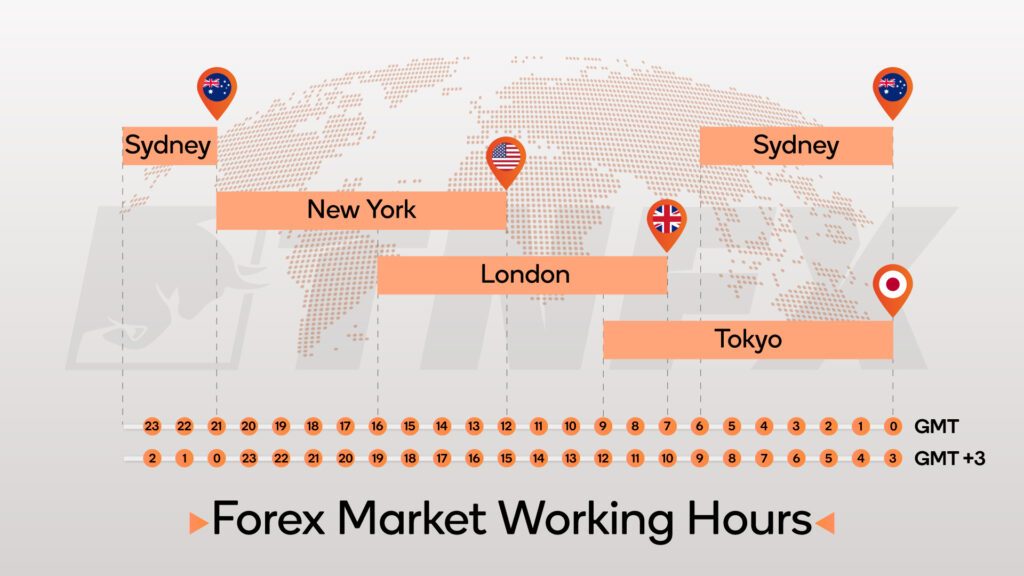
Because New York is a global financial hub, its opening time has a massive “ripple effect” on other international markets. For an investor based in London, the New York open happens in the mid-afternoon (2:30 PM GMT). For an investor in Tokyo, the New York open occurs late at night (11:30 PM JST).
Coordinating with International Markets
The “overlap” period between the New York and London markets (9:30 AM to 11:30 AM ET) is often the most liquid time for global currency (Forex) markets and large-cap multinational stocks. During these two hours, both the world’s largest and second-largest financial centers are active simultaneously. This convergence creates massive liquidity and is often the time when major macroeconomic trends are solidified.

Tools and Platforms for Monitoring New York Hours
In the modern era, staying synced with New York time is easier than ever. Most financial news apps, such as Bloomberg, CNBC, or Yahoo Finance, provide a countdown to the New York open. Additionally, sophisticated trading platforms like Thinkorswim or Interactive Brokers allow users to set alerts for “market open” and “market close,” ensuring that they are never caught off guard by a time zone shift, especially during the transition to or from Daylight Saving Time.
Navigating the New York markets requires more than just knowing the ticker symbols of your favorite companies. It requires a disciplined understanding of the clock. By respecting the 9:30 AM to 4:00 PM core session, leveraging the pre-market and after-hours for strategic moves, and being mindful of the volatility inherent in the opening and closing bells, investors can better position themselves to build and protect their wealth in the world’s most influential financial ecosystem.
aViewFromTheCave is a participant in the Amazon Services LLC Associates Program, an affiliate advertising program designed to provide a means for sites to earn advertising fees by advertising and linking to Amazon.com. Amazon, the Amazon logo, AmazonSupply, and the AmazonSupply logo are trademarks of Amazon.com, Inc. or its affiliates. As an Amazon Associate we earn affiliate commissions from qualifying purchases.