
For the modern investor, the clock is just as important as the ticker symbol. Whether you are a day trader looking to capitalize on intraday volatility or a long-term investor checking the value of your 401(k), understanding exactly when the stock market opens and closes—and what happens during those transition periods—is fundamental to financial success. While the short answer for most U.S. investors is 4:00 PM Eastern Time, the reality of global finance is far more nuanced, involving extended-hours sessions, international time zones, and strategic windows of opportunity.
Understanding Standard Market Hours in the United States
The heartbeat of the American financial system resides in New York City. The two largest stock exchanges in the world, the New York Stock Exchange (NYSE) and the NASDAQ, operate on a synchronized schedule designed to provide maximum liquidity and stability for the millions of trades executed daily.
The New York Stock Exchange (NYSE) and NASDAQ
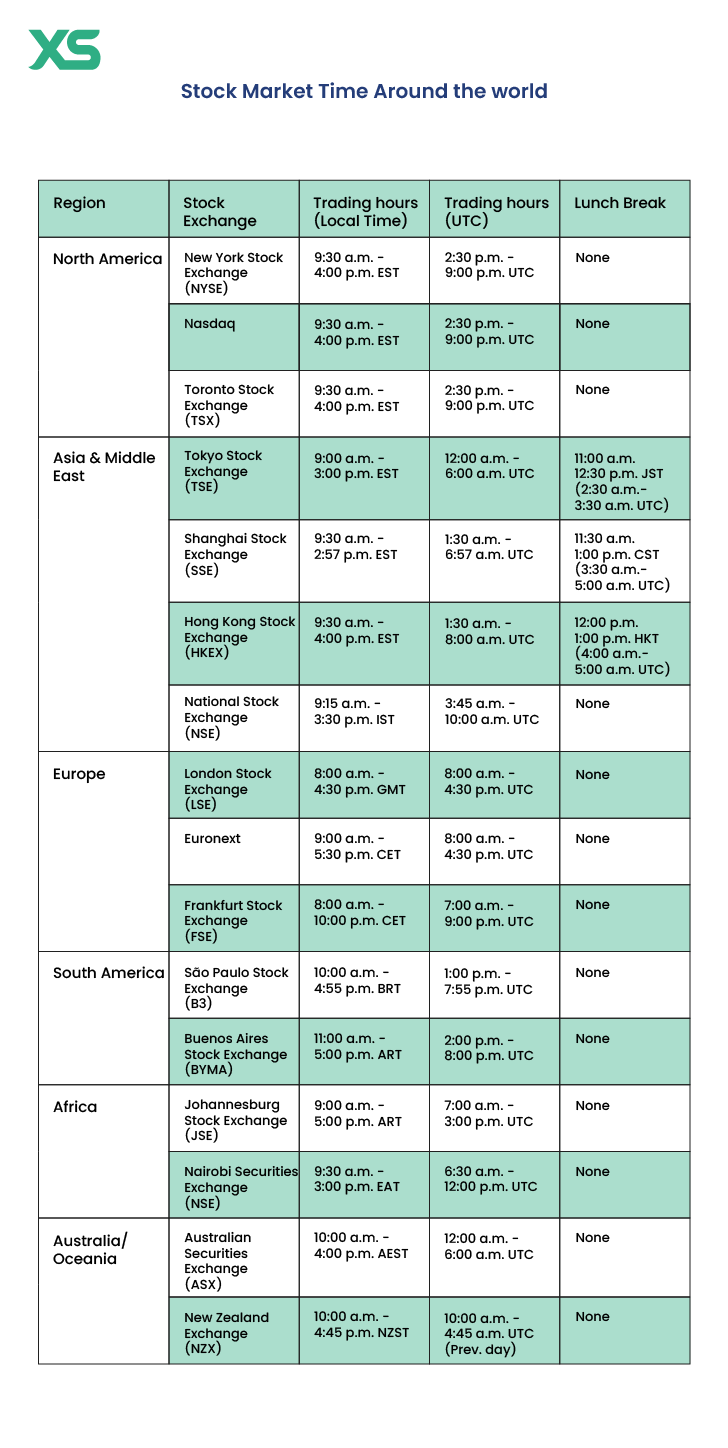
For the vast majority of equities traded in the United States, the core trading session begins at 9:30 AM ET and concludes at 4:00 PM ET, Monday through Friday. This 6.5-hour window is often referred to as “regular market hours.” During this time, liquidity—the ease with which an asset can be bought or sold without affecting its price—is at its peak. Institutional investors, retail traders, and automated high-frequency algorithms all interact within this window, ensuring that price discovery is as efficient as possible.
The 4:00 PM closing bell is more than just a tradition; it marks the official “closing price” for the day. This price is used by mutual funds to calculate their Net Asset Value (NAV) and by analysts to determine the daily performance of indices like the S&P 500 and the Dow Jones Industrial Average.
Holiday Schedules and Early Closures
It is vital for investors to realize that the market does not follow a standard 365-day calendar. The NYSE and NASDAQ are closed on major U.S. federal holidays, including New Year’s Day, Martin Luther King Jr. Day, Presidents’ Day, Good Friday, Memorial Day, Juneteenth, Independence Day, Labor Day, Thanksgiving, and Christmas.
Furthermore, the market often observes “early closures.” On days like the Friday after Thanksgiving (Black Friday) and sometimes on Christmas Eve, the market closes at 1:00 PM ET. Missing these details can lead to failed trade executions or unexpected “gap” risks where the price changes significantly while the market is closed.
The Significance of the Closing Auction
The final minutes of the standard session are among the most frantic and important of the day. Both the NYSE and NASDAQ utilize a “closing auction” or “closing cross” to determine the final price. This process aggregates all the buy and sell orders that have been designated to execute “at the close.” By pooling this massive volume, the exchange can find a single price that satisfies the most orders, providing a stable exit point for the day.
Beyond the Bell: The World of Extended-Hours Trading
While the “closing bell” rings at 4:00 PM, the digital nature of modern finance means that the market never truly sleeps. “Extended-hours trading” allows investors to react to news that breaks outside of the standard 9:30 AM to 4:00 PM window.
After-Hours Trading: 4:00 PM to 8:00 PM ET
Immediately following the regular session, the after-hours market begins. This session typically runs until 8:00 PM ET. This is the period when most publicly traded companies release their quarterly earnings reports. Because these reports can cause a stock price to swing 10% or 20% in a matter of minutes, the after-hours market is a high-stakes environment.
However, trading during these hours comes with significant risks. Liquidity is much lower than during the day, meaning the “spread”—the difference between the buy and sell price—is much wider. A stock might have a bid of $100 and an ask of $105, making it expensive to enter or exit a position. Furthermore, the lack of volume can lead to extreme price volatility that may not reflect where the stock will actually trade when the market re-opens the next morning.
Pre-Market Trading: 4:00 AM to 9:30 AM ET
On the other side of the spectrum is the pre-market session. While some brokers allow trading as early as 4:00 AM ET, the bulk of pre-market activity occurs between 8:00 AM and 9:30 AM ET. This session is often used by traders to react to overnight news from European markets or early-morning economic data releases from the U.S. government, such as employment reports or inflation data.
Participation and Mechanics
In the past, extended-hours trading was largely the playground of institutional giants. Today, most major retail brokerages provide access to these sessions. To participate, investors must usually use “Limit Orders” rather than “Market Orders.” Because of the volatility and low liquidity, exchanges require you to specify the exact price you are willing to pay to prevent you from being filled at an absurdly disadvantageous price.
Global Market Hours: A 24-Hour Perspective

The U.S. market is only one piece of the global financial puzzle. For diversified investors, the “close” is a relative term that moves across the globe with the sun.
Major International Exchanges
As the U.S. markets are winding down, markets in Asia are preparing to open. The Tokyo Stock Exchange (TSE) generally operates from 9:00 AM to 3:00 PM local time, with a lunch break in between. The Hong Kong Stock Exchange follows a similar pattern.
In Europe, the London Stock Exchange (LSE) and the Euronext markets open while it is still the middle of the night in New York. The LSE typically operates from 8:00 AM to 4:30 PM GMT. For a New York-based investor, this means the London market is open from 3:00 AM to 11:30 AM ET.
The Overlap Effect
One of the most critical times for global liquidity is the “overlap” between the European and U.S. sessions. Between 9:30 AM ET and 11:30 AM ET, both New York and London are open. This two-hour window often sees the highest trading volumes of the day, particularly in the foreign exchange (Forex) markets and for multinational corporations listed on multiple exchanges. Traders often find that price trends established during this overlap carry significant weight for the remainder of the day.
The 24-Hour Cycle of Futures
While individual stocks have specific closing times, the Futures market—which includes contracts on the S&P 500 (E-mini), Gold, and Crude Oil—operates nearly 24 hours a day, five days a week. These markets close briefly in the late afternoon for a “maintenance period” but otherwise provide a continuous look at investor sentiment. If a major geopolitical event happens at 2:00 AM, the S&P 500 futures will move immediately, providing a preview of what the “regular” stock market will do when it finally opens at 9:30 AM.
Strategic Timing: Navigating the Trading Day
Knowing when the market closes is only half the battle; knowing how the market behaves at different times allows an investor to trade more intelligently. Professional traders often divide the day into specific zones.
The Opening Cross and Morning Volatility
The first 30 to 60 minutes of the trading day (9:30 AM – 10:30 AM) are often the most volatile. This is when the market “prices in” all the news that occurred overnight and during the pre-market. For novice investors, this can be a dangerous time to trade because prices can swing wildly. For experienced traders, this volatility represents the best opportunity for profit.
The “Lunchtime Lull”
From roughly 12:00 PM to 1:30 PM ET, trading volume typically thins out as floor traders and institutional desks in New York take breaks. During this period, the market often “drifts,” and price movements may lack conviction. Many professional investors avoid making large moves during this window because the lower volume makes it easier for small trades to move the price in an inorganic way.
The Power Hour: 3:00 PM to 4:00 PM ET
The final hour of trading is colloquially known as the “Power Hour.” This is when institutional investors—pension funds, hedge funds, and mutual funds—rebalance their portfolios. It is a period of intense volume and often sees a “second wind” of volatility. If the market has been trending up all day, the Power Hour often sees an acceleration of that trend as traders rush to get in before the close. Conversely, it can also see sharp reversals as profitable traders “flat” their positions to avoid the risk of holding assets overnight.
The Risks of the “Close” and Overnight Gaps
The moment the market closes at 4:00 PM, a specific type of risk takes over: Gap Risk. Because the market is not continuously pricing assets, any news that happens between 4:00 PM Friday and 9:30 AM Monday cannot be immediately traded on the standard exchange.
If a company announces a major lawsuit or a product failure on Saturday, the stock price cannot change on the NYSE. However, the perceived value changes instantly. When the market finally opens on Monday morning, the stock may “gap down,” opening at $80 even though it closed at $100 on Friday.
Understanding the closing time is essential for managing this risk. Conservative investors often reduce their “margin” (borrowed money) or close out speculative positions before the weekend to ensure they aren’t wiped out by an overnight or over-weekend gap that they had no power to trade against.

Conclusion: The Clock as a Financial Tool
In the world of finance, time is not just a measurement—it is a variable that dictates liquidity, volatility, and risk. While “4:00 PM” is the standard answer to when the stock market closes, a sophisticated investor views the close as a dynamic transition. By understanding the mechanics of the closing auction, the opportunities within extended-hours trading, and the global cycle of international exchanges, you can transform the market clock from a limitation into a strategic advantage. Whether you are aiming to avoid the volatility of the Power Hour or seeking to capitalize on after-hours earnings reports, mastering the timing of the market is a foundational step in any successful investment journey.
aViewFromTheCave is a participant in the Amazon Services LLC Associates Program, an affiliate advertising program designed to provide a means for sites to earn advertising fees by advertising and linking to Amazon.com. Amazon, the Amazon logo, AmazonSupply, and the AmazonSupply logo are trademarks of Amazon.com, Inc. or its affiliates. As an Amazon Associate we earn affiliate commissions from qualifying purchases.