
At its most fundamental level, a stock is a financial instrument that represents ownership in a corporation. When you purchase a stock—often referred to as “shares” or “equity”—you are essentially buying a small piece of that company’s assets and future earnings. For decades, the stock market has served as one of the most effective vehicles for building long-term wealth, allowing individual investors to participate in the growth of global enterprises. However, understanding what a stock is requires more than just a dictionary definition; it requires an exploration of how ownership functions, how the market facilitates trading, and how these assets generate value for the holder.

Understanding the Mechanics of Stock Ownership
When a company decides to “go public,” it divides its total value into millions of tiny pieces called shares. This process is typically initiated through an Initial Public Offering (IPO). By selling these shares to the public, the company raises capital that it can use to fund new projects, research and development, or geographic expansion. Once the IPO is complete, these shares trade on a secondary market, such as the New York Stock Exchange (NYSE) or the NASDAQ, where investors buy and sell them from one another.
The Concept of Fractional Ownership
Holding a stock means you are a shareholder. This status grants you certain rights, though these vary depending on the amount of stock you own. In a legal sense, you own a “fraction” of the corporation. If a company has one million shares outstanding and you own ten thousand of them, you own 1% of the company. This ownership stake entitles you to a proportional share of the company’s profits and, in many cases, a voice in how the company is run through voting rights on major corporate decisions, such as electing the board of directors.
The Role of the Stock Exchange
Stock exchanges act as the infrastructure for the investment world. They are regulated marketplaces where buyers and sellers meet to execute trades. The price of a stock at any given moment is determined by the law of supply and demand. If more people want to buy a stock (demand) than sell it (supply), the price rises. Conversely, if bad news breaks about a company and more people want to sell than buy, the price falls. This constant fluctuation is what creates the “volatility” often discussed in financial news, but for the long-term investor, it represents the changing market consensus on a company’s future value.
Public vs. Private Equity
It is important to distinguish between public stocks and private equity. Most casual investors deal with public stocks, which are listed on exchanges and available for anyone to buy. Private companies also have stock, but it is not traded on public exchanges. Investing in private companies is usually reserved for “accredited investors” or venture capital firms. For the vast majority of people, “investing in stocks” refers to the liquid, transparent world of the public markets.
Navigating the Different Classes and Categories of Stocks
Not all stocks are created equal. Depending on the company’s stage of growth, its industry, and the specific rights attached to the shares, stocks can behave very differently in an investor’s portfolio. Understanding these distinctions is crucial for building a strategy that aligns with your financial goals and risk tolerance.
Common Stock vs. Preferred Stock
Most investors purchase “common stock.” This is the type of equity that provides the potential for capital appreciation (the stock price going up) and dividends. Common stockholders also typically have voting rights. However, in the event of a company’s liquidation, common stockholders are at the bottom of the priority ladder; creditors and bondholders are paid first.
“Preferred stock,” on the other hand, functions somewhat like a hybrid between a stock and a bond. Preferred stockholders usually do not have voting rights, but they have a higher claim on assets and earnings. They receive dividends at a fixed rate, and these dividends must be paid out before any dividends are issued to common stockholders. Preferred stock is often less volatile than common stock but offers less potential for massive price growth.
Growth Stocks vs. Value Stocks
Investors often categorize stocks based on their perceived potential. “Growth stocks” are companies that are expected to grow their sales and earnings at a faster rate than the average company in the market. These companies usually reinvest all their profits back into the business to fuel further expansion, meaning they rarely pay dividends. Tech giants and innovative biotech firms are classic examples of growth stocks.
“Value stocks” are companies that the market may have undervalued. These are often established companies with steady earnings that are trading at a lower price relative to their fundamentals (like dividends or earnings). Value investors look for “deals,” hoping that the market will eventually recognize the company’s true worth, leading to a price correction upward.
Market Capitalization Tiers
Stocks are also categorized by their “market cap,” which is the total dollar value of all outstanding shares.
-
Large-cap stocks: Companies with a market cap of $10 billion or more. These are typically stable, “blue-chip” companies with long histories of success.
-
Mid-cap stocks: Companies with a market cap between $2 billion and $10 billion. They offer a balance between the stability of large-caps and the growth potential of small-caps.
-
Small-cap stocks: Companies with a market cap between $300 million and $2 billion. These are often younger companies with high growth potential but also higher risk and volatility.
How Investors Generate Wealth from Stocks
Investing in stocks is not merely a game of watching numbers change on a screen; it is a strategic endeavor to capture the value created by human ingenuity and corporate productivity. There are two primary ways an investor makes money from stocks: capital appreciation and dividends.

Capital Appreciation: The “Buy Low, Sell High” Model
Capital appreciation occurs when the market price of a stock increases above the price you paid for it. For example, if you buy a share for $50 and its value rises to $75, you have a “paper gain” of $25. If you sell the share at that price, you “realize” a capital gain. Price appreciation is driven by a company’s ability to increase its earnings over time, innovate within its industry, and maintain a competitive advantage that makes its future cash flows more attractive to other investors.
Dividend Income: The Power of Cash Flow
Some companies distribute a portion of their earnings back to shareholders in the form of dividends. This is common among mature, profitable companies that do not need to reinvest every cent of profit back into operations. Dividends provide a steady stream of passive income. For many investors, dividends are the primary goal, especially during retirement. When dividends are reinvested to buy more shares of the same stock (a process often automated through a Dividend Reinvestment Plan, or DRIP), the portfolio can grow exponentially over time.
The Phenomenon of Compounding
The true secret to stock market wealth is compounding. Compounding occurs when the returns on your investments start to earn their own returns. If your $10,000 investment grows by 10%, you have $11,000. The following year, if it grows by 10% again, you don’t just earn another $1,000; you earn 10% of $11,000, which is $1,100. Over decades, this effect creates a “hockey stick” curve of wealth accumulation, turning modest monthly contributions into significant fortunes.
Risk Management and the Volatility Factor
While the potential for reward is high, stocks are inherently risky. Unlike a savings account, where your principal is generally guaranteed, the value of a stock can drop to zero if the underlying company fails. Understanding and mitigating these risks is the hallmark of a professional approach to investing.
Systemic vs. Non-Systemic Risk
Investors face two main types of risk. “Systemic risk” (or market risk) refers to factors that affect the entire market simultaneously, such as a global recession, a spike in interest rates, or geopolitical instability. You cannot easily avoid systemic risk through stock selection alone.
“Non-systemic risk” is specific to an individual company or industry. This includes a product recall, a change in management, or a decline in a specific sector’s popularity. This type of risk can be significantly reduced through diversification—the practice of spreading your investments across many different companies, industries, and geographic regions.
The Importance of Diversification
Diversification is often called the “only free lunch in finance.” By holding a variety of stocks, you ensure that the failure of one company does not ruin your entire financial future. Many modern investors achieve instant diversification by purchasing Index Funds or Exchange-Traded Funds (ETFs). These are baskets of stocks that track a specific index, such as the S&P 500, which represents the 500 largest publicly traded companies in the United States.
Volatility as an Opportunity
In the short term, the stock market is a “voting machine,” reflecting the emotions and fears of participants. This leads to volatility. However, in the long term, the market is a “weighing machine,” reflecting the actual substance and profitability of companies. Successful investors train themselves to view volatility not as a reason to panic, but as an opportunity to buy high-quality companies at a discount when the rest of the market is fearful.
Building a Professional Investment Thesis
To succeed in stock investing, one must move beyond speculation and toward a disciplined methodology. This involves analyzing companies and maintaining a perspective that spans years rather than days.
Fundamental Analysis
Professional investors use fundamental analysis to determine the “intrinsic value” of a stock. This involves scrutinizing financial statements:
-
The Balance Sheet: What does the company own (assets) and what does it owe (liabilities)?
-
The Income Statement: Is the company profitable? Are its revenues growing year over year?
-
The Cash Flow Statement: Is the company generating actual cash, or is its profit just an accounting entry?
Key metrics like the Price-to-Earnings (P/E) ratio, Return on Equity (ROE), and Debt-to-Equity ratio help investors compare different companies and decide which ones offer the best value for their money.
Developing a Long-Term Vision
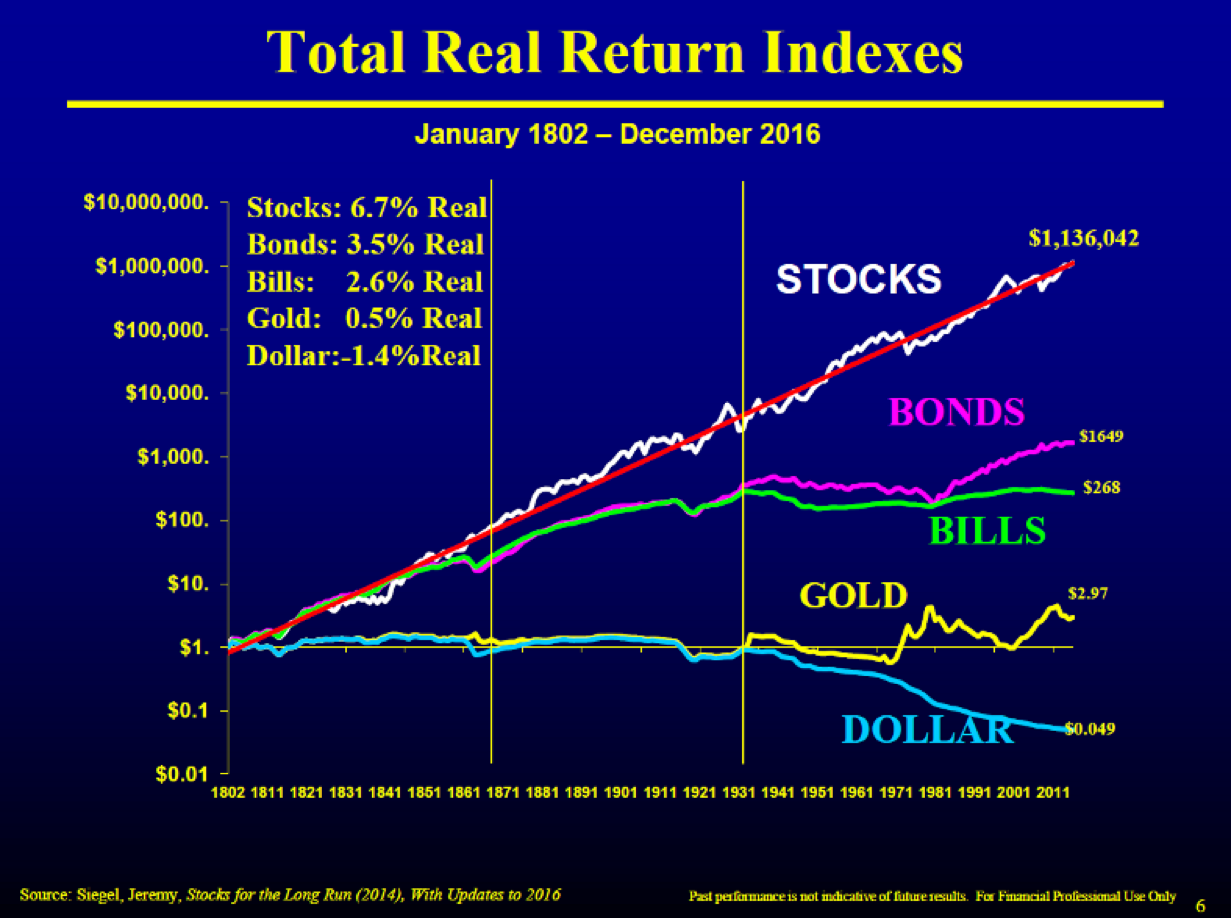
The history of the stock market is a history of resilience. Despite wars, depressions, and pandemics, the global economy has continued to grow, and the stock market has followed. The greatest enemy of the individual investor is often their own psychology—the urge to sell when prices drop or to chase “hot” stocks when prices are at their peak.
By understanding that a stock is a legitimate piece of a business, an investor can adopt a “business owner” mindset. If you owned a local hardware store, you wouldn’t try to sell the building every time the weather was bad; you would focus on the long-term profitability of the shop. Investing in stocks requires the same level of patience and conviction. When you buy a stock, you are betting on the future of that company, the talent of its employees, and the demand for its products. In the world of finance, those who understand this fundamental truth are the ones most likely to achieve lasting financial independence.
aViewFromTheCave is a participant in the Amazon Services LLC Associates Program, an affiliate advertising program designed to provide a means for sites to earn advertising fees by advertising and linking to Amazon.com. Amazon, the Amazon logo, AmazonSupply, and the AmazonSupply logo are trademarks of Amazon.com, Inc. or its affiliates. As an Amazon Associate we earn affiliate commissions from qualifying purchases.