
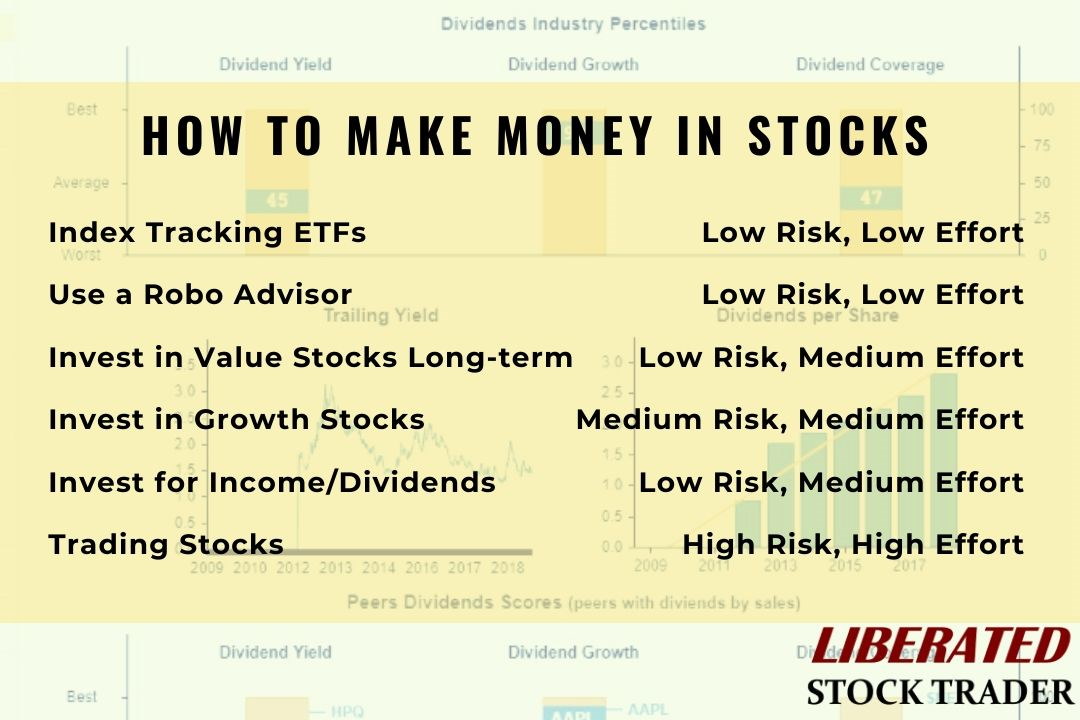
Investing in the stock market is often portrayed as a complex labyrinth of charts, tickers, and rapid-fire decisions. However, at its core, the stock market is one of the most effective vehicles for wealth creation ever devised. To understand how you actually get money from stocks, one must look past the daily fluctuations and focus on the fundamental mechanisms that transfer corporate value into an investor’s pocket. There are two primary ways to profit—capital gains and dividends—along with several sophisticated strategies used by seasoned investors to optimize their returns.
Capital Gains: The Profit from Price Appreciation
The most common way people envision making money in the stock market is through capital gains. This occurs when you sell a stock for more than you originally paid for it. While the concept of “buy low, sell high” is simple in theory, the execution requires an understanding of market dynamics, company valuation, and investor psychology.

The Mechanics of Price Appreciation
When you buy a share of a company, you are buying a piece of its future earnings. If the company grows its revenue, expands its profit margins, or dominates a new market, the demand for its shares typically increases. As more investors compete to own a limited number of shares, the price rises.
Capital gains are categorized into two states: unrealized and realized. An unrealized gain exists on paper; if you bought a stock at $50 and it is now trading at $75, you have a $25 unrealized gain. However, you do not actually “get” that money until you sell the position. Once sold, the gain becomes realized, and the cash is deposited into your brokerage account, ready for withdrawal or reinvestment.
Growth Stocks vs. Value Stocks
To maximize capital gains, investors often look toward growth stocks. These are companies, often in the technology or biotech sectors, that reinvest all their profits back into the business to fuel rapid expansion. While these stocks may not pay a dividend, their potential for dramatic price appreciation is much higher. On the other hand, value stocks are companies that the market may have undervalued. Buying these stocks at a “discount” and waiting for the market to recognize their true worth is another pathway to significant capital gains.
The Impact of Market Sentiment
It is important to recognize that stock prices are not always tied to a company’s immediate performance. Market sentiment—how investors feel about the economy, interest rates, or geopolitical events—can drive prices up or down regardless of a company’s balance sheet. Successful investors often use this volatility to their advantage, buying during periods of irrational fear and selling during periods of irrational exuberance.
Dividends: Generating Passive Income Streams
While capital gains require you to sell your ownership stake to see cash, dividends allow you to get money from stocks while still holding your shares. A dividend is a distribution of a portion of a company’s earnings to its shareholders, usually paid out quarterly. This is the closest the stock market comes to providing a “paycheck.”
Understanding Dividend Yield and Payout Ratios
To evaluate how much money you will receive from a dividend-paying stock, you must look at the dividend yield. This is the annual dividend payment divided by the stock’s current price, expressed as a percentage. For example, if a stock costs $100 and pays $4 in annual dividends, the yield is 4%.
However, a high yield is not always a good sign. Investors must also look at the payout ratio—the percentage of earnings a company pays out as dividends. If a company is paying out 90% of its earnings, it may not have enough cash left to weather a downturn or invest in growth, making the dividend unsustainable. A healthy payout ratio generally falls between 30% and 60% for established companies.
Dividend Aristocrats and the Power of Consistency
For those seeking reliable income, “Dividend Aristocrats” are a gold standard. These are companies within the S&P 500 that have not only paid a dividend but have increased that dividend every year for at least 25 consecutive years. These companies are typically blue-chip giants with stable cash flows and dominant market positions. By holding these stocks, investors receive a “raise” every year without having to do any extra work, making dividends a cornerstone of retirement planning and passive income strategies.
Reinvesting for Exponential Growth
One of the most powerful ways to get more money from stocks over the long term is through a Dividend Reinvestment Plan (DRIP). Instead of taking the dividend as cash, you use that money to automatically buy more shares of the stock. Over time, this creates a compounding effect: you own more shares, which pay more dividends, which buy even more shares. Decades of DRIP participation can turn a modest investment into a massive portfolio that generates substantial cash flow in later years.
Strategic Selling and Portfolio Management
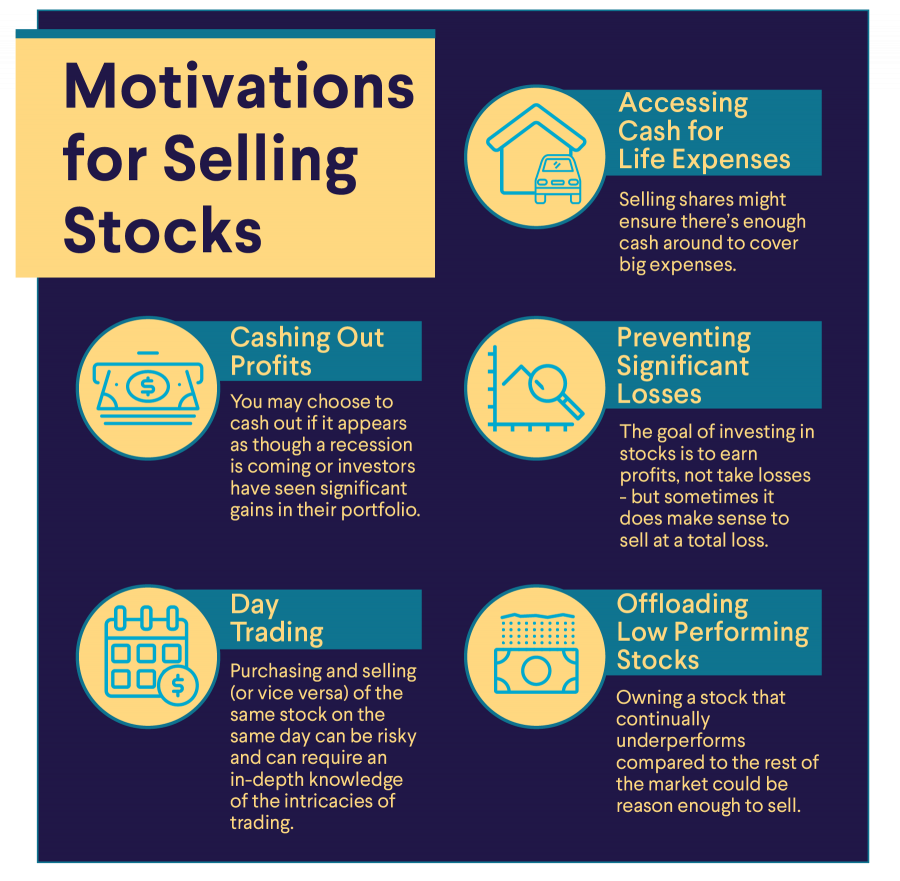
Getting money from stocks isn’t just about the initial purchase; it’s about knowing how and when to exit or adjust your positions. Professional portfolio management involves strategic selling to lock in profits, manage risk, and optimize for the inevitable reality of taxation.
When to Harvest Profits
Knowing when to sell is often harder than knowing when to buy. Sophisticated investors set “price targets” based on valuation metrics. If a stock’s price has outpaced its actual business growth to the point where it is overvalued, selling a portion of the position allows the investor to “take money off the table.” This cash can then be moved into other undervalued opportunities or held as a reserve for market downturns.
Tax-Loss Harvesting
Sometimes, getting money from stocks involves minimizing the money you lose to the government. Tax-loss harvesting is the practice of selling a stock that is at a loss to offset the capital gains taxes earned from other successful investments. For instance, if you made $5,000 on one stock but lost $2,000 on another, selling the losing position can reduce your taxable gain to $3,000. In many jurisdictions, if your losses exceed your gains, you can even use a portion of that loss to offset your regular income tax, effectively putting more money back in your pocket.
Long-Term vs. Short-Term Capital Gains
The timing of your sale significantly impacts how much of the money you get to keep. In the United States and many other regions, assets held for more than a year are subject to long-term capital gains tax rates, which are typically much lower than standard income tax rates. Selling a stock after 366 days instead of 364 days can result in a significantly higher net profit, highlighting the financial benefits of a patient, long-term investment horizon.
Advanced Income Strategies: Options and Lending
Beyond the traditional methods of selling shares and collecting dividends, the modern financial ecosystem offers specialized ways to extract liquidity and income from a stock portfolio. These methods are often used by institutional investors and high-net-worth individuals to enhance their returns.
Selling Covered Calls
A covered call is an options strategy where an investor who owns at least 100 shares of a stock sells the “right” for someone else to buy those shares at a specific price (the strike price) by a certain date. In exchange for granting this right, the investor receives an upfront payment called a “premium.”
If the stock price stays below the strike price, the investor keeps the shares and the premium. If the stock rises above the strike price, the investor is obligated to sell the shares at that price but still keeps the premium and any gains up to the strike price. This is an effective way to generate “synthetic dividends” on stocks that may not pay a traditional dividend.
Securities Lending
Many large brokerage firms offer fully paid securities lending programs. When you opt into these programs, you give your broker permission to lend your shares to other traders (often short-sellers who need to borrow shares to bet against a stock). In return, the broker shares a portion of the interest earned on that loan with you. While the income is usually modest, it provides a way to earn a small, steady stream of cash on shares that would otherwise just be sitting in your account.
Building a Sustainable Wealth Machine
Ultimately, getting money from stocks is a process of transitioning from a consumer to an owner. When you buy stocks, you are participating in the global economy as a provider of capital. The rewards for this participation—gains, dividends, and premiums—are the compensation for the risk you assume.
Diversification and Risk Mitigation
The key to consistently getting money from the market is survival. Over-concentration in a single stock or sector can lead to catastrophic losses if that specific area of the economy falters. By diversifying across different sectors (Tech, Healthcare, Energy, Finance) and asset classes (ETFs, Index Funds, Individual Equities), you ensure that a failure in one area does not stop the cash flow from the rest of your portfolio.
The Power of Compound Interest
The most profound way stocks generate money is through the passage of time. Compound interest is often called the eighth wonder of the world because it allows wealth to grow at an accelerating rate. An investor who starts early and stays consistent will find that, eventually, the annual growth and dividends from their portfolio will exceed their annual salary from their job.
Getting money from stocks is not a get-rich-quick scheme; it is a disciplined approach to asset accumulation. Whether through the steady drip of dividends, the strategic realization of capital gains, or the use of advanced derivative strategies, the stock market remains the premier destination for those looking to turn their savings into a self-sustaining financial engine. By understanding these mechanisms, investors can navigate the markets with confidence, turning volatility into opportunity and ownership into long-term financial freedom.
aViewFromTheCave is a participant in the Amazon Services LLC Associates Program, an affiliate advertising program designed to provide a means for sites to earn advertising fees by advertising and linking to Amazon.com. Amazon, the Amazon logo, AmazonSupply, and the AmazonSupply logo are trademarks of Amazon.com, Inc. or its affiliates. As an Amazon Associate we earn affiliate commissions from qualifying purchases.