
The 1920s, often remembered as the “Roaring Twenties,” was an era of unprecedented economic expansion and cultural transformation. For the first time in American history, the general public became enamored with the stock market. However, beneath the surface of jazz, flappers, and industrial growth lay a volatile financial mechanism that would eventually lead to the most catastrophic economic collapse in modern history. At the center of this fragility was the practice of buying on margin. While leverage is a common tool in modern finance, the unregulated and excessive use of margin in the late 1920s created a speculative bubble that was destined to burst with a devastating “domino effect.”
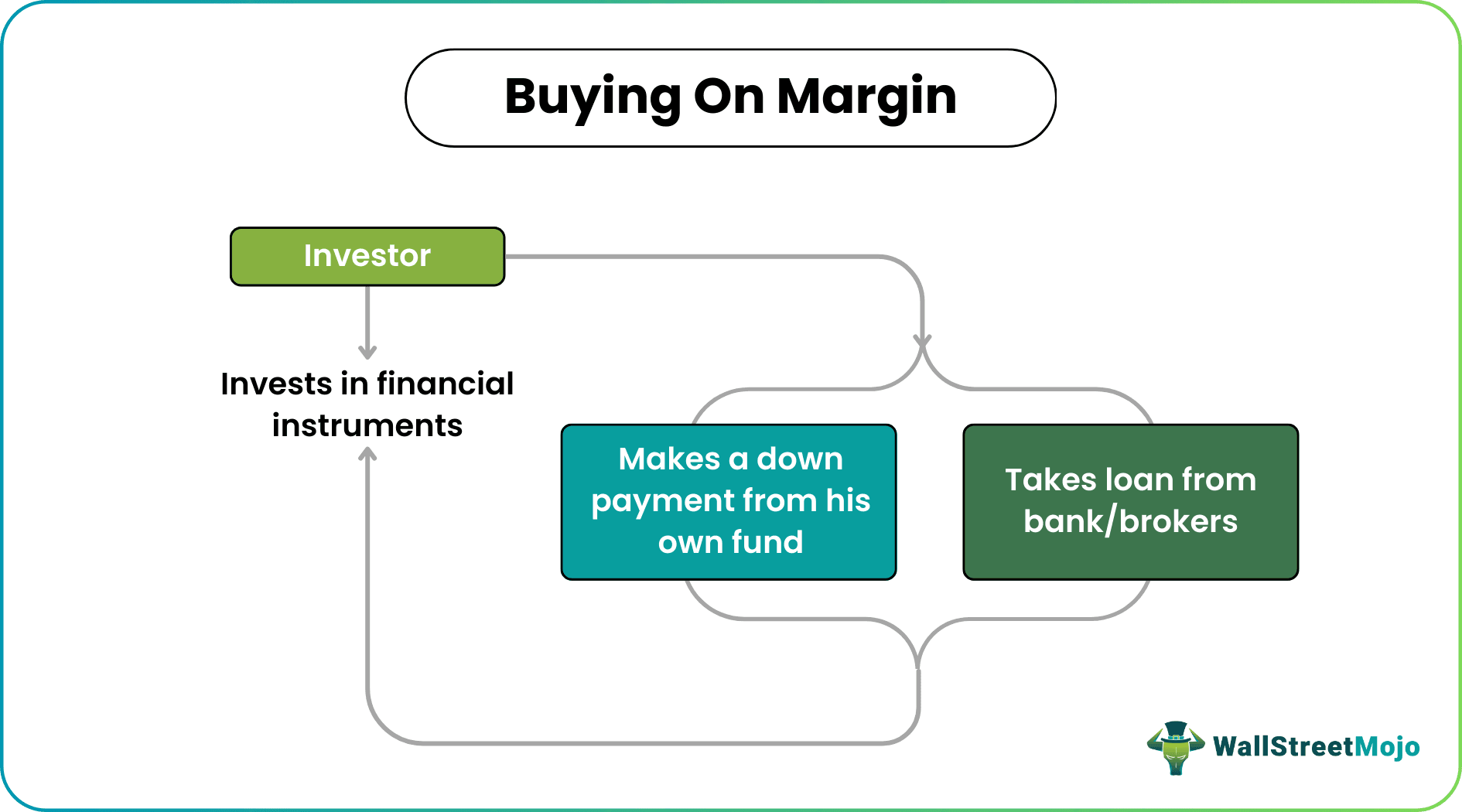
To understand how buying on margin led to the Great Depression, one must look past the simple act of borrowing money and examine the systemic vulnerabilities it created. It was not merely the debt itself that caused the crash, but the forced liquidation cycles and the evaporation of liquidity that followed once the market shifted from euphoria to panic.
The Mechanics of Margin: How Borrowed Money Amplified the Bull Market
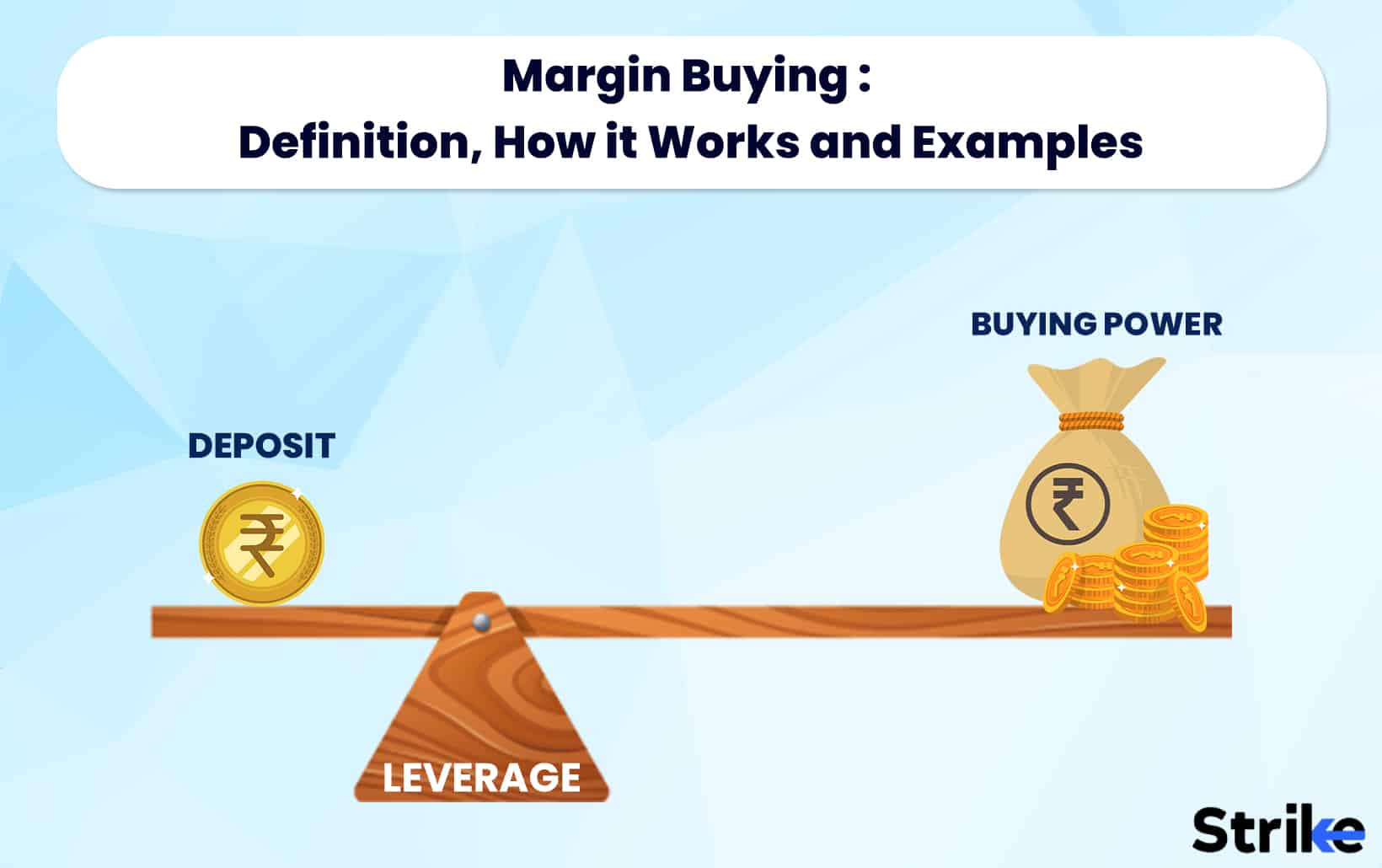
In the current financial landscape, the Federal Reserve regulates margin requirements through Regulation T, which typically mandates that investors provide at least 50% of the purchase price of a stock in cash. In the 1920s, however, the financial world was the “Wild West.” Investors could often purchase stocks with as little as 10% down. This meant that an investor with $1,000 could control $10,000 worth of shares, borrowing the remaining $9,000 from their broker.
The Allure of the 10% Down Payment
The mathematical appeal of margin is undeniable. If an investor buys $10,000 worth of stock with $1,000 of their own money and the stock price rises by 10%, the total value of the investment becomes $11,000. After paying back the $9,000 loan, the investor is left with $2,000—effectively doubling their initial capital. During the bull market of the 1920s, when stocks seemed to go nowhere but up, this appeared to be a foolproof way to build wealth.
This low barrier to entry invited millions of middle-class Americans—people who previously had no experience with the complexities of the market—to enter the fray. This influx of new capital created a self-fulfilling prophecy: more buyers led to higher prices, and higher prices lured in more margin-backed buyers.
Liquidity and the Illusion of Wealth
By 1929, the amount of outstanding “brokers’ loans”—money lent to investors for margin purchases—had reached staggering heights. In 1923, these loans totaled approximately $1.5 billion; by 1929, they surged to over $8.5 billion. This was not just “paper wealth”; it was a massive debt obligation that relied entirely on the continued appreciation of asset prices.
This created an illusion of liquidity. As long as the market climbed, everyone appeared solvent. However, the capital backing the market was increasingly comprised of credit rather than earned income or corporate profits. The market had become a giant inverted pyramid, balanced precariously on a tiny tip of actual cash.
The Catalyst of Collapse: When the Margin Call Becomes a Death Spiral
The danger of margin is that it works exponentially in both directions. While it magnifies gains, it also magnifies losses. In a margin account, the stock itself serves as collateral for the loan. If the value of that collateral drops below a certain point, the broker issues a “margin call,” requiring the investor to either deposit more cash or sell the shares immediately to pay back the loan.
The Mathematical Breaking Point
Because investors in 1929 were often leveraged at 90%, it only took a small decline in stock prices to wipe out their entire equity. If a $100 stock dropped to $90, an investor who had only put down $10 had lost 100% of their investment. At that point, the broker’s capital was at risk. To protect themselves, brokers didn’t wait for permission; they simply sold the stock at the market price to recoup the loan amount.
In late October 1929, specifically on “Black Thursday” and “Black Tuesday,” the market experienced its first significant tremors of fear. As prices began to slip, thousands of margin calls were triggered simultaneously.
Forced Liquidation and the “Fire Sale” Mentality
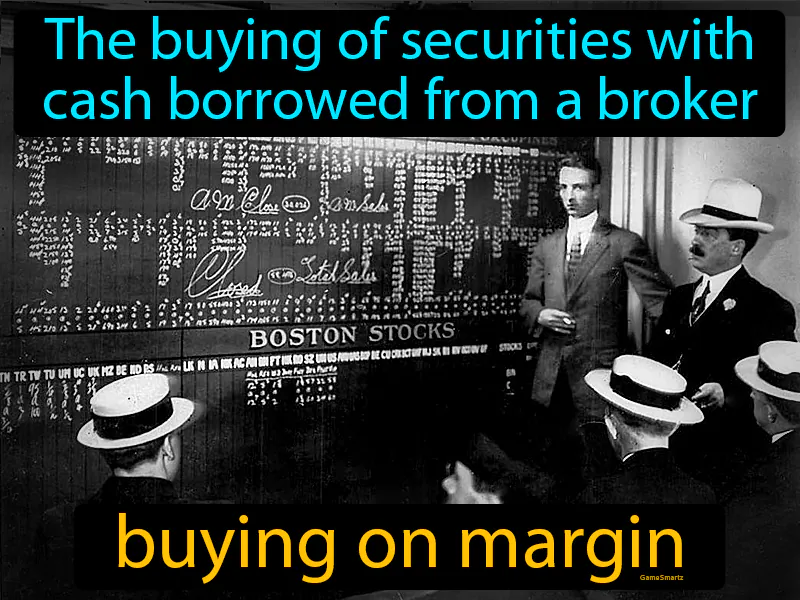
The unique horror of a margin-driven crash is the element of “forced selling.” In a typical market decline, an investor might choose to “hold on” and wait for a recovery. However, a margin investor does not have that luxury. When the broker issues a margin call and the investor has no more cash to provide, the broker sells the shares regardless of the price.
This created a feedback loop of catastrophic proportions. Forced sales increased the supply of stocks on the market while the demand was vanishing. This excess supply drove prices down further, which in turn triggered a new wave of margin calls for investors who had previously been safe. This “death spiral” meant that the very structure of the market’s financing was now the primary engine of its destruction.
The Psychological Domino Effect: Fear as a Market Force
Markets are driven by more than just numbers; they are driven by human psychology. The transition from the “New Era” optimism of the 1920s to the paralyzing fear of the 1930s was accelerated by the realization that the wealth of the previous decade was built on a foundation of sand.
From Euphoria to Panic
In the years leading up to the crash, prominent economists and politicians insisted that the American economy had reached a “permanently high plateau.” When the market began to dip, the initial reaction was confusion, then denial. But as the margin-call spiral took hold, denial turned to panic.
Investors watched as their life savings disappeared in hours. Because many had used their homes or other assets as collateral for their brokerage accounts, the crash didn’t just affect their portfolios; it destroyed their entire financial standing. This psychological blow led to a massive contraction in consumer spending, as even those who hadn’t invested in the market became terrified of the future.
The Failure of the Banking Safety Net
The crisis was exacerbated by the fact that commercial banks had become heavily involved in the margin game. Many banks had lent money to brokerage firms, and some had even used depositors’ money to invest in the market directly. When the stock market collapsed and brokers could no longer repay their loans, the banks themselves became insolvent.
The resulting bank runs were the final domino. As people rushed to withdraw their savings, banks that were already reeling from stock market losses were forced to close their doors. The collapse of the credit system, triggered by the collapse of margin-backed stock prices, essentially froze the American economy, leading to the decade-long stagnation of the Great Depression.
Post-Crash Evolution: Regulatory Safeguards and Modern Leverage
The devastation of the 1929 crash served as a brutal lesson for the global financial community. It became clear that unregulated leverage was a systemic risk that could bring down the entire economic infrastructure of a nation. This realization led to the most significant financial reforms in history.
The Birth of the SEC and Regulation T
In response to the crash, Congress passed the Securities Act of 1933 and the Securities Exchange Act of 1934, which created the Securities and Exchange Commission (SEC). One of the primary goals of these new regulations was to curb the “fever of speculation” that margin buying had facilitated.
The Federal Reserve was granted the power to set margin requirements. This led to the implementation of Regulation T, which significantly increased the amount of cash an investor must provide. By ensuring that investors had more “skin in the game,” the government aimed to prevent the type of rapid, forced liquidation spirals that characterized the 1929 crash. While the market can still crash today, the 50% margin requirement provides a much thicker buffer than the 10% requirement of the Roaring Twenties.
Is Modern Investing Repeating History?
Despite these regulations, the concept of buying on margin remains a double-edged sword in modern finance. Today, leverage takes many forms beyond traditional margin accounts, including options, futures, and “synthetic” leverage in complex derivatives.
In the modern era, we have seen echoes of 1929 in events like the 2008 financial crisis—where leverage in the housing market created a similar bubble—and more recently in the volatility of the cryptocurrency markets, where high-leverage trading often leads to massive “liquidations” that mirror the margin-call spirals of the past.
The fundamental lesson of 1929 is that leverage provides a false sense of security during bull markets. It masks the true value of assets and creates a fragility that can only be seen when the tide turns. Buying on margin did not just cause a market dip; it created a systemic trap where the mechanism intended to create wealth became the very tool that ensured a total economic wipeout. Understanding this history is essential for any modern investor, as it serves as a reminder that while the tools of finance evolve, the dangers of excessive debt and market psychology remain constant.
aViewFromTheCave is a participant in the Amazon Services LLC Associates Program, an affiliate advertising program designed to provide a means for sites to earn advertising fees by advertising and linking to Amazon.com. Amazon, the Amazon logo, AmazonSupply, and the AmazonSupply logo are trademarks of Amazon.com, Inc. or its affiliates. As an Amazon Associate we earn affiliate commissions from qualifying purchases.