
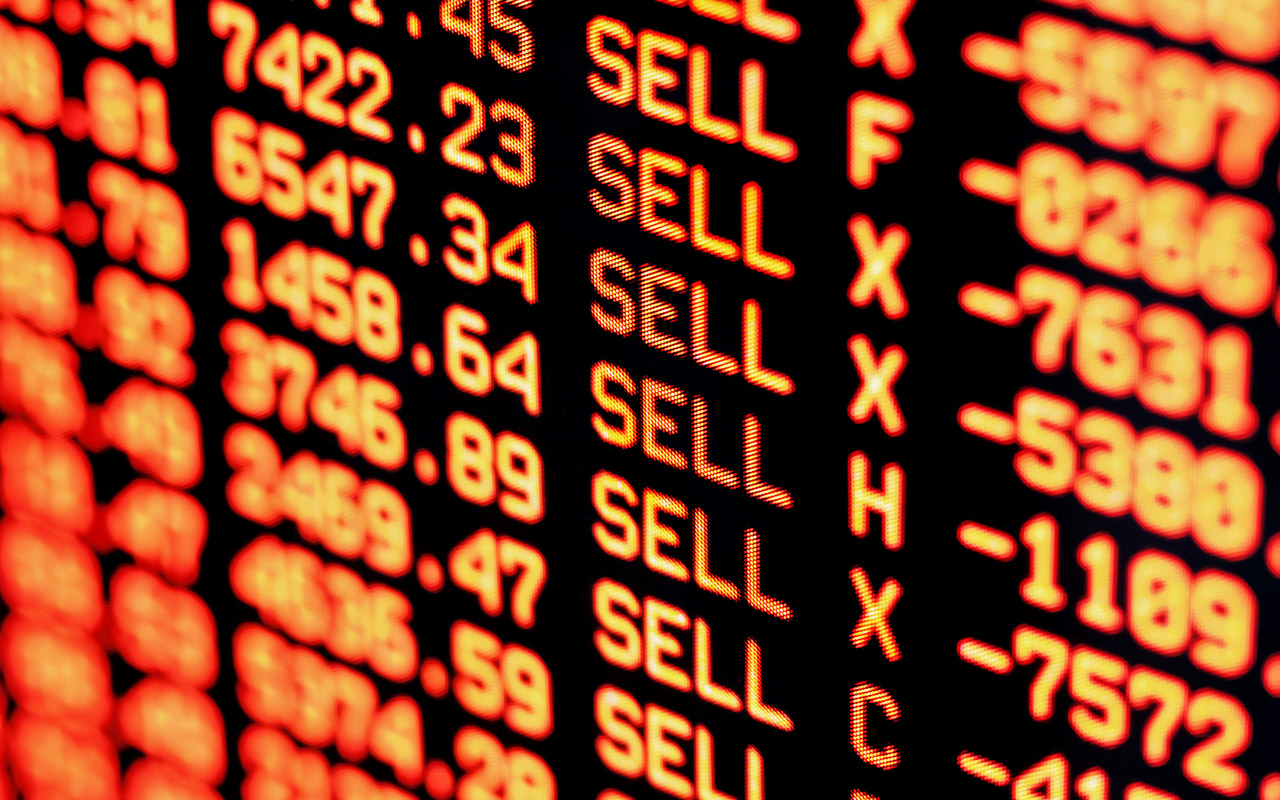
Market volatility is an inherent characteristic of the financial landscape, yet when a significant sell-off occurs, it often triggers a wave of concern for both retail and institutional investors. A “sea of red” on a trading dashboard is rarely the result of a single isolated event. Instead, it is typically the culmination of various macroeconomic pressures, shifting investor sentiments, and technical triggers that converge at a single moment. Understanding why the market is selling off today requires a multi-faceted analysis of the global economy, corporate performance, and the psychological mechanisms that drive capital movement.

The Macroeconomic Backdrop: Inflation and Interest Rate Trajectories
The most common driver of modern market volatility is the shifting outlook on monetary policy. Central banks, particularly the Federal Reserve in the United States, wield immense power over equity valuations through their control of interest rates. When the market experiences a sharp decline, it is often because new data has emerged that complicates the path toward lower rates.
The Federal Reserve’s Stance and Inflation Pressures
Equity markets thrive on predictability and cheap capital. When inflation data—such as the Consumer Price Index (CPI) or the Personal Consumption Expenditures (PCE) price index—comes in hotter than expected, it signals to the market that the “war on inflation” is not yet won. This realization forces investors to recalibrate their expectations. If inflation remains “sticky,” the Federal Reserve is less likely to cut interest rates and may even signal a “higher for longer” approach.
Higher interest rates are a natural headwind for stocks. They increase the cost of borrowing for corporations, which can stifle expansion and eat into profit margins. Furthermore, in a high-interest-rate environment, the discount rate used in valuation models increases, which lowers the present value of future cash flows. This is particularly punishing for growth stocks and the technology sector, where valuations are heavily dependent on earnings projected years into the future.
Bond Yields and Their Pressure on Equities
The relationship between the stock market and the bond market is often inverse during periods of volatility. As treasury yields rise, they offer a more attractive, risk-free alternative to the volatility of the equity market. If the 10-year Treasury yield spikes, it often triggers a rotation out of stocks and into fixed-income assets. This “yield competition” can cause a massive liquidity drain from the S&P 500 and Nasdaq, as institutional fund managers rebalance their portfolios to capture guaranteed returns. A sell-off is frequently the physical manifestation of this capital migration.
Corporate Health and the Weight of Earnings Guidance
While macroeconomic data sets the stage, corporate earnings provide the script. A market sell-off today could be the direct result of a “miss” from a bellwether corporation or a broader trend of decelerating growth across a specific sector.
The Gap Between Expectations and Results
Stock prices are not just reflections of a company’s current value; they are reflections of what investors expect the company to be worth in the future. During earnings season, the market often experiences “sell the news” events. Even if a company reports record-breaking profits, the stock may plummet if those profits were already “priced in.” If the actual figures fail to exceed the whisper numbers—the unofficial expectations of analysts—investors may perceive the stock as overvalued and begin to offload shares.
Forward-Looking Statements and Growth Deceleration
Perhaps more important than the previous quarter’s performance is the “guidance” provided by management. In a sell-off, the culprit is often a cautious outlook. If CEOs and CFOs express concern about softening consumer demand, rising input costs, or supply chain disruptions, the market reacts violently.
In a tightening economy, the “consumer discretionary” sector is often the first to feel the burn. If major retailers report that households are pulling back on non-essential spending, it sends a ripple effect through the entire market. This collective realization that the “growth story” may be pausing leads to a broad de-risking strategy among investors, contributing to the downward pressure on indices.
Geopolitical Friction and the Flight to Safety

Global markets are inextricably linked, and geopolitical instability is a primary driver of sudden “risk-off” environments. When tensions rise in critical economic regions, the uncertainty alone is enough to trigger a sell-off.
Energy Price Fluctuations and Global Trade
Geopolitical conflicts often center around regions that are vital to the world’s energy supply. A spike in oil or natural gas prices acts as a de facto tax on both businesses and consumers. For companies, higher energy costs increase the price of manufacturing and logistics. For consumers, expensive fuel leaves less disposable income for other goods and services. When the market senses a prolonged period of high energy costs, it begins to price in a potential recession, leading to a preemptive sell-off.
The Role of Safe-Haven Assets
During periods of global unrest, the “flight to safety” becomes a dominant market theme. Investors move their capital out of “risk assets” like stocks and cryptocurrencies and into “safe havens” such as gold, the U.S. Dollar, or Swiss Francs. This mass exit from the equity markets creates a vacuum of buyers, causing prices to drop rapidly. Today’s sell-off might simply be a reflection of the world’s collective anxiety regarding international relations, trade wars, or regional instability.
Technical Indicators and the Role of Algorithmic Trading
In the modern era, a significant portion of market volume is driven not by humans, but by sophisticated algorithms and high-frequency trading (HFT) systems. These systems are programmed to respond to specific price levels and technical triggers, which can turn a minor dip into a major sell-off.
Support Levels and Algorithmic Cascades
Traders closely monitor “support levels”—price points where an asset historically struggles to fall below because buyers typically step in. However, if a major index like the S&P 500 breaks through a key support level (such as a 50-day or 200-day moving average), it can trigger a cascade of automated sell orders.
These algorithms don’t care about “value” in the traditional sense; they respond to momentum. Once a downward trend is established, trend-following bots join the fray, adding immense selling pressure. This can lead to an “oversold” condition where the market drops much further than the fundamental data would suggest is reasonable.
The Fear and Greed Index and Margin Calls
Investor psychology plays a massive role in market mechanics. When the market begins to slide, “fear” takes over. This fear is exacerbated by margin calls. Many institutional and individual traders use “margin”—borrowed money—to leverage their positions. As the value of their holdings drops, brokers require them to deposit more cash or sell their positions to cover the loan. These forced liquidations happen regardless of the investor’s long-term thesis, creating a feedback loop that accelerates the sell-off.
Navigating the Storm: Maintaining Investment Discipline
While a market sell-off is unsettling, it is a standard part of the economic cycle. For the disciplined investor, understanding the “why” behind the sell-off is the first step in avoiding emotional decision-making.
Rebalancing During Volatility
A sell-off often creates a disconnect between a company’s stock price and its intrinsic value. While the broad market might be down due to macroeconomic fears, individual companies with strong balance sheets and consistent cash flows may be unfairly punished. Long-term investors often view these periods as “sales,” providing an opportunity to acquire high-quality assets at a discount. Rebalancing a portfolio during a sell-off—moving capital from overvalued sectors into those that have been oversold—is a hallmark of successful wealth management.
The Importance of a Long-Term Perspective
History shows that market sell-offs, even severe ones, are temporary. The market has survived geopolitical crises, pandemics, and periods of hyper-inflation, always eventually reaching new highs. The danger for most investors is not the sell-off itself, but their reaction to it. Panic-selling at the bottom of a move “locks in” losses and prevents the investor from participating in the eventual recovery.
Today’s market sell-off is likely a complex cocktail of interest rate anxiety, corporate guidance shifts, and technical breakdowns. By identifying these factors, investors can move away from a place of panic and toward a place of strategic observation. The market is a machine built to transfer wealth from the impatient to the patient, and during a sell-off, that patience is tested more than ever. Staying informed on the macroeconomic drivers and maintaining a diversified, disciplined approach remains the most effective way to navigate the turbulence of the financial markets.
aViewFromTheCave is a participant in the Amazon Services LLC Associates Program, an affiliate advertising program designed to provide a means for sites to earn advertising fees by advertising and linking to Amazon.com. Amazon, the Amazon logo, AmazonSupply, and the AmazonSupply logo are trademarks of Amazon.com, Inc. or its affiliates. As an Amazon Associate we earn affiliate commissions from qualifying purchases.