
Understanding why the stock market is closed is a fundamental aspect of financial literacy for any investor, whether you are a seasoned day trader or a long-term passive investor. While the digital age makes it feel as though the world of finance should operate 24/7, the reality of the major exchanges—such as the New York Stock Exchange (NYSE) and the Nasdaq—is rooted in a structured calendar of operations. When you see a “closed” sign on your trading app, it is usually due to one of three primary reasons: a scheduled federal holiday, a weekend, or, in rarer cases, an unscheduled market halt triggered by extreme volatility or technical failures.
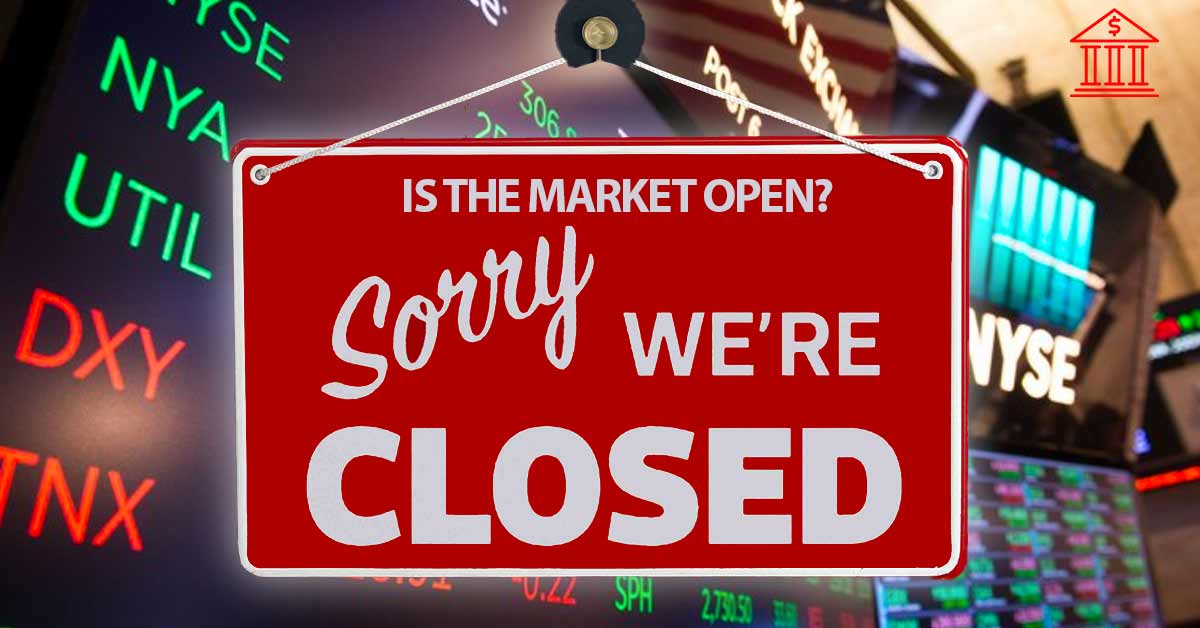
This guide explores the mechanics of market schedules, the cultural and economic reasons behind closures, and how investors should navigate the periods when the “opening bell” remains silent.
The Standardized Calendar: Scheduled Market Holidays and Observations
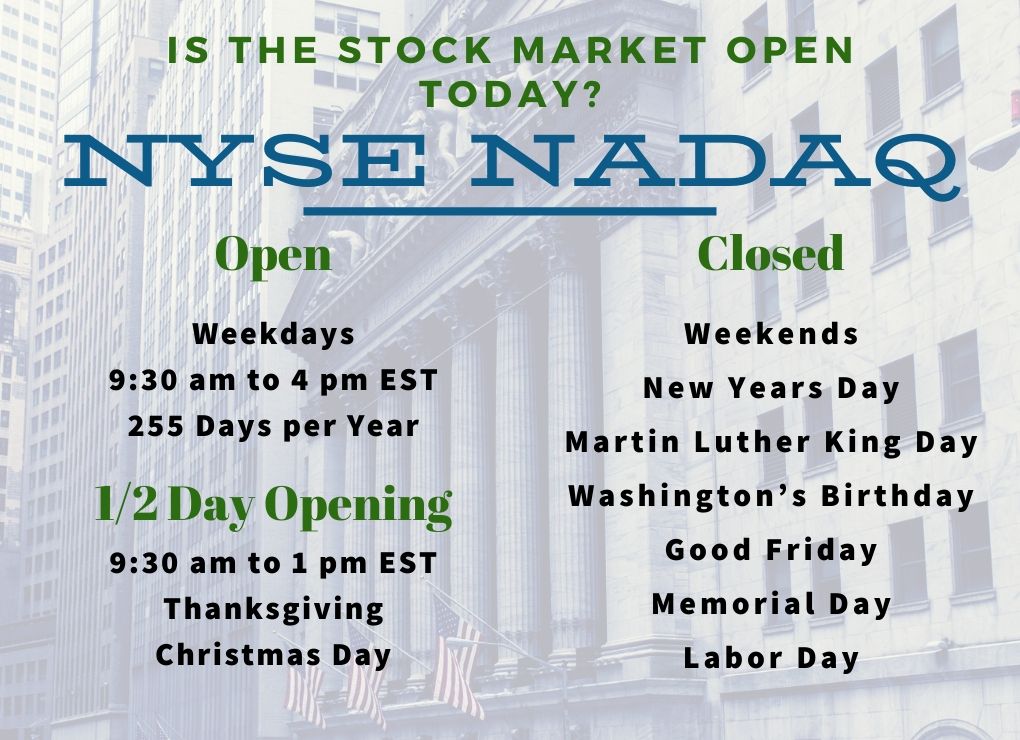
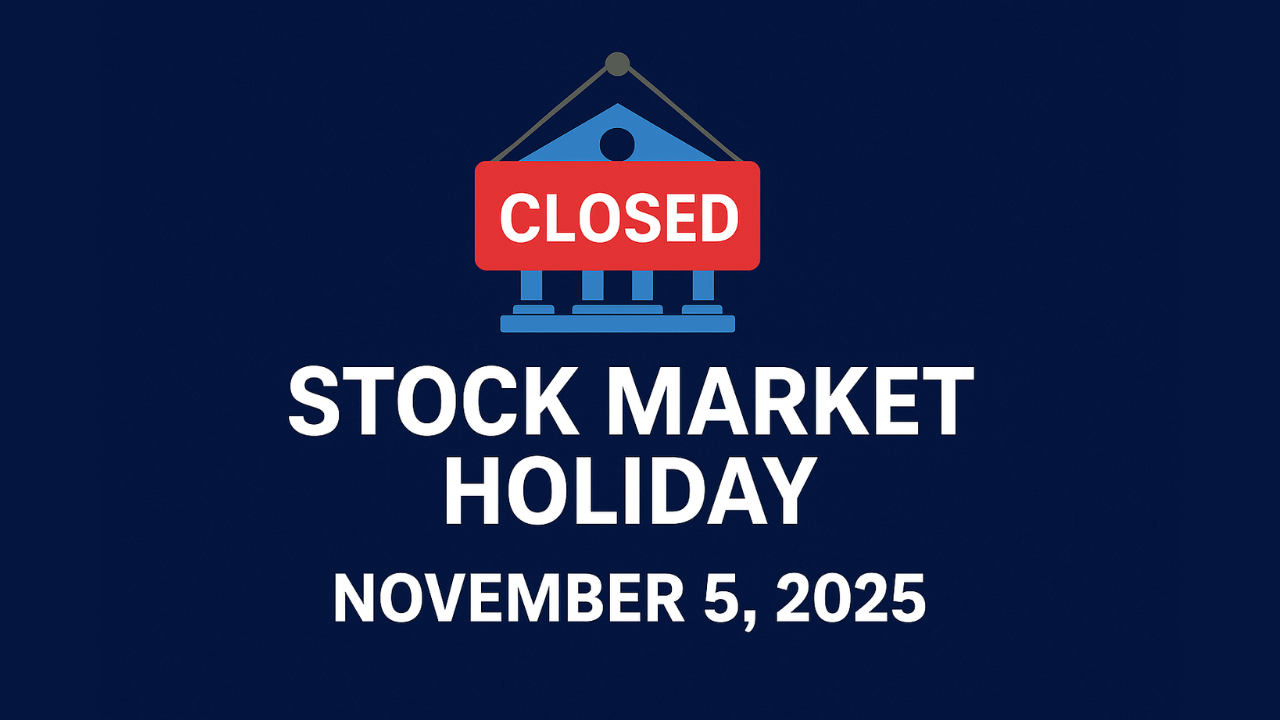
The most common reason the stock market is closed on a weekday is a scheduled holiday. In the United States, the major stock exchanges generally follow the federal holiday schedule, though there are slight variations. These closures are designed to provide market participants, clearinghouses, and banking institutions a reprieve, ensuring that liquidity remains stable by not trading when the majority of the workforce is offline.
Federal vs. Exchange Holidays
Most investors are familiar with the “big” holidays: New Year’s Day, Independence Day, Thanksgiving, and Christmas. However, the stock market also observes several other significant days that might not always result in a complete shutdown of other private sectors. These include Martin Luther King Jr. Day, Presidents’ Day, Memorial Day, Juneteenth National Independence Day, and Labor Day.
A unique aspect of the market calendar is the “observation” rule. If a holiday falls on a Saturday, the market typically closes on the preceding Friday. If a holiday falls on a Sunday, the market closes on the following Monday. This ensures that the labor force involved in the massive infrastructure of global finance receives a full day of rest. Good Friday is a notable exception to the federal rule; while it is not a federal holiday in the U.S., the NYSE and Nasdaq historically remain closed, a tradition that dates back decades.
The Significance of Early Closures
In addition to full-day closures, the market often operates on a “shortened” schedule during specific holiday eves. For example, the day after Thanksgiving (often referred to as Black Friday) and Christmas Eve typically see the market close at 1:00 p.m. ET. These early closures often coincide with lower trading volumes. Professional institutional traders often take these days off, leading to “thin” markets where price movements can sometimes be more exaggerated due to a lack of liquidity. For the retail investor, understanding these early closures is vital to avoid placing orders that might not be filled until the following full trading day.
Beyond the Calendar: Why Markets Close During Extraordinary Events
While holidays are predictable, the market occasionally closes or halts due to unforeseen circumstances. These unscheduled closures are rare but represent some of the most pivotal moments in financial history. They are generally categorized into three types: volatility halts (circuit breakers), technical failures, and national emergencies.
Market-Wide Circuit Breakers and Volatility Halts
In the wake of the “Black Monday” crash of 1987, the Securities and Exchange Commission (SEC) implemented “circuit breakers.” These are automated mechanisms designed to stop trading temporarily when the market experiences extreme downward pressure. The goal is to provide a “cooling-off” period, allowing investors to digest information and preventing a panic-driven death spiral in asset prices.
There are three levels of market-wide circuit breakers based on the S&P 500 Index:
-
Level 1: If the index drops 7% from the previous day’s close, trading is halted for 15 minutes.
-
Level 2: If the drop reaches 13%, trading is halted for another 15 minutes.
-
Level 3: If the drop hits 20%, trading is suspended for the remainder of the day.
We saw these mechanisms in action during the onset of the COVID-19 pandemic in March 2020. These closures are not a sign of a “broken” market but rather a safety feature of a modern, high-speed financial system.
Technical Glitches and Systemic Failures
In an era of high-frequency trading and complex algorithms, technical issues can occasionally force a market closure. While the exchanges have massive redundancies, glitches can happen. In 2015, the NYSE famously suspended trading for several hours due to an internal technical issue. Similarly, the Nasdaq has experienced “flashes” where trading was paused to ensure the integrity of the price discovery process. When these events occur, the primary concern of regulators is “fairness”—ensuring that all participants have equal access to the market once it reopens.
National Days of Mourning and Environmental Impacts
The stock market also closes to honor significant national events or in response to physical threats. It is a long-standing tradition for the U.S. markets to close for a National Day of Mourning following the death of a former U.S. President. More pragmatically, environmental factors like Hurricane Sandy in 2012 forced a two-day closure of the NYSE because the physical infrastructure in lower Manhattan was at risk. These closures serve as a reminder that despite the digital nature of stocks, the market still relies on physical locations and human safety.
The Global Ripple Effect: Understanding International Market Schedules
When the U.S. market is closed, it does not mean global finance has stopped. Investors must be aware that different countries follow different cultural and religious calendars. For instance, the London Stock Exchange (LSE) will be closed for “Bank Holidays” that do not exist in the U.S., and markets in the Middle East often operate on a Sunday-through-Thursday schedule.
The T+1 Settlement Shift and Liquidity
A critical component of why markets close is the “settlement” process. As of May 2024, the U.S. moved to a T+1 settlement cycle, meaning most securities transactions now settle one business day after the trade is executed. Market closures are essential “dead zones” that allow banks and clearinghouses to catch up on the massive amount of paperwork and digital verification required to move billions of dollars between accounts. If the markets were open 24/7 without these breaks, the risk of settlement failure would increase significantly, potentially leading to systemic instability.
Navigating the Downtime: Investor Strategies When Exchanges Are Dark
For many, a closed market is a source of frustration, especially if news breaks during the hiatus. However, professional investors view market closures as an opportunity for strategic analysis and emotional recalibration.
The Role of Futures and Pre-Market Sentiment
Even when the “cash market” (the actual NYSE and Nasdaq exchanges) is closed, the futures market often remains active for longer periods. Index futures (like S&P 500 or Nasdaq 100 futures) provide a “window” into how the market is reacting to news during a holiday. If a major geopolitical event occurs on a Sunday night, investors look at the futures market to predict how the stock market will open on Monday morning. Monitoring these indicators can help you prepare your entry or exit strategies before the opening bell rings.
Analyzing the Week Ahead
Market closures provide a rare moment of stillness in an otherwise noisy environment. Use this time to:
-
Review Portfolio Performance: Assess whether your holdings still align with your long-term goals without the distraction of fluctuating “tick-by-tick” prices.
-
Research Fundamentals: Read through quarterly earnings reports or SEC filings (10-Ks) that you may have skimmed during the busy trading week.
-
Set Limit Orders: Most brokerage platforms allow you to place orders while the market is closed. These orders will be queued and executed as soon as the market opens, or once your specific price target is hit.
The Future of Trading Hours: Will the Markets Ever Go 24/7?
There is an ongoing debate in the financial world regarding the expansion of trading hours. With the rise of cryptocurrency markets—which never close—there is increasing pressure on traditional equities to follow suit. Some retail platforms already offer “24/5” trading for a limited number of popular stocks and ETFs.
However, many experts argue against a 24/7 stock market. The primary concern is liquidity. When trading is spread out over 24 hours, there are fewer participants at any given moment, which leads to “wide spreads” (a larger gap between the buying and selling price). This makes trading more expensive for the average person. Furthermore, the human element—the need for analysts, traders, and regulators to sleep—remains a significant barrier.
For now, market closures remain a vital part of the financial ecosystem. They provide a necessary boundary between the fast-paced world of capital appreciation and the logistical requirements of a secure, regulated global economy. The next time you find the market closed, remember that it is not just a break in the action; it is a period of essential maintenance and reflection that keeps the wheels of capitalism turning smoothly. Knowing exactly “why” the market is closed today allows you to stay ahead of the curve, ensuring that you are never caught off guard by the schedule of the world’s most powerful exchanges.
aViewFromTheCave is a participant in the Amazon Services LLC Associates Program, an affiliate advertising program designed to provide a means for sites to earn advertising fees by advertising and linking to Amazon.com. Amazon, the Amazon logo, AmazonSupply, and the AmazonSupply logo are trademarks of Amazon.com, Inc. or its affiliates. As an Amazon Associate we earn affiliate commissions from qualifying purchases.