
The Dow Jones Industrial Average (DJIA) remains the most iconic barometer of the American economy. When people ask, “How is the market doing today?” they are almost always referring to this price-weighted index of 30 prominent companies listed on stock exchanges in the United States. Despite the rise of more diversified indices like the S&P 500 or the tech-heavy Nasdaq, the Dow continues to hold a unique psychological and financial grip on the investing public. Understanding how the Dow is performing “today” requires more than just looking at a red or green number on a screen; it requires an analysis of the underlying economic currents, corporate health, and investor sentiment that drive those daily fluctuations.

Understanding the Current Pulse of the Dow Jones Industrial Average
The Dow Jones is unique because it is a price-weighted index, meaning companies with higher stock prices have a greater impact on the index’s total value than those with lower stock prices. This differs from market-cap-weighted indices where the total valuation of the company dictates its influence. When we assess how the Dow is doing today, we are essentially looking at a snapshot of 30 “blue-chip” leaders across various sectors—excluding utilities and transportation, which have their own specific Dow averages.
What the Numbers Tell Us Today
A daily gain or loss in the Dow is often a reaction to immediate news catalysts. If the Dow is trading higher today, it typically signals a “risk-on” environment where investors feel confident about the stability of established earnings. Conversely, a decline often points to systemic fears, such as rising interest rates or geopolitical instability. Because the Dow consists of mature, profitable companies—ranging from Goldman Sachs and UnitedHealth Group to Microsoft and Coca-Cola—its daily movement is a high-level reflection of the health of “Big Business” in America. To truly understand today’s performance, one must look at the “advance-decline line” within those 30 stocks to see if a rally is broad-based or driven by a single outlier.
The Components Driving Performance
In the current market cycle, the Dow’s performance is often dictated by a handful of high-priced components. Financials and Healthcare currently carry significant weight. For instance, a major move in UnitedHealth or Goldman Sachs can move the index dozens of points regardless of what the other 28 companies are doing. When assessing today’s performance, an astute investor looks at which sectors are leading the charge. Are the industrial giants like Caterpillar and Boeing rebounding, suggesting a recovery in manufacturing? Or is the index being held up by defensive plays like Walmart and Procter & Gamble, suggesting that investors are seeking safety amidst volatility?
Macroeconomic Factors Influencing Today’s Market Movements
No index exists in a vacuum. The Dow’s daily performance is a constant negotiation between corporate fundamentals and the broader macroeconomic environment. Today’s market movements are largely a reflection of the tug-of-war between inflation data, central bank policy, and the resilience of the American consumer.
Interest Rates and Federal Reserve Policy
Perhaps the single most influential factor on the Dow’s daily performance is the Federal Reserve’s stance on interest rates. Since the Dow is composed of mature companies with significant debt structures and capital expenditure requirements, the “cost of money” is paramount. When the Fed signals a “hawkish” stance (maintaining or raising rates), the Dow often faces downward pressure as borrowing costs rise and future cash flows are discounted at a higher rate. Conversely, “dovish” signals often spark rallies. Today’s traders are hyper-fixated on every word from Fed officials, looking for clues on the timing of rate cuts or hikes, which causes the Dow to react with volatility to even minor speeches or meeting minutes.
Inflation Data and Consumer Spending
The Dow is heavily weighted toward consumer-facing companies. Therefore, data points like the Consumer Price Index (CPI) and Personal Consumption Expenditures (PCE) have an immediate impact on daily trading. If inflation is cooling, it suggests that the companies within the Dow—many of which rely on discretionary spending—will see improved margins and higher sales volumes. If inflation remains “sticky,” investors worry that the Federal Reserve will keep rates high for longer, potentially choking off economic growth. Today’s performance is often a direct response to whether the market believes the “soft landing” narrative—curbing inflation without a recession—is still on track.
Geopolitical Stability and Trade
As global conglomerates, the 30 companies in the Dow Jones are sensitive to international relations. Supply chain disruptions in Asia, energy price fluctuations in Europe, or trade tensions with major partners can cause immediate ripples. Because the Dow represents the backbone of American industry, it serves as a frontline indicator of how global events affect domestic profitability. Today’s performance might be influenced by a shift in oil prices affecting Chevron, or trade policy updates affecting the international revenues of companies like Apple and Nike.
Analyzing the Dow vs. Other Major Indices

To understand how the Dow is doing today, it is helpful to compare it to its peers. The divergence between the Dow, the S&P 500, and the Nasdaq Composite tells a story of where capital is flowing and what type of risk investors are willing to take.
Dow Jones vs. S&P 500: Concentration Matters
The S&P 500 is often considered a better representation of the overall market because it includes 500 companies and is market-cap weighted. However, the Dow provides a more concentrated look at the “industrial heartland” and legacy tech. On days when the S&P 500 is flat but the Dow is up, it often indicates a rotation into “Value” stocks and away from “Growth.” This “Value tilt” makes the Dow a favorite for conservative investors who are less interested in the high-volatility swings of the broader market and more interested in the steady dividends and earnings of established giants.
Tech vs. Blue-Chip: The Nasdaq Divergence
The Nasdaq is the home of high-growth technology and biotechnology. There are days when the Nasdaq might be soaring on AI-driven hype while the Dow is languishing. This happens when investors are chasing capital appreciation over stability. Conversely, during a “flight to quality,” the Nasdaq may sell off while the Dow remains resilient. If the Dow is doing well today while the Nasdaq is struggling, it suggests that the market is prioritizing current profitability and “fortress balance sheets” over future growth prospects. This divergence is a key indicator of market sentiment and “risk appetite.”
How Investors Should Interpret Daily Fluctuations
For the individual investor, the daily movement of the Dow can be an emotional rollercoaster. However, professional financial strategy dictates a more measured approach to “how the Dow is doing today.” Daily fluctuations are often noise, but they provide critical entries and exits for those with a disciplined plan.
Avoiding the Noise of Short-Term Volatility
In the age of 24-hour news cycles and instant smartphone notifications, it is easy to overreact to a 400-point drop in the Dow. However, in percentage terms, such a move is often less than 1-2%. Strategic investors treat today’s Dow performance as a single data point in a much longer trend line. The “noise” of daily trading is often driven by high-frequency trading algorithms and institutional rebalancing rather than a fundamental shift in the value of the American economy. Understanding that today’s dip might be tomorrow’s buying opportunity is a hallmark of a sophisticated financial mindset.
The Role of the Dow in a Balanced Portfolio
While some argue the Dow is an “antiquated” index, its components are some of the most consistent dividend payers in history. For someone focused on income and capital preservation, how the Dow is doing today matters because it affects the yield and safety of their core holdings. Many investors use Dow-tracking ETFs (like the DIA) as a foundational element of their portfolio. When the index is “down today,” it may represent a time to “DRIP” (Dividend Reinvestment Plan) at lower prices, effectively lowering the cost basis of an investment that is designed to be held for decades, not days.
Looking Ahead: Forecasting the Future of Blue-Chip Stocks
While “today” is the focus, the Dow’s performance is always forward-looking. Investors are not just trading on today’s earnings, but on the expectation of what those earnings will look like six to nine months from now.
Corporate Earnings Projections
The Dow’s long-term health is inextricably linked to the “Earnings Power” of its 30 members. We are currently in an era where efficiency, AI integration, and margin expansion are the primary drivers of stock price appreciation. Even if the Dow is sluggish today, upward revisions in earnings guidance from key players like Microsoft or Salesforce can set the stage for a multi-month rally. Investors must look past today’s price action to see if the underlying companies are becoming more profitable and efficient.
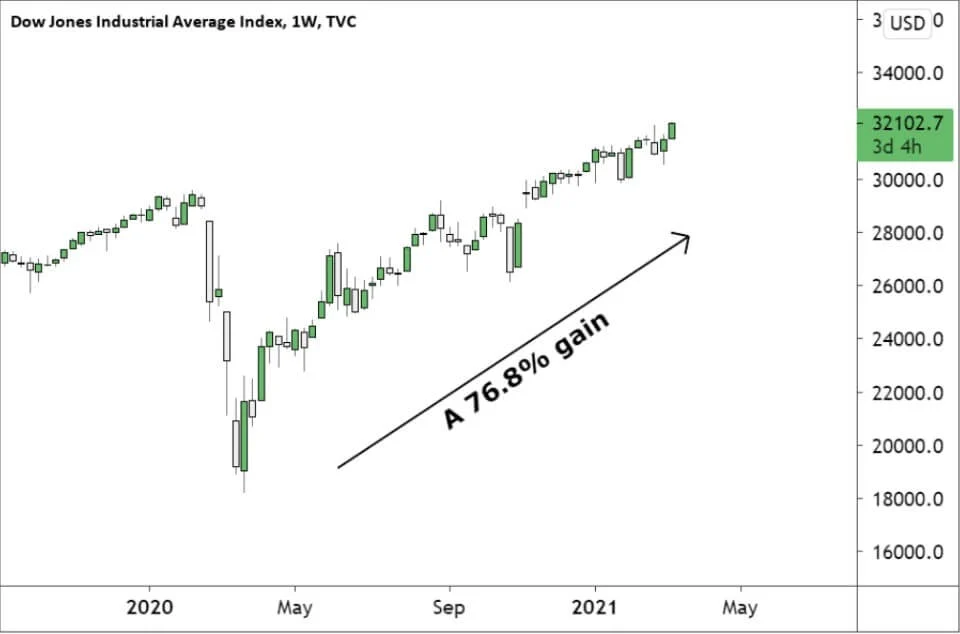
Long-Term Secular Trends in the Dow
The composition of the Dow changes over time to reflect the shifting nature of the economy. Old-school giants are occasionally replaced by modern powerhouses (as seen with the inclusion of Amazon). This evolution ensures that the index remains relevant. When we ask how the Dow is doing today, we are also asking: “Is the American corporate model evolving successfully?” The transition toward a more service-oriented, tech-enabled, and healthcare-heavy economy is reflected in the current Dow lineup. As long as these 30 companies continue to innovate and dominate their respective niches, the long-term trajectory of the index remains an upward climb, regardless of the temporary setbacks or volatility we see in today’s trading session.
In conclusion, assessing how the Dow Jones Industrial Average is doing today requires a holistic view of the financial landscape. It is a mix of price-weighted mechanics, macroeconomic sensitivity, and the fundamental strength of the world’s most powerful corporations. By looking beyond the headline number and understanding the “why” behind the movement, investors can move from being reactive observers to proactive strategists in their personal finance journey.
aViewFromTheCave is a participant in the Amazon Services LLC Associates Program, an affiliate advertising program designed to provide a means for sites to earn advertising fees by advertising and linking to Amazon.com. Amazon, the Amazon logo, AmazonSupply, and the AmazonSupply logo are trademarks of Amazon.com, Inc. or its affiliates. As an Amazon Associate we earn affiliate commissions from qualifying purchases.