
The stock market is often viewed as a modern marvel of digital infrastructure, a complex web of fiber-optic cables and high-frequency algorithms executing trades in milliseconds. However, the conceptual foundation of the stock market—the idea of fractional ownership in an enterprise—is centuries old. To understand how old the stock market truly is, one must look past the glowing screens of Wall Street and delve into the merchant history of medieval Europe and the seafaring ambitions of the Dutch Republic.
While the modern, regulated exchanges we recognize today are roughly 400 years old, the spirit of the market—trading debts and business interests—dates back even further. Understanding this timeline is not merely an academic exercise; it provides vital context for contemporary investors regarding market resilience, the evolution of risk, and the long-term trajectory of global wealth.

The Origins: From Medieval Bonds to the First Official Exchange
The roots of the stock market are found in the transition from feudalism to early capitalism. Long before there were “stocks” in the sense of equity, there were “bonds” or debt instruments. In the 1300s, Venetian money lenders began to trade debts among themselves. If a lender held a high-interest loan from a government or a merchant, they might sell that “claim” to another lender for immediate cash. This created a secondary market for financial obligations, the true ancestor of the modern exchange.
The Venetian Roots and the Birth of Bourses
In the 14th century, the city-states of Italy were the financial hubs of the Western world. In places like Venice, Pisa, and Florence, the first iterations of government securities were traded. These were not shares in companies but rather government bonds issued to fund local wars or infrastructure. By the 1500s, the concept had spread to the Low Countries. In Antwerp, the “Bourse” became a central meeting place for merchants to trade commodities and various types of debt. While these were not “stock markets” in the modern sense because they lacked corporate shares, they established the physical and legal framework for organized trading.
The Dutch East India Company: The First Modern IPO
The definitive birth of the stock market occurred in 1602. This was the year the Dutch East India Company (Verenigde Oostindische Compagnie or VOC) was granted a charter by the Dutch government. The VOC faced a massive logistical challenge: funding long, dangerous voyages to the East Indies for spices. These voyages were too expensive and risky for a single individual or a small group of partners to fund.
To solve this, the VOC did something revolutionary. Instead of seeking a simple loan, they invited the general public to invest capital in exchange for a share of the company’s future profits. This was the world’s first Initial Public Offering (IPO). Crucially, these shares were “permanent.” Unlike previous maritime ventures where the investment was liquidated after a single voyage, the VOC kept the capital, and the investors received a piece of paper representing their ownership. To provide liquidity for these investors, the Amsterdam Stock Exchange was established shortly thereafter, allowing shareholders to buy and sell their interests to others. This marked the official beginning of the stock market as a system of equity trading.
The Rise of the Global Financial Hubs
As the Dutch model proved wildly successful, other nations took notice. The 18th and 19th centuries saw a rapid expansion of stock markets as the Industrial Revolution and colonial expansion demanded unprecedented amounts of capital.
The London Stock Exchange and the Coffee House Era
Across the English Channel, the British were developing their own financial ecosystem. In the late 1700s, stockbrokers in London were often banned from the Royal Exchange for being too “unruly.” Consequently, they moved their operations to local coffee houses, most notably Jonathan’s Coffee House in Change Alley.
In these informal settings, brokers would post lists of stock and commodity prices. It was here that the London Stock Exchange (LSE) was effectively born. The LSE eventually formalized in 1801. The British market was instrumental in funding the technological breakthroughs of the era, including the canal systems and, later, the massive expansion of the railways. The “Railway Mania” of the 1840s in Britain demonstrated both the power of the stock market to fund infrastructure and the inherent danger of speculative bubbles.
The Buttonwood Agreement and the Birth of the NYSE
While Europe was refining its markets, a new financial power was emerging in the United States. In the late 1700s, the fledgling American government was struggling with debts from the Revolutionary War. In 1792, 24 stockbrokers gathered under a buttonwood tree on Wall Street in New York City. They signed the “Buttonwood Agreement,” which established a set of rules for trading securities and fixed commission rates.
This agreement laid the foundation for the New York Stock Exchange (NYSE). Unlike the London or Amsterdam exchanges, which often focused on international trade, the early NYSE was heavily focused on government bonds and bank stocks. However, as the 19th century progressed, the NYSE became the primary engine for American industrialization, listing the shares of steel mills, oil companies, and the vast railroad networks that crossed the continent.
The Evolution of Market Mechanics
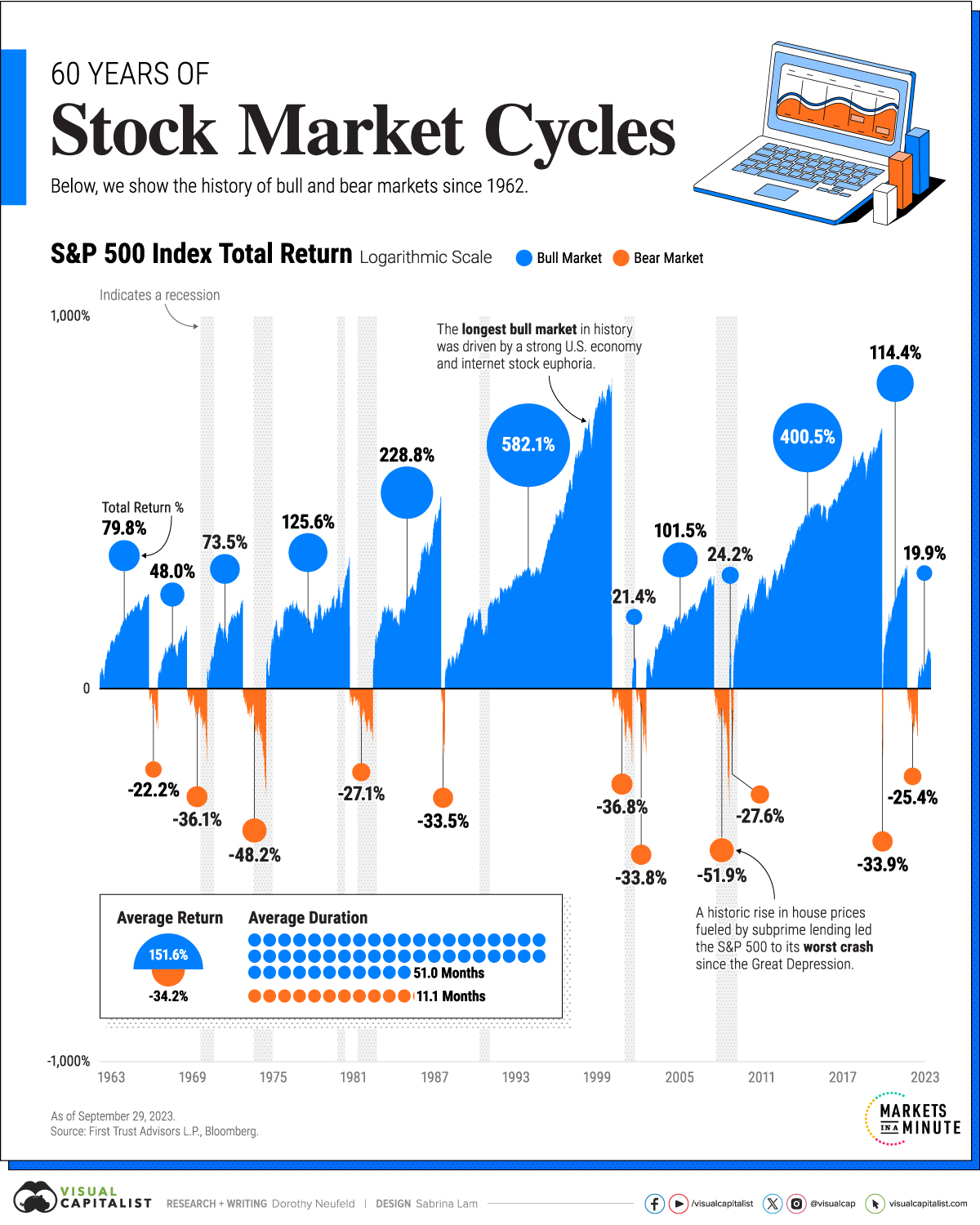
The stock market is not a static entity; it has evolved through several distinct technological and regulatory phases. How we trade today is vastly different from how trades were executed even fifty years ago.
From Ticker Tape to Electronic Trading
For over a century, the “floor” was the heart of the stock market. Brokers would shout orders to one another in what was known as the “open outcry” system. Information traveled slowly. In the mid-19th century, the invention of the telegraph and the subsequent ticker tape machine revolutionized the market by allowing price information to be transmitted across distances in near real-time.
The next major leap occurred in 1971 with the creation of NASDAQ (National Association of Securities Dealers Quotations). NASDAQ was the world’s first electronic stock market. It did not have a physical trading floor; instead, it used a computer system to provide price quotes. This was the beginning of the end for the traditional floor broker and the start of the digital era, where speed became the ultimate competitive advantage.
The Digital Revolution and the Rise of the Retail Investor
The late 20th and early 21st centuries have been defined by the democratization of the market. Prior to the 1970s, investing was largely the domain of the wealthy and institutional players. The advent of the discount brokerage in the 1970s, followed by the internet boom of the 1990s, changed everything.
Today, the stock market is roughly 422 years old if we count from the VOC’s inception, but it has changed more in the last 30 years than in the previous 300. The introduction of online trading platforms, the elimination of trading commissions, and the rise of mobile apps have allowed millions of retail investors to participate in the market. Furthermore, the shift from active management to passive indexing through Exchange-Traded Funds (ETFs) has fundamentally altered how capital flows through the global economy.
Why Knowing Market History Matters for Modern Investors
Understanding that the stock market is over four centuries old provides a level of perspective that is often lost in the daily noise of financial news. The history of the market is a history of human progress, punctuated by periods of irrational exuberance and painful correction.
Lessons from Historical Crashes
Every generation of investors tends to believe that “this time is different.” However, history suggests otherwise. From the Tulip Mania in the 1630s to the South Sea Bubble of 1720, and from the Great Depression of 1929 to the Dot-com crash of 2000, the market has shown a recurring pattern of boom and bust.
Studying these events reveals that while the technologies change, human psychology remains constant. Greed and fear have driven market cycles for 400 years. For the modern investor, this historical perspective is an antidote to panic. Seeing that the market has survived world wars, pandemics, and systemic collapses provides the conviction necessary to stay invested during periods of short-term volatility.
Understanding Cycles and Long-Term Growth
If you look at a chart of the stock market over the last 100 years, the most striking feature is its upward trajectory. Despite the numerous crises mentioned above, the market has consistently rewarded those who provide capital to productive enterprises over the long term.
The “age” of the stock market is a testament to the endurance of the corporate model. Since 1602, the market has functioned as a mechanism for compounding wealth. By understanding that the stock market is an ancient institution, investors can view their portfolios not as a gamble on today’s price action, but as a participation in a centuries-old tradition of global economic growth.

The Future: Beyond Traditional Exchanges
As we look toward the future, the stock market is entering a new era that may eventually make our current systems look as antiquated as the Buttonwood Agreement. We are seeing the rise of 24/7 trading, the tokenization of assets via blockchain technology, and the increasing influence of Artificial Intelligence in decision-making.
The “market” is moving away from centralized exchanges toward decentralized networks. Just as the Dutch moved from informal merchant gatherings to a structured exchange, we may be moving toward a global, borderless liquidity pool where ownership is verified by code rather than by a centralized clearinghouse.
Regardless of the technology, the fundamental principle remains the same as it was in 1602: a way for individuals to pool their resources to fund innovation and share in the resulting prosperity. The stock market is over 400 years old, and its ability to adapt to new technologies and economic realities suggests it will remain the cornerstone of global finance for centuries to come. For the individual investor, the message is clear: the market is a proven engine of wealth creation that has stood the test of time, and the best time to participate in that history is always as early as possible.
aViewFromTheCave is a participant in the Amazon Services LLC Associates Program, an affiliate advertising program designed to provide a means for sites to earn advertising fees by advertising and linking to Amazon.com. Amazon, the Amazon logo, AmazonSupply, and the AmazonSupply logo are trademarks of Amazon.com, Inc. or its affiliates. As an Amazon Associate we earn affiliate commissions from qualifying purchases.