
The journey toward financial independence often feels like standing at the edge of a vast, complex ocean. You know that wealth lies somewhere beyond the horizon, but the sheer scale of the stock market—with its fluctuating tickers, technical jargon, and thousands of individual companies—can be paralyzing for a beginner. However, the secret to successful investing isn’t found in a complex algorithm or a lucky tip; it is found in the disciplined application of fundamental principles.
Investing in stocks is one of the most effective ways to build long-term wealth and outpace inflation. By purchasing shares of a company, you are becoming a partial owner of a business, participating in its growth, and claiming a stake in its profits. This guide is designed to dismantle the barriers to entry, providing a clear roadmap for anyone asking the pivotal question: “Where do I start?”
Building Your Financial Foundation Before the First Trade
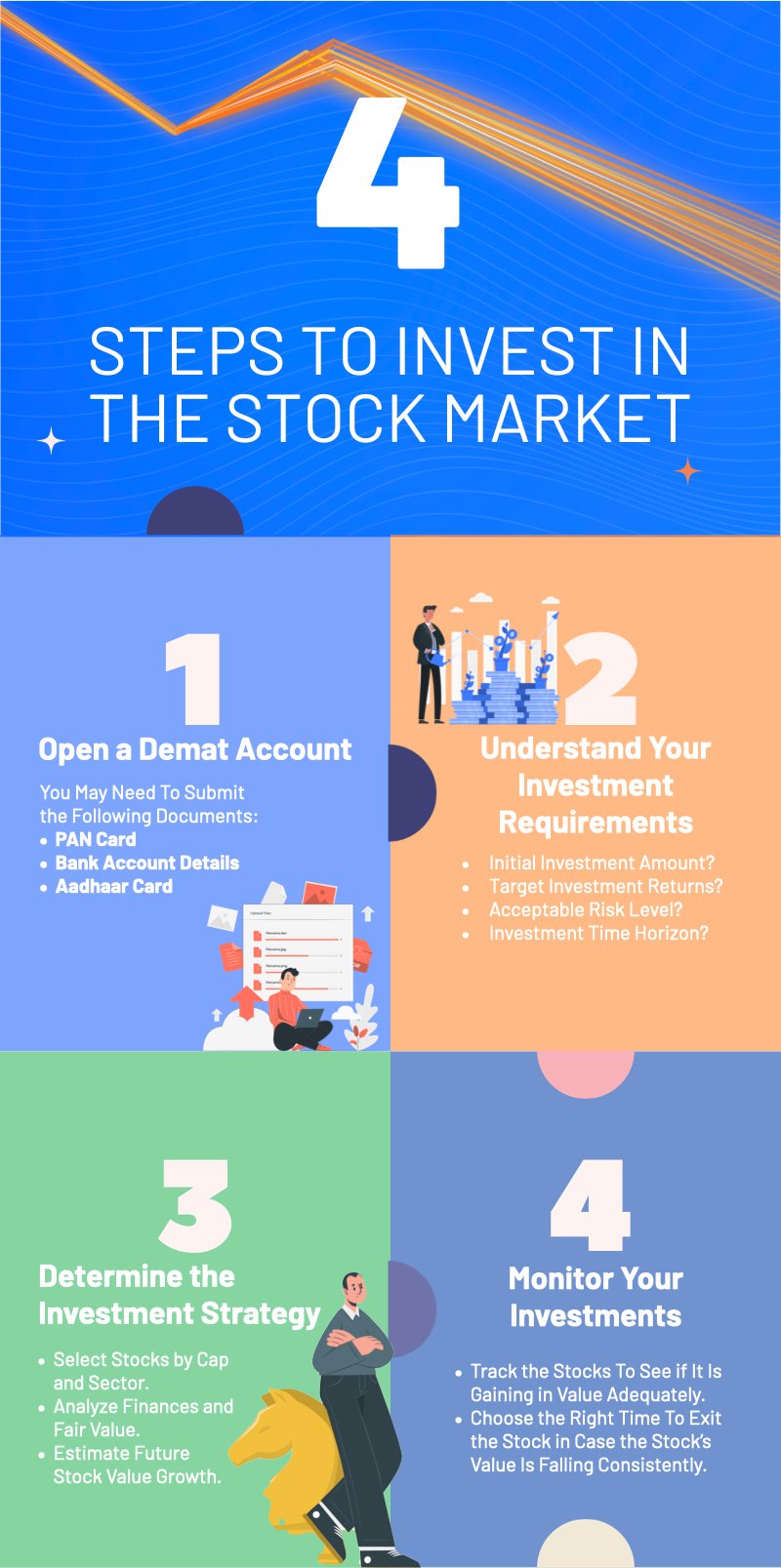
Before you deposit a single dollar into a brokerage account, you must ensure your financial house is in order. Investing is a long-term endeavor, and the worst thing an investor can do is be forced to sell their positions during a market downturn because they need cash for an emergency.
Assessing Your Risk Tolerance
Risk tolerance is a combination of your financial ability to lose money and your emotional temperament toward market volatility. Ask yourself: if your portfolio dropped by 20% in a single month, would you panic and sell, or would you see it as a buying opportunity? Your “time horizon”—how long you plan to keep the money invested—is the biggest factor here. If you are 25 years old and investing for retirement, you have decades to recover from market swings, allowing for a more aggressive, stock-heavy approach. If you are five years from retirement, your strategy must prioritize capital preservation.
The Necessity of an Emergency Fund
An emergency fund is your “insurance policy” against the stock market. Ideally, you should have three to six months of living expenses tucked away in a high-yield savings account. This liquid cash ensures that if you lose your job or face an unexpected medical bill, you won’t have to liquidate your stocks at an inopportune time. In the world of finance, liquidity is the bridge that carries you through volatility.
Managing High-Interest Debt
Not all debt is created equal, but high-interest debt—specifically credit card debt—is the primary predator of investment returns. If you are paying 20% interest on a credit card balance, you are effectively “losing” 20% on that money. Since the historical average return of the stock market is roughly 10% per year, paying off high-interest debt is a guaranteed 20% return on your money. Mathematically, it makes no sense to invest in stocks until high-interest liabilities are cleared.
Navigating the Mechanics: Accounts and Asset Types
Once your foundation is solid, you need a vehicle to reach the market. This involves choosing the right type of account and understanding what you are actually buying.
Choosing the Right Brokerage Account
A brokerage account is essentially a bridge between your bank account and the stock market. In the modern era, you have two primary choices: traditional online brokers (like Fidelity, Charles Schwab, or Vanguard) and fintech apps (like Robinhood or Betterment).
For many, the first place to start isn’t a taxable brokerage account, but a tax-advantaged retirement account. If your employer offers a 401(k) with a match, that is your starting line. A “match” is essentially a 100% return on your investment immediately. Beyond that, Individual Retirement Accounts (IRAs) offer significant tax benefits. A Roth IRA, for example, allows your investments to grow tax-free, and you can withdraw the funds tax-free in retirement, provided you follow the age requirements.
Individual Stocks vs. Exchange-Traded Funds (ETFs)
When you buy an individual stock, you are betting on the success of one company. While this offers the potential for massive gains (think of buying Amazon in the early 2000s), it also carries “unsystematic risk”—the risk that a single company fails due to poor management or industry shifts.
For most beginners, Exchange-Traded Funds (ETFs) are a superior starting point. An ETF is a “basket” of hundreds or thousands of stocks. When you buy a share of an S&P 500 ETF, you are instantly buying a small piece of the 500 largest companies in the United States. This provides instant diversification; if one company in the index goes bankrupt, it has a negligible impact on your overall portfolio.
The Power of Indexing
Index investing is a passive strategy that seeks to replicate the performance of a specific market index rather than trying to “beat” it. History shows that the vast majority of professional fund managers fail to outperform the S&P 500 over long periods. By using low-cost index funds, you minimize management fees (expense ratios) and capitalize on the upward trajectory of the broader economy.
Developing Your Investment Philosophy
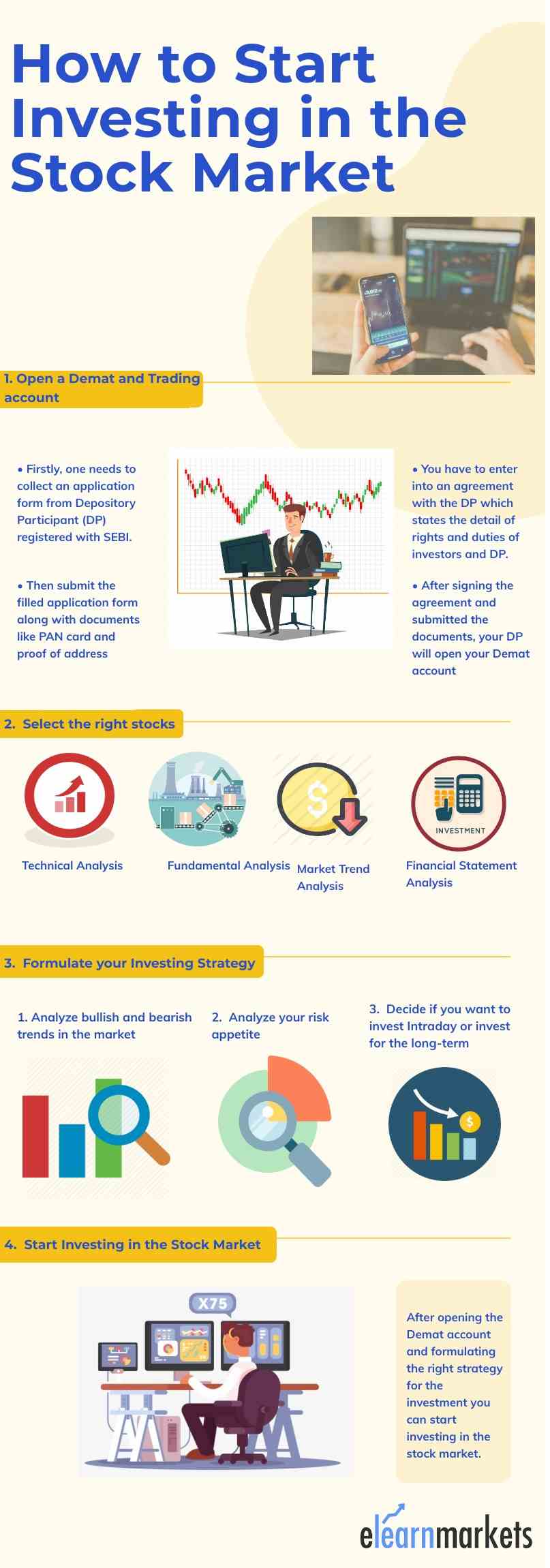
Success in the stock market is 10% math and 90% temperament. Without a philosophy, you will likely fall prey to market noise, “hot” stock tips, and the emotional roller coaster of the news cycle.
Active vs. Passive Investing
Active investing involves frequent buying and selling in an attempt to outperform the market. It requires deep research, technical analysis, and a significant time commitment. Passive investing, on the other hand, follows the “buy and hold” mantra. It assumes that the market is generally efficient and that time in the market is more important than timing the market. For those starting out, a passive approach typically leads to better long-term results and lower stress levels.
The Magic of Dollar-Cost Averaging (DCA)
One of the biggest fears beginners face is “buying at the top.” What if you invest $10,000 today and the market crashes tomorrow? Dollar-Cost Averaging eliminates this fear. Instead of investing a lump sum, you invest a fixed amount of money at regular intervals (e.g., $500 every month), regardless of the stock price.
When prices are high, your $500 buys fewer shares. When prices are low, your $500 buys more shares. Over time, this lowers your average cost per share and removes the emotional burden of trying to time the market perfectly. DCA turns market volatility into a tool for wealth accumulation.
Value vs. Growth: Understanding the Styles
As you progress, you’ll hear about “Growth” and “Value” stocks. Growth stocks are companies expected to grow sales and earnings faster than the market average (often in tech). They usually don’t pay dividends because they reinvest all profits back into the company. Value stocks are companies that appear to be trading for less than their intrinsic worth—often established, “boring” companies that pay consistent dividends. A healthy portfolio often contains a mix of both.
Practical Steps to Making Your First Purchase
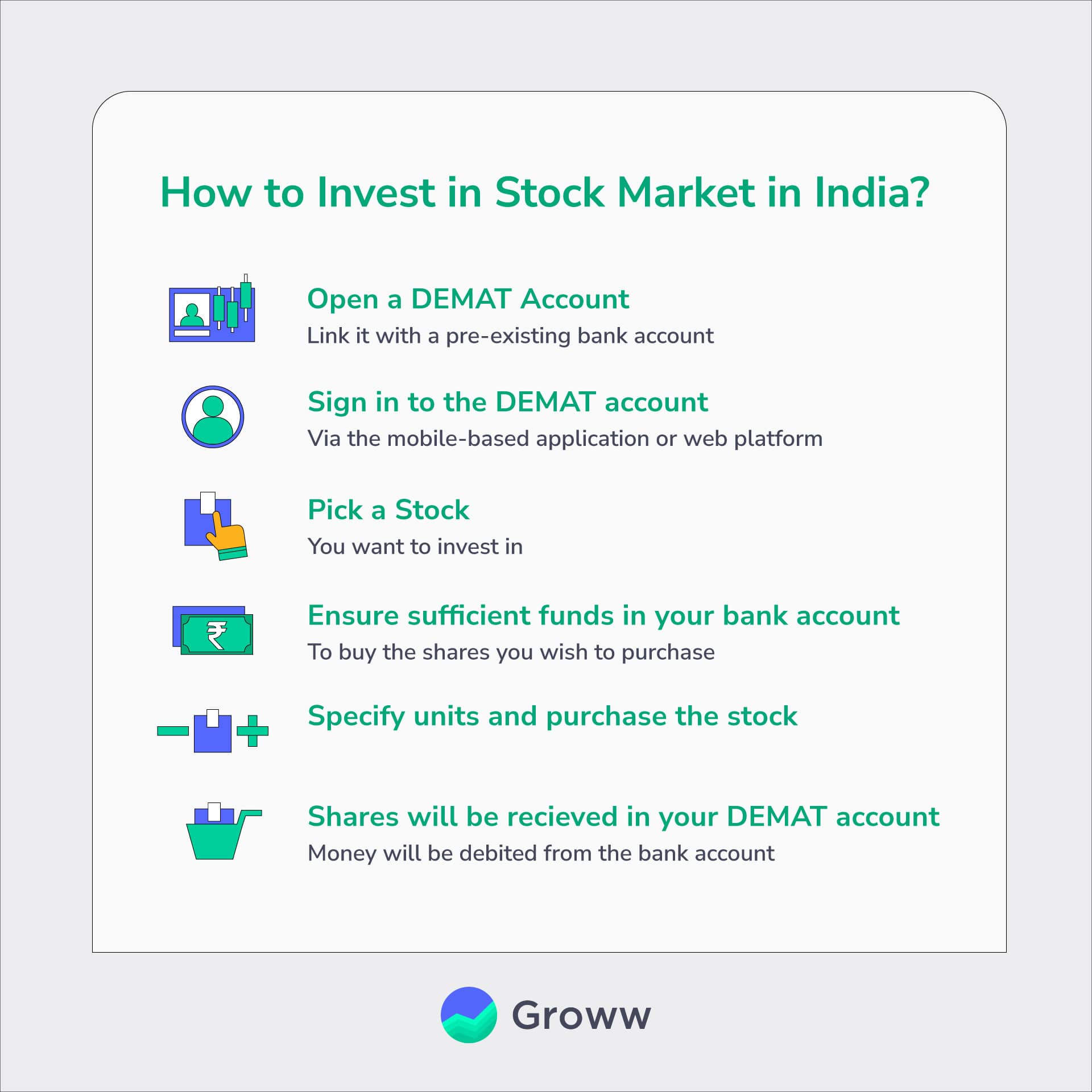
With your account opened and your strategy set, it is time to execute your first trade. This is where the theoretical becomes practical.
How to Research a Security
If you are buying an ETF, research the “expense ratio.” This is the annual fee the fund charges. You should aim for something below 0.10% for broad market funds. If you are buying an individual stock, look at the company’s “moat”—its competitive advantage. Does it have a brand that people love? Does it have a product that is hard to replace? Look at its P/E (Price-to-Earnings) ratio to see how the market is valuing its current profits relative to its share price.
Understanding Market Orders vs. Limit Orders
When you go to click “buy,” you will usually see two primary order types:
-
Market Order: This tells the broker to buy the stock immediately at the best available current price. It guarantees your order will be filled, but not the exact price.
-
Limit Order: This tells the broker you only want to buy the stock if it reaches a specific price or lower. This gives you control over the price, but your order might not be filled if the stock never hits your limit.
For most long-term investors buying highly liquid ETFs, a market order is perfectly fine. However, limit orders are safer for volatile individual stocks.
Starting Small and Scaling Up
The most important step is simply starting. You do not need thousands of dollars to begin. Many modern brokerages allow for “fractional shares,” meaning you can buy $5 worth of a $3,000 stock. Starting small allows you to get comfortable with the interface of your brokerage and the feeling of having skin in the game without risking your entire life savings.
Long-Term Management and the Psychology of Investing
Buying the stock is the beginning, not the end. The real work of an investor is staying the course when the rest of the world is panicking.
Diversification: Your Safety Net
Diversification is the only “free lunch” in finance. By spreading your investments across different sectors (tech, healthcare, energy), different asset classes (stocks, bonds, real estate), and different geographies (U.S. and international), you reduce the risk that any single event can wipe out your wealth. A well-diversified portfolio doesn’t necessarily aim for the highest possible return; it aims for the highest risk-adjusted return.
Managing Emotions and Volatility
The stock market is a device for transferring money from the impatient to the patient. You will inevitably experience a “bear market”—a period where stocks drop 20% or more. During these times, the media will produce headlines designed to trigger fear. Successful investors view these periods as “sales” on the world’s greatest companies. Discipline is the ability to stick to your plan when your lizard brain wants to run for the hills.
The Compounding Effect
The greatest force in the financial universe is compound interest. If you invest $500 a month and earn a 7% annual return, after 30 years, you will have over $600,000. Surprisingly, the vast majority of that growth happens in the final few years. This is why the best time to start was ten years ago, and the second-best time is today. Every day you wait is a day you are depriving your future self of the power of compounding.
Investing in stocks is a journey of continuous learning. By starting with a solid financial foundation, utilizing low-cost index funds, and maintaining a long-term perspective, you can navigate the complexities of the market and secure your financial future. The market is not a lottery; it is a ladder. One step at a time, with consistency and patience, you can climb toward the wealth you envision.
aViewFromTheCave is a participant in the Amazon Services LLC Associates Program, an affiliate advertising program designed to provide a means for sites to earn advertising fees by advertising and linking to Amazon.com. Amazon, the Amazon logo, AmazonSupply, and the AmazonSupply logo are trademarks of Amazon.com, Inc. or its affiliates. As an Amazon Associate we earn affiliate commissions from qualifying purchases.