
The allure of the small-town market often goes unnoticed by mainstream investors captivated by the high-velocity growth of urban tech hubs. However, from a financial and strategic perspective, small towns offer a unique set of economic advantages that are difficult to replicate in densely populated cities. Lower barriers to entry, reduced overhead, and a captive audience create a fertile environment for entrepreneurs looking to build sustainable, high-margin businesses.
When evaluating what business to start in a small town, the focus must shift from pure innovation to filling critical market gaps and optimizing cash flow. The goal is to identify recession-proof models where the cost of customer acquisition is low and the lifetime value of a customer is high.

The Economic Landscape of Small-Town Business
Before selecting a specific niche, it is essential to understand the underlying financial mechanics of a rural or small-market economy. The “small-town advantage” is rooted in three primary financial metrics: lower real estate costs, reduced competition, and high community loyalty which translates into marketing efficiency.
Lower Overhead and Operating Costs
In a major metropolitan area, the “burn rate” of a new business is often its greatest threat. High commercial rents, expensive labor, and steep local taxes can drain capital before a business reaches profitability. In contrast, small towns offer commercial real estate at a fraction of the cost. Whether you are leasing a storefront or purchasing a warehouse, your fixed monthly expenses are significantly lower. This allows for a much more favorable break-even analysis, giving the entrepreneur more time to find their footing and scale operations without the immediate pressure of crushing debt.
Market Gaps and Limited Competition
Large corporations and franchises often overlook smaller populations because they cannot achieve the scale they require for their standard operating models. This creates “service deserts” where residents are forced to travel long distances for basic needs or specialized services. From a finance perspective, these gaps represent a low-competition environment where a new entrant can quickly capture a significant market share. When you are the only provider of a specific service within a 30-mile radius, you gain significant pricing power.
Community Loyalty as a Marketing Asset
In a small town, word-of-mouth is the most potent and cost-effective marketing tool available. While a city-based business might spend thousands of dollars a month on Google Ads or social media campaigns to attract fleeting customers, a small-town business builds reputation-based equity. Once a business proves its reliability, the community becomes its primary marketing engine. This reduces the Customer Acquisition Cost (CAC) to nearly zero over time, directly boosting the net profit margin.
Recession-Proof Service-Based Businesses
Service-based businesses are often the most lucrative options in small towns because they require minimal inventory and focus on essential needs. These businesses are typically “recession-proof,” as they provide services that people cannot easily defer, regardless of the broader economic climate.
Skilled Trades and Maintenance
Infrastructure in small towns often ages, and the demand for skilled labor—plumbing, HVAC, electrical work, and general contracting—frequently outstrips the supply. Starting a trade-based business is an excellent investment because the margins on labor are high. Furthermore, as a business owner, you can move from being a solo practitioner to managing a fleet of technicians, creating a scalable enterprise.
The financial beauty of the trades lies in the recurring nature of the work. Maintenance contracts for local schools, government buildings, and residential complexes provide a steady stream of predictable income. By implementing a subscription-based maintenance model, a small-town trade business can stabilize its cash flow and increase its valuation for a future exit.
Specialized Care Services
As the demographic of many small towns trends toward an older population, the demand for specialized care services is skyrocketing. This includes non-medical senior care, mobile pet grooming, and specialized cleaning services. These businesses are highly profitable because they solve a “pain point” that is both emotional and practical.
From an investment standpoint, the startup costs for a mobile service business are incredibly low—often requiring only a vehicle and basic equipment. The ROI is high because the business is not tied to a specific physical location, allowing the entrepreneur to serve multiple surrounding communities while keeping taxes and rent low at their home base.
Modernizing the Traditional Storefront: Retail and Hospitality
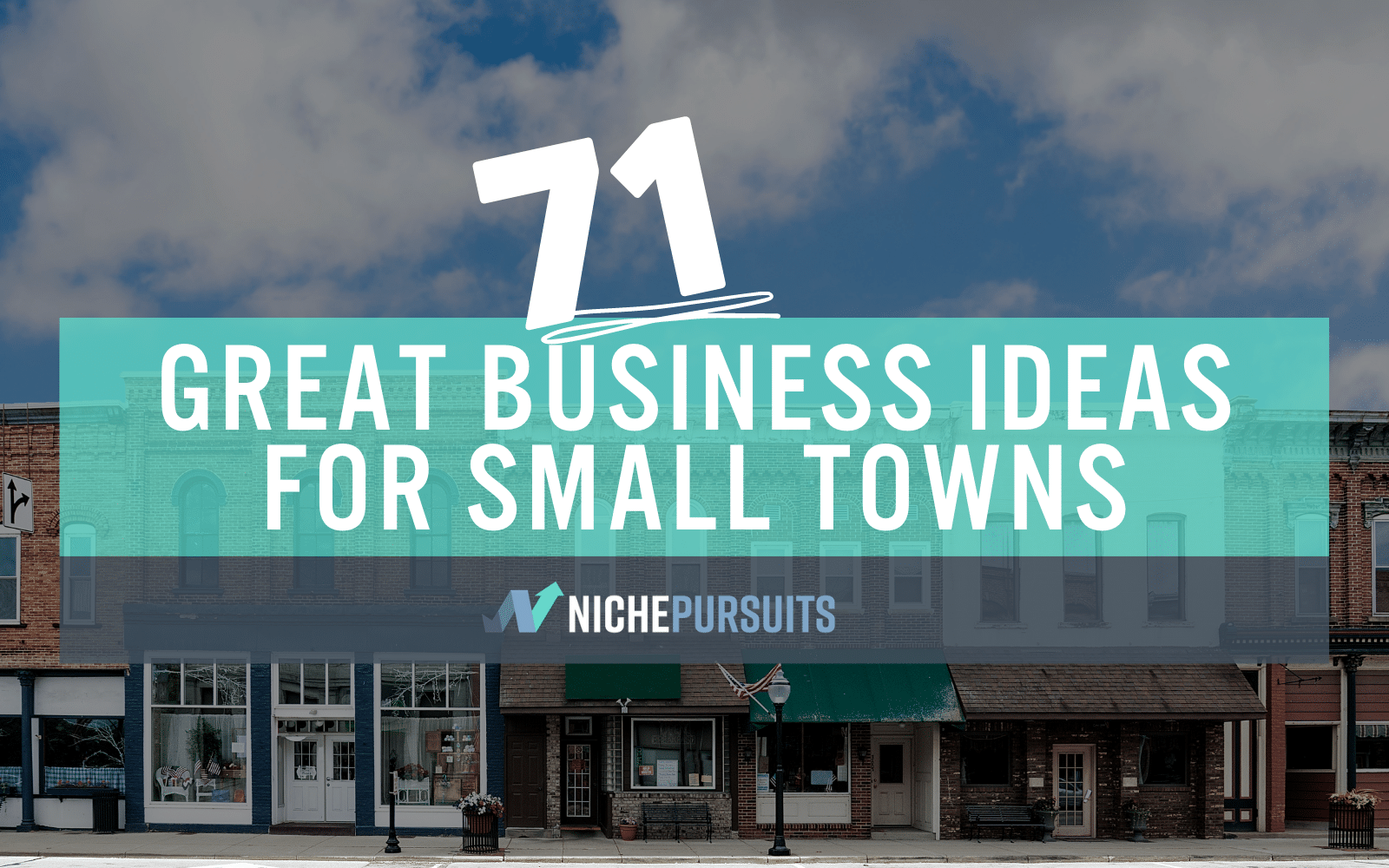
While e-commerce has challenged traditional retail, it has not killed it in small towns. Instead, it has shifted the focus toward “experiential” and “essential” retail. To succeed in small-town retail, an entrepreneur must avoid competing with giants like Walmart on price and instead compete on curation and experience.
The Boutique and Specialty Niche
A successful small-town retail business focuses on what the big-box stores cannot provide: specialized knowledge and unique inventory. This could range from a high-end hardware store that carries specialty tools to a boutique grocery store focusing on locally sourced meats and produce.
The financial strategy here is “Value-Added Reselling.” By curating products that appeal to a specific local demographic or a growing “work-from-home” class moving to smaller towns, you can maintain higher margins. Additionally, the storefront acts as a physical billboard, building brand trust that can be leveraged later for an online sales component.
Food and Beverage as a Destination
In many small towns, the local coffee shop or restaurant is the primary social hub. The key to profitability in small-town hospitality is “Day-Part Diversification.” A business that serves coffee and breakfast in the morning, functions as a co-working space in the afternoon, and offers a curated selection of wine or craft beer in the evening can maximize its revenue per square foot.
By keeping the menu focused and the staff lean, an owner can manage COGS (Cost of Goods Sold) effectively. High-margin items like specialty coffee and alcohol can subsidize more labor-intensive offerings, creating a balanced and resilient P&L statement.
Financial and Professional Services
As small-town economies diversify, the need for professional services grows. Many residents and small business owners in these areas are underserved by large urban firms that do not understand the local context.
Bookkeeping and Tax Preparation for Local SMBs
Every business in a small town—from the local farm to the new boutique—needs to manage its finances. A professional bookkeeping and tax prep service is a high-margin, low-overhead business that builds long-term wealth through recurring annual fees.
The strategy here is to position yourself as a “Fractional CFO” for local businesses. By offering not just tax prep, but also financial planning, cash flow analysis, and growth consulting, you can command higher hourly rates. This business is also highly portable and can be scaled by hiring remote assistants as the client base expands.
Real Estate and Property Management
Small-town real estate often offers better “cap rates” (capitalization rates) than saturated urban markets. Starting a property management firm allows you to capitalize on this without necessarily owning the buildings yourself. As more people seek a higher quality of life outside of cities, the demand for well-managed rental properties and commercial spaces is increasing.
A property management business generates consistent, passive-style income through a percentage of the monthly rent. It also puts the entrepreneur in a prime position to identify undervalued real estate assets for their own investment portfolio, creating a secondary path to wealth through equity growth.
Digital Integration and Revenue Diversification
The most successful small-town businesses today are those that do not limit themselves to the local population. By using the small town as a low-cost “operating base” while selling to a global market, an entrepreneur can achieve significant financial leverage.
The Hybrid Brick-and-Click Model
A hybrid model involves having a physical presence in the town while maintaining a robust e-commerce platform. For example, a local maker of artisanal leather goods can use their small-town storefront as a workshop and showroom, benefiting from low rent. Simultaneously, they can sell their products globally via an online store.
This model de-risks the business. If local foot traffic slows down, the online revenue keeps the business afloat. If online advertising costs spike, the local loyalists provide a steady baseline of income. From a financial perspective, this is the ultimate “small-town” business because it exports local value to high-wealth urban markets.

Leveraging Local Heritage for Global E-commerce
Every small town has a story, a specific craft, or a local resource that is unique. Businesses that package this “local identity” for a global audience often see the highest growth. Whether it’s specialty honey, heirloom seeds, or handmade furniture, the “small-town” brand carries a premium in the digital marketplace.
By keeping the production in a small town where labor and land are affordable, and selling in a global market where prices are higher, the business owner captures a massive “geographic arbitrage” margin. This is perhaps the most sophisticated way to answer the question of what business to start in a small town—it is a business that lives locally but thinks globally.
In conclusion, starting a business in a small town is not about settling for smaller returns; it is about optimizing for higher margins and lower risk. By identifying essential services, filling retail gaps with experiential models, or leveraging the cost-advantages of a small-town base for global trade, entrepreneurs can build formidable financial engines that provide both local impact and personal wealth.
aViewFromTheCave is a participant in the Amazon Services LLC Associates Program, an affiliate advertising program designed to provide a means for sites to earn advertising fees by advertising and linking to Amazon.com. Amazon, the Amazon logo, AmazonSupply, and the AmazonSupply logo are trademarks of Amazon.com, Inc. or its affiliates. As an Amazon Associate we earn affiliate commissions from qualifying purchases.