
At its core, a small business is often defined by its independence and its relatively small share of a given market. However, from a financial and economic perspective, a small business is a complex engine of wealth creation, characterized by specific capitalization needs, tax structures, and risk profiles. While the casual observer might see a neighborhood coffee shop or a boutique digital agency, a financial analyst sees a specialized asset class that drives nearly half of the private sector GDP. Understanding what constitutes a small business requires looking past the storefront and into the balance sheets, funding mechanisms, and the strategic financial management that allows these entities to survive and thrive.
Understanding the Quantitative and Regulatory Definitions
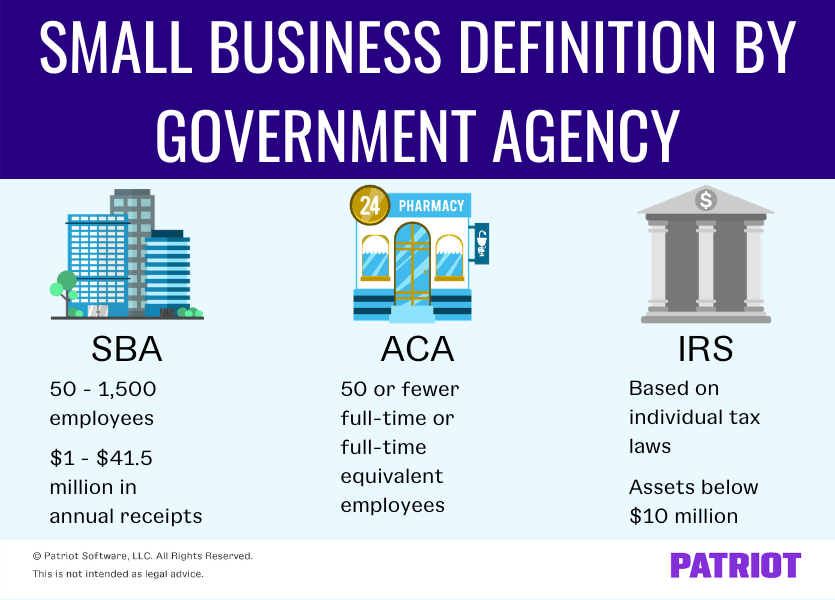
The definition of a small business is not merely a matter of sentiment; it is a rigorous classification used by governments and financial institutions to determine eligibility for loans, grants, and tax incentives. In the United States, the Small Business Administration (SBA) establishes “size standards” that define whether an entity is small and, therefore, eligible for government programs. These standards vary significantly by industry, typically based on either the number of employees or the average annual receipts.
The Role of NAICS Codes in Financial Classification
The North American Industry Classification System (NAICS) provides the framework for these definitions. For example, a manufacturing firm might be considered “small” if it has fewer than 500 or even 1,500 employees, depending on the specific sub-sector. Conversely, in the service or retail sectors, the definition is usually tied to annual revenue. A specialized retail chain might be classified as a small business if its annual receipts fall below a $40 million threshold. For the entrepreneur, understanding these codes is critical for accessing business finance opportunities and government contracts reserved for small entities.
Legal Structures and Tax Implications
From a money management perspective, the way a small business is legally organized dictates its financial destiny. Most small businesses operate as sole proprietorships, partnerships, Limited Liability Companies (LLCs), or S-Corporations.
The S-Corporation and LLC structures are particularly popular in the “Money” niche because they allow for pass-through taxation. This means the business itself does not pay corporate income tax; instead, the profits and losses are “passed through” to the owners’ personal tax returns. This avoids the “double taxation” faced by larger C-Corporations and allows small business owners to utilize deductions like the Qualified Business Income (QBI) deduction, which can exempt up to 20% of their business income from federal taxes.
The Financial Lifecycle: From Side Hustle to Scalable Enterprise
Every small business begins with a capitalization strategy. Whether the goal is to generate a modest side hustle income or to build a venture-backed startup, the initial financial decisions set the trajectory for the business’s viability.
Bootstrapping vs. External Capital
Bootstrapping is the process of starting a business using personal savings and the initial revenue generated by the operation. This method allows the owner to maintain 100% equity, which is a significant long-term financial advantage if the business becomes highly profitable. However, bootstrapping often limits the speed of growth.
On the other end of the spectrum is the pursuit of external capital through angel investors or venture capital. This is common in “tech-adjacent” small businesses that require high upfront R&D costs. From a business finance standpoint, this involves trading equity for liquidity. While this provides the fuel for rapid scaling, it also introduces fiduciary responsibilities to shareholders and shifts the definition of success from simple profitability to an eventual “exit” or IPO.
The Side Hustle Economy and Micro-Enterprises
In the modern economy, the definition of small business has expanded to include the “micro-enterprise” or the professional side hustle. With the rise of digital platforms, individuals can now launch service-based businesses with near-zero overhead. These businesses focus heavily on maximizing “net margin” by keeping expenses low. For many, the goal of these small businesses isn’t to hire hundreds of employees, but to create a high-yield personal income stream that offers more tax advantages than a traditional W-2 salary.
Strategic Financial Management and Cash Flow
The primary reason small businesses fail is not a lack of a good product, but a failure of cash flow management. In the world of business finance, “profit” and “cash” are two very different metrics. A small business can be profitable on paper—meaning its sales exceed its expenses—while simultaneously being insolvent because it lacks the liquid cash to pay its bills.
The Importance of Cash Flow Forecasting
Small business owners must master the art of the cash flow statement. This involves tracking the timing of cash inflows (accounts receivable) versus outflows (accounts payable). For businesses that operate on credit terms—such as wholesalers or B2B service providers—the “cash gap” can be a silent killer. This is the period between paying for the inputs of a product and actually receiving payment from the customer. Managing this gap requires financial tools like lines of credit or factoring, where a business sells its invoices to a third party at a discount to get immediate liquidity.
Managing Debt-to-Equity Ratios
Prudent financial management also involves balancing debt. Small businesses often rely on debt to fund expansion, whether through SBA 7(a) loans, equipment financing, or commercial real estate mortgages. The key financial metric here is the debt-to-equity ratio. While leverage can amplify returns on equity, too much debt can leave a small business vulnerable during economic downturns. Successful small businesses maintain a “fortress balance sheet” with enough liquidity to weather at least six months of operational disruption.
Small Business as a Vehicle for Wealth Creation
Beyond providing a daily income, a small business is one of the most powerful tools for long-term wealth accumulation. Unlike a standard investment in the stock market, where an investor has no control over the company’s performance, a small business owner has a direct hand in increasing the value of their asset.
Valuation and Asset Appreciation
A small business is an asset that can be sold. Valuation is typically based on a multiple of SDE (Seller’s Discretionary Earnings) or EBITDA (Earnings Before Interest, Taxes, Depreciation, and Amortization). For example, a stable service business might sell for 3 to 5 times its annual profit. By focusing on increasing recurring revenue and systematizing operations so the business can run without the owner, an entrepreneur can significantly increase this multiple, leading to a substantial windfall upon the sale of the company.
Tax-Advantaged Investing through the Business
Small business owners have access to unique retirement vehicles that are far more robust than those available to employees. Plans like the SEP IRA or the Solo 401(k) allow owners to contribute significantly higher amounts—often up to $69,000 or more per year depending on income—reducing their current taxable income while building a massive nest egg. Furthermore, the business can often own assets like real estate or vehicles, which provide depreciation benefits that offset taxable gains.
The Economic Resilience of the Small Business Sector
To truly understand what a small business is, one must look at its role in the broader financial ecosystem. Small businesses are often more agile than large corporations. During periods of inflation or shifting consumer trends, small entities can pivot their pricing models and cost structures more rapidly than “blue-chip” giants.
Diversification of Income Streams
Modern small businesses are increasingly diversifying their revenue to ensure financial stability. A local retail shop might add an e-commerce wing (Online Income), or a consulting firm might launch a subscription-based software tool (SaaS). This diversification protects the business from localized economic shocks and increases its overall valuation.
Conclusion: The Bottom Line on Small Business
Ultimately, a small business is a targeted financial instrument designed to convert specialized knowledge and capital into a sustainable profit margin. Whether it is defined by the SBA as having 500 employees or by a solo entrepreneur as a profitable side hustle, the essence remains the same: it is a venture where the risks of ownership are balanced by the potential for significant financial independence and wealth creation. By mastering the nuances of business finance, tax strategy, and cash flow management, the small business owner moves beyond mere “self-employment” and into the realm of strategic asset management, driving both personal prosperity and broader economic growth.
aViewFromTheCave is a participant in the Amazon Services LLC Associates Program, an affiliate advertising program designed to provide a means for sites to earn advertising fees by advertising and linking to Amazon.com. Amazon, the Amazon logo, AmazonSupply, and the AmazonSupply logo are trademarks of Amazon.com, Inc. or its affiliates. As an Amazon Associate we earn affiliate commissions from qualifying purchases.