
In the world of high-stakes commerce, a business proposal is far more than a simple document; it is a critical financial asset. Whether you are a solopreneur pitching a side hustle to a major corporation, a startup founder seeking seed funding, or a seasoned executive bidding on a multi-million dollar contract, the quality of your proposal determines the trajectory of your revenue. Writing a proposal is the art of translating a strategic vision into a compelling financial argument. It is about proving that the investment of capital, time, and resources will yield a return that justifies the risk. To succeed, you must move beyond generic templates and master a structure that speaks the language of money, efficiency, and growth.
Understanding the Financial Framework of a Winning Proposal
Before putting pen to paper, or fingers to keyboard, it is essential to categorize the nature of the opportunity. In business finance, proposals generally fall into two categories: solicited and unsolicited. Each requires a distinct financial lens. A solicited proposal is a response to a Request for Proposal (RFP). Here, the client has already allocated a budget; your job is to prove that you are the most fiscally responsible and effective choice. An unsolicited proposal, however, is an attempt to create a new budget line item. This requires a much higher level of financial persuasion, focusing heavily on the “Cost of Inaction” (COI)—the money the client is currently losing by not implementing your solution.
Identifying the Economic Pain Points
Every successful business proposal begins with a deep dive into the prospect’s financial pain points. You are not selling a service; you are selling a solution to a fiscal drain. Are they struggling with high overhead? Is their current software causing a bottleneck that prevents scale? Is their market share being eroded by more agile competitors? By framing the problem in terms of lost revenue or wasted capital, you immediately capture the attention of decision-makers who are incentivized by the bottom line.
Aligning with the Client’s Fiscal Cycle
Timing is a frequently overlooked element of business finance. A proposal submitted at the end of a fiscal year when budgets are depleted is likely to fail, regardless of its brilliance. Conversely, a proposal submitted during the annual planning phase, when departments are looking for ways to allocate new capital, has a significantly higher chance of approval. Researching the target organization’s fiscal calendar allows you to position your proposal as a timely solution for their upcoming budgetary goals.
The Essential Components of a High-Conversion Business Proposal
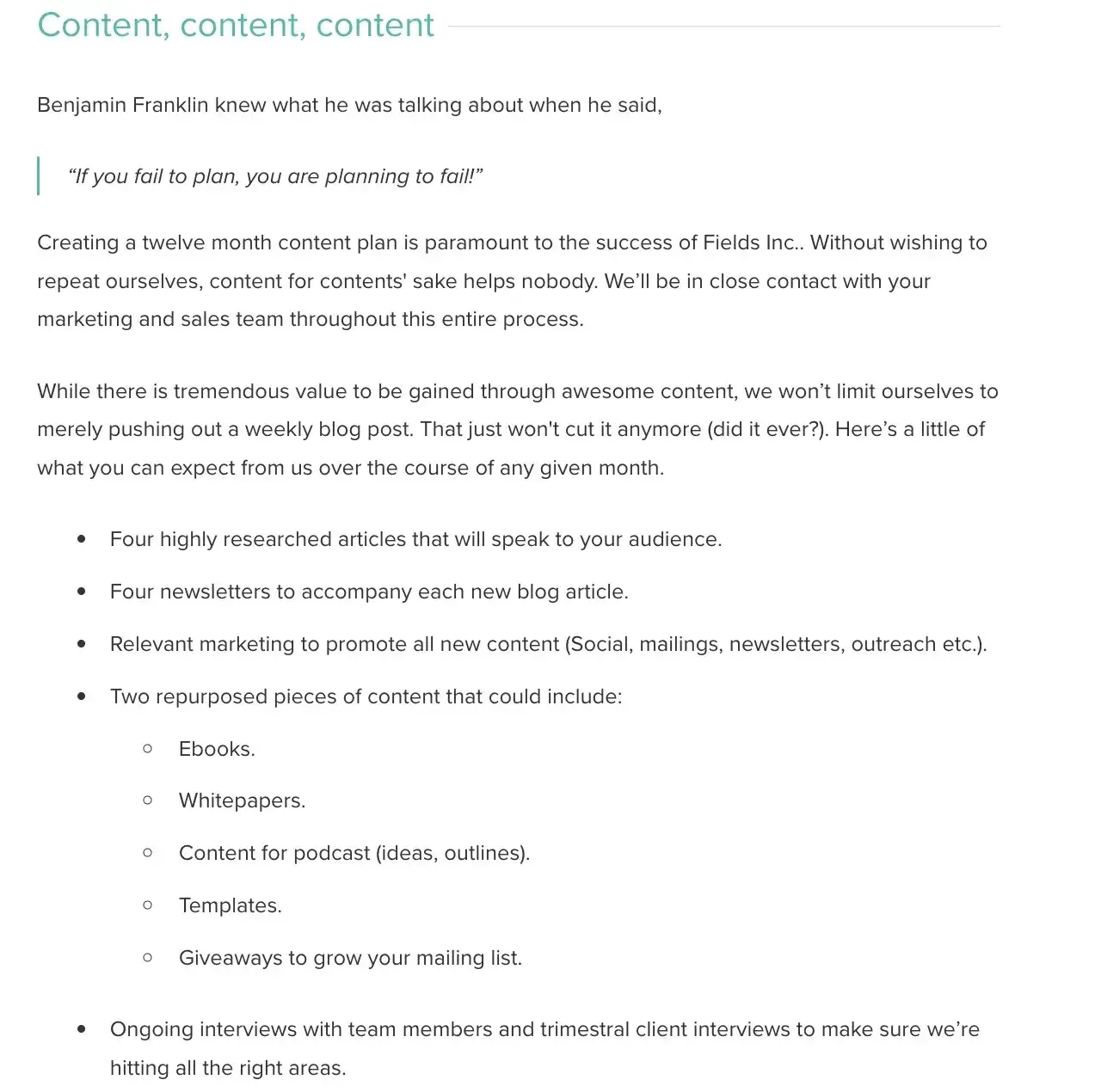
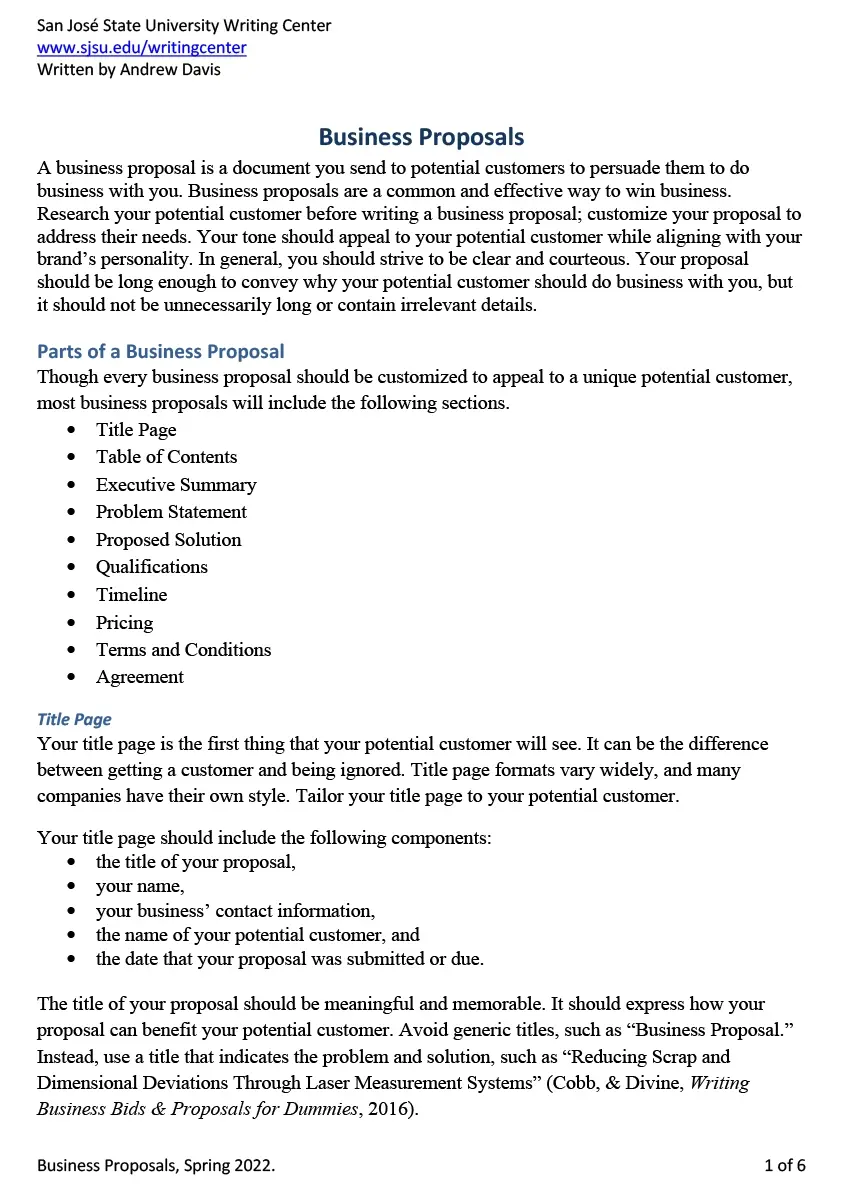
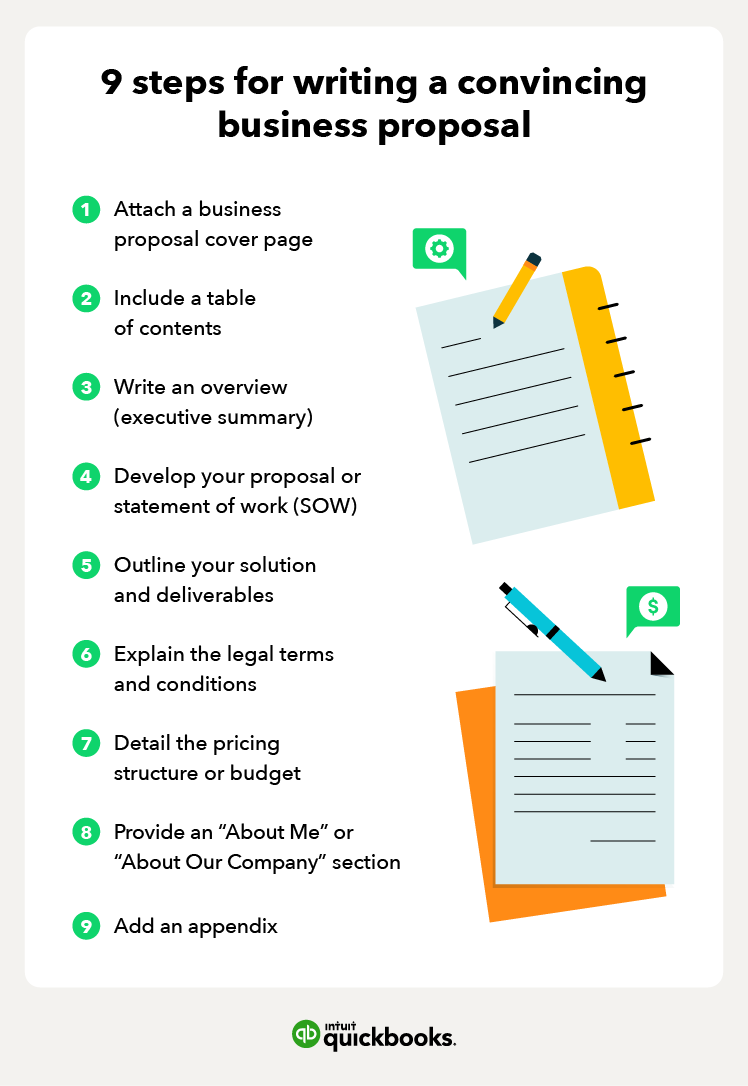
A professional proposal must follow a logical flow that leads the reader from the realization of a problem to the inevitability of your solution. This structure should be designed to pass through multiple hands—from the procurement officer focused on costs to the CEO focused on long-term ROI.
The Executive Summary: The Elevator Pitch for Capital
The Executive Summary is arguably the most important section of the document. Many stakeholders will only read these few paragraphs before deciding whether to pass the proposal on to a technical committee. It should not be a summary of the document’s contents, but rather a summary of the value proposition. Lead with the results: “Our solution will reduce operational costs by 15% within the first six months.” This immediately anchors the conversation in financial gain. It should be concise, authoritative, and focused entirely on the benefits to the client, not the history of your own firm.
The Problem Statement and Market Gap
This section defines the “why” behind the proposal. In the context of business finance, you must quantify the problem. If you are proposing a new digital marketing strategy, don’t just say the client needs more leads; explain how their current lead acquisition cost is 20% higher than the industry average. This uses data to create a sense of urgency. By demonstrating a sophisticated understanding of their market gap, you position yourself as a consultant rather than a mere vendor.
The Solution and Methodology
Once the financial stakes have been established, you introduce your solution. This is where you detail the “how.” However, maintain a focus on efficiency. Describe your process in a way that highlights how it minimizes disruption to their current cash flow. Use H3 sub-sections or bullet points to break down the implementation phases. Each phase should be linked to a milestone, ensuring the client feels a sense of control over the project’s progression and their investment.
Detailed Financial Projections and Resource Allocation
In any business proposal, the section regarding costs and investments is where the deal is either won or lost. Professionalism in this section is non-negotiable. It requires a transparent, detailed breakdown of where every dollar will go and what it is expected to produce.
Value-Based Pricing vs. Commodity Pricing
One of the most effective strategies in business finance is moving away from hourly rates and toward value-based pricing. Hourly rates invite the client to scrutinize your efficiency; value-based pricing invites them to focus on the outcome. For example, instead of charging $100 per hour for a financial audit, price the project at a flat fee based on the projected savings found. This aligns your incentives with the client’s and often leads to higher profit margins for the service provider while providing cost certainty for the buyer.
ROI Analysis and The Payback Period
A sophisticated business proposal includes a section on Return on Investment (ROI). This is the primary metric used by CFOs and investment committees. Calculate the projected ROI using a standard formula: (Net Profit / Cost of Investment) x 100. Furthermore, identify the “Payback Period”—the amount of time it will take for the project to pay for itself through increased revenue or cost savings. A project that pays for itself in six months is an easy “yes” for most financial officers.
Mitigating Financial Risk
Risk is the enemy of investment. Your proposal must proactively address the potential risks involved in the project and explain how you intend to mitigate them. This might include a tiered rollout to test effectiveness before full capital commitment, or a “money-back guarantee” on specific performance milestones. By acknowledging risk, you demonstrate a level of financial maturity that builds immense trust with the stakeholder.
Finalizing the Pitch: From Draft to Signed Contract
The final sections of your proposal should focus on closing the deal and providing the social proof necessary to remove any remaining friction. In the realm of business finance, this often means demonstrating a track record of fiscal success with other clients.
Leveraging Case Studies and Social Proof
Generic testimonials are less effective than financial case studies. Instead of a quote saying “They did a great job,” include a brief summary of a previous project: “Client X invested $50,000 in our supply chain optimization and realized $200,000 in savings within the first year.” This turns your past performance into a tangible financial forecast for your new prospect. It proves that your methodology is not just theoretical, but has been stress-tested in the real world.
The Terms, Conditions, and Call to Action
The conclusion of the proposal should be firm and clear. Include a detailed timeline for the next steps. Do not end with a passive “Let us know what you think.” Instead, provide a clear Call to Action (CTA), such as a scheduled follow-up call to review the financial projections or a digital signature link for the initial Letter of Intent (LOI). Ensure that your terms and conditions—including payment schedules (e.g., 50% upfront, 50% upon completion)—are clearly outlined to avoid any “scope creep” that could negatively impact your margins.
The Importance of Visual Presentation
While the data is the core of the proposal, the presentation reflects the brand’s professionalism and attention to detail. Use clean, high-quality charts to represent financial data. Avoid cluttered spreadsheets; instead, use simplified tables that highlight key figures. A well-designed proposal suggests that the same level of care and precision will be applied to the client’s money and business operations.
By following this strategic framework, your business proposal ceases to be a mere request for work and becomes a compelling investment prospectus. When you speak the language of finance, address risk head-on, and focus relentlessly on the client’s bottom line, you position yourself not just as a provider, but as a strategic partner essential to their future growth.
aViewFromTheCave is a participant in the Amazon Services LLC Associates Program, an affiliate advertising program designed to provide a means for sites to earn advertising fees by advertising and linking to Amazon.com. Amazon, the Amazon logo, AmazonSupply, and the AmazonSupply logo are trademarks of Amazon.com, Inc. or its affiliates. As an Amazon Associate we earn affiliate commissions from qualifying purchases.