
Starting a business is often portrayed as a journey of passion and innovation, but beneath the surface of every successful enterprise lies a rigorous financial architecture. The transition from an idea to a profitable entity requires more than just a unique selling proposition; it demands a deep understanding of capital allocation, risk management, and fiscal discipline. In the modern economic landscape, where traditional barriers to entry have lowered but competition has intensified, the ability to navigate the “Money” side of entrepreneurship is the primary determinant of long-term viability.
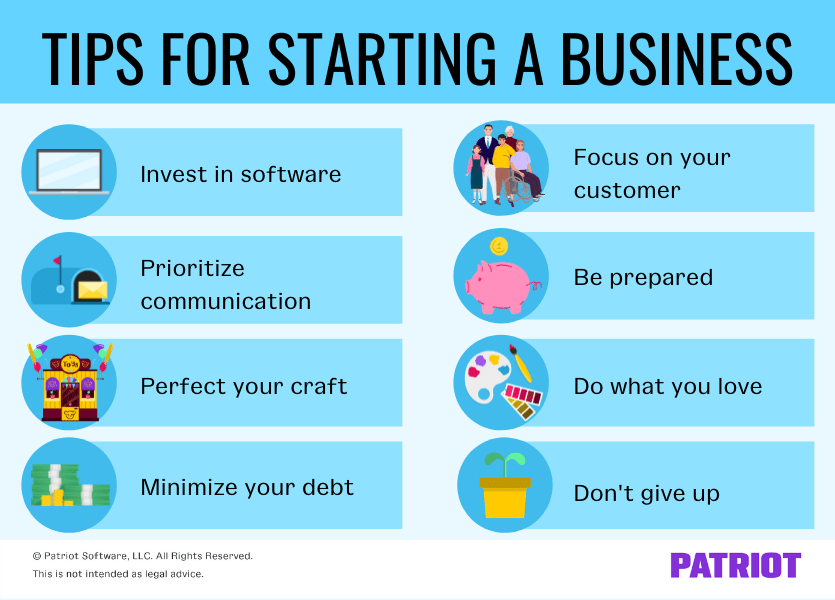
To build a business that lasts, one must view it not just as a project, but as a wealth-generating asset. This requires a shift in mindset from being a consumer to being a producer and an investor. Whether you are launching a digital service, a brick-and-mortar shop, or a scalable tech-enabled side hustle, the following financial blueprint will guide you through the essential stages of starting and sustaining a business.
Laying the Financial Foundation: Capital, Credit, and Cash Flow
The first hurdle every entrepreneur faces is the “capital gap.” Before a business generates its first dollar in revenue, it requires an infusion of resources. Understanding how to source this capital and how to manage it once it arrives is the cornerstone of business finance.
Bootstrapping vs. External Funding
Bootstrapping, or self-funding, is the process of starting a business using personal savings and the initial revenue generated by the venture. This approach offers the highest level of control, as the founder retains 100% equity. From a financial perspective, bootstrapping forces a “lean” mentality, ensuring that every dollar spent is scrutinized for its potential return on investment (ROI).
On the other hand, external funding—such as angel investment, venture capital, or small business loans—can accelerate growth. However, this comes at a cost. Debt requires interest payments regardless of profitability, while equity funding dilutes ownership. For most first-time entrepreneurs, a hybrid approach is often most effective: bootstrapping until the proof of concept is established, then seeking external capital to scale a proven model.
Establishing Business Credit and Financial Separation
One of the most common mistakes new business owners make is “commingling” funds—mixing personal and business finances. To protect personal assets and build a professional financial profile, it is imperative to establish a separate legal entity (such as an LLC or Corporation) and open a dedicated business bank account immediately.
Building business credit is a parallel track to personal credit. By obtaining a Federal Tax ID (EIN) and opening lines of credit with suppliers or business credit cards, you begin to build a credit score for the business itself. This becomes vital when the business needs to secure larger loans for expansion or real estate, as it allows the company to borrow on its own merit rather than relying solely on the founder’s personal creditworthiness.
Maximizing ROI: Strategic Budgeting and Lean Operations
Once the foundation is set, the focus shifts to operational efficiency. In the early stages of a business, cash flow is the lifeblood of the organization. Profit is a goal, but cash flow is a reality. Managing the gap between when expenses are paid and when revenue is collected is the difference between staying afloat and going insolvent.
Identifying High-Impact Side Hustles to Fund Your Vision
Many of today’s most successful corporations began as side hustles. Utilizing low-overhead income streams to fund a more ambitious business goal is a savvy financial strategy. For example, a founder might offer freelance consulting or digital products to generate the “seed money” needed for a manufacturing venture.
This approach minimizes personal financial risk. By treating the side hustle as a dedicated “funding arm,” you can reinvest 100% of those earnings into the primary business’s growth, such as marketing, inventory, or product development. This creates a self-sustaining cycle of wealth where the entrepreneur is not reliant on high-interest personal loans to keep the business running.
Cost-Benefit Analysis of Modern Business Tools
In an era of “Software as a Service” (SaaS), it is easy for a new business to become weighed down by a dozen monthly subscriptions. A professional financial approach requires a strict cost-benefit analysis for every tool added to the stack. Does this software save enough hours of labor to justify its cost? Does this marketing platform provide a measurable Customer Acquisition Cost (CAC) that is lower than the Lifetime Value (LTV) of a customer?

Lean operations mean focusing on the “Minimum Viable Financial Outlay.” Instead of hiring full-time staff, consider project-based contractors. Instead of high-rent office space, utilize virtual offices or co-working spaces. By keeping fixed costs low, the business increases its “runway”—the amount of time it can operate before needing to reach profitability.
Navigating Tax Efficiency and Financial Compliance
As the business begins to generate income, the complexity of managing that money increases. Tax strategy is not just about filing returns at the end of the year; it is about year-round planning to minimize liability and maximize the amount of capital available for reinvestment.
Choosing the Right Business Structure for Tax Benefits
The legal structure of your business significantly impacts how you are taxed. A Sole Proprietorship is the simplest, but it offers no liability protection and subjects all income to self-employment tax. An S-Corp election, however, can allow owners to split their income between a “reasonable salary” (subject to payroll taxes) and “distributions” (not subject to self-employment tax), potentially saving thousands of dollars annually.
Understanding these nuances requires consultation with a tax professional, but the entrepreneur must be the one to drive the strategy. Being proactive about deductions—ranging from home office expenses to equipment depreciation—can significantly alter the net profit margin of the business.
Financial Forecasting and Risk Management
Insightful business owners do not look at the past; they look at the future. Financial forecasting involves creating “Pro Forma” statements—projections of future revenue, expenses, and cash flow. This allows the owner to anticipate “dry spells” in seasonal industries or plan for the purchase of new assets.
Risk management is the defensive side of business finance. This includes maintaining an emergency fund (typically 3–6 months of operating expenses) and securing the necessary insurance (General Liability, Professional Indemnity, etc.). In the world of money, the goal is not just to win, but to ensure that one bad event cannot take you out of the game.
Scaling for Long-Term Wealth: Reinvestment and Exit Strategies
The final phase of starting a business is moving from survival to scaling. Scaling is the process of increasing revenue at a faster rate than costs. This is where true wealth is built, as the business becomes an autonomous entity capable of generating high-margin returns.
The Power of Compound Growth in Business Reinvestment
In personal finance, compound interest is the “eighth wonder of the world.” In business, the equivalent is the reinvestment of profits. By taking the earnings from the first two years and plowing them back into automated systems, better talent, or wider marketing reaches, the business achieves exponential growth.
Investors look for “high-yield” reinvestment opportunities within the company. If spending $1,000 on a specific advertising channel consistently returns $3,000 in gross profit, the logical financial move is to funnel as much capital as possible into that channel until the point of diminishing returns. This disciplined reinvestment turns a small business into a dominant market player.
Preparing the Financial Infrastructure for a Future Exit
Even if you plan to run your business for decades, you should build it as if you intend to sell it tomorrow. A business that is “ready for exit” is one with clean books, documented processes, and diverse revenue streams. From a financial perspective, a business that is overly dependent on the founder is worth very little to an outside buyer.
To maximize the valuation of the business, focus on “EBITDA” (Earnings Before Interest, Taxes, Depreciation, and Amortization). This is the metric most professional investors and acquirers use to determine the price they are willing to pay. By focusing on increasing your EBITDA and ensuring your financial records are audited and transparent, you are building an asset that can eventually be liquidated for a life-changing sum.

Conclusion: The Financial Discipline of Entrepreneurship
Starting a business is a high-stakes exercise in financial management. While the product or service is the face of the company, the financial strategy is the engine. By focusing on building strong credit, maintaining lean operations, planning for tax efficiency, and scaling through disciplined reinvestment, you transform a risky venture into a stable, wealth-generating machine. Success in business is rarely an accident; it is the result of a calculated, professional approach to every dollar that flows through the enterprise.
aViewFromTheCave is a participant in the Amazon Services LLC Associates Program, an affiliate advertising program designed to provide a means for sites to earn advertising fees by advertising and linking to Amazon.com. Amazon, the Amazon logo, AmazonSupply, and the AmazonSupply logo are trademarks of Amazon.com, Inc. or its affiliates. As an Amazon Associate we earn affiliate commissions from qualifying purchases.