
When aspiring entrepreneurs or curious investors ask, “How much do businesses make?” the answer is rarely a single number. Business income is a spectrum that ranges from the modest earnings of a solo freelancer to the multi-billion dollar quarterly reports of multinational conglomerates. However, the true measure of a business’s success is not found in the total amount of money moving through its accounts, but in what remains after every obligation has been met. Understanding how much businesses actually earn requires a deep dive into the mechanics of revenue, profit margins, and the economic realities of different industries.
The Core Financial Equation: Distinguishing Revenue from Profit
The most common mistake in evaluating business performance is conflating revenue with profit. Revenue, often called the “top line,” is the total amount of money generated by the sale of goods or services. While high revenue figures make for impressive headlines, they do not tell the whole story of a company’s financial health.
Gross Profit vs. Net Profit
To understand how much a business truly makes, one must look at the “bottom line,” or net profit. This is the amount left over after all operating expenses, taxes, interest, and costs of goods sold (COGS) have been deducted.
Gross profit is the first layer of the calculation. It represents revenue minus the direct costs of producing the products or services sold. For a retail business, this would be the sales price minus the wholesale cost of the inventory. For a software company, it might include server costs and support.
Net profit, however, is the ultimate indicator of take-home pay. This figure accounts for rent, salaries, marketing, insurance, and the myriad of “invisible” costs that eat away at revenue. A business that generates $1 million in revenue but spends $950,000 to keep the lights on only “makes” $50,000. Conversely, a lean digital consultancy might generate $200,000 in revenue with only $20,000 in expenses, resulting in a significantly higher profit margin and more actual income for the owner.
The Importance of EBITDA
In the professional finance world, businesses are often evaluated based on EBITDA (Earnings Before Interest, Taxes, Depreciation, and Amortization). This metric allows investors and owners to see the cash-flow potential of the business operations themselves, stripping away the variables of financing and accounting strategies. For mid-to-large scale businesses, EBITDA is the standard for determining “how much they make” because it offers a clearer picture of operational efficiency.
Industry Benchmarks: What Different Sectors Actually Earn
The industry in which a business operates is the single greatest predictor of its profit margins. Some sectors are built on high volume and low margins, while others thrive on low volume and high margins.
Professional Services and Consulting
Professional services, such as legal firms, accounting practices, and marketing agencies, often boast some of the highest profit margins in the business world. Because their primary “inventory” is human expertise rather than physical goods, their COGS is relatively low.
A successful solo consulting business can often maintain profit margins between 50% and 80%. As these firms scale and hire more staff, margins typically compress to 15%–30% due to the high cost of talent and office overhead. In this sector, “how much they make” is heavily dependent on the billable hour and the ability to productize expertise.
Retail and E-commerce
The retail sector is notoriously difficult, operating on thin margins. A traditional grocery store might operate on a net profit margin of only 1% to 3%. This means for every $100 in sales, the business only keeps $1 to $3. They survive on massive volume.
Direct-to-consumer (DTC) e-commerce businesses generally fare better, with average net margins ranging from 10% to 20%. However, these businesses face rising customer acquisition costs (CAC) through digital advertising, which can quickly erode profits. In retail, “how much you make” is a game of logistics, inventory turnover, and supply chain management.
Technology and Software-as-a-Service (SaaS)
Technology companies, particularly SaaS providers, are the darlings of the investing world because of their scalability. Once a software product is built, the cost of selling it to the 1,000th customer is nearly zero. This allows for gross margins often exceeding 80% and net margins that can reach 30% to 40% once the company reaches maturity.
However, early-stage tech businesses often “make” negative money. They reinvest every cent of revenue—and often millions of dollars in venture capital—into research, development, and aggressive marketing to capture market share. For these businesses, current earnings are sacrificed for the potential of massive future profits.
Food and Beverage
The restaurant industry is a high-risk environment where “how much you make” is dictated by food waste, labor costs, and rent. A well-run restaurant typically sees a net profit margin of 3% to 6%. Full-service restaurants tend to be on the lower end, while quick-service (fast food) and coffee shops can reach margins of 10% to 15% due to lower labor requirements and higher markup on beverage items.
Factors That Dictate a Business’s Take-Home Pay
Beyond industry averages, specific operational choices determine the actual income of a business. Two businesses in the same town selling the same product can have vastly different earnings based on their internal structures.
Operational Efficiency and Overhead
Overhead is the “silent killer” of business income. This includes fixed costs that must be paid regardless of how much the business sells. High-rent locations, excessive administrative staff, and underutilized equipment create a high “break-even point.”
A business only begins to “make money” after it has covered its fixed costs for the month. Modern digital businesses often prioritize “lean” operations—using automation and remote teams—to keep overhead low and maximize the percentage of revenue that converts to net profit.
Scaling and the Law of Diminishing Returns
Many entrepreneurs assume that doubling their revenue will double their income. In reality, scaling often introduces new complexities that can temporarily decrease profitability. This is known as the “messy middle” of business growth.
As a business grows, it requires more management layers, more robust legal protections, more sophisticated software, and larger premises. These costs often grow faster than revenue in the short term. A business making $500,000 in revenue might actually provide the owner with more personal income than a business making $2 million in revenue that is struggling under the weight of its own expansion costs.
The Reality of Small Business vs. Corporate Earnings
When discussing how much businesses make, we must distinguish between the lifestyle of a small business owner and the financial performance of a corporation.
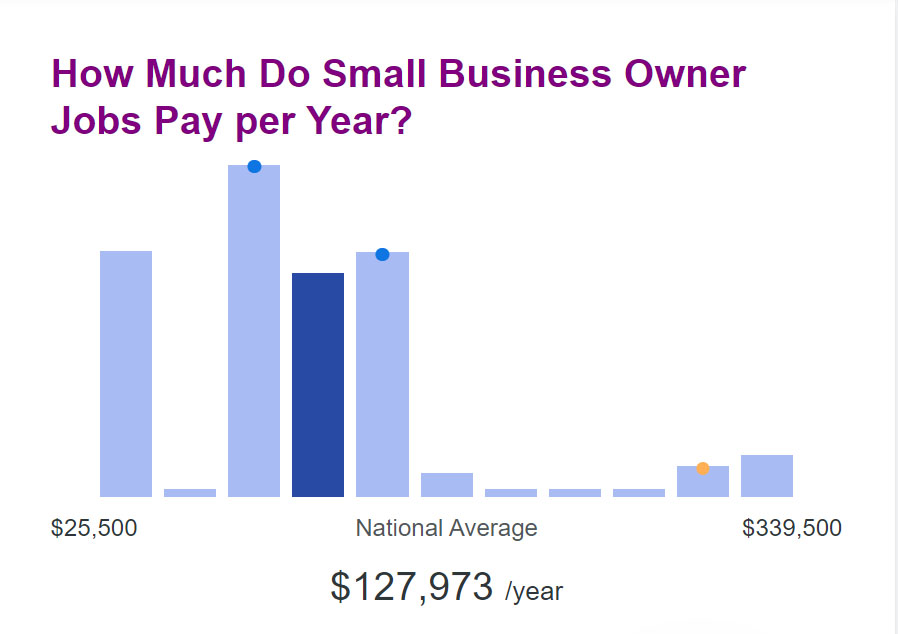
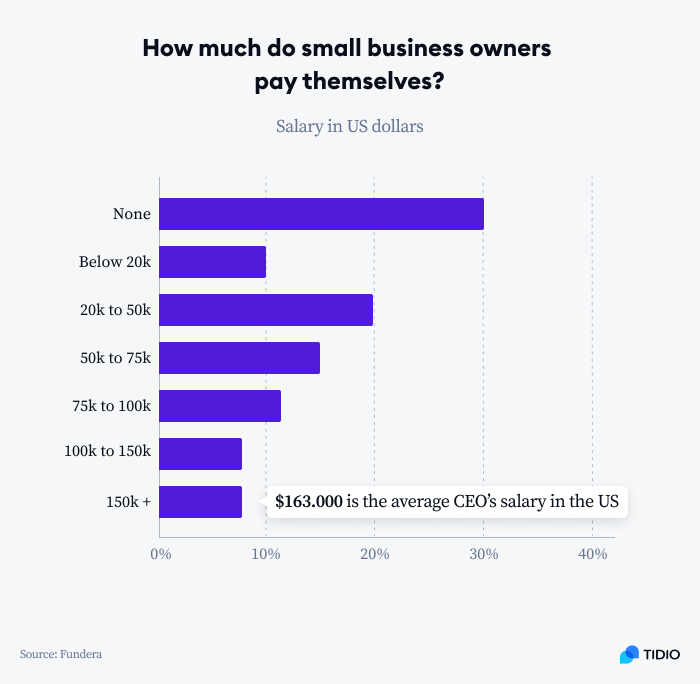
According to data from the Small Business Administration (SBA), a significant portion of small businesses (about 20%) fail in their first year, often because they fail to make enough to cover costs. However, for those that survive, the median income for self-employed individuals at incorporated businesses is approximately $50,000 to $60,000 per year. While this may seem modest, it often includes the benefit of writing off various expenses and building equity in an asset that can later be sold.
On the other end of the spectrum, the “S&P 500” companies—the 500 largest publicly traded companies in the U.S.—have historically averaged a net profit margin of around 10% to 12%. When a company like Apple or Microsoft reports “how much they made,” they are talking about tens of billions of dollars in net income, achieved through a combination of high-margin digital products and global economies of scale.
Strategies for Maximizing Business Earnings
Regardless of the industry, businesses that “make the most” are those that focus on three specific financial levers: pricing power, cost control, and customer retention.
Optimizing Pricing Models
Most businesses underprice their offerings. Small increases in price can have a massive impact on the bottom line because that extra revenue carries no additional cost—it is pure profit. A business with a 10% profit margin that increases its prices by 5% (without losing customers) will see a 50% increase in net profit. Understanding price elasticity and the value-based perception of a brand is essential for increasing what a business makes.
Reducing Customer Acquisition Costs (CAC)
In the digital age, businesses often spend a large portion of their potential earnings on marketing and ads. The most profitable businesses are those that move away from “rented” attention (paid ads) and toward “owned” attention (email lists, brand loyalty, and organic search). By reducing the amount spent to acquire each customer, the lifetime value (LTV) of that customer becomes significantly more profitable.
Strategic Financial Management
Ultimately, how much a business makes is a reflection of its financial discipline. This involves regular audits of expenses, renegotiating vendor contracts, and using tax strategies to protect earnings. High-earning businesses treat their cash flow as a tool for further growth rather than just a pool of money for spending. They understand that every dollar saved on an unnecessary expense is a dollar added directly to the net profit.
In conclusion, “how much a business makes” is a fluid figure defined by industry standards, operational efficiency, and the scale of the enterprise. While revenue creates the potential for wealth, it is the disciplined management of expenses and the strategic pursuit of high-margin opportunities that determine the true financial success of any business venture. Whether it is a local coffee shop or a global tech firm, the goal remains the same: maximizing the gap between what comes in and what goes out.
aViewFromTheCave is a participant in the Amazon Services LLC Associates Program, an affiliate advertising program designed to provide a means for sites to earn advertising fees by advertising and linking to Amazon.com. Amazon, the Amazon logo, AmazonSupply, and the AmazonSupply logo are trademarks of Amazon.com, Inc. or its affiliates. As an Amazon Associate we earn affiliate commissions from qualifying purchases.