
In the world of business finance and entrepreneurship, the business plan serves as the foundational roadmap for a company’s journey from a mere concept to a profitable reality. However, one of the most common questions that plagues new entrepreneurs and seasoned business owners alike is not just what to include in the plan, but how long the document should actually be. In an era where information is consumed in bite-sized pieces and venture capitalists have shorter attention spans than ever, the “100-page manifesto” has largely become a relic of the past.

Determining the ideal length for a business plan requires a balance between comprehensive financial forecasting and concise strategic communication. Whether you are seeking a small business loan, pitching to an angel investor, or simply organizing your internal financial goals, the length of your plan should be dictated by its purpose, its audience, and the complexity of the business model itself.
The Evolution of Business Documentation: Why Modern Plans Are Shrinking
Historically, business plans were massive, leather-bound binders filled with exhaustive market data, multi-decade projections, and every conceivable detail about the operation. This was often seen as a sign of due diligence. However, the modern financial landscape moves at a much faster pace. Technology and market trends shift quarterly, rendering a 50-page projection obsolete before the ink is dry.
Today, the most effective business plans focus on the “Money” aspect—how the business will generate revenue, manage expenses, and provide a return on investment (ROI). Investors and lenders are no longer looking for a novel; they are looking for a clear, data-driven narrative that proves the viability of the venture. A plan that is too long risks burying the most important financial insights under layers of unnecessary “fluff.” Conversely, a plan that is too short may fail to address critical risks or provide enough data to justify a significant investment.
The goal is to reach a “Goldilocks” length: long enough to be credible and thorough, but short enough to be read and understood in a single sitting. For most modern businesses, this sweet spot generally falls between 15 and 25 pages, inclusive of charts and executive summaries.
Categorizing Plan Length Based on Financial Goals
The length of your business plan is primarily determined by who is reading it and what you are asking of them. Different financial stakeholders have different requirements for detail.
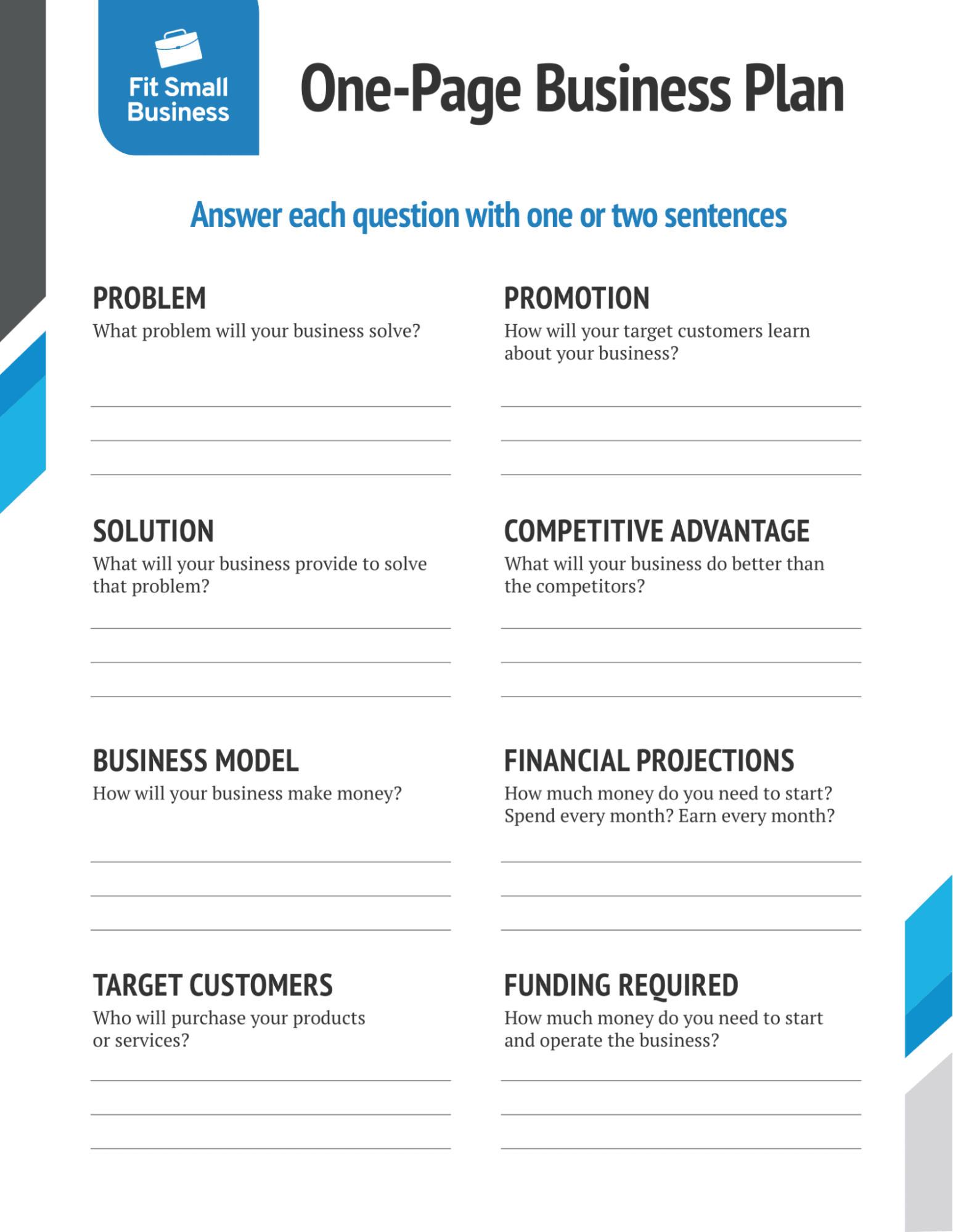
The Lean Startup Model (1 to 5 Pages)
For entrepreneurs in the early stages of a side hustle or a digital-first startup, a “Lean Plan” is often the most efficient choice. This is not a document intended for a bank; rather, it is a strategic summary used to test a concept or secure initial seed funding from friends and family. A lean plan focuses exclusively on the value proposition, the target customer, and the immediate cash flow requirements. From a financial perspective, it highlights the “burn rate” and the “path to profitability” without getting bogged down in five-year projections that are likely to change.
The Standard Small Business Plan (15 to 25 Pages)
If you are approaching a traditional financial institution for a small business loan or a line of credit, a 15-to-25-page document is standard. Banks are conservative by nature; they need to see that you have a grasp on your industry and that your financial projections are grounded in reality. This length allows you to include essential sections such as the company description, market analysis, operational structure, and—most importantly—the financial statements. At this length, the document provides enough room for a three-year financial forecast, including balance sheets and cash flow statements, which are the primary interest of any lender.
The Venture Capital Pitch Deck and Plan (20 to 40 Pages)
When seeking significant investment from venture capitalists (VCs) or private equity firms, the requirements change. While the initial “pitch deck” might only be 10 to 12 slides, the full business plan that follows during the due diligence phase can be more extensive. These plans often range from 20 to 40 pages because they must delve deep into competitive advantages, intellectual property, and complex exit strategies. For a VC, the “money” isn’t just about survival; it’s about scalability and a massive liquidity event (like an IPO or acquisition). These plans require more space to explain how a million-dollar investment will turn into a hundred-million-dollar valuation.
Key Financial Components That Dictate Document Length
A significant portion of your business plan’s length will be occupied by the financial section. This is the heart of the document, as it translates your ideas into the universal language of business: numbers.
Cash Flow Projections and Income Statements
You cannot skim over the financials if you want to be taken seriously. A comprehensive business plan must include at least three years of projected income statements and cash flow analyses. The first year should be broken down month-by-month to show how the business will survive its most vulnerable period. These tables and charts naturally take up several pages. However, the key is to present them clearly. A well-designed graph that shows the “Break-Even Point” can often replace two pages of dense text, making the document more impactful.
Market Analysis and Revenue Justification
One of the reasons business plans become bloated is because the market analysis is too broad. To keep the length manageable, focus on the “Total Addressable Market” (TAM) and your specific “Serviceable Obtainable Market” (SOM). Instead of providing a history of the entire retail industry, focus on the specific financial trends affecting your niche. Detail your pricing strategy and explain why your revenue targets are realistic. If you claim you will capture 10% of a market, you must use the space to explain the cost of acquisition for those customers.
Funding Request and Use of Funds
Every plan written for external financing must include a dedicated section on the funding request. This should not just be a single number. It requires a detailed breakdown of how the capital will be allocated—for example, 40% for inventory, 30% for marketing, and 30% for payroll. Providing this level of financial transparency adds a page or two to the document but is essential for building trust with investors.
Formatting for Impact: Quality Over Page Count
It is a mistake to think that more pages equal more value. In business finance, clarity is more valuable than volume. If your plan is 30 pages long but 10 of those pages are filler text about “company culture” or generic mission statements, a seasoned investor will likely lose interest.
To ensure your plan is the right length, utilize the following formatting strategies:
-
Executive Summary: This should be no more than two pages. It is the “elevator pitch” of your document. If you cannot explain your financial model and value proposition in two pages, your business model might be too complex or poorly defined.
-
Appendices: One of the best ways to keep a business plan concise is to move technical data, resumes of key personnel, and detailed contracts to an appendix. This allows the main body of the plan to remain a focused narrative, while still providing the necessary “deep dive” data for those who want it.
-
Visual Data: Use charts for your financial projections. A line graph showing steady revenue growth is much easier to digest than a table with 50 rows of data. Visuals also help break up the text, making a 20-page document feel like a 10-page read.

The Risks of a Lengthy Plan: Why “Too Much” Is a Financial Liability
In the world of investing, time is money. A business plan that is excessively long can actually harm your chances of securing capital. First, it suggests a lack of focus. If an entrepreneur cannot distill their strategy into a concise document, a lender may worry that they will struggle to manage a streamlined, efficient operation.
Second, a long plan often contains more “assumptions.” The more details you include about the distant future, the more opportunities you provide for an investor to find flaws in your logic. In financial forecasting, the further out you go, the less accurate you become. Focus your length on the immediate 12 to 24 months, where your financial data is most reliable.
Ultimately, the question of “how many pages” is secondary to the question of “how much value.” Your business plan should be as long as it needs to be to prove that your business is a sound financial investment, and not a page longer. By focusing on clear financial metrics, a realistic market analysis, and a concise executive summary, you can create a document that serves as a powerful tool for growth and a persuasive argument for any investor or lender. Target the 15-to-25-page range for a professional standard, and always prioritize the clarity of your path to profitability over the quantity of your words.
aViewFromTheCave is a participant in the Amazon Services LLC Associates Program, an affiliate advertising program designed to provide a means for sites to earn advertising fees by advertising and linking to Amazon.com. Amazon, the Amazon logo, AmazonSupply, and the AmazonSupply logo are trademarks of Amazon.com, Inc. or its affiliates. As an Amazon Associate we earn affiliate commissions from qualifying purchases.