
Navigating the landscape of modern dining requires more than just a healthy appetite; it requires a keen understanding of the shifting economics of the “fast-casual” sector. When consumers ask, “How much is a burger at Shake Shack?” they are rarely looking for a singular, static number. Instead, they are inquiring about a price point that sits at the intersection of luxury branding, supply chain integrity, and inflationary pressure. In the current financial climate, the cost of a ShackBurger is not just a menu item—it is a barometer for the cost of living and a case study in the premiumization of basic commodities.
To understand the price of a Shake Shack burger, one must look past the digital menu boards and into the fiscal realities of food production, urban real estate, and consumer psychology. Whether you are a solo diner budgeting for a weekday lunch or a family of four calculating the cost of a weekend treat, the financial breakdown of this iconic burger reveals much about the state of the modern economy.
The Financial Breakdown: Current Pricing and Regional Variance
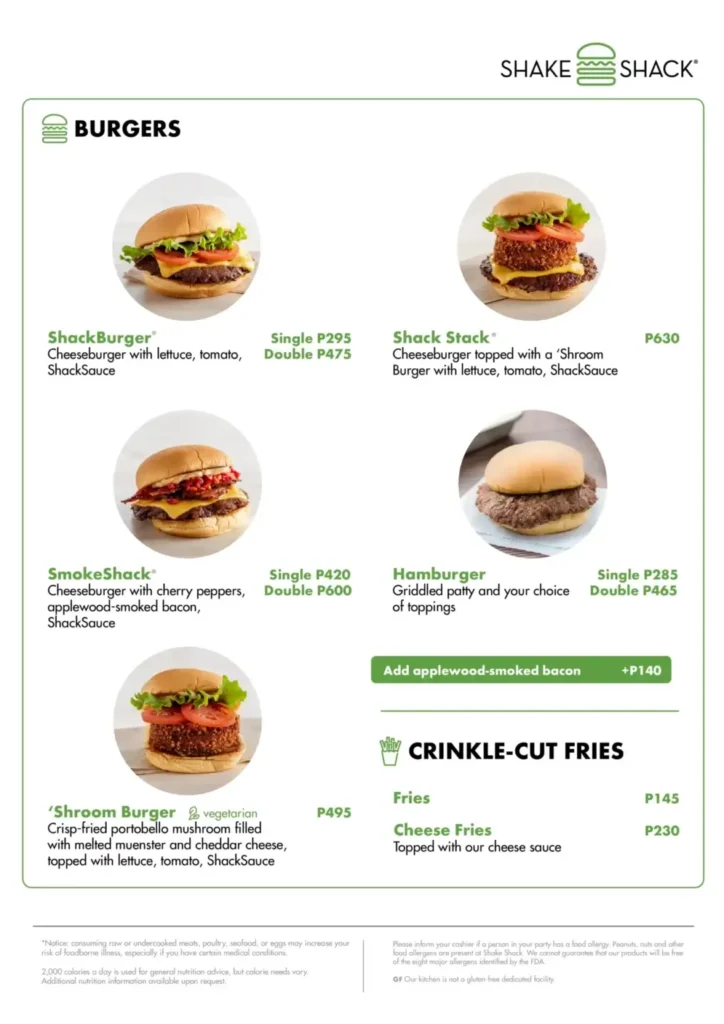
The baseline cost of a burger at Shake Shack typically begins with their flagship offering: the ShackBurger. As of 2024, a single ShackBurger—a cheeseburger topped with lettuce, tomato, and the proprietary ShackSauce—generally retails between $6.89 and $9.45. However, this range is highly sensitive to the geographic location of the “Shack” in question.
The Impact of Geographic Economics
Price variance is one of the most significant factors in the Shake Shack financial model. In a high-cost-of-living (HCOL) area like Manhattan’s Madison Square Park—the brand’s birthplace—a burger will naturally command a higher price than it would in a suburban shopping mall in the Midwest. This is a direct reflection of “occupancy costs” and “labor premiums.” In dense urban centers, the overhead required to maintain a physical footprint is passed on to the consumer. For the personal financier, this means that your location significantly dictates the “value” of the meal.
The Double Burger Premium
For many diners, the single patty is merely a starting point. Moving from a single to a double ShackBurger typically adds between $2.50 and $3.50 to the total. From a “cost-per-ounce” perspective, the double often represents a better financial value for the protein-hungry consumer, as the fixed costs of the bun, toppings, and packaging are already covered in the base price. However, from a strict budgeting standpoint, a double burger often pushes the price of the sandwich alone into the double-digit territory, frequently landing between $10.25 and $12.50.
Limited-Time Offerings (LTOs) and Specialty Surcharges
Shake Shack frequently introduces seasonal items, such as the White Truffle Burger or various “Smokey” iterations. These specialty items often carry a 20% to 30% premium over the standard menu. These are designed to capture “consumer surplus”—the extra money enthusiasts are willing to pay for a novel experience. If you are dining on a strict budget, these specialty burgers are the most common areas where “spending creep” occurs.
The Economics of Fast-Casual: Why It Costs More Than Fast Food
To understand why a Shake Shack burger costs significantly more than a burger from a traditional legacy chain like McDonald’s or Burger King, one must look at the business finance side of the operation. Shake Shack does not classify itself as “fast food,” but rather “fast-casual,” a middle ground that justifies its price point through higher-quality inputs and a specific service model.
Sourcing and Ingredient Integrity
The primary driver of the Shake Shack price tag is the “Bill of Materials” (BOM). Shake Shack utilizes a proprietary blend of 100% all-natural Angus beef that is never frozen and contains no hormones or antibiotics. In the commodity meat market, “never frozen, antibiotic-free” beef carries a significantly higher price per pound than standard industrial beef. Furthermore, the use of non-GMO potato buns and premium produce adds incremental costs that compound. For the consumer, this represents a choice in “value” that prioritizes quality over quantity.
The Labor Model and Operational Overhead
Unlike traditional fast-food outlets that rely heavily on automation and lower wage brackets, Shake Shack has historically positioned itself as an employer that offers higher starting wages and more robust benefits packages. From a corporate finance perspective, higher labor costs necessitate higher menu prices. When you pay $9 for a burger, a portion of that premium is subsidizing a more stable, professionalized workforce, which the brand argues leads to better food safety and consistency.
The “Third Place” Real Estate Strategy
Shake Shack often invests in “lifestyle centers” and high-traffic urban parks. These locations are expensive to secure and maintain. The cost of the burger includes the “rent” for the environment—the clean, modern aesthetic, the outdoor seating, and the community-centric design. In financial terms, the company is not just selling a caloric unit; it is selling an experience, and the price is adjusted to reflect the value of the environment in which the food is consumed.
The “Shake Shack Index”: Inflation and Personal Finance
In personal finance circles, the cost of a standard burger is often used as an informal “Big Mac Index” to measure the purchasing power of a currency. The Shake Shack Index tells a more modern story of inflation and the rising cost of the “attainable luxury.”
Year-over-Year Inflationary Trends
Over the past three years, Shake Shack, like much of the hospitality industry, has implemented incremental price hikes. These are often in the 2% to 5% range annually. These increases are a direct response to “input inflation”—the rising cost of beef, paper products (packaging), and logistics (shipping ingredients to locations). For the individual consumer, these small hikes can be invisible in the short term but lead to a “sticker shock” over a five-year horizon, where a meal that once cost $15 (burger, fries, and drink) now frequently nears $22.
Budgeting for the “Small Luxury”
From a personal finance perspective, Shake Shack occupies the “Small Luxury” category. It is an affordable indulgence that many use as a reward. However, the financial trap lies in the “add-on” culture. A ShackBurger at $8.50 seems reasonable, but the business model relies on the high-margin “attachments”:
-
Fries: Often $4.00 to $5.50.
-
Shakes: Frequently $6.00 to $7.50.
-
Beverages: $3.00 to $5.00.
A complete meal often totals $20 or more. When compared to the cost of a home-cooked meal (approx. $3.00 to $5.00 for similar ingredients), the “convenience and brand tax” is roughly 400%. Understanding this ratio is essential for anyone practicing conscious spending.
Comparative Value: Shake Shack vs. The Competition
When deciding where to spend your dining dollars, it is helpful to look at the competitive landscape of the burger market. Shake Shack sits in a specific niche that competes with both the high-end and the low-end.
Shake Shack vs. Five Guys
In the financial battle for burger supremacy, Five Guys is the most direct competitor. While Shake Shack’s base prices often look lower, Five Guys includes most toppings for free and provides a much larger portion of fries. Shake Shack, conversely, offers a more curated, “chef-driven” flavor profile. Financially, Shake Shack is often more expensive “per ounce,” whereas Five Guys is more expensive “per transaction,” as their base burger price is usually higher but the portions are larger.
Shake Shack vs. Upscale Casual
Interestingly, the price of a Shake Shack burger often approaches the price of a burger at a sit-down, mid-tier restaurant (like a Chili’s or a local gastropub). However, Shake Shack removes the financial obligation of a 20% gratuity for table service. For the financially savvy diner, Shake Shack can represent a “savings” over a sit-down meal while providing a similar quality of protein, provided the diner values the speed and lack of tipping over the service and seating.
Strategic Spending: Maximizing Your ROI at the Shack
If you have decided that the $9 burger is worth the investment, there are ways to optimize the transaction to ensure you are getting the best financial return on your meal.
The Power of the Mobile App
From a digital finance perspective, the Shake Shack app is a tool for price optimization. The brand frequently offers “Buy One, Get One” (BOGO) deals on Sundays or during specific promotional windows (like “Shack After Dark”). By leveraging these digital coupons, the “unit cost” of a burger can be halved, bringing it down to a price point that rivals even the cheapest fast-food alternatives.
Avoiding the “Drink Tax”
The highest markup on the Shake Shack menu—and indeed any restaurant menu—is on fountain sodas and bottled water. If you are looking to enjoy the premium quality of the burger without the inflated total, opting for the free water often provided at the “water station” can reduce your total bill by 15% to 20%.

Loyalty and Rewards
The “Shack Track” and other loyalty initiatives are designed to increase “Customer Lifetime Value” (CLV). For the frequent diner, these rewards programs provide a “rebate” on your spending. While it shouldn’t encourage unnecessary spending, if Shake Shack is already a part of your monthly food budget, failing to use the loyalty program is essentially leaving money on the table.
In conclusion, the price of a burger at Shake Shack is more than just a number on a board. It is a reflection of premium sourcing, urban economic pressures, and a strategic business model that targets the “mass-affluent” consumer. While it stands at a higher price point than traditional fast food, the value proposition is found in the quality of ingredients and the consistency of the experience. For the financially conscious, understanding these dynamics allows for better budgeting and a more informed decision on when to indulge in this modern American staple.
aViewFromTheCave is a participant in the Amazon Services LLC Associates Program, an affiliate advertising program designed to provide a means for sites to earn advertising fees by advertising and linking to Amazon.com. Amazon, the Amazon logo, AmazonSupply, and the AmazonSupply logo are trademarks of Amazon.com, Inc. or its affiliates. As an Amazon Associate we earn affiliate commissions from qualifying purchases.