
Financial management is often misconstrued as a series of complex mathematical equations or the exclusive domain of Wall Street experts. In reality, effective money management is less about high-level calculus and more about consistent behavior, disciplined systems, and a clear understanding of your personal goals. To manage your money better is to gain control over your life, providing the freedom to make choices that align with your values rather than being dictated by your bank balance.
Regardless of your current income level, the principles of wealth accumulation and preservation remain the same. It requires a shift from a reactive mindset—where money is spent as it arrives—to a proactive strategy where every dollar is assigned a specific purpose. By implementing structured frameworks, leveraging modern financial tools, and cultivating a long-term perspective, anyone can transform their financial trajectory.
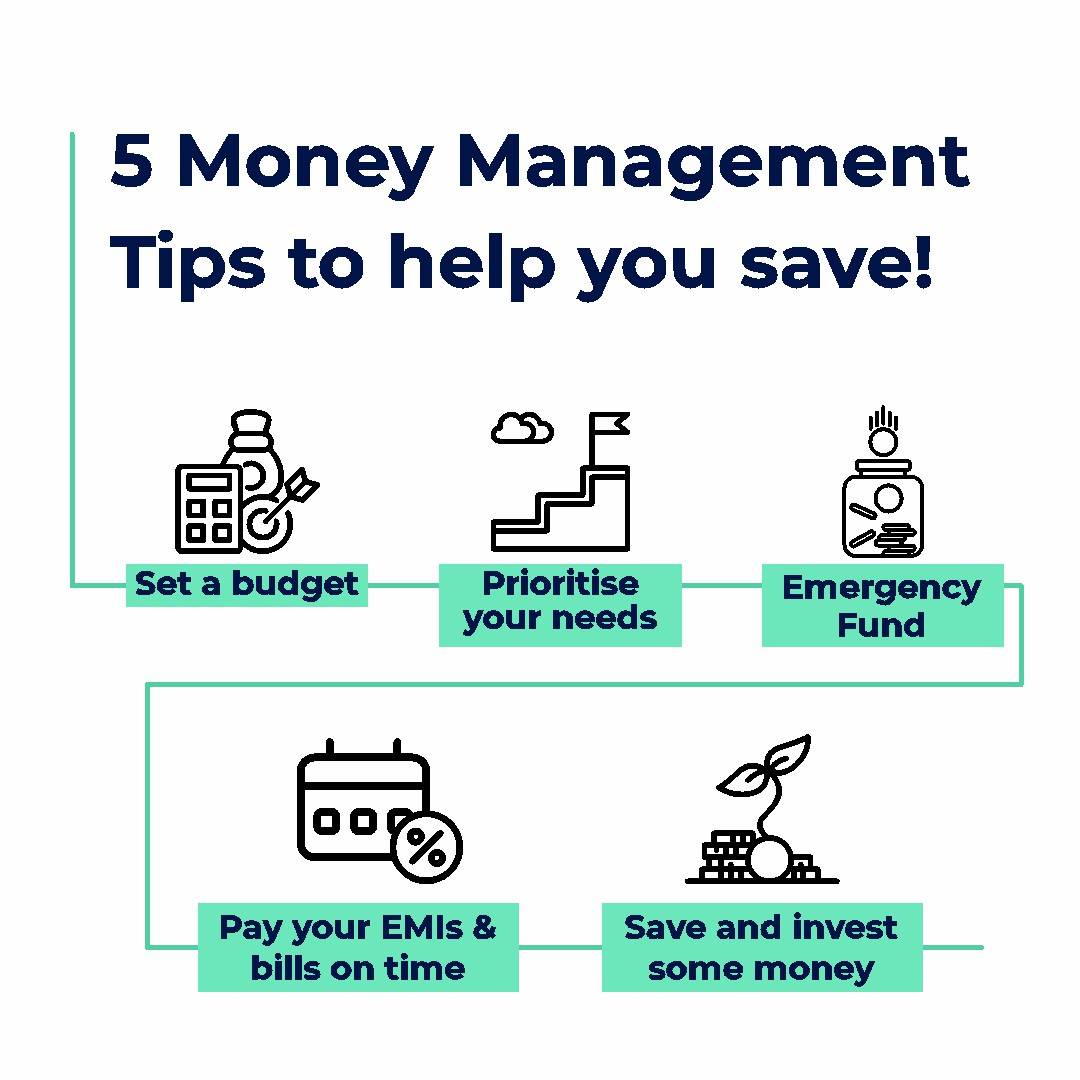
Establishing a Foundation with Strategic Budgeting
The cornerstone of any successful financial plan is a robust budget. A budget is not a restriction on your freedom; rather, it is a roadmap that ensures your resources are directed toward the things that matter most. Without a clear view of cash flow—the money coming in versus the money going out—it is impossible to make informed decisions about saving or investing.
The 50/30/20 Framework
For those seeking a straightforward yet effective way to categorize their spending, the 50/30/20 rule offers an ideal starting point. Developed as a proportional guideline, this method suggests allocating 50% of your after-tax income to “needs,” 30% to “wants,” and 20% to “savings and debt repayment.”
The “needs” category covers essential expenses such as housing, utilities, groceries, and insurance. The “wants” category represents discretionary spending, including dining out, subscriptions, and hobbies. Finally, the remaining 20% is the most critical for long-term growth, as it focuses on building an emergency fund, contributing to retirement accounts, or paying down principal on loans. By adhering to these ratios, you ensure that you are living within your means while simultaneously building a cushion for the future.
The Power of Zero-Based Budgeting
For individuals who require more granular control, zero-based budgeting is a highly effective alternative. This method operates on the principle that “Income minus Expenses equals Zero.” This does not mean you have zero dollars left in your bank account at the end of the month; rather, it means that every single dollar has been intentionally assigned a category—whether that category is rent, groceries, a vacation fund, or a brokerage account.
Zero-based budgeting forces you to confront your spending habits directly. It eliminates “leaky” spending—those small, unnoticed purchases that aggregate into significant monthly losses. When you give every dollar a job before the month begins, you take full ownership of your financial narrative.
Strengthening Your Financial Position Through Debt and Savings Management
Once a budget is established, the focus must shift toward protecting your capital. This involves two primary objectives: eliminating high-interest liabilities that erode your net worth and establishing a safety net to prevent future debt.
Eliminating High-Interest Liabilities
Not all debt is created equal, but high-interest debt—particularly credit card balances—is the single greatest obstacle to wealth creation. Interest rates on consumer credit often exceed 20%, far outstripping the historical returns of the stock market. Therefore, paying off these balances should be viewed as a guaranteed return on your investment.
There are two popular strategies for debt repayment: the Debt Snowball and the Debt Avalanche. The Debt Snowball method focuses on psychological momentum by paying off the smallest balances first. This provides quick wins that keep the individual motivated. Conversely, the Debt Avalanche method focuses on mathematical efficiency by targeting the debts with the highest interest rates first. While the Avalanche method saves more money over time, the Snowball method is often more sustainable for those who find motivation in visible progress. Choosing the method that matches your temperament is more important than choosing the one that is mathematically “perfect.”
Designing an Optimized Emergency Fund
An emergency fund is the bedrock of financial security. Without it, a single car repair or medical bill can force a person back into high-interest debt, undoing months of progress. A standard recommendation is to save three to six months’ worth of essential living expenses in a highly liquid account, such as a High-Yield Savings Account (HYSA).
However, an optimized emergency fund should be tiered. The first tier should be a small, immediate cushion (e.g., $1,000 to $2,000) held in a standard checking or savings account for instant access. The second tier, representing the remainder of the 3–6 month goal, can be held in an HYSA where it earns a competitive interest rate while remaining accessible within a few business days. This structure ensures that your “lazy” money is still working for you while providing the peace of mind necessary to take calculated risks in your career or investments.
Transitioning from Saving to Building Wealth
Managing money better involves moving beyond the “preservation” phase and into the “growth” phase. Once your high-interest debt is gone and your emergency fund is set, the focus shifts to investing. Investing is the process of using your capital to purchase assets that have the potential to appreciate in value or generate passive income over time.
The Principles of Modern Investing

For the average individual, the most effective path to wealth is not through picking individual “hot” stocks, but through broad-based market participation. Diversification is the only “free lunch” in finance; by spreading your investments across different sectors and asset classes, you mitigate the risk of a single company’s failure impacting your entire portfolio.
Low-cost index funds and Exchange-Traded Funds (ETFs) are excellent tools for this purpose. They allow investors to own a small piece of hundreds or even thousands of companies simultaneously. The goal is to capture the long-term growth of the economy while keeping management fees to a minimum. Over decades, the power of compound interest turns modest, consistent contributions into significant wealth.
Maximizing Tax-Efficient Vehicles
Where you hold your investments is often just as important as what you are investing in. Utilizing tax-advantaged accounts can significantly accelerate your progress. In many jurisdictions, retirement accounts like the 401(k) or IRA (or their international equivalents) offer either immediate tax deductions on contributions or tax-free growth on withdrawals.
Managing money better means understanding these rules and using them to your advantage. For instance, if an employer offers a matching contribution to a retirement plan, that is effectively a 100% return on investment. Ignoring such opportunities is a major financial oversight. A sophisticated approach involves a “tax-diversified” strategy, where you have a mix of pre-tax and post-tax (Roth) accounts to provide flexibility in retirement.
Harnessing Tools and Systems for Financial Efficiency
In the modern era, managing money does not have to be a manual, labor-intensive process. Technology has provided a suite of tools that can automate the most difficult parts of financial discipline.
The Power of Systematic Automation
The most common reason people fail to save or invest is “decision fatigue.” Every month, they must decide whether to put money into savings or spend it on a new gadget. You can bypass this internal struggle by automating your finances. Set up automatic transfers so that a portion of your paycheck goes directly into your savings and investment accounts the moment it hits your bank.
This is known as “paying yourself first.” By removing the money from your discretionary pool before you even see it, you adapt your lifestyle to the remaining balance. Automation ensures consistency, and consistency is the primary driver of financial success.
Tracking Metrics Beyond the Bank Balance
While checking your bank balance tells you how much cash you have, it doesn’t tell you how well you are managing your money. To get a true picture, you must track your net worth—the total of everything you own (assets) minus everything you owe (liabilities).
Tracking net worth once a month or once a quarter provides a high-level view of your progress. It helps you see the impact of debt repayment and investment growth in a single number. Numerous apps and software platforms now aggregate all your accounts into a single dashboard, providing real-time insights into your spending trends and net worth trajectory. These tools transform abstract numbers into actionable data.
Cultivating a Sustainable Financial Psychology
Ultimately, money management is a psychological game. You can have the best spreadsheet in the world, but if your behavior doesn’t align with your goals, the spreadsheet is useless.
Navigating the Trap of Lifestyle Creep
Lifestyle creep (or lifestyle inflation) occurs when your spending increases at the same rate as your income. When you get a raise and immediately upgrade your car or move into a more expensive apartment, your financial position remains static despite your higher earnings.
To manage money better, you must consciously combat this tendency. A powerful strategy is to “split the raise.” When your income increases, allocate 50% of the increase to your savings or investments and allow yourself to spend the other 50% on lifestyle improvements. This allows you to enjoy the fruits of your labor today while significantly accelerating your path to financial independence.
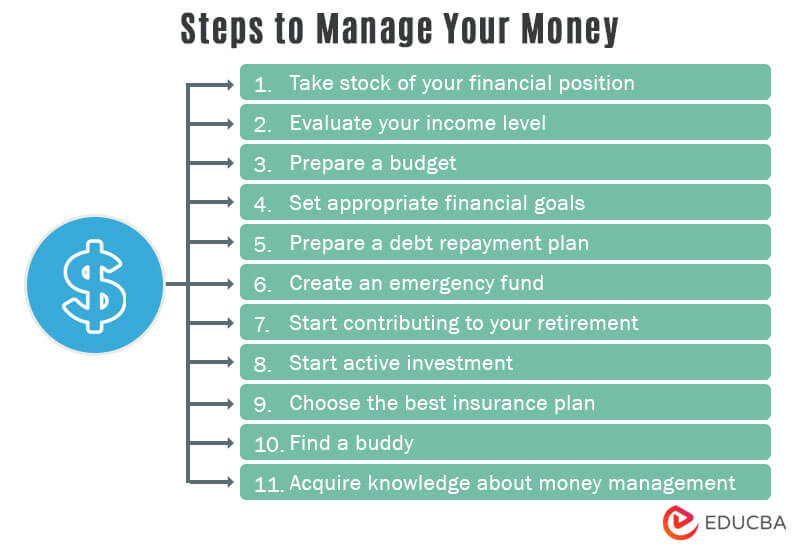
Aligning Capital with Personal Values
True financial management isn’t about hoarding every penny; it’s about spending intentionally. Values-based spending is the practice of ruthlessly cutting costs on things that don’t bring you joy while spending extravagantly on the things that do.
If you value travel but don’t care about luxury cars, your budget should reflect that. By identifying your core values, you remove the guilt often associated with spending. Money is a tool used to build a life you love. When you manage it better, you aren’t just increasing a number on a screen—you are creating the security and the opportunity to live authentically.
Effective money management is a lifelong journey. It requires constant adjustment as your circumstances change, but the core pillars of budgeting, debt management, strategic investing, and psychological discipline remain constant. By taking control of your finances today, you are not just securing your future; you are reclaiming your time and your freedom.
aViewFromTheCave is a participant in the Amazon Services LLC Associates Program, an affiliate advertising program designed to provide a means for sites to earn advertising fees by advertising and linking to Amazon.com. Amazon, the Amazon logo, AmazonSupply, and the AmazonSupply logo are trademarks of Amazon.com, Inc. or its affiliates. As an Amazon Associate we earn affiliate commissions from qualifying purchases.