
Determining the ideal monthly savings rate is one of the most critical steps in building a sustainable financial future. While the question seems straightforward, the answer is rarely a single, universal number. Financial health is highly individualized, influenced by age, income level, geographic location, and long-term aspirations. However, by utilizing proven frameworks and understanding the variables at play, you can establish a monthly target that balances your current lifestyle with your future security.
The 50/30/20 Framework: A Universal Starting Point
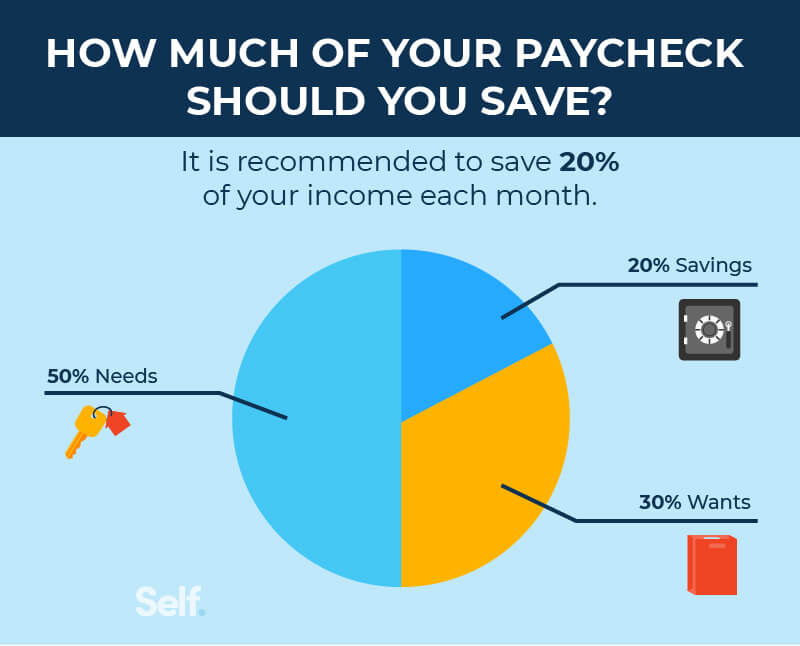
The most widely recommended benchmark for personal finance is the 50/30/20 rule. Popularized by Senator Elizabeth Warren in her book All Your Worth, this guideline provides a clear structure for allocating after-tax income.
Breaking Down the Percentages
Under this model, 50% of your income is dedicated to “Needs”—the non-negotiable expenses like housing, utilities, groceries, and insurance. The next 30% is allocated to “Wants,” covering dining out, entertainment, and hobbies. The final 20% is the target for your “Savings and Debt Repayment.”
If you are aiming for a baseline of financial stability, saving 20% of your take-home pay is the gold standard. This percentage is designed to ensure you are simultaneously building an emergency fund, contributing to retirement accounts, and paying down principal on debts.
Adjusting for High-Cost Realities
In many metropolitan areas, the “50% for needs” rule is difficult to maintain due to skyrocketing housing costs. If your rent or mortgage consumes 40% of your income alone, hitting a 20% savings rate requires a radical adjustment of the “Wants” category. In these scenarios, financial experts often suggest a “flex” model where you prioritize the 20% savings goal first—essentially “paying yourself first”—and then distributing the remaining 80% between needs and wants. If 20% feels impossible, the focus should shift to incremental growth, starting at 5% or 10% and increasing the contribution by 1% every few months.
Variable Factors: Determining Your Personal Saving Target
While 20% is a helpful benchmark, your specific circumstances may require a more aggressive or conservative approach. Several key variables dictate whether you should be saving more or less than the standard recommendation.
The Debt-to-Income Ratio
Your monthly savings target cannot be viewed in isolation from your debt. If you are carrying high-interest consumer debt, such as credit card balances with interest rates exceeding 15-20%, your “savings” should technically be directed toward debt elimination. The mathematical reality is that no traditional savings account or standard investment portfolio can consistently outperform the cost of high-interest debt. In this case, your monthly goal might be 20% or even 30%, but the vast majority of that capital should be used to clear balances before being moved into an investment vehicle.
The Emergency Fund Requirement
Before focusing on long-term wealth building, your monthly savings should be directed toward an emergency fund. The standard advice is to keep three to six months of essential living expenses in a liquid, high-yield savings account. If you are a freelancer, business owner, or work in a volatile industry, your monthly savings should be higher until you have closer to nine or twelve months of expenses saved. This “buffer” is the foundation upon which all other financial goals are built.
Cost of Living and Lifestyle Goals
Someone living in a low-cost area with the goal of “Fat FIRE” (Financial Independence, Retire Early) will need a significantly higher monthly savings rate than someone in a high-cost area aiming for a traditional retirement at age 67. If your goal is early retirement, a 20% savings rate is likely insufficient; many in the financial independence community aim for 50% or higher. Conversely, if you have a robust pension or significant expected inheritance, your monthly pressure might be lower, though relying on future “maybes” is a risky strategy.
Priority Ranking: Where to Direct Your Monthly Savings

Once you have identified the dollar amount you can save each month, the next challenge is determining the hierarchy of where those funds should go. Not all “saving” is created equal, and the order of operations significantly impacts your long-term net worth.
Capturing the Employer Match
The absolute first priority for your monthly savings should be any employer-sponsored retirement plan (like a 401(k) or 403(b)) that offers a matching contribution. This is essentially a 100% return on your investment. If your employer matches up to 5% of your salary, your first 5% of savings must go there. Failing to do so is leaving part of your total compensation package on the table.
Tax-Advantaged Accounts vs. Taxable Brokerage
After securing a match and building an emergency fund, the next priority is usually tax-advantaged accounts such as a Roth IRA or a Health Savings Account (HSA). These tools allow your savings to grow tax-free or provide tax deductions on contributions. Only after these “buckets” are filled to their annual limits should you look toward a standard taxable brokerage account. By prioritizing tax efficiency, your monthly savings work harder for you, allowing you to hit your net worth goals faster than through simple bank savings alone.
Short-Term vs. Long-Term Sinking Funds
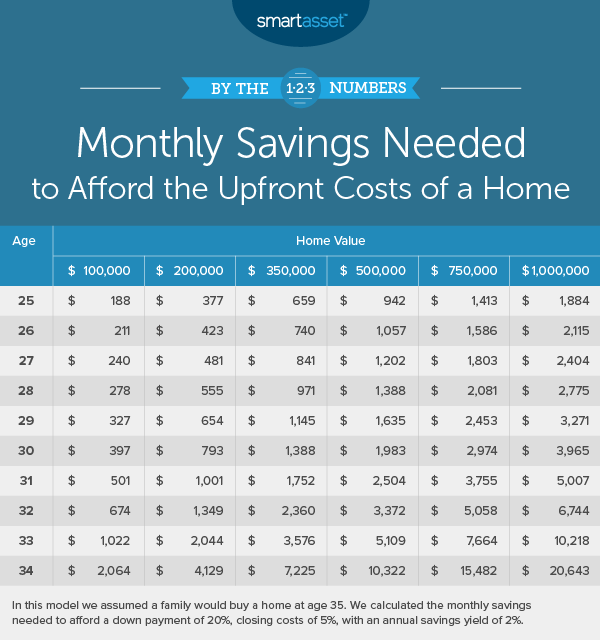
Monthly savings shouldn’t only be for the distant future. It is important to segment your savings into “sinking funds” for known upcoming expenses. This includes annual car insurance premiums, home maintenance, travel, or a down payment on a house. By allocating a portion of your monthly savings to these specific categories, you prevent “emergency” spending that would otherwise disrupt your long-term investment strategy.
The Impact of Life Stages on Saving Potential
The amount you should save a month often fluctuates depending on your decade of life. Financial needs and earning potential evolve, and your savings strategy must evolve with them.
Your 20s: The Power of Compounding
In your 20s, time is your greatest asset. Even a small monthly savings amount can grow exponentially due to the power of compound interest. A common benchmark is to aim for saving 15-25% of your gross income. Even if your salary is at its lowest point, prioritizing the habit of saving is more important than the raw dollar amount. By age 30, a general goal is to have the equivalent of one year’s salary saved.
Your 30s and 40s: The High-Pressure Years
For many, the 30s and 40s bring increased financial pressure: mortgages, children, and perhaps supporting aging parents. This is often when the 20% goal becomes hardest to maintain. However, these are also typically the peak earning years. The focus here should be on avoiding “lifestyle creep”—the tendency to increase spending as income rises. If you receive a raise, consider directing 50% of that increase directly into savings before you become accustomed to the extra cash flow.
Your 50s and 60s: The Catch-Up Phase
As retirement nears, your monthly savings target may need to increase to bridge any gaps in your nest egg. The IRS allows for “catch-up contributions” to retirement accounts for those over 50. At this stage, your savings goal should be driven by a clear understanding of your expected “burn rate” in retirement. If your house is paid off and children are independent, your ability to save a larger percentage of your income should theoretically peak.
Psychological and Behavioral Tactics for Consistent Growth
The hardest part of saving money isn’t the math—it’s the behavior. Knowing how much you should save is different from actually doing it. To ensure you meet your monthly targets, you must implement systems that reduce friction.
Automation and the “Invisible” Savings
The most successful savers are those who never see the money in the first place. By automating your savings—setting up a direct deposit from your paycheck into a separate savings or investment account—you remove the need for monthly willpower. If the money is moved before it hits your primary checking account, you learn to live on the remainder, making the 20% (or whatever your target is) “invisible.”
Tracking Net Worth Over Expenses
Focusing solely on how much you spend can feel restrictive and discouraging. Instead, shift your focus to tracking your net worth. Watching your net worth grow each month as a result of your savings provides a psychological “win” that reinforces the behavior. When you view a monthly saving of $1,000 not as “money I can’t spend,” but as “a $1,000 increase in my personal freedom,” the habit becomes much easier to sustain.
Reevaluating the “Minimum”
Ultimately, the question of how much you should save is a question of how much you value your future time. Every dollar saved is a unit of freedom purchased. While 20% is a fantastic baseline, the real target should be the maximum amount you can save while still living a life you find meaningful today. By finding that “sweet spot”—where you are neither deprived in the present nor vulnerable in the future—you create a financial plan that is not just effective, but enduring.
aViewFromTheCave is a participant in the Amazon Services LLC Associates Program, an affiliate advertising program designed to provide a means for sites to earn advertising fees by advertising and linking to Amazon.com. Amazon, the Amazon logo, AmazonSupply, and the AmazonSupply logo are trademarks of Amazon.com, Inc. or its affiliates. As an Amazon Associate we earn affiliate commissions from qualifying purchases.