
Budgeting is often perceived as a financial straitjacket—a restrictive list of “nos” that prevents you from enjoying your hard-earned income. In reality, a well-constructed budget is the ultimate tool for freedom. It is a strategic roadmap that ensures your money is working for you, rather than you working solely for your money. To master your finances, you must transition from passive spending to intentional allocation. Whether you are looking to pay off debt, save for a home, or build a robust investment portfolio, the process begins with a fundamental understanding of how to manage your cash flow.
The Foundations of a Proactive Financial Plan
Before choosing a specific budgeting method, you must establish a baseline. You cannot manage what you do not measure. The first step in any successful budget is a comprehensive audit of your current financial state. This involves more than just looking at your bank balance; it requires a deep dive into your habits, obligations, and income streams.
Tracking Net Income vs. Gross Income
Many people make the mistake of budgeting based on their gross salary—the number on their offer letter. However, your budget must be built on your net income, or “take-home pay.” This is the amount that actually hits your bank account after taxes, health insurance premiums, 401(k) contributions, and other deductions. If you are a freelancer or a business owner, this step is even more critical, as you must manually account for self-employment taxes and business overhead before determining what is available for personal use.
Categorizing Fixed and Variable Expenses
Once you know exactly how much is coming in, you must categorize how it goes out. Expenses generally fall into two categories: fixed and variable.
-
Fixed Expenses: These are the non-negotiables that remain relatively constant each month, such as rent or mortgage payments, car insurance, loan repayments, and subscription services.
-
Variable Expenses: These fluctuate based on behavior and necessity. This includes groceries, dining out, entertainment, fuel, and utility bills.
To get an accurate picture, review your bank and credit card statements from the last three months. Total these expenses and find the average. This exercise often reveals “phantom expenses”—forgotten subscriptions or small daily purchases that aggregate into significant monthly leaks.
Proven Budgeting Frameworks for Every Lifestyle
There is no one-size-fits-all approach to budgeting. The best system is the one you can stick to consistently. Depending on your personality and financial goals, one of the following frameworks will likely resonate more than others.
The 50/30/20 Rule
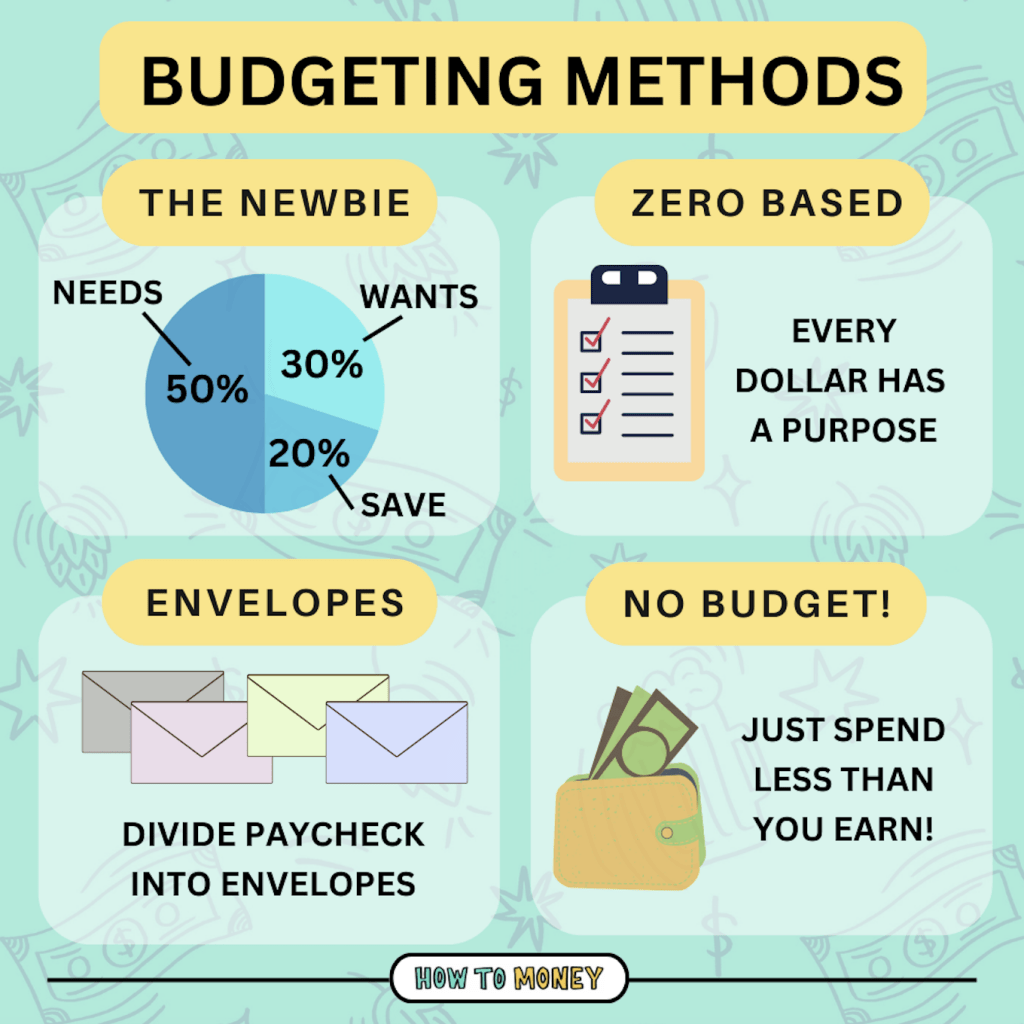
Popularized by Senator Elizabeth Warren, the 50/30/20 rule is an excellent starting point for those who want a simple, high-level overview of their finances. It breaks your net income into three buckets:
-
50% for Needs: This covers the absolute essentials—housing, utilities, basic groceries, and minimum debt payments.
-
30% for Wants: This is your lifestyle fund. It includes hobbies, dining out, travel, and streaming services.
-
20% for Savings and Debt Repayment: This is the wealth-building bucket. It goes toward emergency funds, retirement accounts, and extra payments on high-interest debt.
The beauty of this system is its flexibility. If your “needs” exceed 50%, it is a clear signal that you may be “house poor” or “car poor,” requiring a lifestyle adjustment to ensure you aren’t neglecting your future self.
Zero-Based Budgeting
Zero-based budgeting is a more granular approach where every single dollar of your income is assigned a specific task. By the end of the month, your income minus your expenses (including savings and investments) should equal exactly zero.
This method is highly effective for individuals who feel like their money “disappears” without reason. It forces you to be intentional. If you want to spend an extra $100 on a concert ticket, you must decide which other category that money is coming from. This “give and take” creates a high level of financial awareness and prevents mindless overspending.
The Envelope System and Digital Cash Stuffing
For those who struggle with overspending on variable categories like “Dining” or “Clothing,” the envelope system offers physical boundaries. You withdraw a set amount of cash for these categories and place it in labeled envelopes. Once the money in the “Dining” envelope is gone, you cannot eat out until the next month.
In the digital age, many financial tools allow you to replicate this with “virtual envelopes” or “buckets” within your savings account. This provides the same psychological barrier without the inconvenience of carrying physical cash.

Leveraging Technology and Financial Tools
In the modern financial landscape, manual tracking can be cumbersome. Fortunately, a suite of digital tools can automate much of the heavy lifting, allowing you to focus on decision-making rather than data entry.
Automated Budgeting Apps
Applications like YNAB (You Need A Budget), EveryDollar, and various banking integrations offer real-time tracking of your spending. These tools link directly to your accounts, categorizing transactions as they occur. The primary advantage here is visibility. When you can see at a glance that you have only $20 left in your “Grocery” budget for the week, you are statistically more likely to opt for a home-cooked meal over a delivery service.
The Power of Custom Spreadsheets
While apps are convenient, many financial experts prefer the control of a custom spreadsheet (Excel or Google Sheets). Building your own budget allows you to track specific metrics that apps might miss, such as your net worth progression or your “FIRE” (Financial Independence, Retire Early) number. The act of manually entering data once a week creates a visceral connection to your spending that automation can sometimes diminish.
Automating Savings and Investments
The most effective way to ensure you meet your financial goals is to “pay yourself first.” Set up automatic transfers so that a portion of your paycheck moves into your savings or brokerage account before you even have a chance to spend it. By automating your 20% (from the 50/30/20 rule), you remove the reliance on willpower.
Advanced Strategies for Long-Term Wealth
Once you have mastered the basics of cash flow management, your budget should evolve into a tool for wealth accumulation and risk mitigation.
Building an Emergency Fund
A budget without an emergency fund is a house built on sand. Most experts recommend keeping three to six months of essential living expenses in a high-yield savings account (HYSA). This fund acts as insurance against job loss, medical emergencies, or major home repairs. Within your budget, the “Savings” category should prioritize this fund until it is fully capitalized.
Utilizing Sinking Funds
One of the primary reasons budgets fail is the “unexpected” expense that was actually predictable. Car registrations, annual insurance premiums, holiday gifts, and vacations are not emergencies; they are irregular expenses. Sinking funds involve breaking these large annual costs into monthly “payments” to yourself. If you know you spend $1,200 on holiday gifts in December, your budget should include a $100 “Holiday” line item every month starting in January.
Managing Debt Strategically
Your budget is your primary weapon against debt. There are two main strategies to incorporate into your monthly plan:
-
The Debt Avalanche: You pay the minimum on all debts but put every extra dollar toward the debt with the highest interest rate. This is mathematically the most efficient way to save money on interest.
-
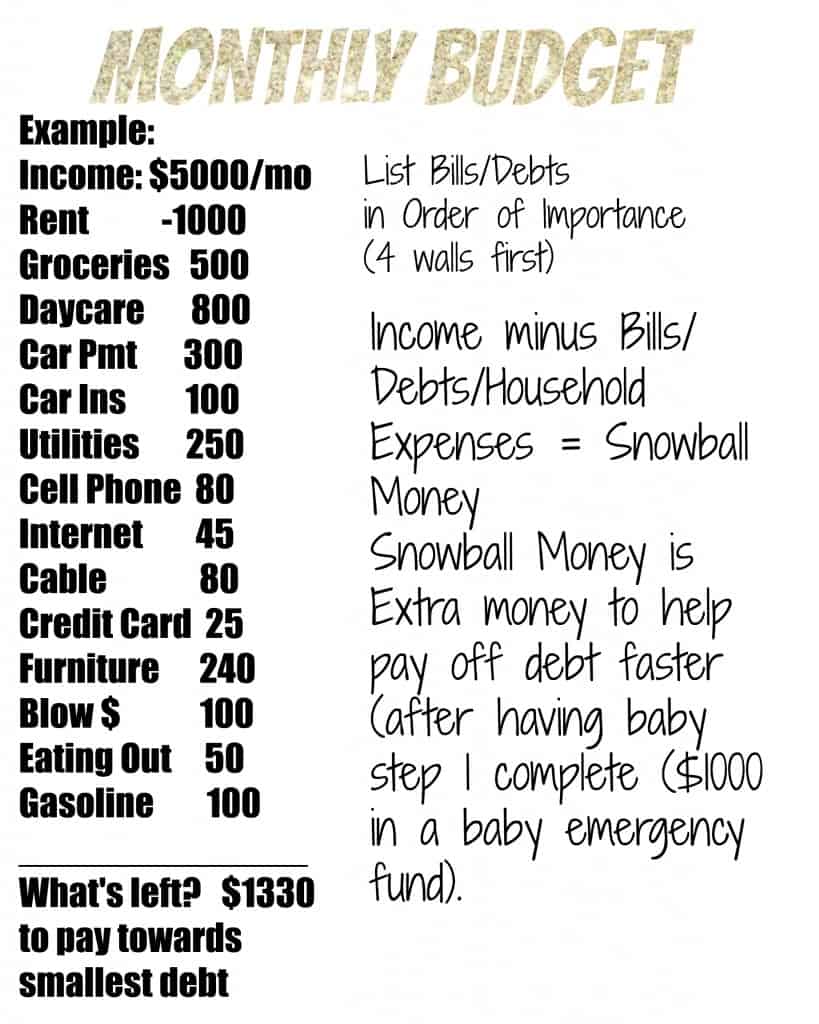
The Debt Snowball: You pay off the smallest balance first to gain psychological momentum.
Your budget should clearly dictate which debt is being targeted each month, ensuring that you aren’t just treading water with minimum payments.
Psychological Barriers and Maintaining Consistency
The technical side of budgeting is math; the practical side is psychology. Most budgets fail not because the math is wrong, but because the human element is ignored.
Avoiding Frugality Burnout
A budget that is too restrictive is like an extreme diet—it often leads to a “binge” of impulse spending. It is vital to include a “Fun Money” or “Guilt-Free Spending” category in your budget. This is a set amount of money you are allowed to spend on whatever you want, no questions asked. This small allowance makes the rest of the discipline sustainable.
The Monthly Financial Review
A budget is not a static document; it is a living entity. Set a recurring “money date” at the end of each month to review your performance. Did you overspend on groceries? Was your electric bill higher than expected? Use this time to adjust your categories for the upcoming month. Life changes—your rent might go up, or you might get a raise—and your budget must reflect your current reality.
Identifying Your “Why”
Ultimately, budgeting is about trade-offs. You are choosing to sacrifice a small luxury today for a significant security tomorrow. Whether your goal is to retire early, travel the world, or provide a legacy for your family, keep that “why” at the forefront of your financial planning. When your budget is aligned with your core values, it ceases to feel like a chore and begins to feel like a powerful engine for the life you want to lead.
aViewFromTheCave is a participant in the Amazon Services LLC Associates Program, an affiliate advertising program designed to provide a means for sites to earn advertising fees by advertising and linking to Amazon.com. Amazon, the Amazon logo, AmazonSupply, and the AmazonSupply logo are trademarks of Amazon.com, Inc. or its affiliates. As an Amazon Associate we earn affiliate commissions from qualifying purchases.