
Saving money is often framed as a marathon—a slow, steady accumulation over decades. However, there are moments in life where a sprint is required. Whether you are building an emergency fund, preparing for a down payment on a home, or securing capital for a new business venture, the ability to rapidly aggregate liquid capital is a vital financial skill. Saving money quickly is not merely about discipline; it is about the strategic optimization of three specific levers: aggressive expense reduction, rapid income acceleration, and the utilization of high-efficiency financial tools.
To achieve results that far outpace the average, one must move beyond common advice like “buying fewer lattes.” Instead, a systematic overhaul of your financial ecosystem is necessary to widen the gap between what you earn and what you spend.

Radical Expense Optimization and the “Big Three”
The fastest way to see an immediate increase in your savings rate is to cut costs at the source. While many people focus on “micro-expenses,” the most significant gains are found in the “Big Three”: housing, transportation, and food. These typically represent 50% to 70% of the average household budget.
Dominating the Fixed Costs
Housing is almost always the largest monthly expenditure. To save money fast, you must consider temporary, radical shifts. This might mean taking on a roommate for six months, downsizing to a smaller rental, or even moving back with family for a designated period. If your lease is not up, look for ways to monetize your space, such as renting out a spare room or a parking spot.
Transportation is the second largest drain. If you have a car payment that exceeds 10% of your take-home pay, selling the vehicle in favor of a used, reliable alternative can instantly inject thousands into your savings. Furthermore, eliminating commute costs through carpooling or public transit—even temporarily—can save hundreds in fuel, insurance, and maintenance costs each month.
The Science of Food Budgeting
Food is the most volatile variable in a budget. To save fast, you must transition from a “convenience” model to a “utility” model. Dining out and food delivery services carry a 300% to 500% markup over home-cooked meals. By implementing strict meal prepping—buying staples like grains, proteins, and frozen vegetables in bulk—you can reduce a monthly food bill from $800 to $250. This shift alone can yield an extra $6,600 over a year, or $550 per month, without requiring a single extra hour of work.
Negotiating the Invisible Drain
Beyond the big three, there are “invisible” expenses: subscriptions, insurance premiums, and utility rates. Conduct a “subscription audit” by reviewing the last three months of bank statements. Cancel every service you have not used in the last 30 days. For essential services like internet and insurance, call the providers. In many cases, mentioning a competitor’s rate or asking for the retention department can lower your monthly bill by 15% to 20%.
Maximizing Immediate Cash Flow and Side Hustles
While cutting expenses provides a floor for your savings, increasing your income provides the ceiling. There is a limit to how much you can cut, but there is no limit to how much you can earn. To save fast, you must treat your time as a commodity and deploy it where the return on investment (ROI) is highest.
The Liquidation Phase
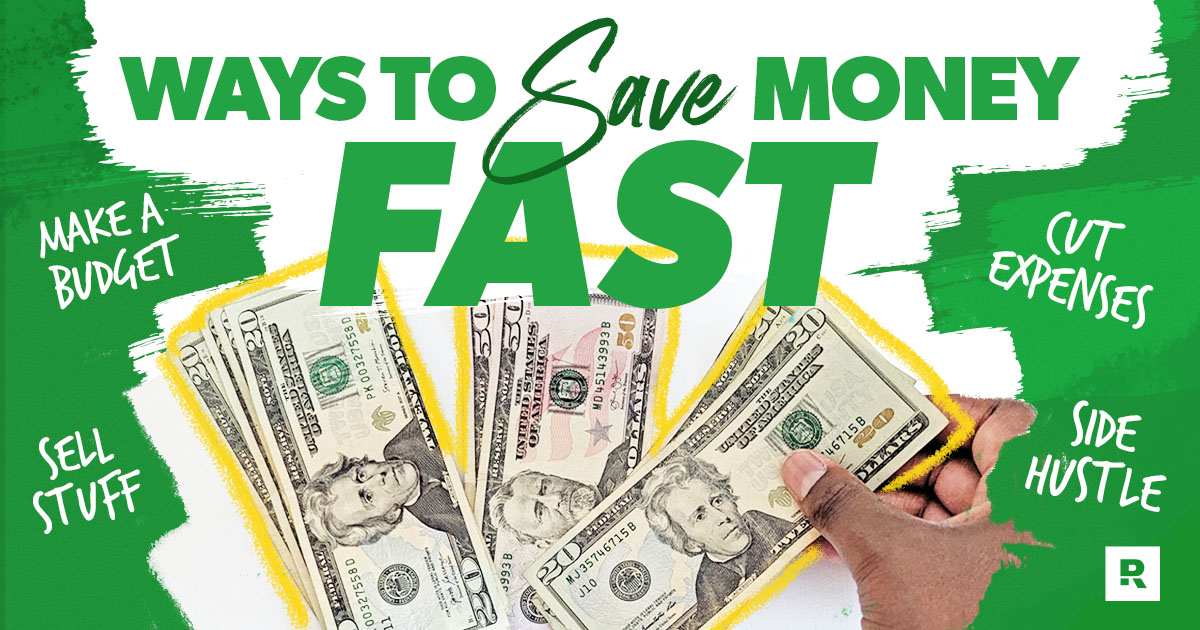
The fastest way to get a lump sum of cash is to liquidate underutilized assets. Most households are sitting on $1,000 to $3,000 worth of unused electronics, furniture, designer clothing, and sports equipment. Platforms like Facebook Marketplace, eBay, and specialized resale sites allow for rapid liquidation. Spend one weekend cataloging, cleaning, and listing these items. The goal is “velocity of capital”—it is better to sell an item for $80 today than to wait three weeks for a $100 buyer.
High-Leverage Side Hustles
To maintain a high savings rate over several months, you need a recurring stream of extra income. The gig economy offers two paths: manual labor and skilled freelancing.
-
Skill-Based Freelancing: If you have skills in writing, graphic design, coding, or digital marketing, platforms like Upwork or Toptal can provide high-hourly rates. These are “high-leverage” because they utilize your professional expertise to earn significantly more per hour than entry-level gig work.
-
Service-Based Gigs: For immediate cash, service-based work such as ride-sharing, grocery delivery, or pet sitting offers the lowest barrier to entry. While the hourly rate may be lower, the ability to work “on-demand” during evenings and weekends allows you to turn idle time into savings.
Optimizing Tax Withholdings
A frequently overlooked strategy is adjusting your tax withholdings. If you consistently receive a large tax refund every year, you are essentially giving the government an interest-free loan. By adjusting your W-4 form with your employer to better reflect your actual tax liability, you can increase your monthly take-home pay immediately. This “found money” should be diverted directly into your savings account.
Financial Infrastructure and Automated Systems
Willpower is a finite resource. To save money fast, you must remove human error from the equation by building a financial infrastructure that prioritizes savings automatically. This involves choosing the right accounts and setting up systems that move money before you have a chance to spend it.
High-Yield Savings Accounts (HYSA)
Traditional savings accounts offer negligible interest rates, often as low as 0.01%. When saving a large sum of money, the interest itself becomes a contributor. Moving your funds to a High-Yield Savings Account (HYSA) at a digital bank can offer rates 10 to 40 times higher than traditional brick-and-mortar banks. These accounts are FDIC-insured and keep your money liquid while ensuring it maintains its purchasing power against inflation.
The “Pay Yourself First” Principle
The most effective automated system is the “split direct deposit.” Most payroll systems allow you to divide your paycheck into multiple accounts. Set a specific dollar amount or percentage (e.g., 20% or $500 per pay period) to go directly into your HYSA. Because this money never hits your primary checking account, you are less likely to perceive it as “available” for spending. This creates a psychological barrier that reinforces your savings goal.
Micro-Saving and Round-Up Tools
While large transfers do the heavy lifting, fintech tools that “round up” your purchases can provide a secondary layer of growth. These apps track your spending and round every transaction to the nearest dollar, moving the spare change into a savings or investment account. While this won’t save you $10,000 overnight, it acts as a passive “tax” on your spending that accumulates steadily in the background.
Psychological Frameworks for Rapid Accumulation
The barrier to saving money fast is rarely a lack of math skills; it is usually a psychological struggle against consumer culture and instant gratification. To succeed in a high-speed savings sprint, you must adopt a specific mental framework.
The “No-Spend” Challenge
A popular and effective tactic is the “No-Spend Month.” During this period, you commit to spending money ONLY on essentials: rent, basic groceries, and utilities. No coffee out, no movies, no new clothes, and no impulse buys. This radical experiment does two things: it provides a massive one-month boost to your savings and it resets your “hedonic treadmill.” After 30 days of austerity, you realize how many of your “needs” were actually “wants,” allowing you to maintain a higher savings rate even after the challenge ends.
Visualizing the Opportunity Cost
To resist impulse purchases, you must shift your perspective from the price of an item to its opportunity cost. If you are tempted by a $200 gadget, don’t ask if you can afford it. Instead, ask: “Is this gadget worth three days of work?” or “Is this gadget worth delaying my house down payment by two weeks?” When you attach a time-value or a goal-value to every dollar, your motivation to save remains high.
The Power of S.M.A.R.T. Goals
Vague goals like “I want to save more” usually fail. Rapid saving requires S.M.A.R.T. goals: Specific, Measurable, Achievable, Relevant, and Time-bound. For example: “I will save $5,000 for an emergency fund in the next 120 days by cutting my food budget by $400 and earning $800 a month through freelancing.” Having a clear target and a deadline creates a sense of urgency that keeps you focused during the difficult middle weeks of your savings journey.

Conclusion: Transitioning from Sprint to Sustainability
Saving money fast is an exercise in intensity. It requires a temporary departure from “normal” spending habits in favor of a hyper-efficient lifestyle. By attacking the Big Three expenses, leveraging your skills for extra income, and automating your financial systems, you can achieve in months what takes others years.
However, the true value of a savings sprint is the lasting impact on your financial behavior. The habits formed during a period of aggressive saving—such as tracking every dollar, negotiating for better rates, and prioritizing long-term goals over short-term impulses—are the same habits that build generational wealth. Once you reach your immediate target, you can ease the intensity, but the infrastructure you have built will continue to serve you, turning a temporary sprint into a permanent foundation for financial freedom.
aViewFromTheCave is a participant in the Amazon Services LLC Associates Program, an affiliate advertising program designed to provide a means for sites to earn advertising fees by advertising and linking to Amazon.com. Amazon, the Amazon logo, AmazonSupply, and the AmazonSupply logo are trademarks of Amazon.com, Inc. or its affiliates. As an Amazon Associate we earn affiliate commissions from qualifying purchases.