
For investors, the rhythmic pulse of the stock market is dictated by the opening and closing bells of the world’s major exchanges. When people ask, “What time does the Dow Jones close?” they are typically referring to the trading hours of the New York Stock Exchange (NYSE) and the Nasdaq, where the 30 blue-chip companies that comprise the Dow Jones Industrial Average (DJIA) are listed.
The standard trading session for the Dow Jones Industrial Average ends at 4:00 PM Eastern Time (ET), Monday through Friday. However, for the modern investor, the “close” is not as simple as a hard stop. Between pre-market sessions, after-hours trading, and the high-intensity “Power Hour,” understanding the clock is essential for managing risk and capturing opportunity.

The Standard Trading Session: 9:30 AM to 4:00 PM ET
The official trading day for the Dow Jones begins at 9:30 AM ET and concludes at 4:00 PM ET. This six-and-a-half-hour window represents the period of highest liquidity and lowest spreads, making it the primary arena for both institutional and retail investors.
The Significance of Eastern Time
Because the major U.S. exchanges are physically and administratively centered in New York City, all official market times are referenced in Eastern Time. For investors located in other regions, it is vital to synchronize their clocks:
-
Pacific Time: 6:30 AM – 1:00 PM
-
Mountain Time: 7:30 AM – 2:00 PM
-
Central Time: 8:30 AM – 3:00 PM
-
Greenwich Mean Time (GMT): 2:30 PM – 9:00 PM
Holiday Schedules and Early Closures
While the 4:00 PM close is the standard, the market observes several federal holidays where the exchange is closed entirely. These include New Year’s Day, Martin Luther King Jr. Day, Washington’s Birthday, Good Friday, Memorial Day, Juneteenth, Independence Day, Labor Day, Thanksgiving, and Christmas.
Additionally, the Dow Jones often experiences “early close” days—typically the day after Thanksgiving (Black Friday) and sometimes Christmas Eve—where the closing bell rings at 1:00 PM ET. Knowing these dates is crucial for personal finance management, as liquidity often dries up significantly in the days leading up to a holiday closure.
The Mechanics of the Market Close: The Closing Auction
The 4:00 PM bell is not just a symbolic end to the day; it triggers a sophisticated mechanical process known as the “Closing Auction” or the “Closing Cross.” This process is designed to consolidate all remaining interest in a stock to determine a single, definitive closing price.
Understanding Price Discovery
During the final minutes of the trading day, the exchange’s computers aggregate “limit-on-close” and “market-on-close” orders. This concentration of volume helps ensure that the final price accurately reflects the supply and demand of the day. For companies in the Dow Jones, such as Apple or Goldman Sachs, the closing price is the benchmark used by mutual funds and ETFs to value their portfolios (Net Asset Value).
The Impact of “Market on Close” (MOC) Orders
Institutional investors often use MOC orders to ensure they receive the official closing price. Because these orders must be executed at the very end of the day, they can cause significant price swings in the final seconds of trading. This is why you often see a massive spike in volume at exactly 4:00 PM ET. For retail investors, understanding this mechanic helps explain why a stock’s price might jump or dip unexpectedly right as the session ends.
Trading Beyond the Bell: After-Hours and Pre-Market Sessions
While the “official” close is 4:00 PM, the digital nature of modern finance allows for trading to continue long after the physical floor has cleared. This is known as extended-hours trading, facilitated by Electronic Communication Networks (ECNs).

The After-Hours Session (4:00 PM – 8:00 PM ET)
After-hours trading begins immediately after the closing bell and lasts until 8:00 PM ET. This period is particularly significant during “Earnings Season.” When a Dow component company, like Microsoft or Disney, releases its quarterly financial results after 4:00 PM, the after-hours market reacts instantly.
The Risks of Extended Hours
While the ability to trade after the close offers flexibility, it comes with heightened risks that personal finance experts warn against:
-
Lower Liquidity: Far fewer participants are active, meaning it can be harder to buy or sell shares without significantly moving the price.
-
Wider Spreads: The difference between the bid and ask price often widens, increasing the cost of the trade.
-
High Volatility: With fewer shares being traded, a single large order can cause a dramatic and sometimes irrational price swing.
Pre-Market Trading (4:00 AM – 9:30 AM ET)
On the flip side of the close is the pre-market session. While some platforms allow trading as early as 4:00 AM ET, the bulk of activity occurs between 8:00 AM and 9:30 AM. Investors use this time to react to overnight news from European markets or early-morning economic data, such as inflation reports or employment numbers.
The “Power Hour”: Strategy in the Final Sixty Minutes
In the world of professional trading, the hour between 3:00 PM and 4:00 PM ET is known as the “Power Hour.” This is often the most volatile and high-volume period of the day, as traders rush to square their positions before the close.
Institutional Rebalancing
Large hedge funds and pension funds often wait until the Power Hour to execute large trades to ensure they are participating in the day’s deepest liquidity. For an individual managing their own portfolio, the Power Hour can be a double-edged sword. It offers the best chance to exit a position at a fair market price, but the rapid movements require a disciplined strategy.
The Psychology of the Close
The market close often dictates the “sentiment” for the following morning. A “strong close,” where the Dow finishes near its daily high, often suggests bullish momentum that may carry over into the next day. Conversely, a “weak close” can signal that investors are nervous about holding positions overnight, potentially leading to a gap down the following morning.
Global Impact: How the Dow’s Close Affects the World
The Dow Jones is more than just a U.S. index; it is a global barometer of economic health. Because of this, the 4:00 PM ET close sets the stage for international markets.
The Domino Effect on Asian and European Markets
As the Dow closes, markets in Tokyo, Hong Kong, and Sydney are preparing to open or are already in their early sessions. A dramatic sell-off in the Dow at 4:00 PM ET often triggers a “risk-off” sentiment globally, causing Asian indices like the Nikkei 225 to open lower. Similarly, the “London Close” occurs at 11:30 AM ET, meaning the final few hours of the Dow’s session are often influenced by European traders finishing their day.
The Role of Dow Futures
Even when the NYSE is closed, Dow Jones Futures continue to trade on the Chicago Mercantile Exchange (CME). Futures trade nearly 24 hours a day, five days a week. This allows investors to see where the Dow is “indicated” to open long before the 9:30 AM bell rings. For those tracking their investments, monitoring futures on Sunday night can provide an early warning of how the market will react to weekend news.
Conclusion: Mastering the Clock for Financial Success
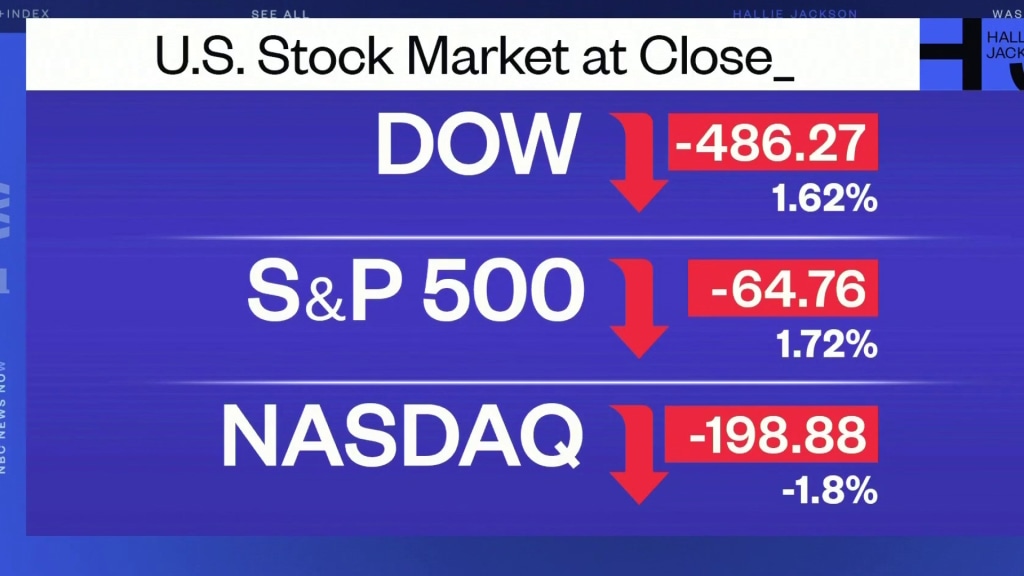
Understanding what time the Dow Jones closes is the first step in developing a professional approach to investing. While the 4:00 PM ET bell signals the end of the standard session, the “close” is actually a complex ecosystem of auctions, extended hours, and global interactions.
For the long-term investor, the daily close is a point of reference for portfolio valuation and rebalancing. For the active trader, it is the climax of the day’s volatility and opportunity. By respecting the hours of the market and understanding the mechanics that occur when the bell rings, you can better navigate the complexities of the financial world and protect your capital from the unique risks of the market’s “off-hours.”
Whether you are checking the Dow’s performance for your 401(k) or looking for a tactical entry point in a blue-chip stock, the clock is just as important as the price. Always ensure your trading platform is set to Eastern Time, keep a calendar of market holidays, and remember that while the floor might close at 4:00 PM, the world of finance never truly sleeps.
aViewFromTheCave is a participant in the Amazon Services LLC Associates Program, an affiliate advertising program designed to provide a means for sites to earn advertising fees by advertising and linking to Amazon.com. Amazon, the Amazon logo, AmazonSupply, and the AmazonSupply logo are trademarks of Amazon.com, Inc. or its affiliates. As an Amazon Associate we earn affiliate commissions from qualifying purchases.