
In the complex ecosystem of the global financial markets, the sight of a portfolio “in the red” often triggers a visceral reaction of anxiety for the average investor. However, for the seasoned participant, a decline in stock prices is not merely a loss of paper wealth—it is a data point that demands rigorous analysis. Understanding why stocks are down, which sectors are being hit hardest, and how to differentiate between a temporary setback and a fundamental collapse is essential for long-term wealth preservation and growth. Market volatility is an inherent feature of capitalism, and the ability to navigate these downturns distinguishes successful investors from those who succumb to the pressures of emotional trading.
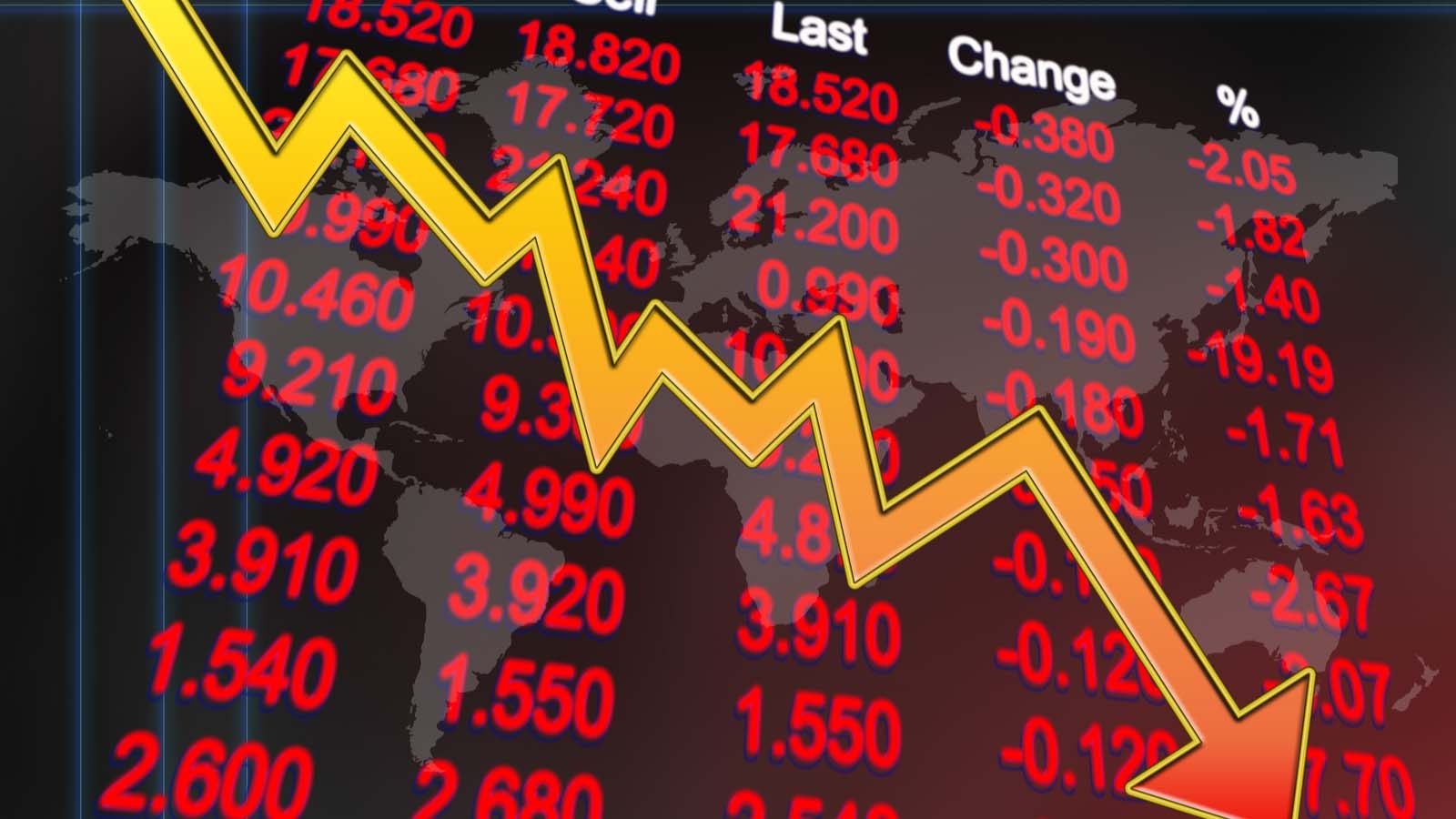
The Mechanics of Market Corrections: Why Stocks Lose Value
Before identifying specific assets that are underperforming, it is critical to understand the systemic and idiosyncratic drivers that push stock prices lower. Equity prices are essentially the present value of future cash flows, and any variable that threatens those cash flows or increases the rate at which they are discounted will cause a price drop.
Macroeconomic Pressures and Interest Rates
The most prevalent driver of market-wide declines in recent years has been the shift in monetary policy. When central banks, such as the Federal Reserve, raise interest rates to combat inflation, the cost of borrowing increases for both consumers and corporations. This has a dual impact on stock prices. First, it compresses profit margins as companies face higher interest expenses on their debt. Second, it increases the “discount rate” used in valuation models. Because investors can now get a higher guaranteed return from “risk-free” assets like Treasury bonds, they are less willing to pay a premium for the uncertain future earnings of stocks. This leads to a broad re-rating of equity multiples, where even companies with growing earnings may see their stock prices fall because the market is no longer willing to pay 30 times earnings for them.
Earnings Season Disappointments and Guidance Cuts
On an individual level, stocks often go down because of a “miss” in quarterly earnings reports. However, the “miss” itself is often less important than the “guidance”—the company’s projection of future performance. If a corporation reports record profits but warns that consumer spending is slowing or that supply chain costs are rising, the stock will likely sell off. Investors trade on the future, not the past. When a company’s narrative changes from one of unbridled growth to one of cautious stagnation, the stock price adjusts rapidly to reflect this new reality.
Systematic Risk vs. Idiosyncratic Risk
It is also important to distinguish between systematic risk (market-wide) and idiosyncratic risk (company-specific). Systematic risk refers to events like geopolitical tensions, global pandemics, or recessionary fears that drag down almost all stocks regardless of their individual health. Idiosyncratic risk involves factors like a failed product launch, a CEO resignation, or a legal settlement. When you ask “what stocks are down,” you must first determine if the entire market is retreating or if specific companies are failing due to internal mismanagement.
Distinguishing Between a Discounted Asset and a Value Trap
When stock prices fall, the phrase “buy the dip” becomes a common refrain. However, not every stock that is down is a bargain. In the world of finance, one of the most dangerous mistakes an investor can make is falling into a “value trap”—a stock that looks cheap based on traditional metrics but continues to decline because its business model is fundamentally broken.
Analyzing the Fundamental Health of a Company
To determine if a stock is a “buy” on the way down, an investor must look beyond the price chart and examine the balance sheet. A healthy company experiencing a stock price decline will still maintain strong interest coverage ratios, manageable debt levels, and consistent margins. If a stock is down because of a temporary sector rotation—where investors move money from tech to energy, for example—but the company’s fundamentals remain intact, it may represent a significant buying opportunity. Conversely, if a stock is down because its debt is ballooning while its revenue shrinks, it is likely a falling knife that should be avoided.
The Role of Free Cash Flow in Turbulent Times
In a down market, “cash is king,” but for the company itself, “Free Cash Flow” (FCF) is the ultimate metric of survival. FCF is the cash a company generates after accounting for cash outflows to support operations and maintain its capital assets. Companies with high FCF can use a market downturn to their advantage by initiating share buybacks at lower prices, increasing dividends to reward patient shareholders, or acquiring distressed competitors. When searching for stocks that are down but worth holding, look for those that continue to generate robust cash flow despite the prevailing market sentiment.
Sentiment vs. Substance: Avoiding Emotional Traps
Market sentiment often swings like a pendulum, moving from extreme euphoria to irrational pessimism. Stocks often go down simply because of “multiple contraction,” where the public’s perception of a sector sours. We see this frequently in the technology and biotech sectors. A company may be making great strides in innovation, but if the market “mood” has shifted toward defensive stocks like utilities or consumer staples, the high-growth stock will be sold off regardless of its progress. Recognizing when a price drop is driven by sentiment rather than a change in the company’s intrinsic value is the key to contrarian investing.
Sector-Specific Declines: Where the Red Is Concentrated
Market downturns are rarely uniform. Different sectors react differently to economic cycles, and understanding these nuances helps investors pinpoint where the most significant declines are occurring and why.
The Vulnerability of High-Growth Tech in High-Rate Environments
Historically, the technology sector is among the first to see significant declines when interest rates rise. This is because many tech companies, especially those in the software-as-a-service (SaaS) or AI space, are “long-duration” assets. Their value is heavily back-loaded, meaning the majority of their projected cash flows are expected to occur far in the future. When rates go up, those future dollars are worth significantly less today. This leads to massive sell-offs in “speculative” tech stocks that may have high revenue growth but no current profitability.
Consumer Discretionary and the Impact of Inflation
The consumer discretionary sector—including retail, travel, and luxury goods—often sees stocks go down when inflation erodes the purchasing power of the average household. As the cost of “needs” (rent, food, fuel) rises, the budget for “wants” (new clothing, electronics, vacations) shrinks. Stocks in this category are highly sensitive to consumer confidence indices. If a major retailer reports a buildup in inventory or a decrease in foot traffic, it can trigger a sector-wide decline as investors fear a broader economic slowdown.
Energy and Commodities: The Cycle of Boom and Bust
Energy stocks often move in opposition to the broader market, but they are subject to their own unique pressures. These stocks are down when commodity prices—such as crude oil or natural gas—slump due to oversupply or a global slowdown in manufacturing. Because these companies are “price takers,” their profitability is directly tied to the market price of the raw materials they extract. When the global economy cools, demand for energy drops, leading to sharp declines in energy equities, even if those companies are operating efficiently.
Strategic Responses to a Downward Market
Seeing “red” in a brokerage account is a test of an investor’s strategy and temperament. Rather than reacting with panic, investors should utilize a set of established financial tools to manage their exposure and potentially benefit from the volatility.
Dollar-Cost Averaging: The Discipline of Buying the Dip
One of the most effective ways to handle stocks that are down is through Dollar-Cost Averaging (DCA). Instead of trying to “time the bottom”—which is nearly impossible even for professionals—DCA involves investing a fixed amount of money at regular intervals. When prices are low, your fixed investment buys more shares; when prices are high, it buys fewer. Over time, this lowers your average cost basis per share and removes the emotional burden of trying to guess when the market has finished its descent.
Tax-Loss Harvesting: Finding a Silver Lining
For investors holding stocks in taxable accounts, a downturn provides an opportunity for “tax-loss harvesting.” This involves selling a security that is trading at a loss to offset capital gains tax liabilities incurred from other investments. After selling the losing position, the investor can wait 30 days (to avoid the “wash-sale rule”) and buy back into a similar asset or a diversified ETF. This strategy allows the investor to maintain market exposure while effectively using their “down” stocks to lower their tax bill.
Portfolio Rebalancing and Risk Mitigation
A down market is an excellent time to rebalance. If a market correction has caused your equity allocation to drop from 70% to 60%, and your bond allocation to rise, rebalancing involves selling some of the “safer” assets to buy the “down” stocks. This forces the investor to adhere to the most fundamental rule of investing: buy low and sell high. Furthermore, it is a time to prune the portfolio of “dead wood”—stocks that were bought during a period of hype but no longer fit a disciplined investment thesis.
The Investor’s Mindset: Turning Volatility into Wealth
Ultimately, the question of “what stocks are down” is less important than how an investor perceives the decline. The history of the stock market is a story of resilience and long-term upward trajectory, interrupted by periods of sharp, painful declines.
Historical Perspectives on Market Recoveries
Since 1950, the S&P 500 has experienced dozens of corrections (declines of 10% or more) and several bear markets (declines of 20% or more). In every single instance, the market eventually recovered and reached new all-time highs. While past performance is not a guarantee of future results, the structural nature of the economy—driven by innovation, population growth, and productivity gains—tends to favor the optimist over the long run. Stocks being down is a feature of the system, not a bug. It is the price one pays for the superior returns that equities offer over cash or bonds.

The Importance of a Long-Term Horizon
The most successful investors, from Warren Buffett to Peter Lynch, have emphasized that the stock market is a vehicle for transferring money from the impatient to the patient. When stocks are down, the media often amplifies the sense of crisis, focusing on short-term “pain” and “market bloodbaths.” However, for an investor with a 10, 20, or 30-year time horizon, these periods are merely blips on a long-term chart. Maintaining a focus on the underlying value of businesses rather than the daily fluctuations of their ticker symbols is the only way to endure market volatility without losing sight of one’s financial goals.
In conclusion, when stocks are down, it is an invitation to perform a deep audit of one’s financial strategy. It is a time to evaluate the macro-environment, assess the fundamental health of individual holdings, and apply disciplined investment techniques like dollar-cost averaging and rebalancing. By viewing a down market as a period of “sale prices” rather than a period of “wealth destruction,” an investor can transform volatility from a threat into a powerful tool for long-term wealth accumulation.
aViewFromTheCave is a participant in the Amazon Services LLC Associates Program, an affiliate advertising program designed to provide a means for sites to earn advertising fees by advertising and linking to Amazon.com. Amazon, the Amazon logo, AmazonSupply, and the AmazonSupply logo are trademarks of Amazon.com, Inc. or its affiliates. As an Amazon Associate we earn affiliate commissions from qualifying purchases.