
The global financial landscape has recently undergone a series of convulsive shifts that have left seasoned investors and retail participants alike questioning the stability of the traditional bull market. To understand what happened to the stock market, one must look beyond the daily price tickers and delve into the intersection of monetary policy, shifting industrial cycles, and the psychological recalibration of risk. The era of “easy money” has officially concluded, and in its place, a complex environment of high interest rates and geopolitical uncertainty has emerged, fundamentally changing how capital is allocated across global exchanges.
The Macroeconomic Landscape: Interest Rates and Inflation
The primary driver behind recent market fluctuations is the aggressive pivot in central bank policy, particularly by the Federal Reserve. For over a decade, the stock market benefited from historically low interest rates, which fueled corporate expansion and made equities the only viable destination for yield-seeking capital. However, the surge in inflation—driven by post-pandemic supply chain disruptions and fiscal stimulus—forced a dramatic reversal.
The Federal Reserve’s Balancing Act
When the Federal Reserve raises interest rates to combat inflation, it effectively increases the cost of borrowing for corporations and consumers. For the stock market, this creates a dual pressure. First, higher discount rates are applied to future cash flows, which disproportionately affects the valuation of high-growth tech companies. Second, as bond yields rise, the “equity risk premium” shrinks, making safer fixed-income assets more attractive compared to the inherent volatility of stocks. The market has been in a constant state of “will they or won’t they” regarding rate cuts, and any data point suggesting that inflation remains “sticky” sends shockwaves through the trading floors.
The Persistence of Inflationary Pressures
While inflation has cooled from its 40-year highs, the “last mile” of bringing it down to the 2% target has proven difficult. Persistent costs in housing, services, and energy have kept the market on edge. Investors are no longer just watching corporate earnings; they are scrutinizing the Consumer Price Index (CPI) and Personal Consumption Expenditures (PCE) reports with an intensity previously reserved for Apple or Nvidia’s quarterly results. The market’s reaction to these reports explains much of the intraday volatility: if inflation looks stubborn, the market prices in “higher for longer” rates, leading to a sell-off.
Sector Rotations and the AI Paradox
A significant portion of the market’s recent story involves the extreme concentration of gains in a handful of technology stocks, followed by a violent rotation into other sectors. The rise of Generative Artificial Intelligence (AI) created a massive surge in the valuations of companies like Nvidia, Microsoft, and Alphabet. However, as the initial euphoria subsided, the market began to ask difficult questions about the timeline for AI profitability.
From Growth to Value: A Changing Tide
What we have witnessed recently is a “great rotation.” As the high-flying tech names reached astronomical valuations, investors began seeking safety and value in lagging sectors such as utilities, healthcare, and consumer staples. These sectors, often referred to as “defensive,” provide dividends and stable earnings that are less sensitive to the economic cycle. This shift caused a divergence where the Nasdaq (tech-heavy) might be down while the Dow Jones Industrial Average (value-heavy) hits new highs. This internal churn is a hallmark of a maturing market cycle where participants are de-risking their portfolios.
The Role of Big Tech in Market Corrections
Because a small group of companies—often called the “Magnificent Seven”—makes up such a large percentage of the S&P 500’s market capitalization, their performance dictates the direction of the entire index. When these stocks experience even a minor correction due to earnings that were “good but not great,” the entire market appears to be in a freefall. This concentration risk has been a major factor in recent market downturns; even if 400 out of 500 companies in the index are performing well, a 10% drop in three or four tech giants can drag the entire market into the red.
Geopolitical Tensions and Global Supply Chains
The stock market does not exist in a vacuum, and recent geopolitical developments have introduced a level of “macro-risk” that has been absent for years. From the ongoing conflicts in Eastern Europe and the Middle East to the escalating trade tensions between the U.S. and China, the globalized model of “just-in-time” manufacturing is being replaced by “just-in-case” reshoring.

Energy Markets and Their Ripple Effects
Energy prices are the lifeblood of the global economy. Volatility in oil and natural gas prices, driven by geopolitical instability, acts as a hidden tax on both corporations and consumers. When energy prices spike, transportation costs rise, manufacturing becomes more expensive, and consumer discretionary spending falls. The stock market reacts to these shifts almost instantly, as energy uncertainty complicates the Federal Reserve’s job of controlling inflation without triggering a recession.
The Impact of International Conflict on Investor Sentiment
Uncertainty is the enemy of the stock market. While markets can price in “bad news,” they struggle to price in “unknown news.” The threat of disrupted shipping lanes in the Red Sea or potential sanctions on semiconductor exports creates a “fear premium.” Investors often respond to these threats by moving to “safe-haven” assets like gold or the U.S. Dollar, leading to a liquidity drain from the equity markets. This flight to quality is a recurring theme whenever global tensions escalate, contributing to the “risk-off” environment we have seen recently.
The Psychology of Volatility: Fear, Greed, and the Retail Investor
Market movements are as much about human psychology as they are about math. The recent “flash crashes” and rapid recoveries are symptomatic of a market driven by high-frequency trading algorithms and a highly emotional retail investor base.
The Return of the “Fear Gauge” (VIX)
The CBOE Volatility Index, known as the VIX, has seen several spikes recently. This index measures the market’s expectation of 30-day volatility based on S&P 500 index options. When the VIX rises, it indicates that investors are buying “insurance” against a market drop. The recent spikes in the VIX suggest that the era of “calm seas” is over. We are now in a regime where 1% or 2% daily moves in the major indices are becoming the new normal, rather than an anomaly.
Behavioral Finance in an Era of High-Speed Trading
The speed at which information travels today has compressed the market’s reaction time. In the past, it might take days for a disappointing economic report to be fully digested. Today, it takes milliseconds. Algorithmic trading programs are set to trigger sell orders once certain technical levels are broken, creating a “waterfall effect” where selling begets more selling. This mechanical volatility often detaches from fundamental reality, causing the market to overreact in both directions. For the individual investor, this means the “paper losses” can look much scarier than the underlying economic health of the companies they own.
Strategic Positioning for Long-Term Stability
Understanding what happened to the stock market is only the first step; the second is determining how to navigate it. The current environment requires a move away from speculative “momentum” trading and a return to fundamental analysis and disciplined portfolio management.
Diversification Beyond Traditional Assets
In a high-rate environment, the traditional 60/40 (stocks/bonds) portfolio has faced challenges, but it is also seeing a resurgence in relevance. With bonds finally offering meaningful yields, they once again serve as a true hedge against equity volatility. Furthermore, investors are increasingly looking at “real assets” such as real estate and commodities to protect against the eroding power of inflation. Diversification today isn’t just about owning different stocks; it’s about owning different types of risk.

The Importance of Staying the Course
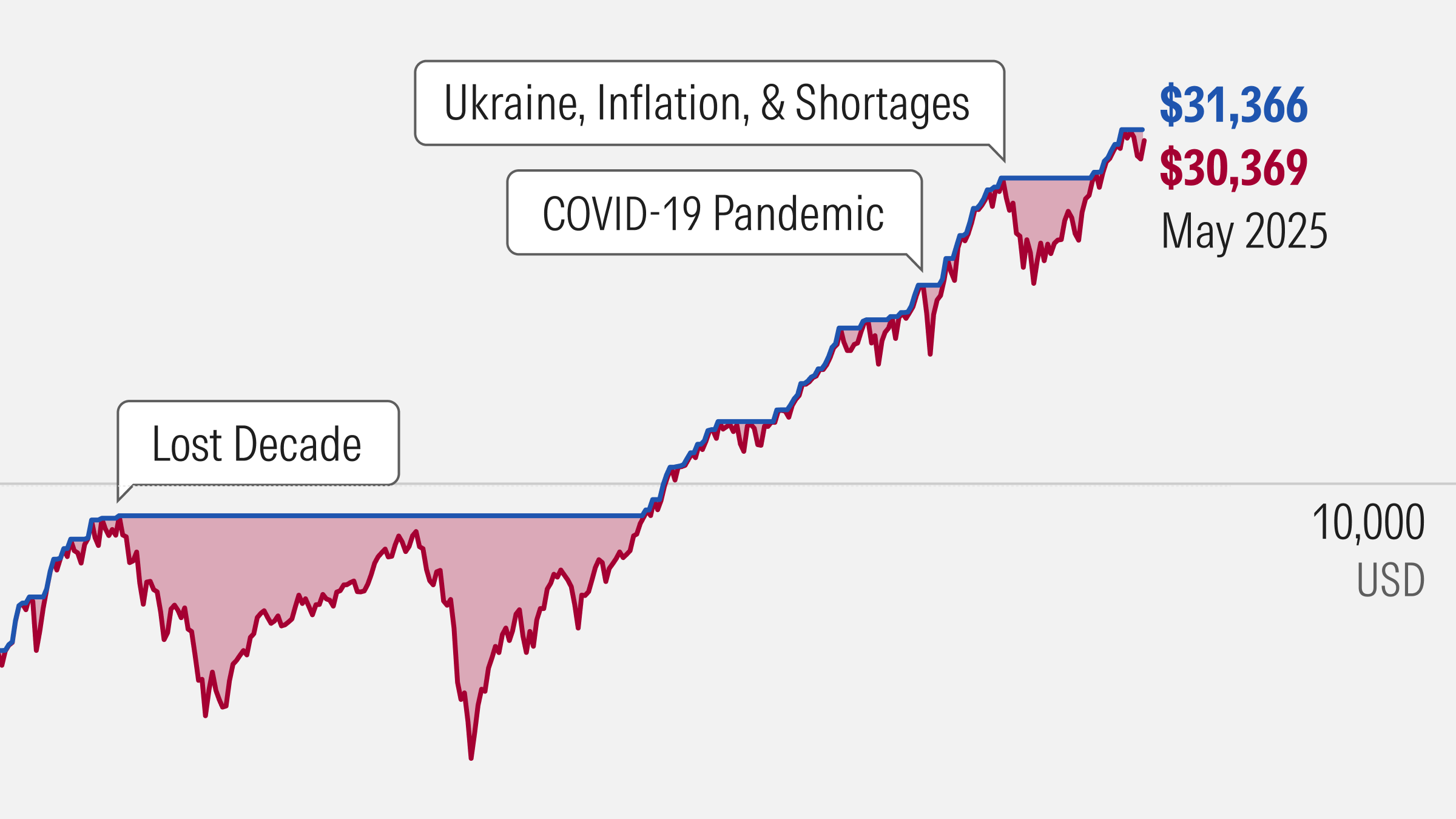
History shows that the stock market’s most significant gains often occur immediately following its most frightening drops. The “what happened” of the market is usually a temporary realignment of prices rather than a permanent destruction of value. For those with a long-term horizon, the current volatility represents a re-entry point rather than an exit signal. The transition from a low-rate, high-liquidity environment to a more disciplined economic reality is painful, but it is also necessary for the long-term health of the financial system. By focusing on company fundamentals—strong balance sheets, consistent cash flow, and pricing power—investors can weather the current storm and position themselves for the next cyclical upswing.
aViewFromTheCave is a participant in the Amazon Services LLC Associates Program, an affiliate advertising program designed to provide a means for sites to earn advertising fees by advertising and linking to Amazon.com. Amazon, the Amazon logo, AmazonSupply, and the AmazonSupply logo are trademarks of Amazon.com, Inc. or its affiliates. As an Amazon Associate we earn affiliate commissions from qualifying purchases.