
When investors ask, “How is the market doing?” they are rarely looking for a simple up-or-down percentage. The question is inherently complex, seeking to understand the health of the global economy, the stability of personal retirement accounts, and the potential for future growth. To answer this question accurately, one must look beyond the daily fluctuations of the major indices and examine the underlying machinery of the financial world, from central bank policies to sectoral shifts and consumer behavior.
The modern financial landscape is a tapestry of interconnected variables. While a single headline might suggest a bull market is in full swing, a deeper dive into breadth, valuation, and macroeconomic indicators often reveals a more nuanced story. Understanding these nuances is the difference between reactive gambling and proactive investing.
Understanding the Primary Indicators of Market Health
To gauge the state of the market, we must first define what “the market” actually represents. For most, it refers to the equity markets, specifically the major benchmarks that track the performance of the largest publicly traded companies. However, a truly holistic view requires looking at the interplay between stocks, bonds, and economic data.
The Major Indices: S&P 500, Dow Jones, and Nasdaq
The S&P 500 is widely considered the best single gauge of large-cap U.S. equities. Because it is market-cap weighted, it reflects the performance of the 500 largest companies, offering a broad look at the corporate engine of the economy. When the S&P 500 is performing well, it generally signals high investor confidence in corporate earnings.
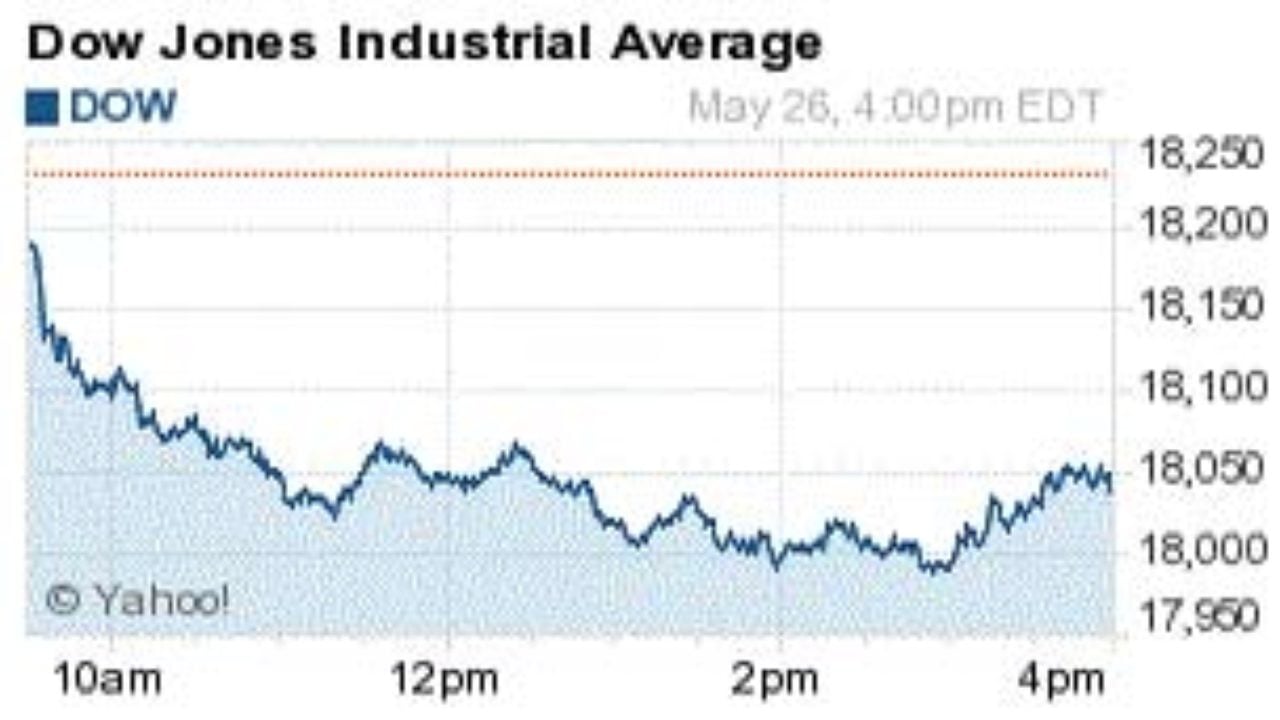
The Dow Jones Industrial Average (DJIA), conversely, is a price-weighted index of 30 “blue-chip” companies. While less comprehensive than the S&P 500, it serves as a pulse check for industrial and value-oriented sectors. Finally, the Nasdaq Composite, heavily weighted toward technology and growth stocks, acts as a barometer for innovation and risk appetite. In a healthy market, these three indices often move in tandem, though divergence between them can signal a rotation of capital from growth to value or vice versa.
The Role of the Bond Market and Treasury Yields
If the stock market is the engine of the economy, the bond market is the fuel gauge. Specifically, the yield on the 10-year U.S. Treasury note is one of the most critical numbers in finance. When yields rise, it often indicates that investors expect higher inflation or stronger economic growth, which can lead the Federal Reserve to raise interest rates.
Higher yields can put downward pressure on stocks because they increase the “discount rate” used to value future cash flows. This is particularly true for tech and growth stocks, where much of the value is predicated on earnings far into the future. Furthermore, an inverted yield curve—where short-term debt pays more than long-term debt—has historically been a reliable, though not infallible, harbinger of economic recession.
Employment Data and Consumer Spending
The market does not exist in a vacuum; it is supported by the American consumer. Consumer spending accounts for approximately 70% of the U.S. GDP. Therefore, “how the market is doing” is inextricably linked to “how the worker is doing.” Low unemployment rates and steady wage growth provide the liquidity necessary for consumers to buy goods and services, which drives corporate profits. However, an “overheated” labor market can also lead to wage-push inflation, prompting central banks to tighten monetary policy, which can eventually cool the market.
Macroeconomic Trends Shaping the Current Trajectory
Current market performance is being shaped by a unique set of macroeconomic challenges and opportunities. We are currently navigating a transition from a decade of ultra-low interest rates and high liquidity to a more “normalized” environment where the cost of capital matters.
Inflation and Central Bank Policy
For the past several years, the shadow of inflation has loomed large over every trading floor. The Federal Reserve’s primary tool for combating rising prices is the adjustment of the federal funds rate. When the Fed raises rates, borrowing becomes more expensive for businesses and individuals, which slows economic activity to bring prices down.
Investors are currently obsessed with the “pivot”—the moment when the Fed stops raising rates and begins to cut them. The market’s current performance is largely a reflection of expectations regarding this timeline. If the market believes a “soft landing” (taming inflation without causing a recession) is possible, equities tend to rally. If fears of a “hard landing” (a forced recession) take hold, volatility increases.
Geopolitical Stability and Global Trade
The interconnectedness of the global economy means that domestic markets are sensitive to international events. Supply chain disruptions, energy crises in Europe, and trade tensions in Asia all manifest as volatility in the U.S. markets. For example, fluctuations in the price of crude oil directly impact transportation costs and consumer discretionary spending, while semiconductor trade policies can swing the entire tech sector in a single afternoon. A market “doing well” is often a market that has priced in these geopolitical risks and found a path toward stability.
The Transition to a Post-Pandemic Economy
We are still feeling the aftershocks of the massive fiscal and monetary stimulus injected into the economy during 2020 and 2021. This surplus liquidity created asset bubbles in some areas while providing a necessary safety net in others. As that excess “dry powder” is drained from the system through quantitative tightening, the market is undergoing a fundamental re-rating. Companies that were once valued solely on growth must now prove they can generate actual cash flow in a higher-interest-rate environment.
Sector Performance: Where the Growth and Value Reside
Looking at the market as a monolith is a mistake. Under the surface, different sectors are often moving in opposite directions. Understanding sector rotation is key to identifying where the “real” market health lies.
The Tech Sector’s Continued Dominance vs. Valuations
Technology remains the primary driver of market returns, led by the so-called “Magnificent Seven.” These mega-cap firms have outsized influence due to their massive market capitalizations. While their growth in fields like Artificial Intelligence (AI) and cloud computing is undeniable, their valuations often reach levels that require perfect execution to justify. When the tech sector leads, it indicates a high “risk-on” sentiment. However, if the market’s gains are concentrated in only a few names, the “breadth” of the market is considered weak, which can be a sign of fragility.
Defensive Plays: Energy, Healthcare, and Utilities
In times of economic uncertainty, investors often flee to “defensive” sectors. These are industries that provide essential services regardless of the economic climate. The energy sector, for instance, is highly dependent on commodity prices and geopolitical events but often provides strong dividends. Healthcare and utilities are similarly prized for their stability. If these sectors are outperforming the broader market, it suggests that investors are bracing for a downturn and prioritizing capital preservation over aggressive growth.
The Resurgence of Small-Cap Stocks
Small-cap stocks, often tracked by the Russell 2000 index, are generally more sensitive to domestic economic conditions and interest rates than their large-cap counterparts. Because smaller companies often rely more heavily on floating-rate debt, they are hit harder by rate hikes. A rally in small caps is frequently seen as a sign of a broadening recovery, suggesting that the “average” company, not just the tech giants, is beginning to thrive.
Psychology and Sentiment: The Fear and Greed Factor
Market performance is as much a study of human psychology as it is a study of mathematics. The “market” is essentially the collective expectation of millions of participants, and those expectations are rarely purely rational.
Retail Investor Behavior and Social Media Influence
The rise of commission-free trading and the democratization of financial information have given retail investors a louder voice than ever before. Sentiment can shift rapidly based on viral trends, “meme stocks,” or community-driven movements. While institutional money still controls the majority of the volume, the psychological impact of retail sentiment can create significant short-term volatility and “froth” in certain pockets of the market.
Institutional Positioning and Liquidity
Beyond retail sentiment, we must look at where the “smart money” is moving. Institutional investors, such as pension funds, hedge funds, and insurance companies, operate with much longer horizons and larger pools of capital. When these entities move toward cash, it creates a “liquidity vacuum” that can cause sharp market drops. Conversely, when institutional “dry powder” sits on the sidelines, there is significant pent-up demand that can fuel a massive rally once the fundamental outlook clears.
Strategic Recommendations for Different Investor Profiles
Knowing “how the market is doing” is only useful if it informs your personal financial strategy. The current environment of moderate inflation and shifting interest rates requires a disciplined approach.
Long-Term Wealth Accumulation
For those in the accumulation phase—such as those saving for retirement decades away—short-term market “noise” should be largely ignored. The history of the stock market is one of resilience; despite wars, recessions, and pandemics, the long-term trajectory of the S&P 500 has remained upward. For these investors, dollar-cost averaging remains the most effective strategy. By investing a fixed amount regularly, you naturally buy more shares when prices are low and fewer when they are high.
Risk Management and Diversification Strategies
In a market characterized by sector divergence and macroeconomic uncertainty, diversification is the only “free lunch.” This means moving beyond just a mix of stocks and bonds. Investors are increasingly looking at “alternative” assets—such as real estate, private equity, or even commodities—to hedge against equity volatility.
Furthermore, rebalancing is essential. If a tech rally has caused your portfolio to become 80% weighted in growth stocks, you are exposed to significant downside risk if that sector corrects. Periodically selling winners to buy underperforming value sectors ensures that you are adhering to the “buy low, sell high” mantra that is so easy to say but so difficult to execute emotionally.
Ultimately, the market is currently in a phase of discovery. It is attempting to find its footing in a new era of fiscal reality. While volatility may remain elevated in the short term, the underlying strength of corporate earnings and the resilience of the labor market suggest that while the “easy money” era may be over, the opportunity for disciplined wealth creation is as vibrant as ever. Navigating this landscape requires patience, a focus on fundamentals, and the understanding that “the market” is not a single entity, but a complex, evolving ecosystem.
aViewFromTheCave is a participant in the Amazon Services LLC Associates Program, an affiliate advertising program designed to provide a means for sites to earn advertising fees by advertising and linking to Amazon.com. Amazon, the Amazon logo, AmazonSupply, and the AmazonSupply logo are trademarks of Amazon.com, Inc. or its affiliates. As an Amazon Associate we earn affiliate commissions from qualifying purchases.