
In the high-stakes world of derivatives and equity indices, few instruments have gained as much traction and notoriety in recent years as the SPXW. For the uninitiated, SPXW refers to the ticker symbol for S&P 500 Index Weekly options. These are a specific class of options contracts listed by the Cboe Options Exchange (Cboe) that track the performance of the S&P 500 Index, but with a much shorter lifespan than traditional monthly options.
As retail and institutional interest in short-term trading grows, understanding the mechanics, benefits, and risks of SPXW is essential for any modern investor. Unlike standard equity options that represent shares in a single company, SPXW options provide exposure to the broader market, offering a unique blend of tax efficiency, cash settlement, and strategic flexibility.

The Fundamentals of SPXW
To understand SPXW, one must first understand the “parent” product: the SPX. The SPX is the ticker for the S&P 500 Index, which measures the performance of 500 of the largest companies listed on stock exchanges in the United States. While the SPX itself cannot be traded directly like a stock, investors use options to speculate on its movement or hedge their portfolios.
Traditional SPX options expire once a month, typically on the third Friday. However, the market’s demand for more granular timing led to the creation of Weeklys. SPXW options are these weekly versions. Today, SPXW contracts expire almost every business day of the week—Monday through Friday—allowing traders to pinpoint specific economic events or market cycles with extreme precision.
Cash Settlement and European-Style Exercise
One of the most critical distinctions of SPXW options is that they are “European-style” and “cash-settled.”
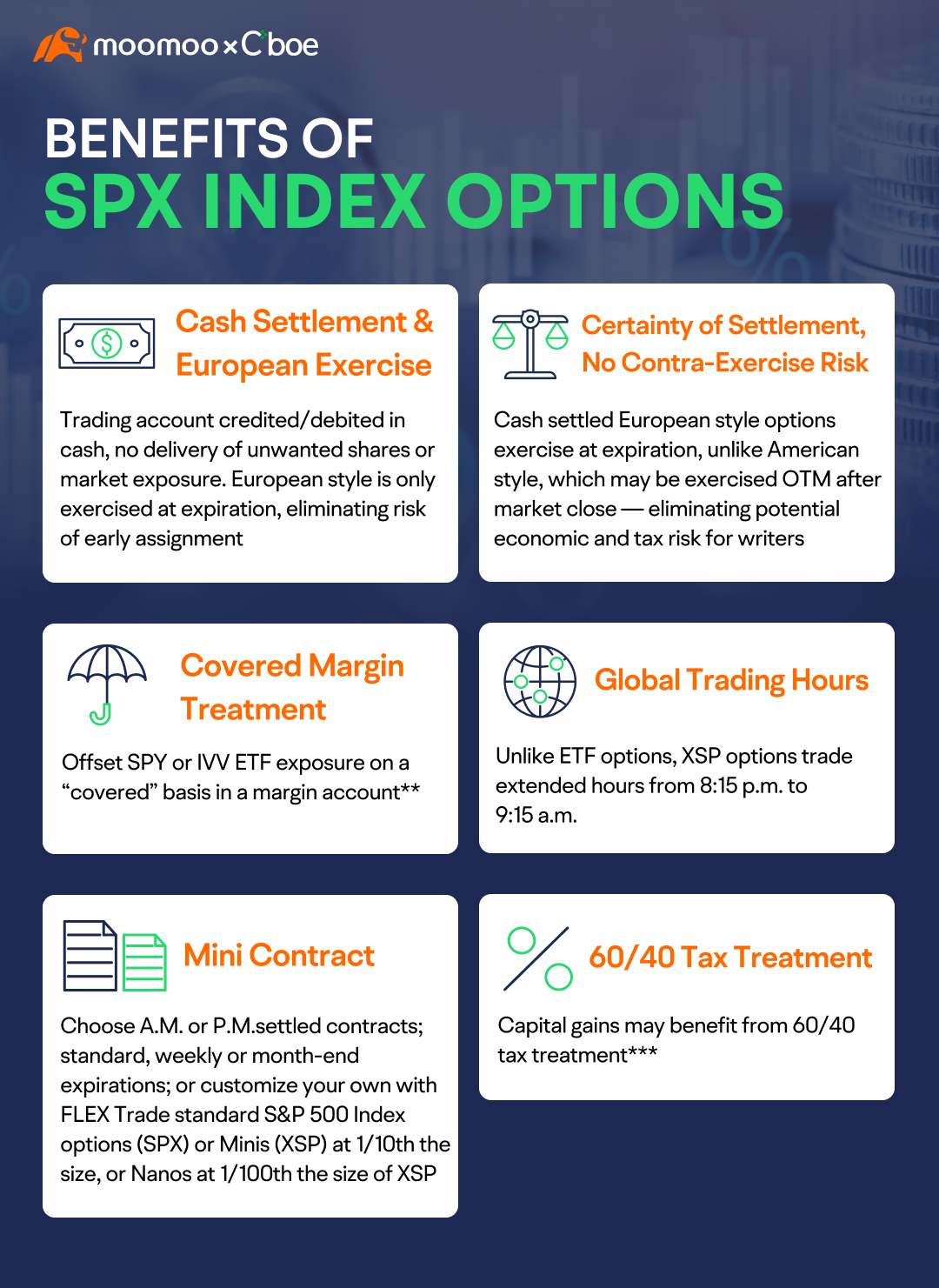
In a standard American-style option (like those for Apple or Amazon stock), the holder can exercise the option at any time before expiration. Furthermore, if you hold a call option on a stock at expiration, you receive 100 shares of that stock. SPXW operates differently. Because it is an index option, there is no underlying physical stock to deliver. Instead, the contract is settled in cash. If your option is in-the-money at expiration, the difference between the index value and your strike price is simply deposited into your brokerage account.
The European-style exercise means that the options cannot be exercised early. This is a significant advantage for sellers (writers) of options, as it eliminates the risk of “assignment” before the expiration date. This predictability allows for more complex mathematical modeling and tighter risk management.
The Proliferation of Expirations
Initially, weekly options were a novelty. However, the Cboe expanded the SPXW roster to include expirations for every Monday, Wednesday, and Friday. More recently, they added Tuesday and Thursday expirations. This evolution has turned SPXW into a tool for “0DTE” (Zero Days to Expiration) trading. Traders can now enter and exit positions within a single trading session, capitalizing on intraday volatility without the overnight risk of market-gapping news.
The Strategic Advantage: Why Trade Weeklys?
Investors gravitate toward SPXW for several reasons, ranging from tactical hedging to income generation. The short-dated nature of these contracts changes the way “Time Decay” (Theta) affects the price of the option, creating opportunities that monthly contracts simply cannot provide.
Hedging Against Short-Term Volatility
The primary utility of SPXW is its ability to act as an insurance policy. Suppose a major economic report, such as the Consumer Price Index (CPI) or a Federal Reserve interest rate decision, is scheduled for a Wednesday morning. An investor with a large portfolio of blue-chip stocks might fear a sudden market drop.
By purchasing SPXW put options that expire on that specific Wednesday, the investor can protect their portfolio against a localized crash. Because the options expire so quickly, they are much cheaper than monthly options, allowing for “micro-hedging” that is cost-effective. If the market remains stable, the investor only loses the small premium paid for the options. If the market plunges, the gains on the SPXW puts can offset the losses in the stock portfolio.
Income Generation through Premium Collection
For many sophisticated traders, SPXW is an income engine. By selling (writing) these options, traders collect the “premium” from the buyer. Because SPXW options have very high time decay, the value of these options erodes quickly as expiration approaches.
Strategies such as “Credit Spreads” or “Iron Condors” are frequently used with SPXW. In these scenarios, a trader bets that the S&P 500 will stay within a certain price range for a few days. If the index stays within that range until the SPXW expiration, the trader keeps the entire premium. With five expirations a week, a disciplined trader can theoretically generate income multiple times per week, though this comes with substantial risk if the market moves sharply in one direction.
Capital Efficiency and Notional Value
SPXW options are “large-cap” instruments. Each contract has a notional value of 100 times the S&P 500 index. If the S&P 500 is trading at 5,000, one single SPXW contract controls $500,000 worth of market exposure. This high notional value allows institutional investors and high-net-worth individuals to move significant amounts of capital with very few contracts, reducing transaction costs and slippage compared to trading smaller ETFs like the SPY (which is 1/10th the size).
Structural Benefits: Tax Efficiency and Settlement

For the serious investor, the “Money” aspect of SPXW isn’t just about the trades themselves, but the structural advantages provided by the U.S. tax code and the exchange rules.
Section 1256 Tax Treatment
In the United States, SPXW options qualify as “Section 1256 Contracts” under the Internal Revenue Code. This is a massive advantage over trading ETFs like SPY or individual stocks. Under Section 1256, any capital gains from SPXW trading are taxed at a blend: 60% at the lower long-term capital gains rate and 40% at the short-term capital gains rate, regardless of how long the position was held.
For a day trader or a short-term swing trader, this can result in a significantly lower tax bill. While a short-term gain on a stock would normally be taxed at the investor’s highest marginal income tax rate, the 60/40 split on SPXW provides a “tax alpha” that can improve net returns by several percentage points annually.
PM Settlement vs. AM Settlement
While traditional monthly SPX options often settle based on the opening prices of the index components on a Friday morning (AM settlement), SPXW options are typically PM-settled. This means their value is determined by the closing price of the S&P 500 on the day of expiration.
PM settlement is generally preferred by retail traders because it allows them to trade the contracts right up until the market close. It eliminates the “overnight risk” associated with AM-settled options, where an investor might be stuck in a position on Thursday night only to find the opening price on Friday morning is vastly different due to a surprise news event.
Advanced Trading Strategies with SPXW
The versatility of SPXW has given rise to specialized trading communities. These strategies rely on the mathematical properties of options—specifically the “Greeks”—to navigate the market.
The Rise of 0DTE (Zero Days to Expiration)
The 0DTE phenomenon has taken the financial world by storm. These are trades opened and closed on the very day the SPXW contract expires. Because there is so little time left, these options are extremely sensitive to price movements (high Gamma) and experience rapid time decay (high Theta).
Traders use 0DTE SPXW options to “scalp” small moves in the index. While highly risky, the leverage is immense. A small 0.5% move in the S&P 500 can result in a 100% or 200% return on a 0DTE option in a matter of hours. Conversely, the position can go to zero just as quickly if the market moves sideways.
Volatility Arbitrage and VIX Correlation
Because SPXW options are used to calculate the VIX (the “Fear Gauge”), there is a deep connection between the two. Professional traders often look for discrepancies between the “Implied Volatility” of SPXW options and the actual movement of the market. If the weekly options are priced for a massive move that doesn’t happen, “Vol sellers” can profit from the “crush” in option premiums.
Navigating Risks and the 0DTE Phenomenon
While the rewards of SPXW can be substantial, the risks are equally potent. The very features that make SPXW attractive—leverage, short duration, and high sensitivity—can also lead to rapid capital depletion.
Gamma Risk and the “Gap Down”
The biggest threat to an SPXW trader is Gamma risk. As an option nears expiration, its Delta (the rate of change in the option’s price relative to the index) becomes extremely volatile. A small move in the S&P 500 can cause the value of a near-dated SPXW option to swing wildly. For sellers of these options, a sudden market spike or “gap down” can lead to losses that far exceed the premium collected, especially if they are not using “defined risk” spreads.
Liquidity and Execution
While SPXW is one of the most liquid markets in the world, the “bid-ask spread” can still be a factor, especially during periods of extreme volatility. Traders must be adept at using limit orders rather than market orders to ensure they aren’t losing a percentage of their profit to the market makers upon entry and exit.
The Psychological Component
The speed of SPXW trading requires a different psychological makeup than long-term investing. Because the feedback loop is so fast—often minutes or hours—traders are susceptible to “revenge trading” or emotional decision-making. Success in the SPXW market requires a rigorous, data-driven approach and a strict adherence to stop-loss protocols.
In conclusion, SPXW is a powerful financial instrument that has democratized access to professional-grade hedging and income strategies. By offering daily expirations on the world’s most followed stock index, it provides the “Money” niche with a tool for precision and tax efficiency. However, its complexity and the velocity of its price movements mean it is best suited for those who have taken the time to understand the nuances of index derivatives and the risks associated with short-term market fluctuations.
aViewFromTheCave is a participant in the Amazon Services LLC Associates Program, an affiliate advertising program designed to provide a means for sites to earn advertising fees by advertising and linking to Amazon.com. Amazon, the Amazon logo, AmazonSupply, and the AmazonSupply logo are trademarks of Amazon.com, Inc. or its affiliates. As an Amazon Associate we earn affiliate commissions from qualifying purchases.